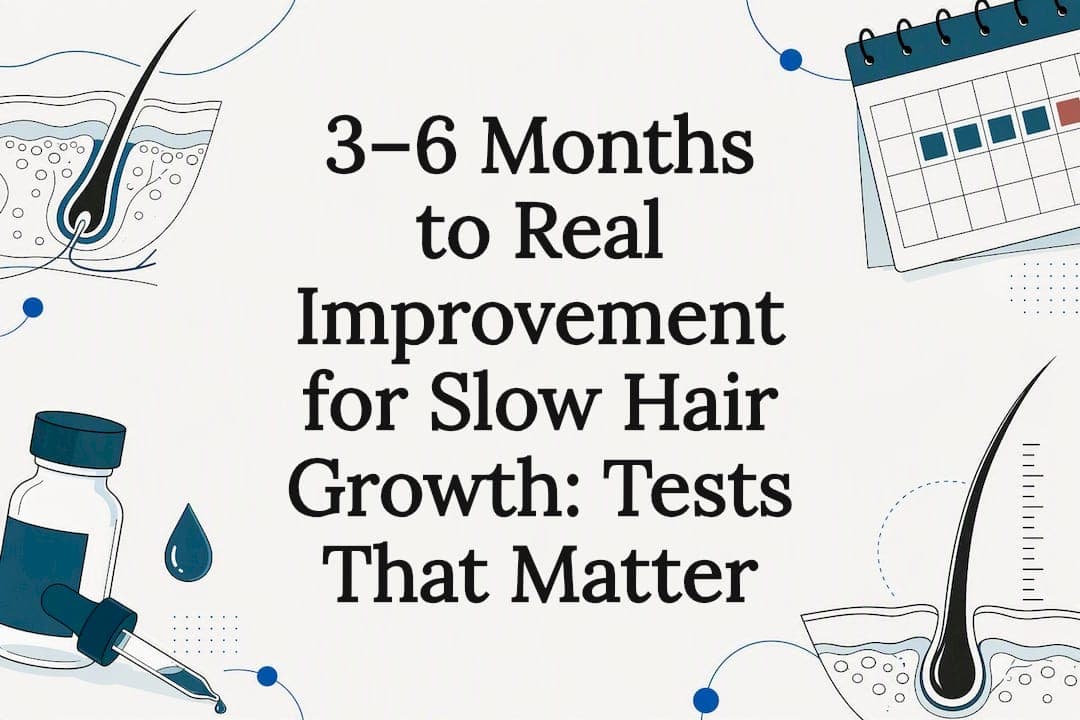
Slow hair growth almost always traces back to one of five categories: genetics and age, hormonal or endocrine shifts, nutrient deficiencies, scalp or follicle inflammation, or mechanical breakage that masks normal root growth. Hair grows about 1 centimeter a month, so real improvement after fixing an underlying cause typically takes three to six months to become visible. Start with a mirror check for breakage, then move to targeted blood work if the scalp and hair shaft look normal, as supported by clinical guidance.
TL;DR:
- Hair growth can be slowed by genetic factors, age-related follicle miniaturization, and early entry into telogen, which delay visible improvement even after addressing underlying causes.
- Hormonal imbalances, nutritional deficiencies, and scalp inflammation often require 3 to 6 months of targeted treatment before significant hair growth changes are noticeable.
- Differentiating breakage from follicle slowdown involves checking for frayed ends versus uniform thinning and tracking hair length over several months with consistent photos and measurements.
- Laboratory tests for thyroid function, ferritin, vitamin D, and anemia usually reveal treatable deficiencies that, once corrected, take several months to reflect in hair growth.
- Effective treatments like minoxidil require consistent application for at least 3 to 6 months, and progress is best monitored through objective, monthly scalp photos or scans rather than daily checks.
Table of Contents
- Reasons for Slow Hair Growth: How the Growth Cycle Works
- Five Primary Causes of Slow Hair Growth and How to Diagnose Each One
- Breakage vs. Follicle Slowdown: A Practical Way to Tell the Difference
- What Blood Tests to Request and What the Results Mean
- Treatments That Work, and How Long Before You'll See Anything
- A Simple Decision Path to Narrow Down Your Cause
- When to See a Clinician and What Tests to Request
- Myth vs. Fact: What Actually Speeds Up Hair Growth
- Living With Slow Hair Growth While You Wait for Answers
- The Measured Approach Beats the Miracle Fix
- Track Your Progress Instead of Guessing at It
- Sources
- FAQ
Reasons for Slow Hair Growth: How the Growth Cycle Works
Every hair follicle cycles through four phases: anagen (active growth, lasting two to seven years), catagen (a brief two to three week transition), telogen (a two to four month resting phase), and exogen (shedding). Scalp hair grows at roughly 1 cm per month, so a follicle stuck in a shortened anagen phase, or one that has slipped into telogen early, produces visibly slower growth even though the underlying rate of cell division hasn't changed much.
This is why timing matters more than most people realize. A major illness, crash diet, surgery, or high fever can push a large share of follicles into telogen at once. The shedding from that event doesn't show up immediately. It typically appears two to three months later, a delay known as telogen effluvium, which is why so many people can't connect their hair loss to the stressor that caused it.
Several forces determine how long anagen lasts and how much hair sits in telogen at any given time:
- Hormonal shifts, particularly thyroid dysfunction and androgen sensitivity
- Chronic scalp inflammation or infection
- Nutrient shortfalls, especially iron and vitamin D
- Certain medications, including some blood pressure drugs, retinoids, and chemotherapy agents
Five Primary Causes of Slow Hair Growth and How to Diagnose Each One
Most slow growth complaints sort into five buckets. Here's how to figure out which one applies to you, what to check, and how long correction usually takes to show results.
1. Genetics and age
Patterned thinning at the crown or temples, a family history of early hair loss, and hair that grows fine but never seems to get past a certain length are the telltale signs of androgenetic alopecia. Age compounds this: anagen phases shorten over the decades, and follicles gradually miniaturize, producing finer, shorter strands with each cycle, a process reviewed in research on hair aging.
Diagnostic step: Compare your part width and hairline in photos taken one to two years apart. Ask relatives on both sides when their hair thinning started. Timeline: This cause develops over years, not weeks, so change is slow to notice but treatments like minoxidil can show anagen density improvements within 3 to 6 months.
2. Hormonal and endocrine issues
Irregular periods, new acne along the jawline, unexplained weight changes, cold intolerance, or sudden diffuse shedding all point toward a hormonal driver, whether that's thyroid dysfunction or elevated androgen activity.
Diagnostic step: Track your cycle regularity and any new skin or weight changes for one full month before your appointment, then request TSH, free T4, and, if periods are irregular, a reproductive hormone panel. Timeline: Thyroid correction often shows scalp improvement within 3 to 6 months of normalized lab values; hormonal acne-related shedding may take slightly longer to resolve.
3. Nutritional deficiencies
Iron, protein, and vitamin D deficiencies are the most consistently linked nutritional causes of slow or thinning hair. Zinc and B12 deficiencies are less common but worth checking if you have a restrictive diet or a malabsorption condition.
Diagnostic step: Request serum ferritin, 25-OH vitamin D, and a complete blood count. Many clinicians treat ferritin under 30 to 40 ng/mL as suboptimal for hair growth even when it falls inside a lab's normal range. Timeline: Expect no visible change for the first 6 to 8 weeks even after repletion begins; most people see measurable improvement by month 3 to 4.
4. Scalp and follicle inflammation
Persistent itching, flaking, redness, or an oily scalp that never seems to calm down suggests seborrheic dermatitis or a fungal overgrowth interfering with the follicle's environment. Left untreated, chronic inflammation can shorten anagen and worsen shedding.
Diagnostic step: Part your hair in several spots and check for redness, scale, or unusual oiliness at the scalp itself, not just flaking in the hair. Try a medicated shampoo containing ketoconazole or zinc pyrithione for 4 weeks. If symptoms persist, see a dermatologist. Timeline: Mild dandruff-type inflammation often improves within a month; deeper inflammatory conditions may take 2 to 3 months and prescription treatment.
5. Breakage and styling damage
This is the cause people mistake for "slow growth" most often, when in reality the roots are producing hair at a normal rate but the shaft snaps before it gets long. Uneven lengths across the head, a fringe of short broken strands framing the face, and split or frayed ends are the giveaways.
Diagnostic step: Section off a lock of hair and run your fingers down its length. Breakage feels rough and frayed partway down the shaft; healthy follicle-driven hair feels consistent from root to tip, just short. Timeline: Once you stop the damaging practice (heat, chemical processing, tight styles), length retention typically improves within one full growth cycle, about 2 to 3 months, since you're no longer losing what the follicle produces.
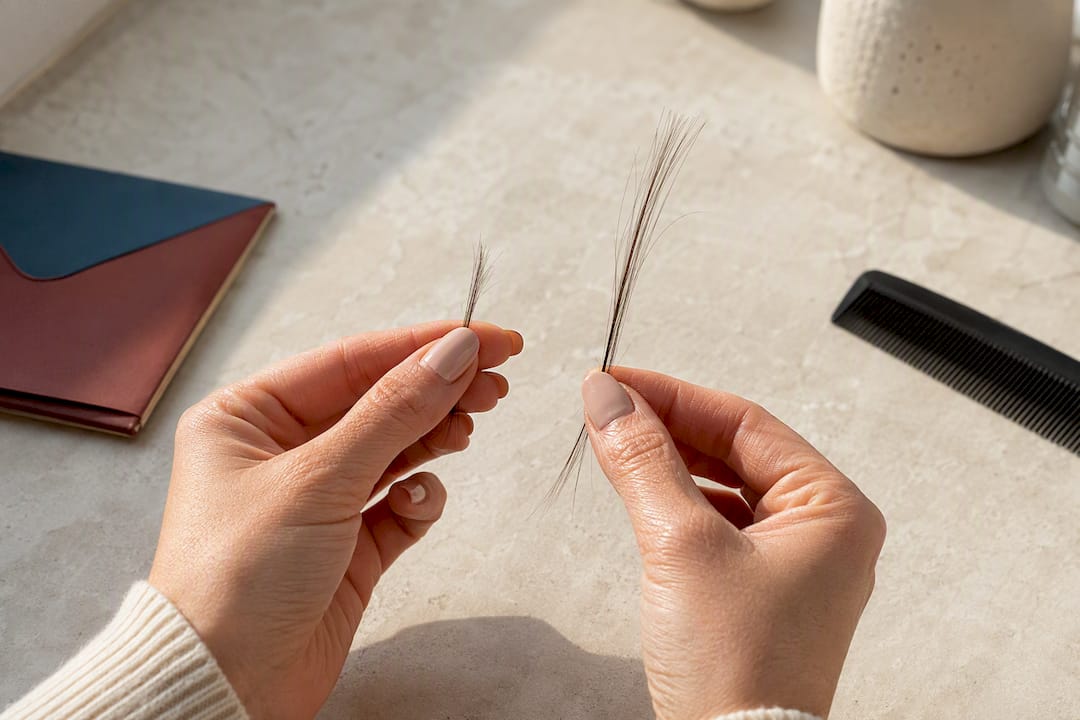
Pro Tip: Keep a small clipping of hair from a trim in an envelope. Six months later, hold new growth against it. This single comparison tells you more about your actual growth rate than any amount of guessing in the mirror.
Breakage vs. Follicle Slowdown: A Practical Way to Tell the Difference
Breakage and follicle dysfunction look similar at first glance but leave very different clues if you know where to check.
- Frayed, rough, or split ends signal shaft breakage; uniform thinning across the whole strand length signals a follicle issue
- Shedding concentrated on a pillow, brush, or shower drain suggests normal exogen loss; hair breaking off mid-shaft during brushing or styling suggests mechanical damage
- Fine, short "peach fuzz" style vellus hairs scattered across the scalp indicate follicle miniaturization, not breakage
- A localized bald patch usually points to alopecia areata or traction; diffuse, all-over thinning usually points to telogen effluvium or hormonal causes
The most reliable method costs nothing: take a photo of the same section of scalp, in the same lighting, with the same part, once a month for three months. Measure a marked lock of hair against a ruler each time. Objective tracking beats memory, since most people either overestimate how fast their hair used to grow or underestimate gradual thinning until it's already noticeable.
Pro Tip: Use your phone's grid overlay when taking scalp photos. It keeps your framing consistent from month to month, which matters more than the camera quality itself.
What Blood Tests to Request and What the Results Mean
A focused lab panel answers most of the diagnostic questions self-checks can't.
- TSH (plus free T4 if TSH is abnormal): screens for hypothyroidism and hyperthyroidism, both linked to shedding
- Serum ferritin: many clinicians consider levels below 30 to 40 ng/mL suboptimal for hair growth, even though standard lab reference ranges often start lower
- 25-OH vitamin D: low levels are associated with hair thinning, though the mechanism is still being studied
- Complete blood count (CBC): flags anemia, which often travels with low ferritin
- Zinc, B12, or an autoimmune panel (ANA): worth requesting only if diet, symptoms, or scalp appearance suggest it
Roughly half of adult women with hair loss have iron stores low enough to be clinically relevant, which is why ferritin is one of the first tests worth requesting rather than the last. A dermatology referral or scalp biopsy becomes appropriate when you notice scarring, shiny bald patches, or patchy loss that doesn't fit a typical pattern. Lab-driven treatment is not a quick fix. Correcting a deficiency changes what your follicles have to work with, but the hair already visible on your head won't reflect that change for several months, since it grew under the old conditions.
Treatments That Work, and How Long Before You'll See Anything
Evidence-backed options differ a lot in mechanism, and readers should measure success against realistic timeframes rather than expecting overnight results.
- Topical minoxidil: extends anagen and can increase anagen follicle density; most users apply it twice daily and don't see meaningful change before 3 to 6 months, with continued improvement sometimes through month 12
- Finasteride: an oral option for men with androgenetic alopecia, taken under clinician supervision due to contraindications and side effect monitoring
- Nutritional correction: only worth pursuing once a deficiency is documented by blood work. Correct the specific gap rather than adding broad high-dose supplements
- Procedural options: platelet-rich plasma injections, microneedling, and hair transplants are considered for more advanced or localized loss, usually after simpler measures have been tried
- Lifestyle adjustments: stress reduction, consistent sleep, gentle grooming, and basic scalp hygiene support follicle health as an adjunct to medical treatment, not a replacement for it
Finasteride is FDA-indicated for men only. Women who are or may become pregnant must not handle crushed or broken finasteride tablets, due to the risk of harm to a male fetus. It can also cause sexual side effects (reduced libido, erectile dysfunction) in a minority of men, which usually resolve after stopping treatment. Discuss these risks with a physician before starting.
A Simple Decision Path to Narrow Down Your Cause
- Sudden shedding in the last few months points to telogen effluvium; think back to illness, surgery, or major stress 2 to 3 months earlier.
- Gradual, patterned thinning over years, especially with a family history, points toward genetics and age.
- Scalp symptoms (itch, flaking, redness) point to inflammatory or fungal causes; try a medicated shampoo before ordering labs.
- Uneven length or frayed ends point to breakage, not a follicle problem; fix the habit first.
- If none of these fit cleanly, request the core lab panel, and consider a clinician visit.
Pro Tip: Photograph your part line on the first of every month. Three months of consistent images will tell you more about your actual trajectory than weeks of anxious daily checking.
When to See a Clinician and What Tests to Request
See a clinician sooner rather than later if you notice rapidly progressive patchy bald spots, scarring or shiny skin where hair used to grow, shedding that leaves visible thinning within weeks, or hair loss accompanied by systemic symptoms like fatigue, weight change, or joint pain.
- Bring notes on when shedding started, any recent illness, medication changes, or dietary shifts
- Expect the clinician to order TSH, ferritin, 25-OH vitamin D, and a CBC as a first-line panel
- An ANA test or scalp biopsy may follow if results suggest an autoimmune or scarring process
- Correcting the underlying issue, whether thyroid disease, a documented deficiency, or a medication side effect, often stops or reverses the shedding once it's properly managed
- Follow-up is usually scheduled 3 to 4 months out, since that's the earliest window where lab-driven changes typically become visible on the scalp
Myth vs. Fact: What Actually Speeds Up Hair Growth
| Myth | Fact |
|---|---|
| Frequent trims make hair grow faster | Trimming only removes split ends; growth happens at the root, unaffected by the tips |
| More biotin means faster growth | Biotin only helps if you're actually deficient, which is uncommon; excess offers no added benefit |
| "Detox" shampoos and scalp scrubs boost growth rate | They can improve scalp comfort but haven't been shown to change the underlying growth rate |
| Taking extra vitamins can't hurt | Excess vitamin A or selenium can actually worsen hair loss; more isn't automatically better |
If you're tempted to stack supplements that claim to fix hair loss, get tested first. Targeted correction based on an actual deficiency beats a shotgun approach every time.
Living With Slow Hair Growth While You Wait for Answers
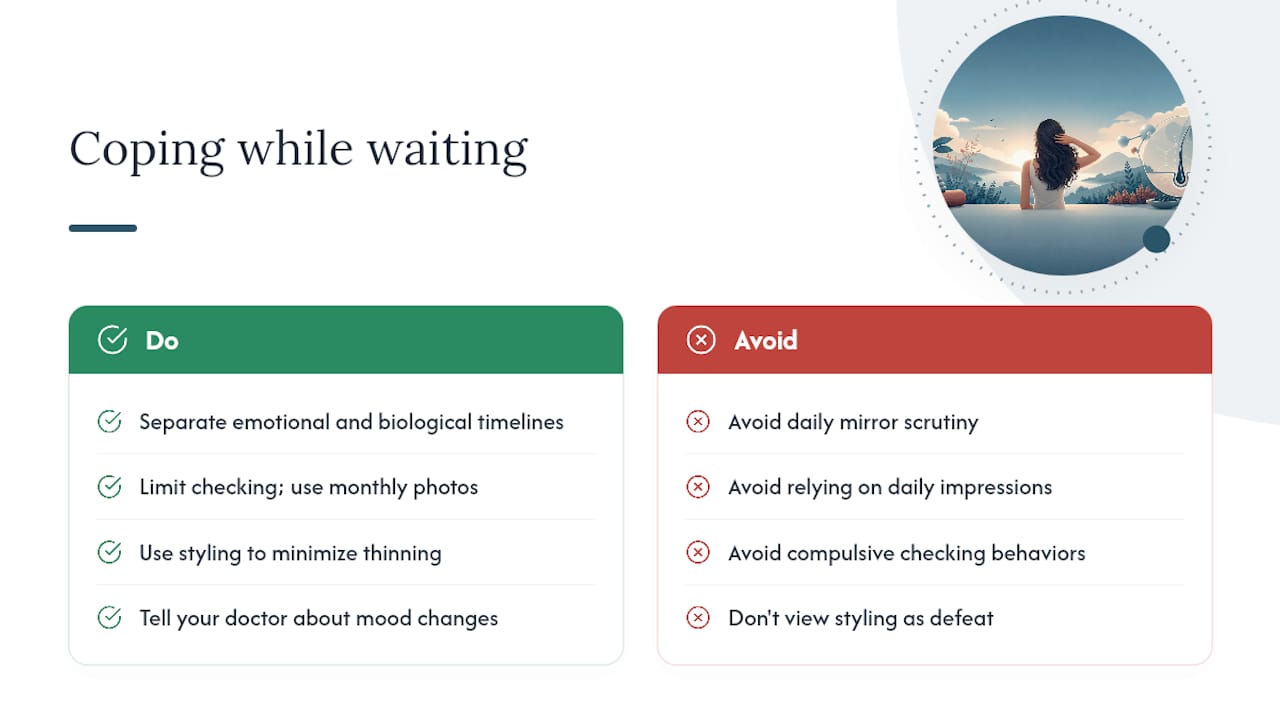
The waiting is often the hardest part. Watching your reflection for weeks without visible change, especially after starting a new routine or treatment, wears on people in ways that rarely get discussed alongside the medical facts. It's common to feel a mix of frustration and self-consciousness, particularly if thinning is visible in photos, under certain lighting, or when hair is pulled back.
A few things help. First, separate the emotional timeline from the biological one. You notice change daily; your hair changes monthly at best. That mismatch is normal, not a sign that nothing is working. Second, limit how often you check. Daily mirror scrutiny amplifies anxiety without giving you any new information, since meaningful change only shows up over weeks. Monthly photo comparisons, taken the same way each time, give you an honest signal without the daily noise.
Styling choices that minimize the appearance of thinning, whether that's a different part, a layered cut, or a temporary fiber product, are reasonable coping tools, not admissions of defeat. If hair loss is affecting your mood, social confidence, or triggering compulsive checking behaviors, that's worth mentioning to a doctor alongside the physical symptoms. Hair loss support groups and therapists familiar with body image concerns can help too, particularly for conditions like alopecia areata that carry an unpredictable course. Patience paired with objective tracking, rather than daily guesswork, tends to be the most sustainable way through the waiting period.
The Measured Approach Beats the Miracle Fix
Most people jump straight to products before ruling out the basics: check for breakage first, then request labs, then consider topical or systemic treatment with a clinician monitoring progress. Skipping steps wastes money and time. Document your scalp and length monthly. Slow, verified progress beats chasing a faster answer that doesn't exist. Tools like MyHair's AI-based scans can help track that change over time and flag patterns worth discussing with a provider.
— Cyriac
Track Your Progress Instead of Guessing at It
There are tools that give you what the mirror can't: an objective, month-over-month record of what's actually happening on your scalp, instead of the guesswork most people rely on while waiting to see if a routine is working. Upload a scan through the hair analysis onboarding process and the AI tracks density, texture, and pattern changes over time, then surfaces product suggestions matched to what it actually finds, not generic advice aimed at everyone. It is designed to work alongside lab tests and clinician visits, not instead of them. Start your first scan through the scanner camera tool and get a baseline reading before you change anything else in your routine.
Sources
For readers who want the primary research behind these recommendations: the hair growth cycle physiology from NCBI's StatPearls, the multifactorial review of hair aging on PMC, the nutrient deficiency and hair loss review, Cleveland Clinic's hair loss diagnosis and treatment guidance, and its dietary recommendations for hair growth.
This article is general information, not a substitute for advice from a qualified doctor. Consult a qualified healthcare professional about your own circumstances before acting on anything here.
- Hair longevity—evidence for a multifactorial holistic approach to managing hair aging changes - PMC
- Physiology, Hair - StatPearls - NCBI Bookshelf
- Diet and hair loss: effects of nutrient deficiency and supplement use - PMC
- Hair loss - Diagnosis and treatment - Cleveland Clinic
FAQ
Why is my hair growing so slowly?
Slow growth usually comes from one of five sources: genetics and age, hormonal or thyroid issues, a nutrient deficiency (often iron or vitamin D), scalp inflammation, or breakage that hides normal root growth. Testing and a simple breakage check narrow it down quickly.
How do I treat slow hair growth?
Treatment depends on the cause: nutritional correction for a documented deficiency, thyroid management for endocrine issues, medicated shampoo or dermatology care for scalp inflammation, and gentler styling habits for breakage. Topical minoxidil can help regardless of cause, typically showing results in 3 to 6 months.
How long does it take to see improvement after fixing a deficiency?
Most people see no visible change for the first 6 to 8 weeks, even after starting treatment, with measurable improvement usually appearing around month 3 to 4. This lag happens because hair grows slowly and reflects conditions from months earlier.
Can supplements help my hair grow faster?
Only if you have a documented deficiency; supplementing without a confirmed gap rarely helps and can backfire; excess vitamin A or selenium has been linked to worsened hair loss. Get ferritin, vitamin D, and thyroid levels checked before adding anything.
Should I track my hair growth with photos?
Yes. Monthly photos taken in the same lighting and part, compared against a measured lock of hair, give a far more reliable read on progress than daily mirror checks. Some apps offer scanning tools that automate this comparison and flag pattern changes over time.