TL;DR:
- C hair has the tightest coil pattern and shrinks 65-75 percent when dry. Proper care focuses on consistent moisture through gentle washing, deep conditioning, and protective styling to prevent breakage. Simplifying routines and understanding your hair's porosity lead to healthier growth and less frustration.
4C hair is defined as the tightest coil pattern in the Andre Walker hair typing system, characterized by densely packed, Z-shaped strands that shrink 65–75% when dry. A 30 cm wet strand can appear as short as 8–10 cm without any stretching. That structural reality makes 4C hair care fundamentally different from caring for looser textures. Natural scalp oils cannot travel down tightly coiled strands the way they do on straight hair, which means moisture loss is constant and intentional hydration is non-negotiable. Every effective routine for this hair type is built around one principle: get moisture in and keep it there.

What are the best washing and conditioning practices for 4C hair?
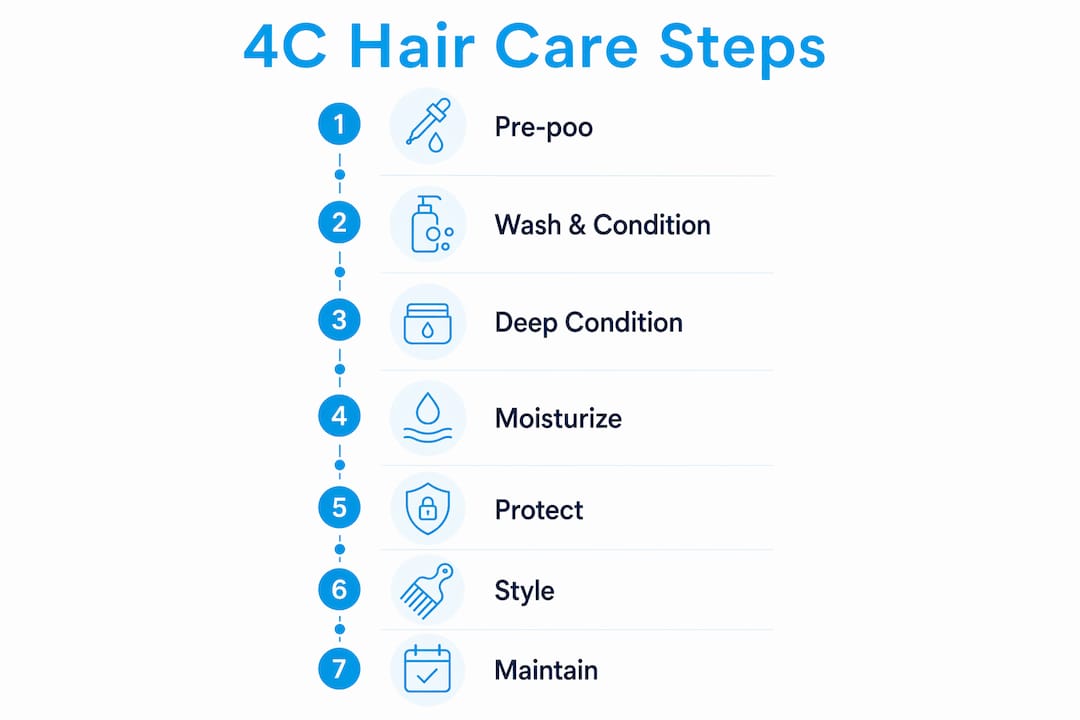
Washing frequency is the foundation of any solid 4C hair care routine. Experts recommend washing every 7–14 days using a sulfate-free, gentle cleanser. Sulfate-free shampoos clean the scalp without stripping the natural oils that coily strands desperately need. Washing more often than once a week typically does more harm than good.
Pre-poo treatments
A pre-poo treatment is applied before shampooing to coat and protect strands from the drying effects of cleansing. Applying a light oil such as coconut or olive oil to dry hair 30 minutes before washing creates a barrier that reduces moisture loss during the wash. This single step can make a noticeable difference in how your hair feels after wash day.
Deep conditioning with heat
Deep conditioning for 20–30 minutes with heat is the most effective way to push moisture into the hair shaft. Heat opens the cuticle layer, allowing conditioner molecules to penetrate rather than just coat the surface. A hooded dryer or a simple plastic cap with body heat works well. Skipping heat means most of the conditioner sits on top of the strand and rinses away.
Co-washing between shampoo days
Co-washing, which means rinsing with conditioner instead of shampoo, refreshes the hair between full wash days without stripping oils. This practice works best for people who exercise frequently or live in dry climates. Conditioner-only rinses maintain softness and reduce the temptation to shampoo too often.
Pro Tip: Add a few drops of glycerin to your deep conditioner before applying. Glycerin is a humectant that draws water from the air into the hair shaft, boosting moisture absorption during your conditioning session.
How to maintain moisture daily and detangle 4C hair
Daily moisture management separates healthy 4C hair from brittle, breakage-prone hair. Refreshing with a water-based spray and leave-in conditioner every 1–2 days prevents the dryness that leads to snapping and splitting. The goal is to keep strands pliable, not crunchy.
LOC vs. LCO method
Two product-layering methods dominate natural hair care for coily textures.
- LOC (Liquid, Oil, Cream): Apply a water-based liquid first, seal with an oil, then lock everything in with a cream. This works best for low porosity hair because the oil layer slows moisture from escaping.
- LCO (Liquid, Cream, Oil): Apply liquid, then cream, then a light oil on top. This suits high porosity hair, which absorbs products quickly and needs the cream to fill gaps in the cuticle before sealing.
Moisture retention depends heavily on porosity. Applying products without knowing your porosity reduces hydration effectiveness. A simple float test, dropping a clean strand in a glass of water and watching whether it sinks or floats, gives a quick read on your hair's porosity level.
Detangling without breakage
Detangling is where most 4C hair damage happens. Detangling with fingers or a high-slip conditioner minimizes micro-tearing that combs cause when used improperly. Always work from the ends toward the roots, never the reverse. Starting at the roots drags tangles down the entire shaft and snaps strands.
- Never detangle dry hair. Dry 4C strands have almost no elasticity and will break under tension.
- Divide hair into 4–6 sections before detangling to make the process manageable.
- Use a wide-tooth comb only after fingers have cleared major knots.
- Work slowly. Rushing through tangles causes more damage than the tangles themselves.
Protecting hair at night is just as important as daytime care. A satin bonnet or satin pillowcase significantly reduces mechanical breakage and moisture loss while you sleep. Cotton pillowcases absorb moisture and create friction that weakens strands overnight.
Pro Tip: Spritz hair lightly with water before putting on your satin bonnet each night. That small amount of added moisture compounds over time and keeps your ends from drying out between wash days.
How to manage shrinkage and promote healthy growth
Shrinkage is not a problem to fix. Shrinkage signals healthy elasticity, meaning the hair can stretch and return to its coiled shape without breaking. Hair that does not shrink is often damaged or over-processed. Reframing shrinkage as a health indicator changes how you approach styling entirely.
Protective styling for length retention
Protective styles reduce tangling, breakage, and moisture loss when maintained properly. Styles like twists, braids, and buns tuck the ends away from friction and environmental dryness. Length retention improves because the hair is not constantly manipulated or exposed.
| Styling approach | Effect on hair health |
|---|---|
| Protective styles (twists, braids) | Reduces breakage, retains length, limits daily manipulation |
| Low-manipulation styles (wash-and-go, puffs) | Minimizes stress on strands while keeping hair accessible |
| High-manipulation styles (daily combing, heat) | Increases breakage risk and moisture loss over time |
| Stretched styles (banding, threading) | Reduces single-strand knots and shows true length |
Balancing protein and moisture
Protein and moisture must stay in balance for 4C hair to grow and stay strong. High porosity hair requires protein treatments before sealing with oils, because hydration escapes quickly through raised cuticles. Without protein to fill those gaps, moisture treatments are short-lived. Signs of protein overload include stiff, brittle hair that snaps easily. Signs of moisture overload include mushy, limp strands with no definition.
Trimming split ends every 8–12 weeks prevents damage from traveling up the shaft. Avoiding excessive heat is equally important. Flat irons and blow dryers used without heat protectant permanently alter the curl pattern and weaken the strand structure over time. For 4C hair growth tips that go deeper on balancing protein and moisture, the connection between internal nutrition and strand strength is worth understanding.
What role does scalp care play in 4C hair health?
Scalp health and strand health are separate concerns that require different approaches. The scalp needs stimulation and cleanliness. The strands need moisture and protection. Mixing up products meant for one with the other creates problems.
Scalp massage stimulates blood circulation, which supports follicle activity and encourages growth. A two-minute massage during washing or before bed costs nothing and delivers real results over time. Use fingertips, not fingernails, to avoid scratching the scalp.
Heavy butters and oils applied to the scalp clog follicles and slow growth. Products like shea butter and castor oil are excellent for sealing the ends of strands but do not belong on the scalp in large amounts. Light oils such as jojoba oil closely mimic the scalp's natural sebum and are better suited for scalp application in small quantities.
- Use clarifying shampoo once a month to remove product buildup from the scalp.
- Avoid scratching or picking at the scalp, which causes inflammation and weakens follicles.
- Apply scalp oils sparingly, focusing on dry or flaky patches rather than coating the entire scalp.
- Keep the scalp clean between wash days with diluted apple cider vinegar rinses if buildup is a recurring issue.
Understanding porosity also shapes product selection. Low porosity hair needs heat to open the cuticle for moisture to enter, while high porosity hair absorbs quickly but loses moisture just as fast. Choosing the best products for 4C hair means matching product weight and formulation to your porosity, not just picking what works for someone else's hair. For a deeper look at oils for 4C hair, the difference between sealing oils and penetrating oils matters more than most people realize.
Key takeaways
Consistent moisture management, not product quantity, determines the health and growth of 4C hair.
| Point | Details |
|---|---|
| Wash every 7–14 days | Sulfate-free shampoo preserves natural oils; overwashing causes dryness and breakage. |
| Match method to porosity | Use LOC for low porosity and LCO for high porosity to maximize moisture retention. |
| Detangle ends first | Always work from ends to roots on wet hair to minimize micro-tearing and breakage. |
| Embrace protective styling | Twists and braids reduce daily manipulation and support visible length retention. |
| Keep scalp and strands separate | Use light oils on the scalp and heavier creams on mid-lengths and ends only. |
Why I stopped chasing the perfect 4C routine
After years of watching people with 4C hair cycle through dozens of products and routines, the pattern is always the same. The more complicated the routine, the less consistently it gets done. Overcomplicating a 4C routine leads to product burnout and inconsistent maintenance, which is worse for hair health than a simple routine done every single week.
The people with the healthiest 4C hair I have seen are not using ten products. They have mastered three or four and apply them on a reliable schedule. A weekly wash day, daily moisture refresh, and nightly bonnet routine covers the vast majority of what this hair type needs. Everything else is optional.
Shrinkage is the part that trips people up mentally. When you wash and condition and your hair looks half the length it felt in the shower, it is easy to feel like nothing is working. But shrinkage is a sign of healthy elasticity, not failure. The goal is not to eliminate shrinkage. The goal is to keep the hair moisturized enough that it stretches without breaking.
My honest advice: build a simple weekly maintenance rhythm and stick to it for at least eight weeks before changing anything. Your hair will tell you what it needs once you stop overwhelming it with new products every two weeks.
— Cyriac
Personalized 4C hair analysis with Myhair
Understanding your hair's specific porosity, density, and growth patterns takes the guesswork out of building a routine that actually works.

Myhair uses AI-powered analysis to assess your individual hair characteristics from a simple scan. The platform identifies your hair's unique needs and delivers tailored product recommendations focused on hydration, strength, and growth. For people with 4C hair, that means recommendations matched to your actual porosity level, not generic advice. Get started with Myhair's hair analysis to receive a personalized care plan built around your hair's real condition. You can also complete the onboarding process in minutes to access your first assessment.
FAQ
What is 4C hair and how is it different from other types?
4C hair is the tightest coil pattern in the hair typing system, with Z-shaped strands that shrink 65–75% when dry. It has the highest density and the most difficulty retaining moisture compared to looser curl types.
How often should you wash 4C hair?
Washing every 7–14 days with a sulfate-free shampoo is the standard recommendation for 4C hair. Washing more frequently strips the natural oils that coily strands rely on for moisture.
What is the LOC method and does it work for 4C hair?
The LOC method layers Liquid, Oil, and Cream to seal moisture into the hair shaft. It works well for low porosity 4C hair, while high porosity hair often responds better to the LCO order.
How do you detangle 4C hair without breakage?
Detangle on wet hair using fingers or a high-slip conditioner, always starting from the ends and working toward the roots. Never detangle dry 4C hair, as dry strands have minimal elasticity and snap under tension.
Does shrinkage mean 4C hair is not growing?
Shrinkage does not indicate slow growth. It signals healthy elasticity, meaning the hair can stretch and return to its coiled shape. Protective styles and stretched styles reveal true length without damaging the hair.