TL;DR:
- Effective hair oils penetrate the scalp and match individual scalp and hair types for best results.
- Pumpkin seed oil shows strong clinical evidence for improving hair density, especially in pattern hair loss.
- Consistent, personalized application and monitoring are essential for seeing real hair growth improvements.
Walk down any beauty aisle or scroll through hair care content online, and you'll find dozens of oils claiming to transform thinning strands into thick, flowing locks. The problem is that most of those claims are built on marketing, not science. With so many options out there, knowing which oils actually support hair growth and which ones just add shine requires real clarity. This article breaks down the top five evidence-backed oils for hair growth, explains how to choose the right one for your specific situation, and gives you a clear framework for getting real results.
Table of Contents
- How to choose the right oil for your hair growth goals
- Top 5 oils for hair growth: What the science and tradition say
- Side-by-side comparison: Oil benefits and best use cases
- How to use hair growth oils for best results
- Why individualized approaches to hair oil routines matter
- Take your hair growth journey further with personalized analysis
- Frequently asked questions
Key Takeaways
| Point | Details |
|---|---|
| Personalization is key | Choosing the right hair oil depends on your hair type, scalp condition, and goals. |
| Scientific support matters | Oils like pumpkin seed oil have research backing their hair growth benefits. |
| Application technique affects results | How you use hair oil is as important as which oil you select for best outcomes. |
| Consistency drives progress | Regular, proper use over several months is usually necessary to see visible hair changes. |
How to choose the right oil for your hair growth goals
Not every oil works the same way, and picking the wrong one can leave you frustrated after months of no progress. Before you invest time and money into any oil routine, understanding what actually drives results will save you from making expensive mistakes.
What makes a hair oil effective?
The most important factor is whether an oil can penetrate the hair shaft or simply coat it. Oils that absorb into the shaft, like coconut oil, help reduce protein loss and prevent breakage from within. Oils that sit on top still have value as sealants and protectants, but they work differently. Scalp stimulation is another key factor. Some oils, like rosemary, actively increase blood flow to follicles, which delivers the oxygen and nutrients that growing hair depends on.
The nutrients an oil carries matter too. Fatty acids, antioxidants, and specific compounds like ricinoleic acid (found in castor oil) each interact with your scalp and follicles in different ways. An oil rich in antioxidants helps neutralize free radicals that can damage follicle cells and slow growth cycles.
Personalization is non-negotiable
Scalp type changes everything. If your scalp is oily, heavy oils like castor can clog follicles and make things worse. Dry or flaky scalps often respond better to nourishing options like argan or pumpkin seed oil. Fine hair needs lighter oils that won't weigh strands down, while coarser or thicker hair can handle richer, denser options.
Sensitivities matter too. Some people react to certain plant-derived compounds, which is why testing before committing to any new oil is essential.
Here's what to assess before choosing your oil:
- Scalp type: Oily, dry, combination, or sensitive
- Hair texture: Fine, medium, or coarse
- Primary concern: Thinning, breakage, slow growth, or scalp health
- Known allergies: Nut-based oils, specific botanicals
- Application preference: Pre-wash treatment, overnight mask, or daily scalp drops
Pro Tip: Mix a small amount of your chosen oil with a carrier like jojoba to reduce the risk of sensitivity reactions and make application easier. Always patch-test on your inner wrist for 24 hours before applying to your scalp.
When you're ready to put this knowledge to work, learning how to build an oil routine gives you a structured approach that maximizes results rather than guessing your way through it.
Top 5 oils for hair growth: What the science and tradition say
Once you understand what to look for, it's easier to compare the most popular and proven oils. These five stand out because they each bring a unique combination of evidence, tradition, and practical usability.
1. Pumpkin seed oil
Pumpkin seed oil is arguably the most exciting development in natural hair growth research in recent years. It contains phytosterols and zinc, compounds that are believed to block the enzyme 5-alpha reductase (the same enzyme targeted by prescription hair loss drugs). This makes it particularly relevant for people experiencing androgenetic alopecia (AGA), which is pattern hair loss driven by hormones.
Research on hair density shows that pumpkin seed oil significantly improves hair density in AGA, making it one of the few natural oils with solid clinical backing. Best for people dealing with thinning at the crown or hairline.
2. Castor oil
This thick, sticky oil has been used for centuries in Ayurvedic and folk traditions. Its secret weapon is ricinoleic acid, a fatty acid that makes up about 90% of castor oil's composition. Ricinoleic acid has anti-inflammatory and antimicrobial properties, which makes it effective for scalp conditions like dandruff or folliculitis that can slow hair growth. Because of its density, castor oil works best when diluted and is particularly popular for eyebrows and edges.
3. Rosemary oil
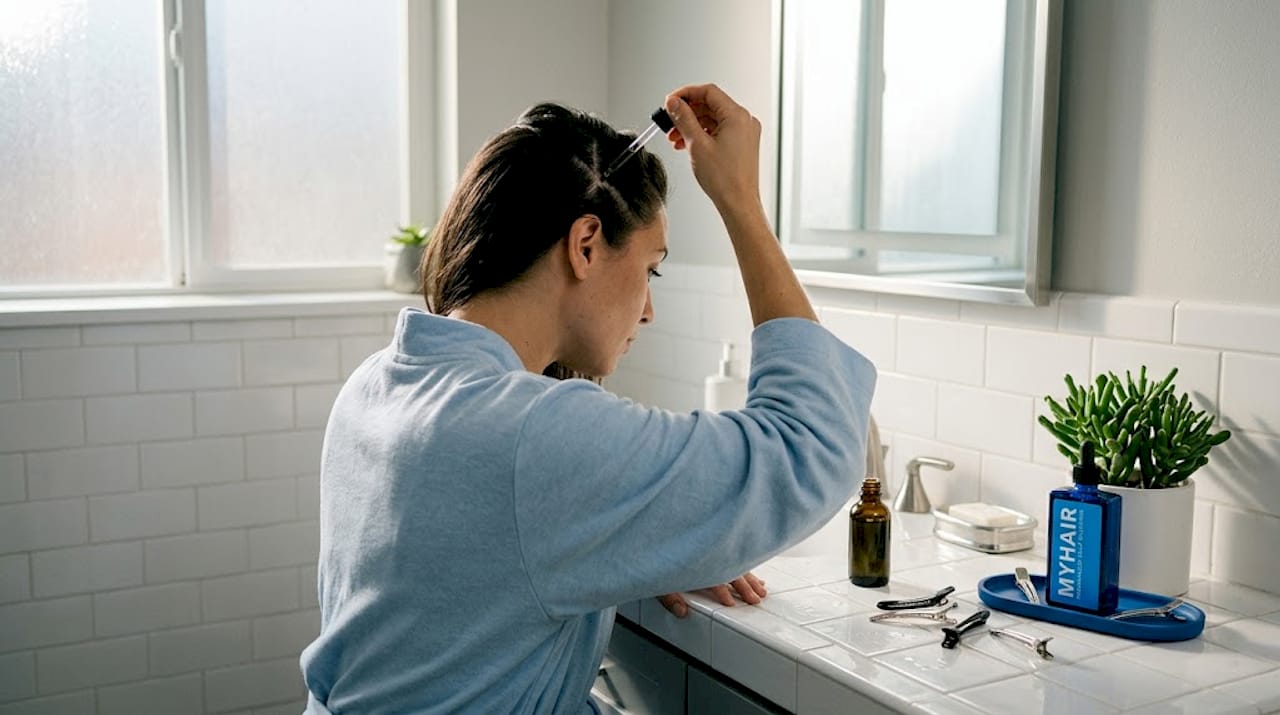
Rosemary is one of the most studied essential oils for hair growth. A frequently cited study comparing rosemary oil to minoxidil (a common topical hair loss treatment) found comparable improvements in hair count after six months of use. It works primarily by improving circulation to the scalp, encouraging follicles to shift from the resting phase back into active growth. It must always be diluted in a carrier oil before scalp application.
4. Coconut oil
Coconut oil's claim to fame is its low molecular weight and straight chain structure, which allows it to penetrate the hair shaft more deeply than most other oils. This means it's exceptional at reducing protein loss from hair, which directly cuts down breakage. It's been a staple in South Asian hair care for generations, and the science backs up that tradition. It's best suited for medium to coarse hair types because it can feel heavy on fine strands.
5. Argan oil
Sourced from the kernels of the Moroccan argan tree, this oil is packed with vitamin E, oleic acid, and linoleic acid. It's lighter than castor or coconut oil and excels at adding shine, reducing oxidative damage from heat styling, and improving overall hair condition. For people who want to support growth while also managing existing damage, argan is a strong choice. You can find more options outlined in natural oils for hair growth and detailed buying guidance in top hair growth oil recommendations.
"The best hair oil is the one that matches your biology, not the one with the loudest marketing claims."
For additional context on how professional care can complement your oil routine, hair health tips from aesthetic specialists offer helpful clinical perspective.
Pro Tip: Layer your oils strategically. Apply a penetrating oil like coconut before washing and a sealing oil like argan after washing to get both deep nourishment and surface protection in one routine.
Side-by-side comparison: Oil benefits and best use cases
After reviewing each oil in detail, a comparison table can help you zero in on the best choice for your specific needs and situation.
| Oil | Main benefit | Best for | Research rating | Notes |
|---|---|---|---|---|
| Pumpkin seed | Supports fuller density | Pattern hair loss (AGA) | Strong clinical evidence | Can be taken orally or applied topically |
| Castor oil | Scalp health, edge growth | Dry scalps, sparse edges | Moderate traditional support | Must dilute; very thick texture |
| Rosemary oil | Circulation and regrowth | Thinning from stress or aging | Solid comparative studies | Always use with carrier oil |
| Coconut oil | Breakage prevention | Medium to coarse hair | Well-researched penetration | May feel heavy on fine hair |
| Argan oil | Antioxidant protection | Damaged or color-treated hair | Good for condition, moderate for growth | Lightweight and versatile |
As research confirms, pumpkin seed oil's effect on hair density in AGA stands out among natural options with measurable clinical outcomes. If you want to explore more 2025 and 2026 tested options, check out a curated list of good hair growth oils with updated reviews.
How to match an oil to your situation:
- Identify your primary concern. Is your issue thinning, breakage, slow growth, or scalp irritation? Each problem points to a different oil solution.
- Factor in your scalp type. Oily scalps need lighter, non-comedogenic oils. Dry scalps need richer options that also lock in moisture.
- Consider your lifestyle. If you wash your hair twice a week, an overnight treatment like castor oil works well. If you prefer a quick daily application, argan or rosemary in a lightweight carrier fits better.
- Start with one oil. Testing one oil at a time for at least four to six weeks lets you clearly attribute any changes to that specific product.
- Track changes consistently. Take photos in the same lighting, same angle, every two to four weeks. Measuring matters because growth is gradual and easy to miss without documentation.
- Adjust based on results. If an oil isn't working after eight weeks of consistent use, reassess your scalp type diagnosis or consider layering with a complementary oil.
How to use hair growth oils for best results
Knowing which oil to choose is half the battle. The other half is applying it correctly and consistently enough to actually see a difference. A lot of people stall here not because they chose the wrong product, but because their application method undercuts its effectiveness.
Frequency depends on your hair type
- Fine hair: One to two times per week to avoid buildup and flatness. Apply primarily to the scalp rather than lengths.
- Medium hair: Two to three times per week. Can cover scalp and mid-lengths without weighing hair down.
- Coarse or thick hair: Three to four times per week, or even daily scalp drops. These hair types absorb and need more moisture overall.
Common mistakes that kill your results
- Applying too much: More oil does not equal faster growth. Excess product sits on the surface and can clog follicles or attract dirt.
- Skipping the scalp massage: The massage itself increases blood circulation independently of the oil. Combining both creates a synergistic effect.
- Not leaving it on long enough: A quick five-minute application and rinse won't allow absorption. Aim for at least 30 minutes, or overnight for deeper treatments.
- Irregular use: Sporadic applications won't move the needle. Consistency over weeks and months is what produces visible change.
Morning vs. evening routines
A morning routine works well with lightweight oils like argan. Apply a few drops to the scalp or ends as a finisher after styling. An evening routine suits heavier oils like castor or coconut. Apply before bed, cover with a silk or satin cap to protect your pillow and boost absorption through gentle heat from your body.
For guidance tailored to natural hair textures and detailed application steps, using hair oil effectively covers the specifics in depth.
Professional scalp treatments can also amplify at-home oil routines significantly. If you're serious about results, professional hair treatments from clinical specialists can complement your oil protocol.
Pro Tip: Warm your oil slightly before application. Place the bottle in a bowl of hot water for two to three minutes. Warm oil absorbs faster and makes scalp massage more effective. Follow with a five-minute circular scalp massage to drive the oil toward follicle level.
Why individualized approaches to hair oil routines matter
Here's something the typical "top 5 oils" article won't tell you: the list itself is almost never the hard part. The hard part is figuring out which oil matches your specific biology, your current hair health stage, your scalp microbiome, and your consistency level. We've seen people use every oil on this list without results, and others see noticeable change from just one applied correctly for six months straight.
No single oil is a magic bullet. The oils that work best are the ones integrated into a routine that accounts for your scalp type, seasonal changes (humidity and temperature affect how oils behave on your scalp), diet, stress levels, and whether an underlying condition like hypothyroidism or iron deficiency is the actual root cause.
The smart approach is evidence-guided and adaptive. Start with one oil based on your clearest concern. Track outcomes honestly. Adjust. If you plateau, dig deeper rather than just switching products randomly.
For those committed to achieving thicker hair naturally, the real differentiator is not which oil is on the shelf but whether you're measuring what's actually changing over time and making informed adjustments.
Take your hair growth journey further with personalized analysis
For those ready to move beyond trial-and-error, tailor-made advice is one click away.
Choosing the right oil is just the starting point. To truly optimize your hair growth outcomes, you need to understand what's happening at the follicle level, track changes over time with precision, and get recommendations built around your unique hair profile.

MyHair.ai offers exactly that. The platform uses AI hair analysis to scan and assess your hair health, identifying patterns of loss, density changes, and scalp conditions that would otherwise take months of guesswork to figure out. Through the hair growth app, you can monitor your progress, receive personalized product insights, and stay accountable to your routine. Ready to see where you stand? Get your hair score and turn your oil routine into a fully optimized, data-backed strategy.
Frequently asked questions
Is pumpkin seed oil effective for thinning hair?
Yes, pumpkin seed oil has been shown to improve hair density in clinical studies, particularly for people experiencing androgenetic alopecia.
How long does it take to see results with hair oils?
Visible improvements typically require consistent use for at least 3 to 6 months, since the hair growth cycle itself moves slowly regardless of what you apply.
Can I mix different oils together for hair growth?
Yes, blending oils like rosemary into a carrier such as coconut or jojoba can enhance benefits, but always patch-test any new combination to rule out sensitivity before applying to your scalp.
Which oil works best for a sensitive scalp?
Argan oil is one of the gentlest options available, thanks to its lightweight texture and anti-inflammatory fatty acid profile, making it a strong starting point for reactive or easily irritated scalps.
Do hair growth oils help with male or female pattern baldness?
Some oils have real supporting evidence here. Pumpkin seed oil, in particular, has shown measurable results for pattern hair loss in clinical settings, though it works best as part of a broader, consistent care strategy.