TL;DR:
- Most men quit beard growth prematurely, often at six weeks, due to perceived patchiness. Facial hair development is a slow, irregular process taking six to twelve months, with patches normal in early stages. Consistent care, targeted treatments like minoxidil, and personalized routines enhance growth and overcome stubborn patches.
Most men quit on their beards too soon. They hit week six, see gaps and thin spots, and assume genetics dealt them a losing hand. But the truth is that facial hair operates on its own slow timeline, and judging your progress at the six-week mark is like leaving the oven at the halfway point and wondering why the bread isn't done. The growth timeline for a full beard runs from six to twelve months, with the patchy, uneven phase lasting anywhere from one to three months. This guide covers the real stages, the treatments that actually work, the daily habits that matter, and how to personalize your approach so you stop guessing and start growing.
Table of Contents
- Understanding facial hair growth: Timeline and expectations
- Evidence-backed treatments for facial hair growth
- Daily routines and grooming strategies to maximize growth
- Personalized solutions for stubborn or patchy beards
- Our take: What most beard guides miss about growth success
- Ready to level up your facial hair journey?
- Frequently asked questions
Key Takeaways
| Point | Details |
|---|---|
| Beard growth is gradual | Patchiness and slow progress are normal early on; allow at least 3-4 months before judging results. |
| Topical minoxidil works | Clinical trials show 60-80% response rates for minoxidil use; oral forms are not recommended. |
| Routine matters most | Daily grooming, skin care, and consistent tracking significantly impact beard fullness and growth speed. |
| Personalization is key | Tailoring products and routines to your individual needs yields the best outcomes for patchy or stubborn beards. |
Understanding facial hair growth: Timeline and expectations
Before you stress about patches, it helps to understand exactly what your follicles are doing under the surface. Facial hair does not grow at a uniform rate across your face, and different zones, the mustache, chin, cheeks, and neck, reach their full density at different times. That staggered pattern is completely normal, not a sign of a problem.
Here is how a typical beard journey breaks down:
| Stage | Timeframe | What to expect |
|---|---|---|
| Stubble phase | Weeks 1 to 4 | Itchy skin, rough texture, uneven coverage |
| Patchy phase | Months 1 to 3 | Visible gaps, inconsistent density |
| Filling phase | Months 3 to 6 | Patches begin to close, density improves |
| Full beard | Months 6 to 12+ | Solid coverage, manageable length |
According to established beard growth stages, facial hair grows at roughly 0.5 inches per month, and you need a minimum of 90 to 120 days before you can make any fair judgment about your beard's true potential. That means three full months of leaving it alone and trusting the process.
Why does patchiness happen in the first place? Several factors drive it:
- Follicle maturity: Not every follicle on your face activates at the same rate. Some follicles are finer and take longer to produce visible, pigmented hair.
- Blood circulation: Cheek areas tend to have lower blood flow compared to the chin and jaw, which often means slower visible growth in those zones.
- DHT sensitivity: Dihydrotestosterone (DHT) is the androgen primarily responsible for facial hair growth. Follicles with higher DHT receptor sensitivity grow faster and thicker.
- Age: Men in their early twenties often see significant improvements in beard density into their late twenties and even early thirties, as androgen sensitivity increases with age.
Understanding the causes of patchy beard growth goes deeper than just waiting it out. Nutritional deficiencies, stress, and even poor sleep can stall your timeline. But the biggest mistake most men make is evaluating their beard at the two-month mark, seeing gaps, and either shaving it off or assuming nothing will change. Statistically, months three through six represent the most dramatic improvement period for the majority of bearded men.
"Allow at least 90 to 120 days before drawing conclusions about your beard's growth potential. What looks patchy at week eight often looks significantly fuller by month five."
If you are in the itchy stubble phase right now, resist the urge to shave. The itch is temporary, caused by sharp hair tips brushing against dry skin. A simple moisturizer or beard balm applied twice daily eliminates most of the discomfort. Push through it, because the filling phase is just on the other side.
Evidence-backed treatments for facial hair growth
Once you understand the timeline, the next logical question is: can you actually speed things up or improve the density of what grows in? The answer is yes, but only with treatments that have real science behind them.
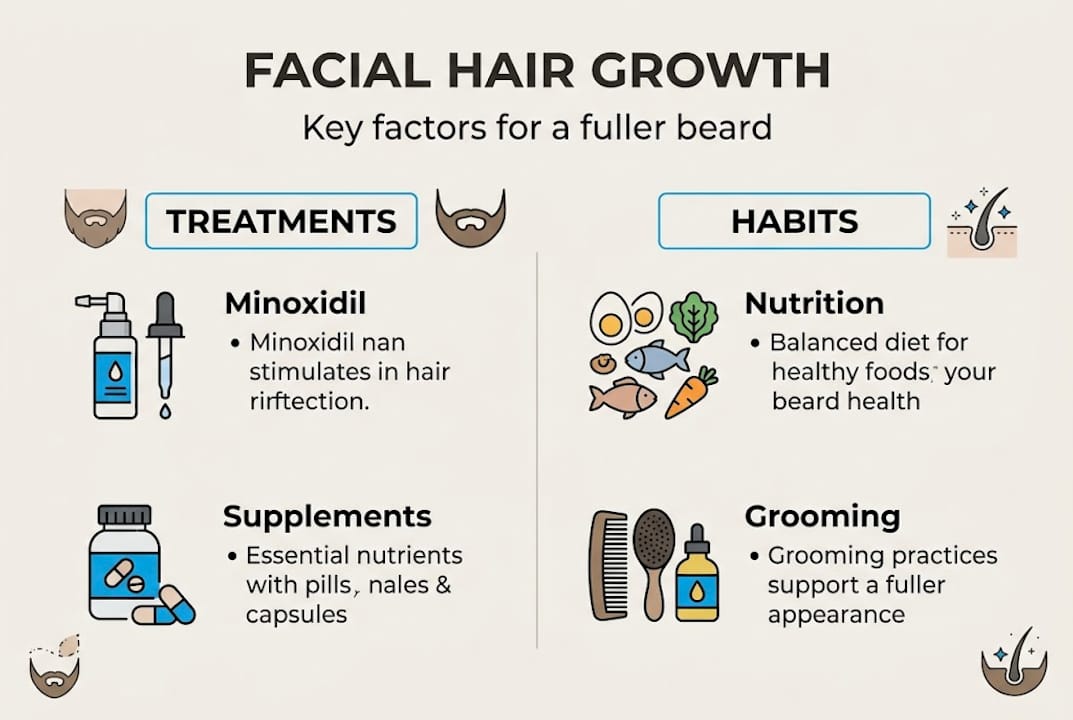
The most researched option for facial hair growth is topical minoxidil. Originally developed for scalp hair loss, minoxidil works by prolonging the anagen (active growth) phase of hair follicles and increasing blood flow to the follicle base. A clinical trial using 5% topical minoxidil found that it increases beard density by 11 hairs per square centimeter and increases hair diameter by 5 micrometers, after just twelve weeks of use in a randomized controlled trial with 69 participants. Response rates across men in broader reviews land between 60 and 80%, which makes it the most reliable topical option available.
Here is how topical and oral treatments compare:
| Treatment | Evidence level | Key benefit | Risk level |
|---|---|---|---|
| 5% topical minoxidil | Strong (RCT data) | Density and diameter increase | Low when applied correctly |
| 3% topical minoxidil | Moderate | Milder effect, good for sensitive skin | Very low |
| Oral minoxidil | Limited for beard | Systemic absorption | High (hypertrichosis risk) |
| Beard growth serums | Weak to none | Varies widely by ingredient | Low to moderate |
| Biotin supplements | Moderate (for deficiency) | Supports keratin production | Very low |
Statistic: Clinical data shows that topical minoxidil at 5% produces measurable beard density improvements in 60 to 80% of men, with results visible as early as eight to twelve weeks of consistent use.
For men exploring cosmetic facial hair treatments, topical minoxidil is typically applied twice daily (morning and before bed) to clean, dry skin. You apply it directly to the sparse areas, allow it to absorb for at least four hours before washing, and commit to daily use for a minimum of three to six months to see meaningful change.
One critical point: do not attempt to accelerate results by switching to oral minoxidil. It is absorbed systemically and can cause unwanted hair growth across the entire body, a condition called hypertrichosis, in addition to blood pressure effects. The topical route gives you targeted results with significantly lower risk.
Pro Tip: Before starting any topical treatment, do a patch test on the inside of your wrist for 24 hours. Redness, swelling, or itching means your skin needs a lower concentration or a different vehicle (gel versus liquid).
If you want to support treatment with internal nutrition, a hair growth supplement comparison can help you identify whether deficiencies in zinc, biotin, vitamin D, or iron are quietly working against your beard goals. Supplements alone will not generate new follicles, but correcting deficiencies removes a real barrier to growth.
Daily routines and grooming strategies to maximize growth
Treatments work best when your daily environment supports them. Think of your routine as the foundation that everything else is built on. Without consistent skin and beard care habits, even the best treatment delivers diminished results.
Here is a daily routine built specifically for men growing out their facial hair:
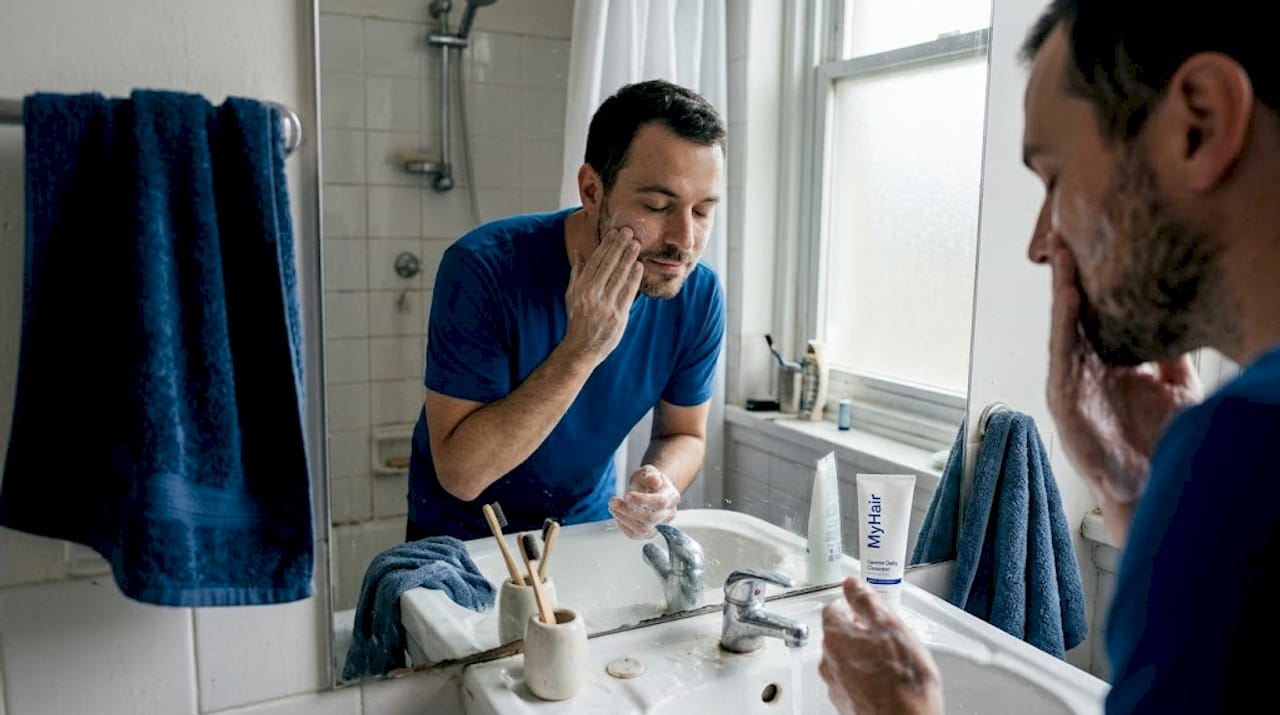
- Cleanse your face twice daily using a gentle, sulfate-free face wash. Excess oil, dead skin cells, and product residue can clog follicles and slow hair emergence.
- Moisturize every morning with a lightweight, non-comedogenic moisturizer. Healthy, hydrated skin is the most effective growing medium for facial hair.
- Apply beard oil in the evening after washing your face, focusing on areas with slower growth. A targeted hair oil routine conditions both the skin underneath and the hair shaft itself.
- Exfoliate twice per week using a gentle scrub or konjac sponge. Exfoliation removes dead skin buildup and stimulates blood circulation at the follicle level.
- Brush or comb your beard daily using a boar bristle brush or a wide-tooth comb. This distributes natural oils evenly and trains hair to grow in a more uniform direction over time.
Pro Tip: A personalized beard care routine tailored to your specific growth pattern and skin type will always outperform a generic routine. What works for thick, fast-growing hair is very different from what works for fine, sparse facial hair.
Managing the itchy phase (weeks one through four) deserves its own attention. According to facial hair growth research, the stubble phase is when most men abandon their growth journey, not because of slow results, but because of skin discomfort. Three things eliminate the itch effectively:
- Apply a thin layer of unscented beard balm morning and night
- Avoid scratching, which creates micro-tears in the skin and can disrupt follicles
- Use a hydrating mist with aloe vera or panthenol during the day to calm irritation
Nutrition is part of your daily routine too. Protein is the building block of keratin, the structural protein in hair. Men consistently eating under their protein needs (under 0.8g per kilogram of body weight per day) often see slower, finer hair growth. Zinc, found in pumpkin seeds, beef, and lentils, plays a key enzymatic role in hair follicle cycling. Iron deficiency is surprisingly common in active men and causes telogen effluvium, a type of shedding that hits facial hair just as hard as scalp hair.
A hair care routine for growth that combines topical care, nutrition, and consistent grooming habits compounds over time. Each individual step is modest. Together they create conditions where your follicles produce the densest, most consistent growth your genetics allow.
Personalized solutions for stubborn or patchy beards
You have waited four months, followed the routine, tried a topical treatment, and the patches are still there. What now? This is where most generic beard guides run out of useful advice. Stubborn patchiness after the three to six month mark is a signal to look deeper, not to give up.
Start by identifying whether your patches are in consistent locations or scattered randomly. Random, shifting patches are often a sign of an inflammatory condition like alopecia barbae, a localized version of alopecia areata that specifically targets the beard area. Consistent cheek patches that have not changed since month one are far more likely to be genetic.
Here is a targeted approach for persistent patchiness:
- Track your progress with photos: Take a front-facing, well-lit photo every two weeks from the same angle. Progress in facial hair is subtle and easy to miss day-to-day. Visual comparison over eight to twelve weeks reveals what your mirror cannot.
- Consider microneedling: Derma rolling at 0.5mm depth over patchy areas, done once per week, stimulates collagen production and increases the absorption rate of topical minoxidil by up to 80% according to dermatology research. Always use a clean roller and apply minoxidil after the session, not before.
- Evaluate your patchy beard solutions: Low-level light therapy (LLLT) devices have emerging evidence for stimulating follicle activity in treatment-resistant cases.
- Review your supplement stack: Research on supplement options for beard growth shows that saw palmetto, ashwagandha, and vitamin D3 can support androgen balance and follicle health in men with borderline deficiencies.
The topical minoxidil evidence is strongest for off-label 3 to 5% concentrations, with anecdotal reports in men showing up to 74% success rates when extrapolated from available clinical data. Oral minoxidil carries the risk of hypertrichosis and is not appropriate for beard-specific use.
"For stubborn patches persisting beyond six months, a combination approach using topical minoxidil, consistent skin care, and professional dermatological assessment produces the best outcomes."
If you have passed the six-month mark with little change and ruled out nutritional causes, a dermatologist visit is warranted. They can assess for alopecia barbae, hormonal imbalances, or prescribe compounded minoxidil formulations at higher concentrations. A specialist can also order a hormone panel to check testosterone, DHT, and thyroid function, all of which directly affect facial hair density.
Our take: What most beard guides miss about growth success
Here is the uncomfortable truth that most beard growth content skips entirely: the men who get the best results are not the ones who find the strongest product. They are the ones who track the longest. Consistency and documentation beat any single treatment every time.
Most guides focus heavily on what to apply and when, and far too little on how to measure whether it is working. Without tracking, you either quit too early because progress feels invisible, or you keep switching products chasing marginal gains. Both are growth-killers. A structured success hair routine built around measurable checkpoints keeps you grounded and honest about what is actually changing.
The other thing guides miss is how deeply individual the whole process is. Two men can follow the identical routine and get noticeably different results, not because one is doing it wrong, but because their genetics, skin type, androgen sensitivity, and baseline nutrition are different. Personalization is not a premium feature. It is the baseline requirement for real progress. Stop comparing your month three to someone else's month nine.
Ready to level up your facial hair journey?
Getting personalized means going beyond general advice and understanding your own hair health data, and that is exactly where MyHair.ai fits in.
MyHair.ai uses AI-powered technology to analyze your hair and skin health through a simple scan, giving you data about your specific growth patterns, follicle density, and areas of concern. Instead of guessing whether your routine is working, you get a personalized hair score that tracks real change over time. From there, you receive tailored product and treatment recommendations built around your individual profile. Start with the AI-powered hair analysis or walk through the hair analysis onboarding to map out your personalized beard growth plan today.
Frequently asked questions
How long does it take to grow a full beard?
Most people need at least six to twelve months to reach full beard growth, with noticeable filling typically beginning after three to six months of consistent growth.
Does minoxidil really help facial hair grow?
Yes, topical minoxidil at 3 to 5% concentration has solid clinical support, with trials showing it increases beard density by 11 hairs/cm² and produces a 60 to 80% response rate in men.
What is the minimum time I should wait before judging beard growth?
You should wait a minimum of 90 to 120 days before drawing any conclusions about your beard's potential, since early patchiness is a normal part of the growth cycle.
Is oral minoxidil safe for beard growth?
Oral minoxidil is not recommended for beard growth, as it carries a significant risk of hypertrichosis and systemic effects; topical application targets growth locally with much lower risk.
What daily habits help beard growth?
Consistent skin cleansing, daily moisturizing, adequate dietary protein and zinc, regular exfoliation, and proper beard grooming all create the physical and nutritional conditions that support healthy, visible facial hair growth.