TL;DR:
- Advances in regenerative science and AI diagnostics now enable biological hair follicle restoration.
- Combination therapies targeting multiple pathways improve hair growth more effectively than single treatments.
- Personalized approaches based on accurate diagnosis maximize the chances of successful hair regeneration.
Hair loss used to feel like a verdict with no appeal. For decades, the options were limited, the results inconsistent, and the science frustratingly slow. That has changed. A wave of regenerative science, AI-powered diagnostics, and novel pharmacological breakthroughs now means that losing hair is no longer the same as losing the battle. Whether you're dealing with early thinning or significant shedding, today's therapies work at the biological level to stimulate, restore, and in some cases rebuild follicles that were once considered gone for good.
Table of Contents
- What is hair regeneration therapy?
- The science driving hair follicle regeneration
- Key types of hair regeneration therapies available today
- Breakthrough innovations and combination therapies
- Why effective hair regeneration therapy is rarely one-size-fits-all
- Take the next step toward personalized hair regeneration
- Frequently asked questions
Key Takeaways
| Point | Details |
|---|---|
| Multiple therapies work | Hair regeneration uses diverse therapies, from stem cells to advanced pharmacologics, to target hair loss more effectively. |
| Personalization is key | Tailoring therapies to your unique pattern, biology, and needs dramatically improves hair regrowth results. |
| Combination yields better outcomes | Combining treatments like PRP and topical agents often achieves faster, fuller hair restoration than single methods alone. |
| Evidence is advancing | Recent large studies and lab advances offer increasing proof—and hope—that meaningful hair regrowth is now achievable for many. |
What is hair regeneration therapy?
Hair regeneration therapy is a broad term covering any treatment designed to restore hair growth by working at or below the surface of the scalp, targeting the biology of the follicle itself. This is different from cosmetic cover-ups or simple scalp massages. True regenerative therapy engages the cellular machinery that creates hair, either by activating dormant follicles, supplying growth signals they're no longer producing on their own, or rebuilding follicular structures from scratch.
Traditional approaches focused on slowing the loss rather than reversing it. Minoxidil, for example, widens blood vessels to improve scalp blood flow. Finasteride blocks the hormone conversion that damages follicles over time. These are effective tools, and millions of people use them, but they are not regenerative in the strict biological sense. They don't rebuild follicle tissue or restore its original function.
The newer generation of therapies takes a fundamentally different approach. These include:
- Cell-based methods: Using stem cells or secreted factors from stem cells to reactivate follicle growth cycles
- Platelet-rich plasma (PRP) and platelet-rich fibrin (PRF): Concentrating the body's own growth factors and injecting them directly into the scalp
- Topical anti-androgens: Blocking hormone damage at the receptor level, directly at the follicle
- Device-driven therapies: Using photobiomodulation (PBM), essentially targeted light energy, to stimulate cellular activity
- Bioprinting and organ germ assembling: Engineering follicles in the lab to be transplanted or induced to grow
"Hair follicle regeneration strategies include organ germ assembling, stem cell induction, and bioprinting, but face significant challenges replicating embryonic signals and finding reliable cell sources."
The biological process underlying all of these is the hair follicle cycle, specifically the transition from the resting phase (telogen) back into active growth (anagen). Stem cells located in the follicle bulge region are responsible for triggering this shift. Growth factors including hepatocyte growth factor (HGF) and insulin-like growth factor 1 (IGF-1) act as chemical signals that tell these stem cells when to activate.
The type and stage of hair loss matter enormously here. Someone in early-stage androgenetic alopecia (AGA), the most common form of genetic patterned hair loss, has more viable follicles to work with than someone who has had significant loss for a decade. Understanding where you are on that spectrum is the critical first step, which is why treating androgenetic alopecia effectively starts with an accurate diagnosis. For those exploring clinical options, hair clinic regeneration services offer professionally administered treatments tailored to individual presentations.
With the groundwork laid, let's explore the key mechanisms that actually drive hair follicle regeneration.
The science driving hair follicle regeneration
Understanding what actually happens inside a regenerating follicle helps you evaluate treatments with a clearer eye. The central players are hair follicle stem cells (HFSCs), which sit in a protected niche in the bulge region of each follicle. These cells are held in a careful balance between dormancy and activation by competing molecular signals.
The most important of these are the WNT and BMP (bone morphogenetic protein) pathways. WNT signals push stem cells toward activation and growth. BMP signals suppress them and keep the follicle in its resting phase. For healthy hair cycling, you need WNT to win that signal competition regularly. In people experiencing hair loss, particularly hormone-driven AGA, that balance is disrupted, often chronically tipping toward the BMP-dominant, resting state.
One of the most fascinating recent discoveries involves mechanical stimulation. Skin stretching, a physical force applied to the scalp, has been shown to activate HFSCs through the WNT/BMP pathway interaction.
| Mechanism | Pathway activated | Key factors released |
|---|---|---|
| Skin stretching (mechano-activation) | WNT/BMP balance shift | HGF, IGF-1 |
| PRP injection | Growth factor signaling | PDGF, VEGF, EGF |
| MSC secretome application | Paracrine signaling | Exosomes, cytokines |
| Photobiomodulation (PBM) | Mitochondrial activation | ATP, reactive oxygen species |
Research confirms that mechano-activation of hair follicle stem cells via skin stretching activates WNT/BMP pathways while recruiting macrophages that release HGF and IGF-1, and this mechanism is complemented effectively by both MSC secretome and PRP therapies.
Macrophages play a surprisingly important role here. These immune cells, typically associated with fighting infection, also act as coordinators of tissue regeneration. When recruited to the follicle site, they release the chemical signals that tell stem cells to shift into growth mode. This is why systemic inflammation can impair hair regeneration even when localized treatments are applied correctly.
The mesenchymal stem cell (MSC) secretome refers to the collection of proteins, growth factors, and exosomes released by stem cells. Rather than injecting live stem cells (which carries complexity and regulatory challenges), researchers found that the secreted factors alone can replicate much of the regenerative benefit. This is a more stable, scalable approach that's now forming the basis of several commercial formulations.
For a detailed look at where the research is heading, the latest hair research page tracks current clinical developments. Having understood the biological principles, let's compare the major therapy options available today.
Key types of hair regeneration therapies available today
Not all therapies are created equal, and matching the right treatment to your biology, the stage of your hair loss, and your lifestyle is essential. Here's how the main options stack up.
PRP and PRF involve drawing your blood, spinning it in a centrifuge to concentrate the platelets, then injecting that concentrate into your scalp. The platelets carry growth factors that signal follicles to reactivate. Clinical data shows PRF achieves 62 to 97% density improvement in just 3 to 6 months, making it one of the faster-acting options available. PRF (fibrin) is the newer variant, releasing growth factors more slowly over time for sustained effect.
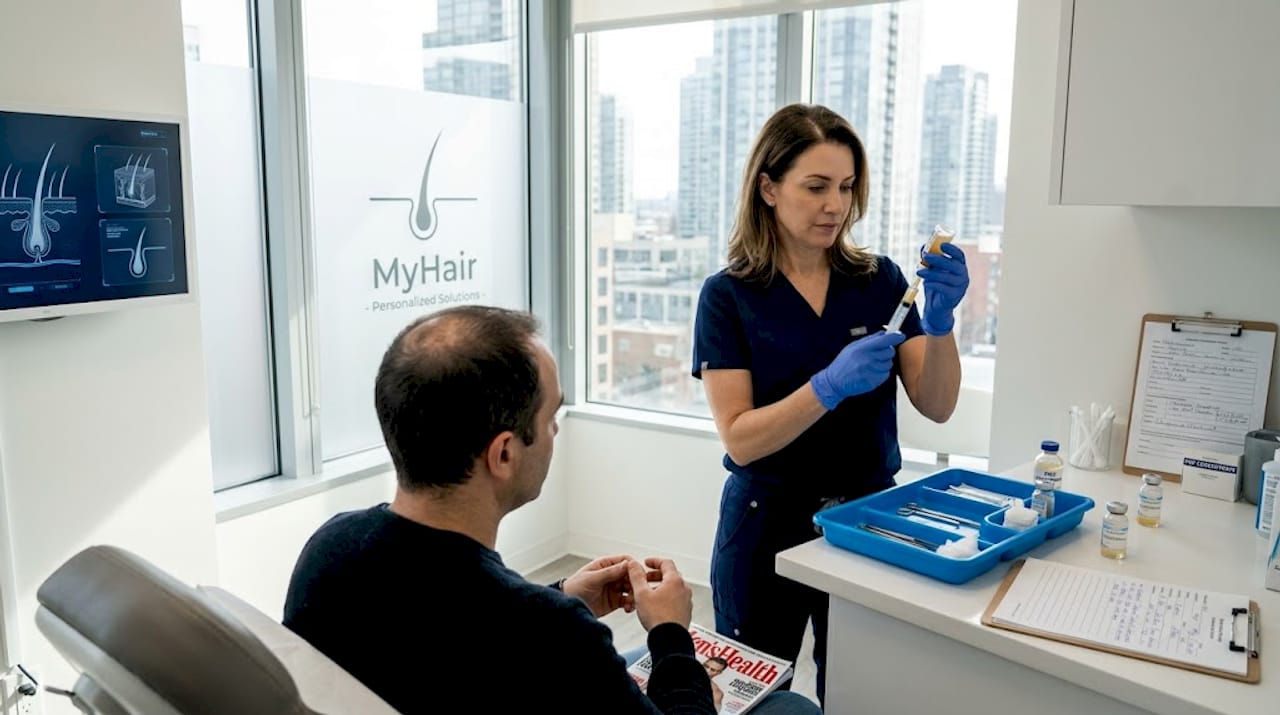
Stem cell secretome and conditioned media (CM) have shown consistent results. Conditioned media, which contains the growth factors produced by stem cells in culture, improves hair density by 7 to 16% and thickness by 11 to 32%. Stromal vascular fraction (SVF), which contains a mix of regenerative cells from fat tissue, shows density improvements of 41 to 48%. Extracellular vesicles (EVs, including exosomes) show 28 to 45% improvements.
Pharmacological options like clascoterone are rapidly changing the landscape. Unlike finasteride, which blocks hormone conversion systemically, clascoterone works directly at the androgen receptor on the follicle, with no systemic absorption.
Device-driven therapies including low-level laser therapy (photobiomodulation) have cleared FDA review for hair loss. Average growth seen across trials lands around 25%, which is modest but meaningful for many patients, particularly when combined with other treatments.
| Therapy | Average improvement | Timeline | FDA status |
|---|---|---|---|
| PRP/PRF | 62 to 97% density | 3 to 6 months | Not cleared |
| CM/Secretome | 7 to 32% density/thickness | Variable | Investigational |
| SVF | 41 to 48% density | 3 to 6 months | Investigational |
| Clascoterone | 2.39x vs. baseline | 12 months | Approved topical |
| PBM (laser) | ~25% average | 3 to 6 months | FDA-cleared |
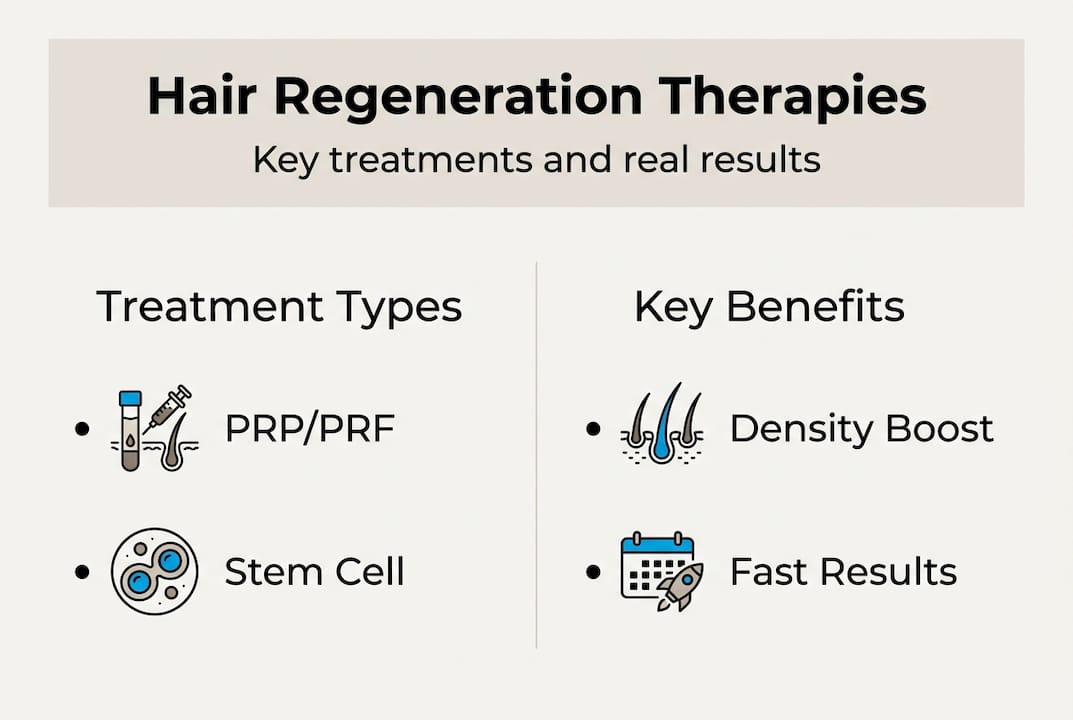
Pro Tip: If you're earlier in your hair loss journey, PRP or secretome therapies combined with a proven pharmacological agent tend to give better results than any single option alone.
For a closer comparison of treatment approaches, top regrowth treatments covers both foundational and emerging options in depth. If you're specifically dealing with patterned hair loss, androgenetic alopecia options offers targeted guidance. For those curious about what reversal actually looks like at different stages, reverse balding solutions breaks it down clearly. Clinics administering these treatments, such as those offering alopecia regenerative treatments, typically use a combination approach tailored to individual assessment.
With these therapies in mind, it's important to explore what makes certain combinations or new innovations especially powerful, or challenging.
Breakthrough innovations and combination therapies
The single most important shift in hair regeneration over the past two years is the move from monotherapy to combination protocols. Researchers and clinicians are finding consistently that layering treatments, each targeting a different biological step in the regrowth process, produces results that no single therapy matches alone.
Here's why combination therapy works:
- Target multiple pathways simultaneously. PRP supplies the growth factors. A topical anti-androgen removes the hormonal suppression. PBM energizes cellular machinery. Together, they remove obstacles and provide fuel at the same time.
- Extend the duration of effect. Some therapies act fast but don't last. Others are slower to start but build cumulative benefit. Stacking them covers both timeframes.
- Reduce side effect burden. Lower doses of each agent can achieve equivalent efficacy when combined, reducing the risk of adverse effects from any single treatment.
- Address different causes within the same patient. Many people have both hormonal and inflammatory components to their hair loss. Single treatments often miss one or the other.
Clascoterone deserves special attention. This topical androgen receptor blocker works by preventing DHT from binding to receptors inside the follicle, stopping the damage at its source. Clascoterone 5% topical solution delivered 2.39 times greater hair regrowth at one year compared to patients who switched to placebo after six months, in Phase 3 trials with 1,465 men, and critically, without systemic hormone interference.
The combination of adipose-derived stem cell (ADSC) secretome with minoxidil is another significant finding. ADSC secretome combined with minoxidil outperforms either treatment alone in AGA patients, with significant improvements visible in hair density and shaft thickness at just 12 weeks. This matters because it validates the principle that regenerative biology plus established pharmacology creates a synergy neither achieves independently.
Pro Tip: Don't dismiss established treatments like minoxidil when pursuing regenerative options. The evidence increasingly shows that combining them with newer therapies outperforms abandoning them entirely.
Bioprinting and organ germ assembling represent the farthest horizon. Labs have successfully assembled hair follicle organ germs from dissociated cells, structures that mimic embryonic follicle development and can generate hair when implanted. The challenge is replicating the precise molecular environment of embryonic development at scale, and finding reliable, ethically acceptable cell sources. Regulatory pathways for bioprinted tissue are also still being established in most countries.
For those navigating the decision of which combinations to pursue, personalized AI hair therapy explains how algorithmic analysis can simplify that process. Clinics that offer multi-modal approaches, like those providing clinic hair treatments, represent the practical application of these research findings in a supervised setting.
Why effective hair regeneration therapy is rarely one-size-fits-all
Here's an uncomfortable truth: most people chasing hair regrowth are choosing treatments based on what's trending, what their friend used, or what an ad convinced them to try. That's understandable. The landscape is confusing, the marketing is aggressive, and credible guidance is hard to find without a specialist.
But the research is unambiguous. Pharmacological options like clascoterone have robust, standardized trial data behind them. Regenerative therapies show enormous promise, but trial design inconsistencies and evidence quality issues mean results vary widely across studies. FDA-cleared laser devices average around 25% growth, which is meaningful but not dramatic. None of this is reason for pessimism. It's reason for precision.
The people who get the best outcomes are typically those who start with an honest, accurate assessment of their hair loss stage and pattern, match therapies to their specific biology, set realistic timelines, and stay consistent. Chasing the newest thing constantly is one of the most common ways people undermine their own progress.
Waiting for perfect clinical data before taking action is equally misguided. The evidence base is strong enough now to make informed, intelligent choices. The AI hair growth therapy step guide walks through how to build that kind of structured, personalized approach rather than guessing.
The honest message is this: the science is genuinely exciting, the tools are better than they've ever been, but results still depend on getting the strategy right for you specifically.
Take the next step toward personalized hair regeneration
Understanding the science is the first step. Applying it to your specific situation is where real change begins.
MyHair.ai uses advanced AI algorithms to analyze your scalp and hair health, giving you a personalized assessment that cuts through the noise. Instead of guessing which therapy fits your pattern and biology, you get data-driven clarity. Start with your AI Hair Score analysis to get a detailed picture of where you stand, then move through the start onboarding process to receive tailored product and therapy recommendations built around your results. You can also explore hair research to stay current on the evidence informing those recommendations.
Frequently asked questions
How soon can I expect results from hair regeneration therapy?
Significant improvements at 12 weeks are possible with optimized combinations like ADSC secretome plus minoxidil, but most therapies require 3 to 6 months of consistent use before meaningful change is visible.
Are hair regeneration therapies safe?
Most therapies are well tolerated, with mild side effects reported across clinical studies. Consulting a specialist ensures the right match for your situation and minimizes rare risks.
What is the most effective therapy for androgenetic alopecia?
PRP, stem cell secretome, and newer pharmacologics like clascoterone all show strong clinical outcomes. Clascoterone 5% showed 2.39x hair regrowth at one year, with best results typically achieved through personalized combinations rather than any single treatment.
Why combine therapies and does it really work better?
Yes. Studies confirm that ADSC secretome combined with minoxidil outperforms either treatment alone, and the principle holds across multiple therapy pairings. Targeting different biological pathways simultaneously produces synergistic results.