TL;DR:
- African hair treatment focuses on moisture retention, breakage prevention, and scalp health using traditional and modern techniques. Weekly chebe and shea butter masks help strengthen hair by reducing breakage and retaining length. Proper product layering based on hair porosity enhances moisture absorption and overall hair health.
African hair treatment is defined as a targeted care system built on three pillars: moisture retention, breakage prevention, and scalp health. Coily and kinky hair textures, classified as Type 4 on the Andre Walker hair typing system, lose moisture faster than straight hair because the curl geometry prevents natural oils from traveling down the shaft. That structural reality makes external hydration non-negotiable. The most effective natural hair care routines combine traditional remedies like chebe powder and raw shea butter with modern layering techniques such as the LOC and LCO methods. Consistency across cleansing, moisturizing, and protecting determines long-term results far more than any single product.
What is the best weekly African hair treatment to reduce breakage?
The most effective weekly treatment for breakage reduction combines chebe powder and raw shea butter in a mask applied to mid-lengths and ends. Chebe powder works by coating and protecting the hair shaft, not by stimulating follicle growth. That distinction matters because people who expect length gains from chebe alone will be disappointed. The real benefit is length retention through reduced snapping and splitting.
The Basara women of Chad have used chebe-based treatments for generations, focusing entirely on shaft protection rather than follicle stimulation. That historical practice is now supported by modern understanding of hair structure.
How to mix and apply the mask
Follow this sequence each week for best results:
- Mix the mask. Combine 1 tablespoon chebe powder, 3 tablespoons raw shea butter, and 2 tablespoons of a carrier oil such as coconut or castor oil. This 1:3:2 mixing ratio produces a spreadable consistency that coats strands without clumping.
- Section dry or damp hair. Work in four to six sections so every strand gets coverage.
- Apply from mid-length to ends only. Never apply the mask directly to the scalp. The shea butter concentration can clog follicles and cause buildup at the root.
- Leave on for one hour. Cover with a plastic cap to trap heat and improve penetration.
- Rinse and follow with a sulfate-free shampoo. This removes residue without stripping the moisture you just added.
Visible strengthening appears within 3–4 weeks of consistent weekly use. That timeline assumes you apply the mask every seven days without skipping.
Pro Tip: Warm the shea butter mixture between your palms for 30 seconds before applying. Warmth softens the butter and improves spreadability on dense coils.
How to layer products correctly to maximize moisture in African hair
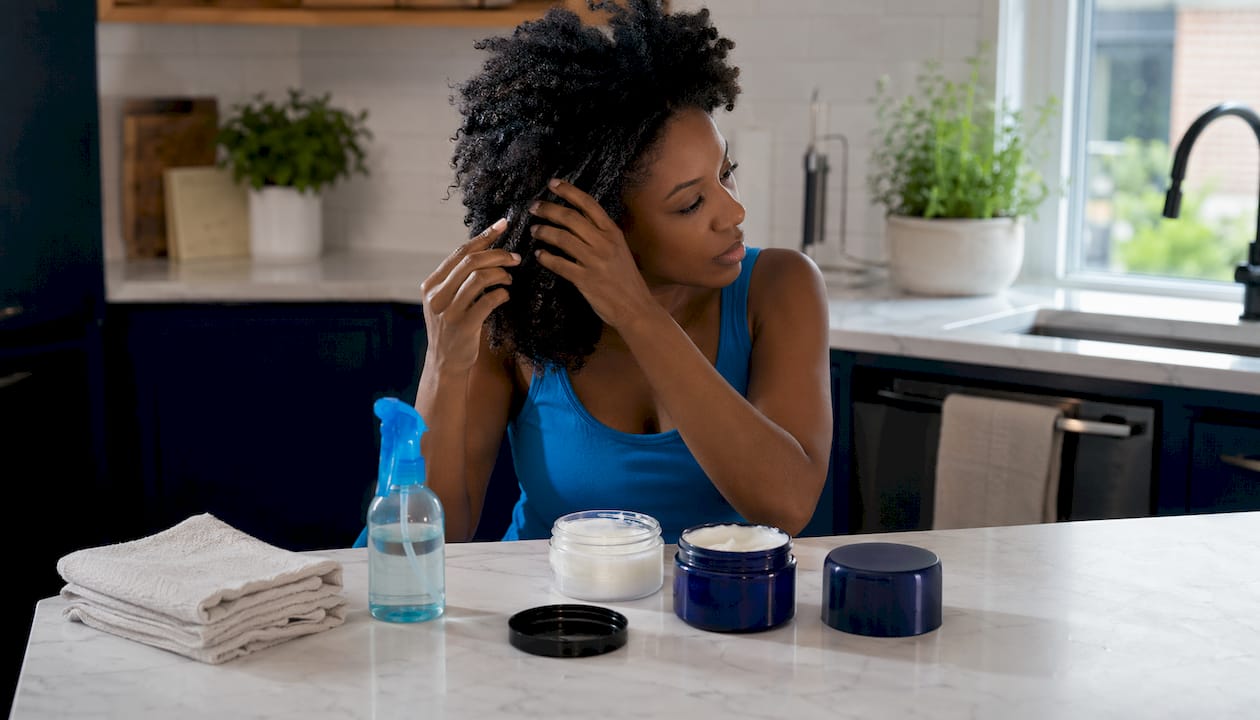
Product layering is the single most misunderstood step in moisturizing African hair. Applying oil before water-based products blocks moisture from entering the hair shaft entirely. Oil should always be the final seal layer, not the first.
LOC vs. LCO: which method fits your hair?
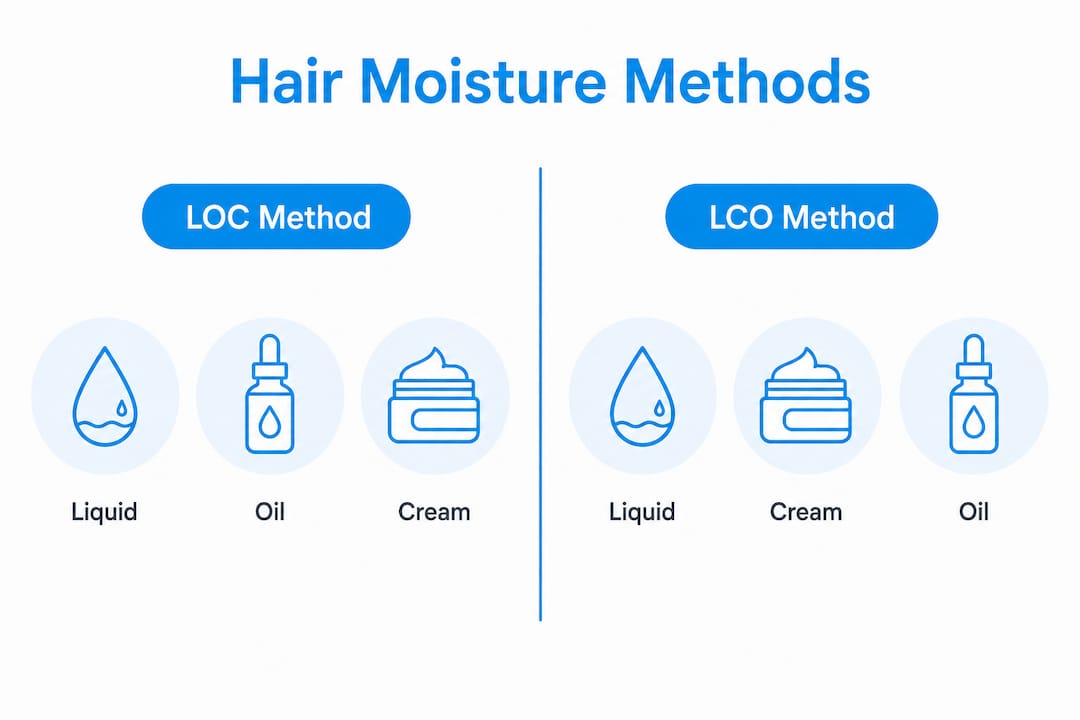
The right layering sequence depends on your hair's porosity. Porosity describes how easily your hair absorbs and holds moisture.
| Porosity type | Method | Sequence | Why it works |
|---|---|---|---|
| Low porosity | LOC | Liquid, Oil, Cream | Oil after liquid helps open the cuticle slightly for cream absorption |
| High porosity | LCO | Liquid, Cream, Oil | Cream fills gaps in the cuticle; oil seals over the top |
Low porosity hair has tightly closed cuticles. Water sits on the surface rather than absorbing quickly. The LOC method places a light oil after the liquid to soften the cuticle before the cream locks everything in. High porosity hair has raised or damaged cuticles that absorb moisture fast but lose it just as quickly. The LCO method uses cream to fill those gaps first, then oil to seal the cuticle shut.
Wait 1–2 minutes between each layer to allow absorption before adding the next product. Rushing this step causes product piling on the surface rather than penetrating the strand.
Common layering mistakes to avoid
The most frequent error is using too much product in each layer. A pea-sized amount of oil and a dime-sized amount of cream per section is enough for most Type 4 textures. Excess product causes buildup that clogs the scalp and dulls the hair over time.
Pro Tip: Test your porosity at home by dropping a clean strand into a glass of water. If it sinks within two minutes, your hair is high porosity. If it floats, it is low porosity.
How to use shea butter and natural oils for scalp and hair health
Raw shea butter is the most versatile ingredient in African hair repair solutions. It moisturizes, reduces frizz, provides light heat protection, and helps manage split ends before they travel up the shaft. No single synthetic product matches that range of benefits at a comparable cost.
For scalp health, apply a small amount of raw shea butter or a lightweight oil such as argan oil directly to the scalp. Use circular massage motions for two to three minutes per section. This stimulates blood circulation, which delivers nutrients to the follicle and keeps the scalp hydrated. You can read more about using argan oil for scalp health to understand how different oils compare for circulation and moisture.
Key benefits of raw shea butter for textured hair
- Moisture barrier. Shea butter forms a protective layer over the cuticle that slows water loss between wash days.
- Anti-frizz. The fatty acid content smooths the cuticle surface, reducing the friction that causes frizz in humid conditions.
- Split end management. Regular application to ends temporarily seals splits and prevents further fraying until the next trim.
- Heat protection. A thin layer applied before heat styling provides a buffer against temperatures up to moderate heat levels.
- Deep conditioning. Used as a deep conditioner for 30 minutes under a heat cap, shea butter restores softness to severely dry or brittle strands.
Wash frequency should match your scalp's oil production. Wash weekly if your scalp becomes oily or itchy within seven days. Wash every two weeks if your scalp stays balanced and your hair is fragile or heavily processed. For a deeper look at shea butter's role in hair health, Myhair's guide on shea butter for hair growth covers application techniques and expected outcomes in detail.
Pro Tip: Buy raw, unrefined shea butter rather than processed versions. Unrefined shea retains its full fatty acid and vitamin content, which is what delivers the moisturizing and protective benefits.
What practical routine should you follow for consistent African hair care?
A consistent, simple routine built on cleansing, moisturizing, and protecting outperforms any complicated multi-product regimen. The goal is to repeat the same core steps reliably, not to use the most products. Here is a weekly structure that works for most Type 4 textures.
- Wash day (once per week or every two weeks). Use a sulfate-free shampoo to cleanse without stripping natural oils. Follow immediately with a deep conditioner. Apply your chebe and shea butter mask on this day if you use one weekly.
- Post-wash styling. While hair is still damp, apply your LOC or LCO layers based on your porosity. Style into a protective style such as twists, braids, or a bun to reduce daily manipulation.
- Midweek moisture refresh (day 3 or 4). Lightly mist hair with water or a water-based leave-in spray. Follow with a small amount of cream or oil to reseal. This step prevents the dryness and brittleness that leads to breakage between wash days.
- Scalp check. Run your fingertips along your scalp to feel for dryness, flaking, or tenderness. Address any issues before they worsen. Apply a light oil if the scalp feels tight.
- Protective styling maintenance. Keep edges moisturized and avoid styles that pull tightly at the hairline. Tension at the temples and nape causes traction alopecia over time.
- Weekly chebe mask (if using). Apply on wash day before shampooing. This sequence lets the mask work for a full hour, then the shampoo removes residue cleanly.
Personalize this structure based on your texture and porosity results. Fine coils may need lighter products and less oil. Dense, thick coils often need heavier creams and more frequent moisture refreshes. Myhair's resource on stopping hair breakage provides texture-specific adjustments that fit directly into this routine.
Key Takeaways
Effective African hair treatment requires consistent moisture layering, breakage prevention through shaft protection, and a simple routine tailored to your hair's porosity and texture.
| Point | Details |
|---|---|
| Weekly mask for breakage | Mix chebe powder, shea butter, and oil at a 1:3:2 ratio; apply to ends for 3–4 weeks to see results. |
| Layer products by porosity | Use LOC for low porosity hair and LCO for high porosity; always apply oil last as a sealant. |
| Shea butter for scalp health | Massage raw shea butter in circular motions to boost circulation; deep condition for 30 minutes. |
| Cleanse without stripping | Use sulfate-free shampoo weekly or biweekly; refresh moisture midweek to prevent breakage. |
| Simplicity beats complexity | A consistent three-step routine of cleansing, moisturizing, and protecting outperforms complicated regimens. |
What I have learned after years of watching people treat their hair wrong
The biggest myth in African hair care is that chebe powder and growth oils make your hair grow faster. They do not. What they do is prevent the breakage that stops you from retaining the length your hair already grows. That shift in thinking changes everything about how you build a routine.
I have seen people spend hundreds of dollars on growth serums while skipping deep conditioning entirely. Their hair grows at the same rate it always did. It just breaks off at the same pace. The net result is zero visible length gain, and the frustration that follows usually leads to even more product purchases.
The second thing I have learned is that most people are using the wrong layering sequence and do not know it. Applying oil first feels logical because oil is associated with moisture. But oil is a sealant, not a moisturizer. Putting it on before your water-based leave-in is like painting over a dirty wall. Nothing underneath gets where it needs to go.
The routines that actually work are boring. Wash. Condition. Layer correctly. Protect. Refresh midweek. Repeat. The people with the healthiest, longest natural hair are almost always doing the least, but doing it without fail every single week. Trends come and go. Consistent fundamentals are what build real hair health over time.
— Cyriac
How Myhair helps you personalize your hair care routine
Generic routines only get you so far. What works for fine 4A coils may actively damage dense 4C strands, and no article can account for every variable in your specific hair health picture.
Myhair uses AI-powered analysis to assess your hair's texture, porosity, and damage level from a scan. The platform then generates a personalized hair score and recommends specific products and routines matched to your actual hair condition, not a generalized hair type. You can track changes over time to see whether your current routine is working or needs adjustment. For people who want to move beyond trial and error, Myhair's hair analysis onboarding is the fastest way to get a clear, data-backed starting point for your care routine.
FAQ
What does African hair treatment actually mean?
African hair treatment refers to a structured care system focused on moisture retention, breakage prevention, and scalp health for coily and kinky hair textures. It combines traditional remedies like chebe powder and shea butter with modern techniques such as the LOC and LCO layering methods.
Does chebe powder make African hair grow faster?
Chebe powder does not accelerate hair growth from the follicle. It reduces breakage by coating and protecting the hair shaft, which allows you to retain more of the length your hair already grows naturally.
What is the LOC method and who should use it?
The LOC method applies products in the order of Liquid, Oil, and Cream. It works best for low porosity hair, where the oil layer helps prepare the cuticle for cream absorption and locks in moisture effectively.
How often should you wash African hair?
Wash African hair once a week if your scalp becomes oily or itchy quickly, or every two weeks if your scalp stays balanced and your hair is fragile. Always use a sulfate-free shampoo to avoid stripping natural oils.
Can you use raw shea butter directly on the scalp?
Yes. Apply a small amount of raw shea butter to the scalp using circular massage motions to improve circulation and hydration. Avoid applying the chebe and shea butter mask directly to the scalp, as the concentrated mixture can cause follicle buildup.