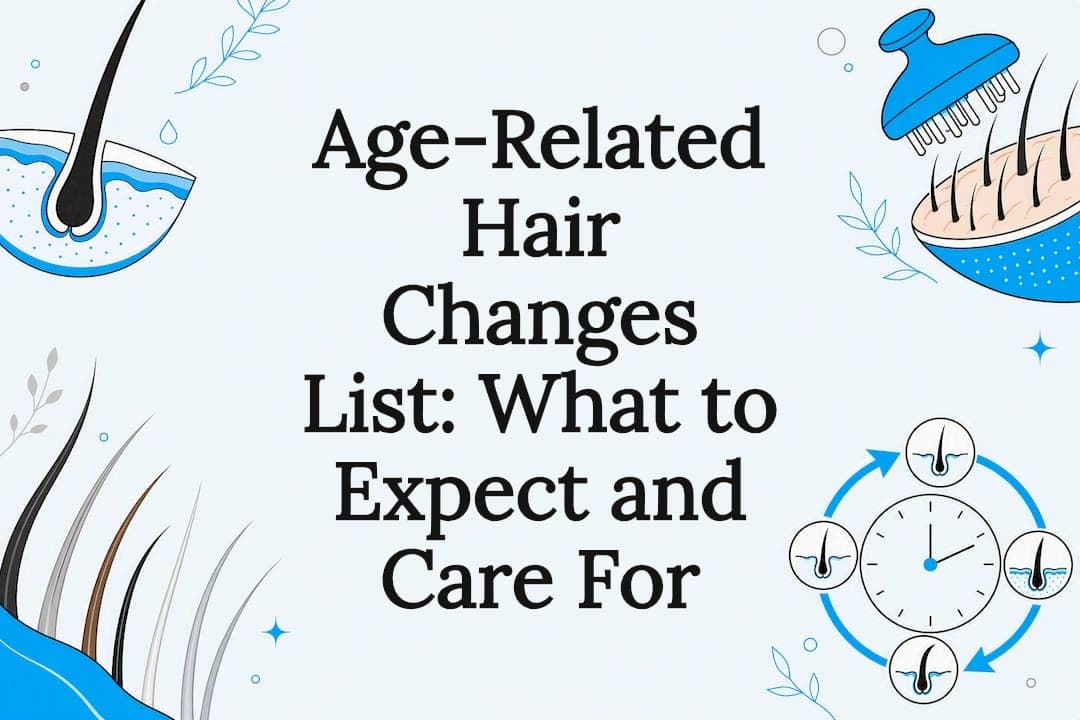
Hair changes with age in six predictable ways: it grays as melanin production drops, it thins as follicles miniaturize, the shaft gets more brittle and dry, growth slows down, the scalp produces less sebum, and body and facial hair redistribute. MedlinePlus notes that scalp graying often starts in your 30s, and a 2026 expert Delphi consensus confirms these shifts (pigment loss, follicle miniaturization, declining fiber quality) follow recognizable patterns, with minoxidil as the only treatment to earn consensus backing for senescent thinning.
- Graying: pigment-producing cells slow down, hair grows in gray or white.
- Thinning/miniaturization: follicles shrink, producing finer, shorter strands.
- Shaft and texture changes: hair gets drier, more brittle, sometimes curlier or coarser.
- Slower growth cycle: strands spend less time in active growth, shed more visibly.
- Scalp and sebum changes: oil production drops, scalp feels tighter or flakier.
- Distribution shifts: facial and body hair patterns change, sometimes in the opposite direction of scalp hair.
Key Takeaways
Age-related hair changes follow a predictable pattern rooted in melanocyte depletion, follicle miniaturization, and reduced sebum production, with minoxidil as the only consensus-backed treatment for thinning.
| Point | Details |
|---|---|
| Graying starts early | Melanin production declines beginning in the 30s for many people, per MedlinePlus. |
| Thinning has a timeline | Men often see rapid thickness decline by their 30s; women's peak thickness passes around 40. |
| Shaft fragility increases | Fewer cuticle layers and reduced diameter make older hair more prone to breakage. |
| Minoxidil is the evidence leader | It's the only therapy with expert consensus support for slowing senescent thinning. |
| Track changes with Myhair | Myhair's AI scan monitors density and shaft changes over time to complement clinical care. |
Table of Contents
- The Complete Age-Related Hair Changes List
- Why Does Hair Age? The Biology Behind the List
- When Do These Hair Changes Typically Start?
- What Treatments Actually Work for Aging Hair?
- How Should You Adjust Hair Care As You Age?
- When Should You See a Clinician About Hair Changes?
- A Reassuring Look at Aging Hair
- Track Your Hair's Changes With Personalized Analysis
- Sources
- FAQ
The Complete Age-Related Hair Changes List
Every one of these changes has a rough timeline and a biological reason behind it. Here's what shows up, when it tends to appear, and how doctors think about it.
Graying (canities)
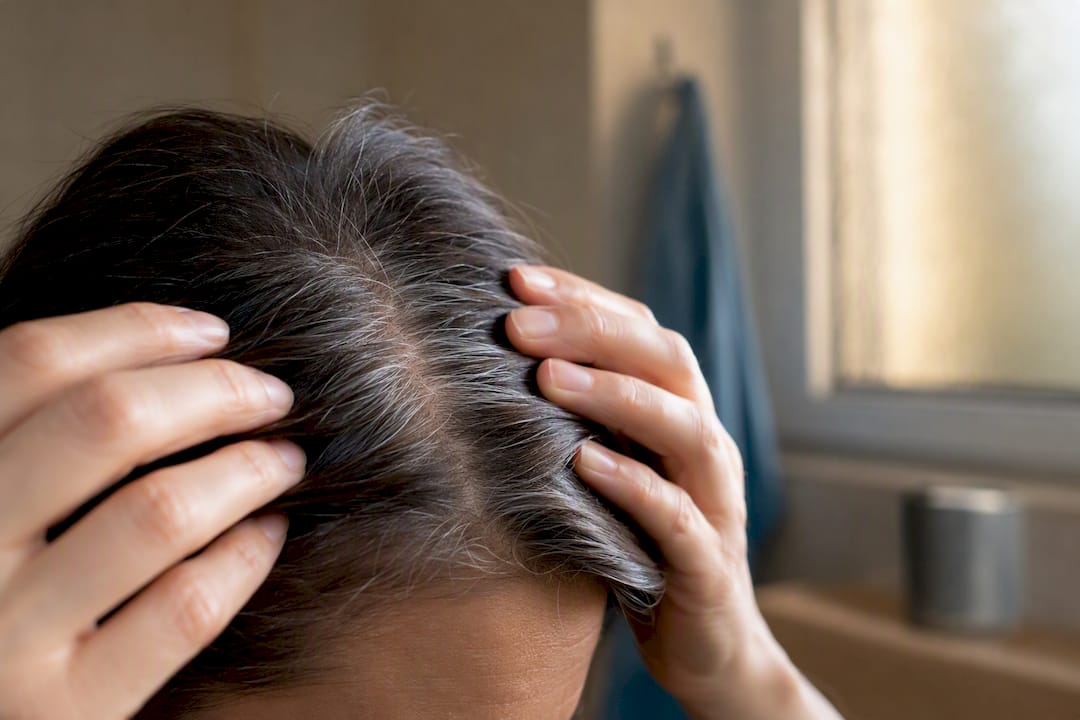
Graying happens because melanocyte stem cells in the hair follicle gradually stop producing pigment. MedlinePlus puts typical onset in the 30s for many people, though genetics shifts that window earlier or later by a decade or more. Once a follicle stops making melanin entirely, that strand grows in permanently gray or white. There's no clinically proven way to reverse this process once it starts.
Thinning and follicle miniaturization
This is the shrinking of hair follicles over successive growth cycles, producing progressively finer, shorter, less pigmented hairs. UCLA Health reports that people assigned female at birth often see their hair thickness peak in mid-adulthood, followed by gradual decline, while people assigned male at birth commonly experience a faster drop in thickness starting in early adulthood. The 2026 Delphi consensus distinguishes this senescent thinning from classic androgenetic alopecia (AGA), though the two frequently overlap and can be hard to tell apart without a scalp exam.
Shaft diameter and fragility
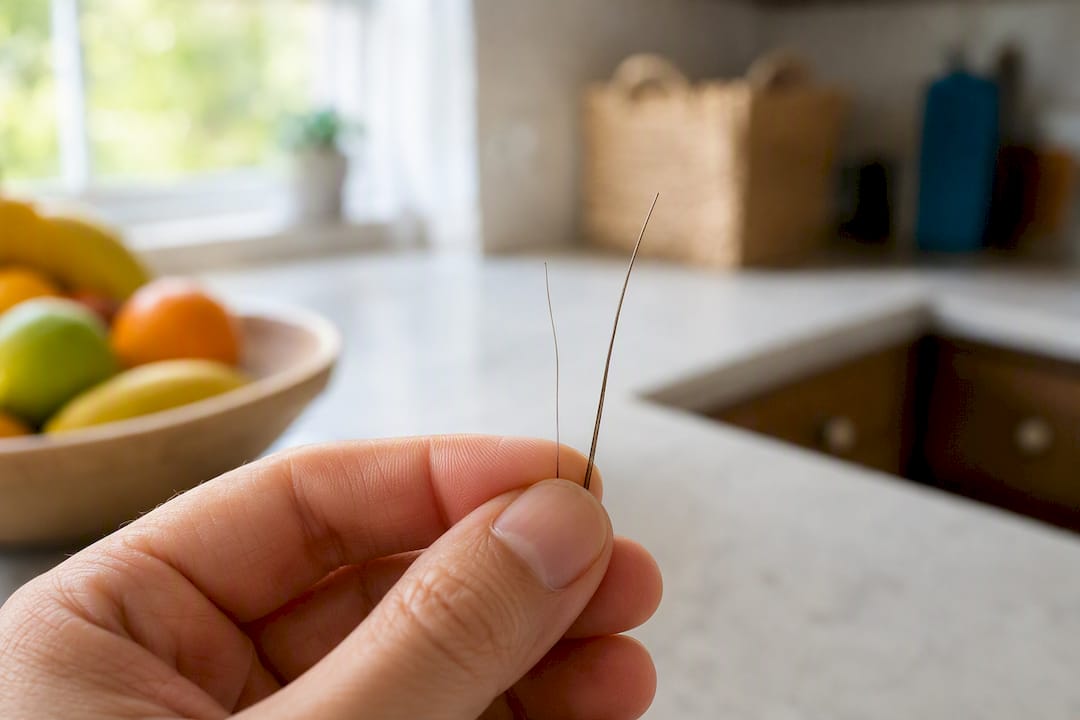
Aging hair fibers lose diameter, shed cuticle layers, and become mechanically weaker, according to a detailed structural review. Fewer cuticle layers mean less protection against friction and heat, so strands snap more easily during brushing or styling.
Texture and curl changes
Many people notice their hair texture shifting, sometimes toward coarseness, sometimes toward a looser or tighter curl pattern than they had in their 20s. Environmental weathering, including UV exposure and repeated heat styling, compounds these structural shifts and dulls shine over time.
Statistic Callout: Scalp graying commonly begins in adulthood, and rapid hair-thickness decline in people assigned male at birth often starts in early adulthood, according to UCLA Health.
Growth-rate and cycle shortening
The anagen (growth) phase shortens with age, so each hair spends less time actively growing before shedding. This produces both slower-feeling growth and a shorter maximum length ceiling.
Scalp and sebum changes
Sebaceous gland output declines with age, leaving the scalp drier and sometimes flakier, which affects shine and manageability more than growth itself.
Distribution changes
Facial and body hair often move in the opposite direction of scalp hair, with some people noticing thicker brow, ear, or nasal hair alongside scalp thinning, a pattern tied to shifting hormone ratios.
Why Does Hair Age? The Biology Behind the List
Every visible sign on this list traces back to a handful of cellular processes. Melanocyte depletion and oxidative stress reduce pigment output, which shows up as gray strands. Hair follicle stem cell exhaustion drives miniaturization, shrinking each follicle's output over successive cycles. Reduced sebum production and years of cuticle wear leave hair drier and duller, while a shortened anagen phase means slower, less voluminous growth overall.
- Hormonal shifts (estrogen and androgen changes) alter follicle sensitivity and hair distribution.
- Chronic low-grade inflammation and UV exposure accelerate follicle and shaft aging.
- Smoking and poor nutrition compound oxidative damage.
- Repeated heat styling and harsh grooming wear down the cuticle faster than biology alone would.
Research into hair aging pathways points to oxidative stress, DNA damage, and inflammation as the shared mechanisms behind graying, thinning, and shaft weakening, meaning these changes rarely happen in isolation.
When Do These Hair Changes Typically Start?
Most people see the first signs earlier than expected, and timing varies meaningfully by sex and genetics.
- 20s to 30s: earliest graying strands appear; some men notice early hairline changes.
- 30s to 40s: rapid thickness decline often begins for people assigned male at birth; graying becomes more visible.
- 40s to 50s: peak thickness passes for people assigned female at birth, sebum production drops noticeably.
- 60 and beyond: growth cycles shorten further, texture and density changes become pronounced.
Red flags that warrant evaluation rather than patience: sudden patchy bald spots, rapid diffuse shedding over weeks, or visible scalp redness and inflammation.
What Treatments Actually Work for Aging Hair?
The 2026 Delphi consensus is blunt about this: minoxidil is the only pharmacologic therapy with expert agreement behind it for senescent thinning. Used consistently, it can slow further miniaturization and produce modest regrowth in some people, though results vary and typically take three to six months to become visible.
What it can't do is reverse graying. No approved medical therapy restores melanocyte function once pigment loss begins. Supplements only help thinning when an actual nutritional deficiency exists (iron or vitamin D deficiency, for example); taking biotin or similar supplements without a diagnosed gap rarely moves the needle on structural, stem-cell-driven thinning.
- Minoxidil: consensus-backed for thinning, no effect on gray.
- Supplements: useful only if a deficiency is confirmed.
- Emerging therapies: promising in early research, not yet consensus-supported.
Pro Tip: Ask your dermatologist about a phototrichogram or standardized baseline photos before starting minoxidil. Comparing photos at the same angle and lighting every 8-12 weeks is how clinicians actually measure whether a treatment is working, rather than relying on memory.
How Should You Adjust Hair Care As You Age?
Small changes in daily care go further than any product marketing suggests. Switch to gentler sulfate-free cleansers and add a weekly moisturizing mask to counter reduced sebum. Lower your styling-tool heat settings and always apply heat protectant. Get trims every 8-10 weeks to cut off weathered ends before they split further up the shaft, and wear a hat or UV spray outdoors since sun exposure accelerates shaft damage.
- Brittle gray hair: prioritize protein-moisture balance and purple toning shampoo for brassiness.
- Thinning hair: choose lightweight, volumizing, scalp-friendly formulas.
- Slow growth: focus on scalp health and gentle massage to support circulation.
Pro Tip: Once hair starts grayng or thinning, many stylists suggest switching to silicone-free glosses rather than heavy serums. They add shine without weighing down finer, more fragile strands.
When Should You See a Clinician About Hair Changes?
See a dermatologist if you notice sudden or patchy hair loss, scalp redness or scaling, unexplained facial hair thickening alongside scalp thinning, or hair loss paired with fatigue or weight changes. A clinician will typically review your medication history, examine your scalp with trichoscopy, and order basic labs like thyroid or iron panels if something looks off. An AI-based hair analysis can help you track changes between visits, but it's a complement to clinical evaluation, not a substitute for it.
A Reassuring Look at Aging Hair
Watching your hair change can feel more personal than any other sign of aging, and that reaction is fair. But the 2026 Delphi consensus and resources like MedlinePlus confirm most of what you're seeing is normal biology, not something gone wrong. The honest answer is that some changes, like graying, aren't reversible with current medicine, while others, like thinning, respond to consistent, evidence-based care. Knowing the difference is what lets you focus your energy where it actually pays off.
Track Your Hair's Changes With Personalized Analysis
Reading a list of hair changes is useful. Knowing which ones are actually happening to your hair, and how fast, is more useful. Myhair's AI-powered scan analyzes your scalp and hair density from photos, giving you a personalized hair score and tracking shifts in thickness, shaft condition, and growth over time instead of leaving you guessing between mirror checks.
That kind of tracking matters most for changes like miniaturization and slow-onset thinning, which are gradual enough that you might not notice them until months have passed. Pair a scan with the everyday care habits covered above, and if your results point toward something that needs medical attention, a scalp exam is still the right next step. Start with a hair scan to see where your hair actually stands today.
Sources
- Aging changes in hair and nails — MedlinePlus
- A Comment on the Science of Hair Aging — PMC (Trüeb, 2018)
- Signaling pathways in hair aging — Frontiers in Cell and Developmental Biology
- A Multifaceted View on Ageing of the Hair and Scalp — MDPI
- Your guide to aging and hair — UCLA Health
FAQ
Can a 70-Year-Old Regrow Hair?
Yes, to a limited degree. Minoxidil can produce modest regrowth in some older adults with senescent thinning, though results vary and won't restore hair to its youthful density.
What Vitamin Deficiency Causes Thinning Hair?
Iron and vitamin D deficiencies are most commonly linked to thinning hair, but supplements only help when an actual deficiency is confirmed through bloodwork rather than assumed.
What Are Five Signs That Hair Is Aging?
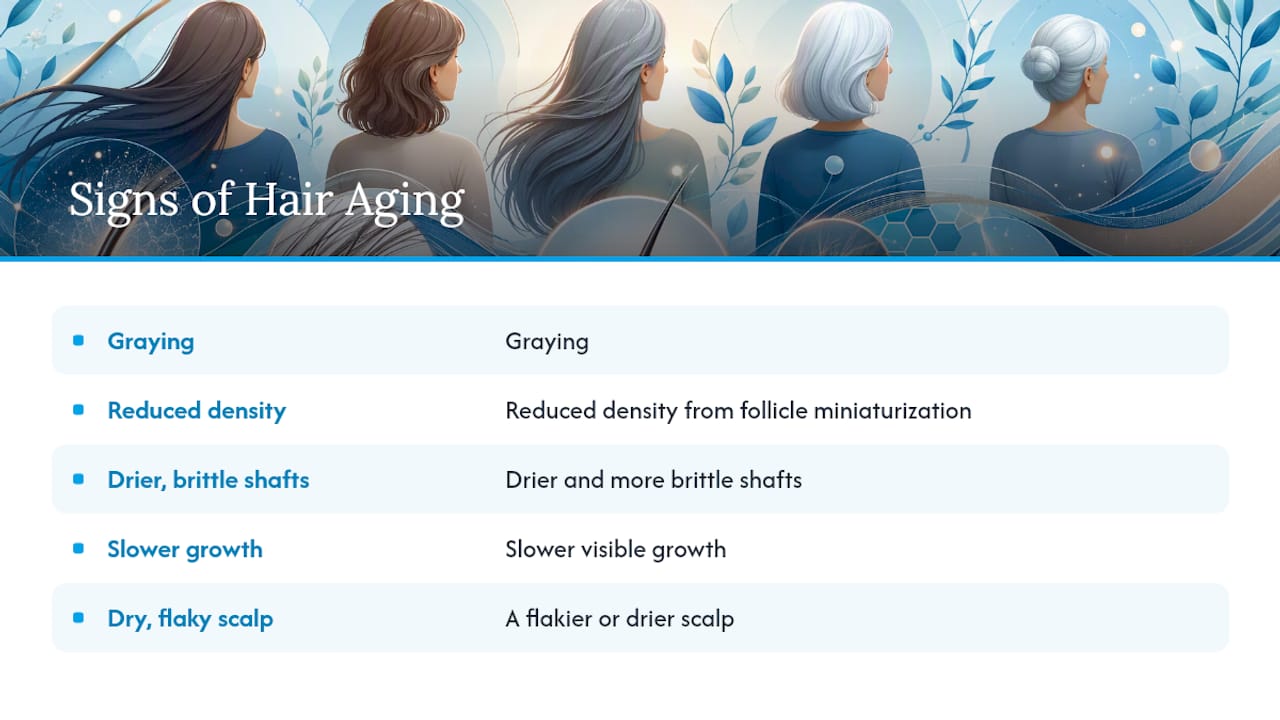
Graying, reduced density from follicle miniaturization, drier and more brittle shafts, slower visible growth, and a flakier or drier scalp are the five hallmark signs covered in this age-related hair changes list.
What Is Considered the "Big Three" for Hair Regrowth?
Minoxidil, finasteride, and low-level laser therapy are commonly grouped together as the most evidence-supported regrowth options, though the 2026 Delphi consensus gave minoxidil the strongest support specifically for senescent thinning.
Finasteride is FDA-indicated for men only. Women who are or may become pregnant must not handle crushed or broken finasteride tablets, due to the risk of harm to a male fetus. It can also cause sexual side effects (reduced libido, erectile dysfunction) in a minority of men, which usually resolve after stopping treatment. Discuss these risks with a physician before starting.
How Can I Track My Own Hair Changes Over Time?
Standardized photos taken under consistent lighting are the low-tech option; an AI-powered hair scan automates that comparison and flags density or shaft changes between visits.