TL;DR:
- AI technology is transforming personalized hair care through molecular peptide discovery, real-time scalp monitoring, and adaptive device treatments. These innovations lead to measurable improvements in hair strength, density, and safety, emphasizing the importance of quality data and proper usage. Combining AI diagnostics and treatments with professional consultation maximizes outcomes for healthier hair long-term.
Hair care used to mean choosing between a handful of shampoos and hoping for the best. Today, AI technology in hair health has fundamentally changed that equation. From molecular peptide discovery to real-time scalp monitoring, the gap between generic drugstore routines and truly personalized care has never been wider. If you're dealing with hair loss, scalp issues, or simply want to make smarter decisions about your hair, the AI tools available right now are more clinically validated and accessible than most people realize. Here's a breakdown of what's actually working.
Table of Contents
- Key takeaways
- 1. AI-powered peptide discovery for stronger hair
- 2. AI-integrated laser and light therapy devices
- 3. AI-driven real-time hair coloring and bleaching systems
- 4. AI virtual try-on tools for hairstyle selection
- 5. AI-developed hair serums with clinical backing
- 6. AI diagnostics for scalp health monitoring
- 7. Comparative overview of leading AI hair technologies
- My take on AI hair technology's real promise
- See your hair health clearly with Myhair
- FAQ
Key takeaways
| Point | Details |
|---|---|
| AI finds better peptides | Molecular modeling has identified compounds that increase hair tensile strength by 44% and cut breakage in half. |
| Laser plus AI outperforms standalone devices | AI-guided multi-modal devices combining laser, LED, and massage show up to 47% hair density improvement in a month. |
| Real-time adjustment prevents color damage | Machine learning algorithms recalculate treatment formulas mid-process, making bleaching and coloring measurably safer. |
| Virtual try-on saves costly mistakes | AI facial analysis previews hairstyle outcomes before a single cut, improving stylist communication and client satisfaction. |
| Personalization requires quality data | AI works best when you give it accurate, consistent inputs. Photo quality, scan frequency, and honest self-reporting all matter. |
1. AI-powered peptide discovery for stronger hair
The most consequential application of artificial intelligence in hair care may be one most consumers never hear about: molecular modeling for peptide development. This is science that happens long before a product reaches store shelves, yet it directly determines whether your strengthening serum actually does anything.
Amorepacific used AI and molecular modeling to screen 8,000 compounds to find Tripeptide-132, a peptide specifically optimized to reinforce hair keratin. The result was a compound that increased hair tensile strength by 44% and reduced breakage by 50%. That's not incremental improvement. That's a structural leap.
Why does this matter for your daily routine? Because most "strengthening" products are formulated based on tradition or marketing logic, not molecular precision. AI changes that by identifying which peptide structures actually bind to keratin at the protein level, rather than just coating the hair shaft temporarily.
Key benefits of AI-driven peptide development for hair health:
- Targets the root cause of breakage at the protein level rather than masking damage
- Dramatically shortens the research timeline from years to months
- Produces compounds with clinically measurable outcomes, not just claims
- Opens the door to personalized formulations based on your specific hair protein profile
Pro Tip: When shopping for strengthening treatments, look for products that list specific peptides by name (like Tripeptide-132 or similar compounds). Generic "keratin complex" labels often indicate bulk filler rather than precision chemistry.
2. AI-integrated laser and light therapy devices
The home laser device category has matured significantly. What's available now is a long way from the first-generation laser combs that required 30 minutes of daily effort for questionable results. Modern devices pair multiple therapeutic modalities with adaptive AI settings, and clinical outcomes are following.
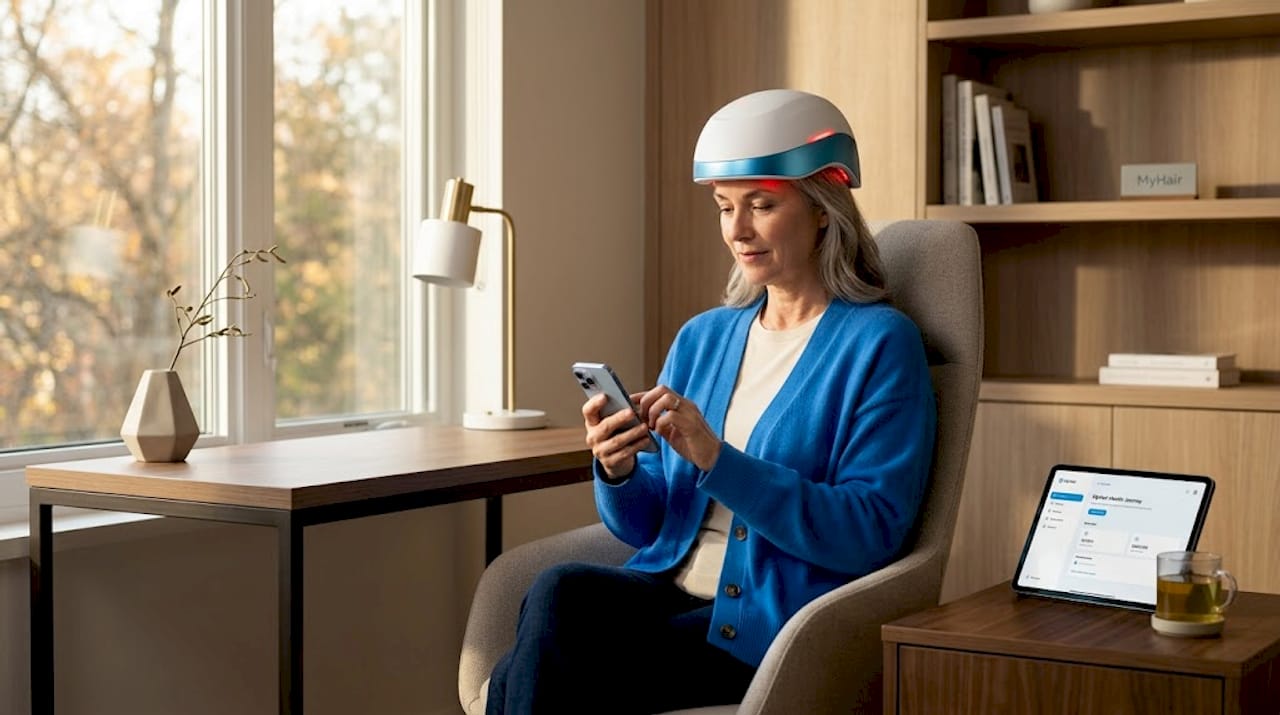
The FAQ 302 device exemplifies where the category has arrived. Using 20 medical-grade lasers and 20 red LED lights alongside T-Sonic scalp massage technology, it produced a 47% increase in hair density in just one month of consistent use. The same device reduced hair loss by 46% and improved hair thickness by 46% across clinical trial participants.
The AI component here matters in a specific way. Rather than delivering a fixed-intensity treatment to every user, adaptive devices use sensor feedback to modulate laser energy based on scalp response. Users with thinner or more reactive scalps get appropriately calibrated energy levels. Users with denser scalp tissue receive the output needed to penetrate to the follicle.
| Device feature | Clinical outcome | User benefit |
|---|---|---|
| 20 medical-grade lasers | 47% hair density increase in 30 days | Measurable regrowth for thinning areas |
| 20 red LED lights | 46% reduction in hair loss | Reduced shedding during washing and styling |
| T-Sonic scalp massage | 46% improvement in hair thickness | Better product absorption and circulation |
| AI-adaptive intensity settings | Consistent treatment precision | Safer experience across different scalp types |
Pro Tip: Consistency matters far more than intensity. A lower-power AI-calibrated session used daily will outperform a high-intensity session used twice a week. Set a recurring alarm and treat it like a supplement schedule.
3. AI-driven real-time hair coloring and bleaching systems
Hair coloring is one of the most chemically aggressive things you can do to your hair. The margin between a beautiful result and severe structural damage is narrow, and traditional timing charts don't account for individual variation in hair porosity, previous chemical history, or strand thickness.
AI systems for hair coloring now use real-time data to dynamically adjust the bleaching process as it progresses. Machine learning algorithms recompute treatment modalities based on in-progress hair data, which means the system is continuously recalibrating rather than following a preset protocol.
Here's what that looks like in practice:
- Sensors measure hair response at multiple checkpoints during the coloring process
- The algorithm recalculates timing and formula ratios based on observed data
- If the hair is processing faster than expected, the system flags or adjusts before damage occurs
- Final results are closer to target shade with less structural compromise
This feedback loop architecture is a departure from how even professional colorists have traditionally worked. The human expert sets the initial formula and monitors visually. The AI system monitors chemically and adjusts dynamically. Both have a role, and the combination produces results neither could achieve alone.
AI hair treatment systems require multiple measurement points and feedback loops to adjust interventions accurately, making hair color treatment far more reliable when technology is properly integrated.
4. AI virtual try-on tools for hairstyle selection
Committing to a major haircut or color change without knowing how it will look on your specific face is one of the most avoidable sources of regret in personal grooming. AI-powered virtual try-on tools have solved most of this problem, though the quality gap between platforms is real.
Tools like Longhair AI use facial analysis to map hairstyles onto user photos, accounting for face shape, forehead width, and hairline position to generate realistic previews. The benefit goes beyond personal decision-making. When you walk into a salon with an AI-generated preview of what you actually want, stylists spend less time interpreting vague descriptions and more time executing.
Tips to get the most out of AI virtual try-on tools:
- Upload a clear, front-facing photo with minimal hair obstruction for accurate mapping
- Use natural lighting rather than overhead or harsh directional light
- Try multiple hairstyle options across categories before narrowing your selection
- Screenshot your preferred result and bring it as a reference to your stylist
Pro Tip: Avoid uploading photos where your hair is wet, styled unusually, or tucked back. The AI reads your current hair volume and texture as baseline data. An inaccurate baseline produces an inaccurate preview.
5. AI-developed hair serums with clinical backing
Not every AI application in hair care operates at the device or treatment level. Some of the most accessible smart hair health solutions are products developed using AI-optimized formulations, designed to work passively in your existing routine.
Clinical evidence shows that AI-developed hair serums can reduce shedding by up to 90% and increase hair density appearance by 56% within three months. That data comes from a 120-day clinical study with 40 participants, which is a modest but meaningful sample size for a topical product.
What AI adds to serum development is systematic ingredient optimization. Rather than relying on formulation expertise alone, AI platforms can model how thousands of ingredient combinations interact with different scalp microbiome profiles, sebum levels, and hair shaft conditions. The output is a formula that's built for biological reality, not just shelf appeal.
For anyone exploring personalized hair loss treatment, combining a clinically developed serum with consistent monitoring tools creates a measurable feedback loop rather than a guessing game.
6. AI diagnostics for scalp health monitoring
Scalp health is where AI-driven hair analysis is arguably most underutilized by consumers, despite being the foundation of everything else. The scalp determines follicle health, sebum production, inflammation levels, and microbial balance. Treating hair without addressing the scalp is like painting a wall without fixing the crack underneath.
Advanced technology for scalp health now includes AI systems that analyze scan imagery to detect early signs of follicle miniaturization, inflammation, and dandruff patterns before they become visible to the naked eye. AI improves precision and personalization in hair health diagnostics far beyond what a visual clinic assessment can achieve in a 20-minute appointment.
The shift is from episodic care to continuous monitoring. Instead of visiting a dermatologist when symptoms become obvious, AI tools allow you to track scalp changes over time, correlate them with lifestyle variables like diet or stress, and adjust your routine before problems escalate. That's a fundamentally different model of care. Explore Myhair's clinical research to see how ongoing monitoring translates to measurable outcomes.
7. Comparative overview of leading AI hair technologies
| AI technology | Primary function | Key benefit | Best suited for |
|---|---|---|---|
| Molecular peptide modeling | Ingredient discovery | 44% stronger hair structure | People with breakage-prone hair |
| AI laser/LED devices | Follicle stimulation | Up to 47% density improvement | Diffuse thinning, early hair loss |
| Real-time coloring systems | Chemical treatment control | Precision bleaching, less damage | Regular color or bleach users |
| Virtual hairstyle try-on | Style visualization | Realistic previews before commitment | Anyone considering a style change |
| AI-developed serums | Daily scalp treatment | Up to 90% shedding reduction | Preventive and active hair loss care |
| AI scalp diagnostics | Health monitoring | Early issue detection, personalized plans | Anyone tracking long-term hair health |
The industry shift from generic to hyper-personalized hair care is accelerating, with companies like L'Oréal building 2026 strategies around AI that actively participates in consumer purchasing decisions rather than just informing them.
My take on AI hair technology's real promise
I've spent considerable time looking at what AI technology in hair health actually delivers versus what it promises on packaging. Here's where I land.
The personalization argument is real. AI genuinely does move hair care from generic advice to tailored treatment, and the clinical numbers on peptide development, device outcomes, and serum performance are not fabricated. Those results exist. What I'd caution is this: the results depend almost entirely on the quality of data going in.
An AI hair analysis tool fed blurry scans and inconsistent check-ins will produce guidance that's only marginally better than a generic quiz on a brand's website. The technology is only as good as your commitment to using it correctly and consistently. That's not a criticism of AI. It's a fact about any feedback-driven system.
I'm genuinely optimistic about device-based applications, particularly the laser and LED category, where AI calibration removes a lot of the guesswork that made earlier versions unreliable. I'm more cautious about products that front-load "AI-developed" in their marketing without publishing ingredient transparency or clinical methodology.
The human expertise component still matters enormously. A skilled clinician reading your AI diagnostic report will catch nuances the algorithm flags but cannot interpret contextually. The best outcomes I've seen come from combining both, not treating AI as a replacement for professional assessment.
— Cyriac
See your hair health clearly with Myhair
Understanding the technology is one thing. Putting it to work on your own hair is another.
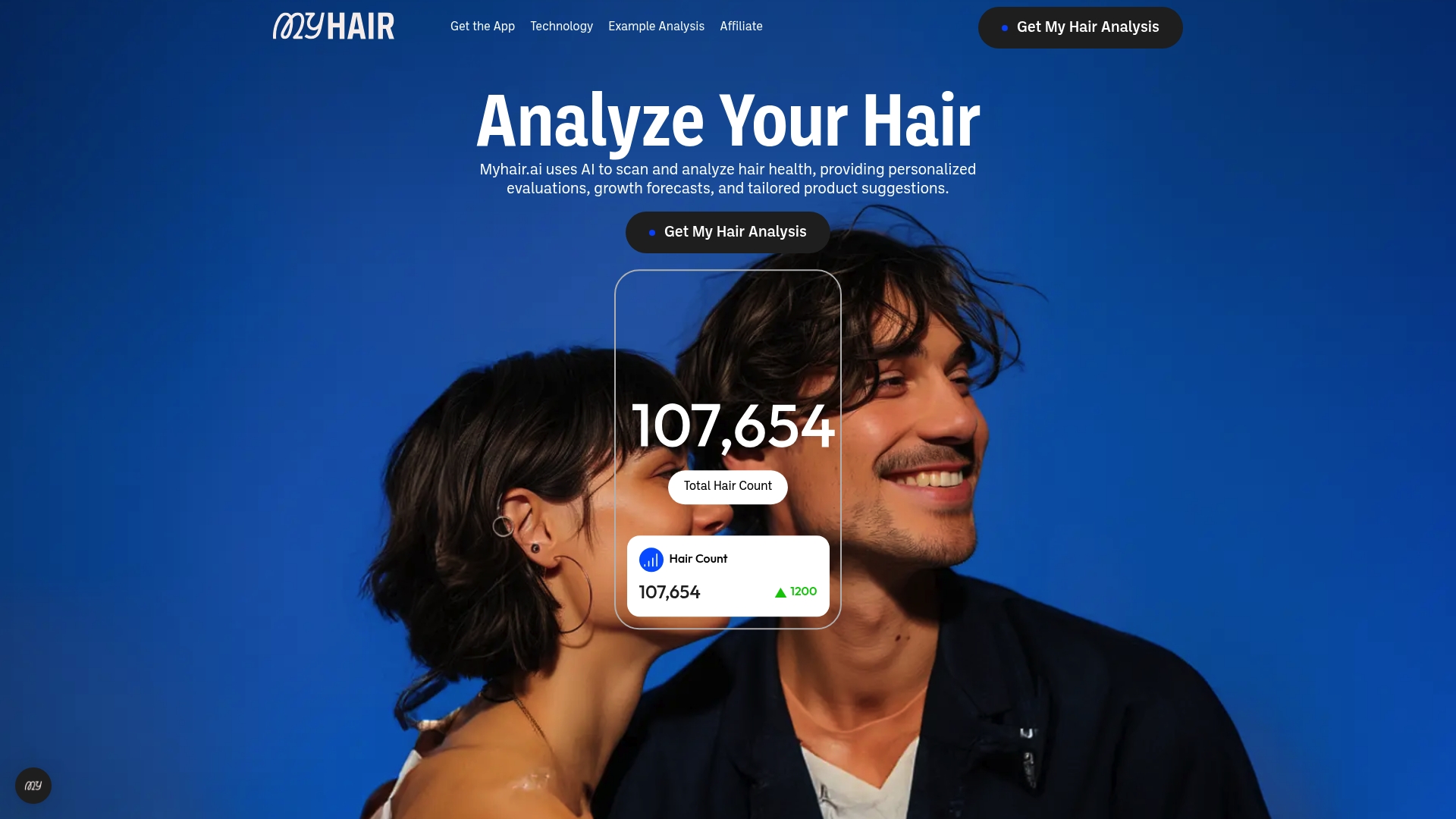
Myhair's AI scanner camera analyzes your hair and scalp in detail, producing a personalized hair score based on your actual scan data rather than a self-reported quiz. The platform tracks changes over time, so you're not guessing whether your routine is working. You'll see it in the data. From there, Myhair's app onboarding walks you through building a regimen matched to your specific hair health profile, backed by research and updated as your results change. If you're serious about smarter hair care, this is where to start.
FAQ
How does AI technology improve hair health outcomes?
AI improves outcomes by replacing generic recommendations with data-driven, personalized analysis. It can detect scalp changes early, optimize ingredient formulations, and adjust treatments in real time based on how your hair responds.
What is AI-driven hair analysis?
AI-driven hair analysis uses algorithms and image scanning to assess scalp condition, follicle health, and hair density. Platforms like Myhair generate individualized scores and recommendations from your scan rather than broad population averages.
Can AI tools actually reduce hair loss?
Yes, with clinical evidence behind specific applications. AI-guided laser and LED devices showed hair loss reduction of 46% in one month, and AI-developed serums demonstrated up to 90% shedding reduction over 120 days in controlled studies.
Are AI virtual hairstyle try-on tools accurate?
They are accurate when you provide high-quality input. Good lighting and a clear front-facing photo are the two biggest factors in generating a realistic preview. The AI mapping is only as precise as the image it receives.
Is AI hair technology accessible without a clinic?
Most modern AI hair tools are designed for consumer use at home. Apps, at-home devices, and AI-formulated products are all available without a clinical referral, though pairing them with professional oversight improves results.