TL;DR:
- Aloe vera oil is effective for soothing scalp irritation, clearing buildup, and conditioning hair. It supports a healthier scalp environment but does not directly promote hair growth. Proper application, quality products, and realistic expectations are key for best results.
Aloe vera oil is a genuinely useful topical for scalp health and hair conditioning, though it won't reverse biological hair loss on its own. Here's what you need to know right away:
- Primary benefit: Soothes scalp irritation, gently clears follicle-clogging buildup, and smooths the hair cuticle to reduce breakage and add shine.
- Realistic growth expectation: Any effect on hair growth is indirect. Aloe supports a healthier scalp environment, but clinical evidence for direct follicle stimulation is thin.
- Safety first: Always do a 48-hour patch test before applying any aloe product to your scalp, especially if you have latex sensitivity.
The mechanisms and evidence are in the next two sections. Step-by-step application recipes and buying guidance follow after that.
Table of Contents
- What is aloe vera oil, and how does it differ from gel or juice?
- How aloe vera actually helps your hair and scalp
- What the science and dermatologists say about aloe for hair
- How to apply aloe vera oil, gel, and blends for best results
- Allergies, contamination risks, and when to skip aloe topically
- How to choose an aloe vera hair product: a label checklist
- Is aloe vera oil right for your hair type?
- Key Takeaways
- The case for keeping aloe in perspective
- Your hair deserves a more precise starting point
- Useful sources and further reading
- FAQ
What is aloe vera oil, and how does it differ from gel or juice?
Most products labeled "aloe vera oil" are not true essential oils. A genuine essential oil is steam-distilled and volatile. Aloe vera cannot be steam-distilled that way, so what you're actually buying is either a macerated oil or CO2 extract where aloe compounds are infused into a lipid-soluble carrier. The INCI name on the label typically reads Aloe Barbadensis Leaf Extract alongside a named carrier such as soybean or sunflower oil.
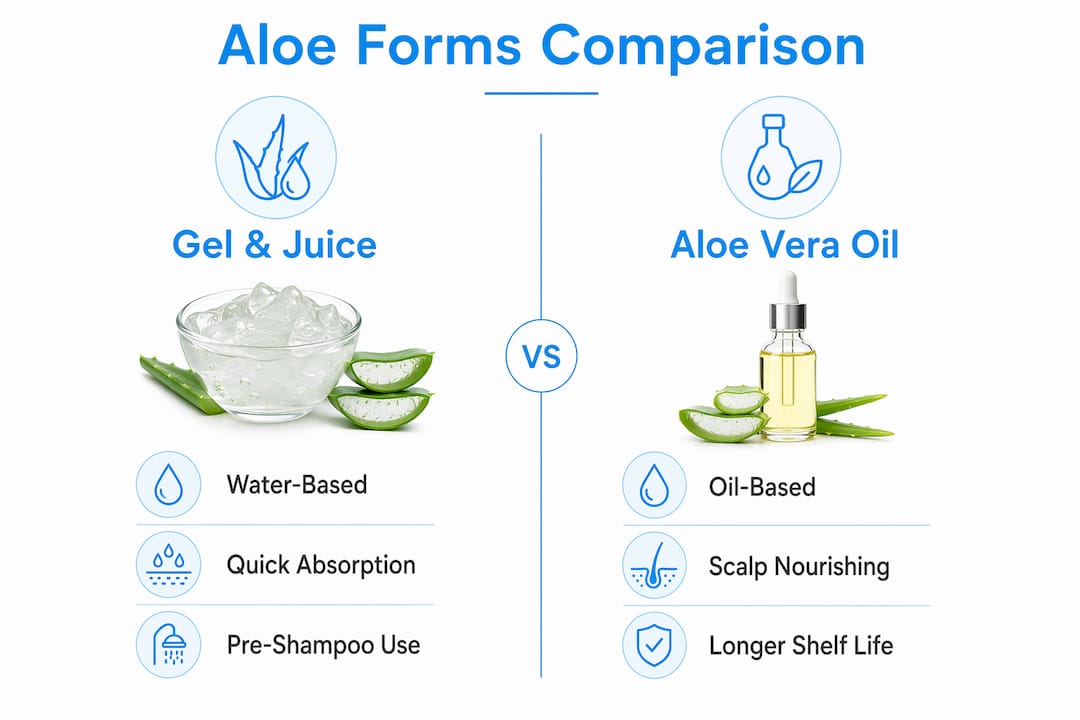
Gel and juice are water-based. They absorb quickly, work well as leave-in sprays or pre-shampoo treatments, and have a shorter shelf life once opened. Aloe-infused oil is lipid-soluble, meaning it blends with other oils and sits on the cuticle longer, making it better suited for sealing moisture or scalp massage. Preserved commercial gels sit in the middle: water-based but stabilized with preservatives for a longer shelf life.
| Form | Base | Best use | Shelf life (opened) |
|---|---|---|---|
| Aloe gel (fresh) | Water | Pre-shampoo, masks | 1–2 weeks refrigerated |
| Preserved aloe gel | Water + preservatives | Leave-in, daily scalp spray | 6 months |
| Aloe-infused oil | Lipid (carrier oil) | Scalp massage, sealing | 6 months (varies by carrier) |
| DIY macerate | Lipid (carrier oil) | Masks, sealing | 3–6 weeks refrigerated |
Pro Tip: Check the ingredient list before you buy. If "Aloe Barbadensis Leaf Extract" appears near the bottom of a long list, the concentration is likely low. A named carrier oil (jojoba, castor, sunflower) should appear second or third for a true aloe-infused oil.
How aloe vera actually helps your hair and scalp
The benefits of aloe vera for hair come from a handful of specific compounds, not a vague "natural" quality.
- Proteolytic enzymes break down dead skin cells and excess sebum on the scalp. This gentle clarifying action removes buildup without stripping the natural oils your scalp needs.
- Anti-inflammatory compounds (including aloesin) calm redness and irritation, which is why aloe is a go-to for itchy or flaky scalps.
- Vitamins A, C, and E plus amino acids condition the hair shaft, supporting strength and a modest degree of shine.
- Mucopolysaccharides bind moisture to both skin and hair, making aloe particularly effective for dry or high-porosity strands that lose water quickly.
- Scalp circulation: Regular massage with an aloe-based oil improves local blood flow, delivering more oxygen and nutrients to follicles — a supportive, not curative, effect.
For high-porosity hair specifically, aloe's ability to smooth cuticles without silicones is a real advantage. You get shine and moisture retention without the heavy buildup that silicone-based conditioners leave behind. Pair it with a natural hair oil for a sealing step and the effect lasts noticeably longer.

What the science and dermatologists say about aloe for hair
The honest summary: aloe is well-supported for scalp health and conditioning, but the evidence for direct hair regrowth is weak.
"Aloe vera is valuable for scalp health and soothing inflammation, but it is not a clinical cure for hair loss. Dermatologists recommend it as a supportive tool, not a standalone treatment." — Prevention, citing dermatologist perspectives
Most of the research on aloe involves small trials, lab studies on isolated compounds, or clinical consensus statements rather than large randomized controlled trials. Systematic reviews find no strong clinical evidence that aloe alone drives follicle regrowth in alopecia. Meanwhile, Healthline notes that the topical vitamins in aloe help with conditioning but don't replace the systemic nutritional intake needed to address deficiency-related hair loss.
The practical takeaway: use aloe for what it demonstrably does (soothe, clarify, condition) and pair it with professional advice if you're dealing with significant shedding or thinning.
How to apply aloe vera oil, gel, and blends for best results
Scalp massage with aloe-infused oil
- Warm 1–2 tablespoons of aloe-infused oil between your palms.
- Part your hair into sections and apply directly to the scalp.
- Massage in small circular motions for 5–10 minutes.
- Leave on for 1–2 hours (or overnight if using a carrier-heavy blend).
- Shampoo out thoroughly.
Frequency: Once or twice a week for dry or irritated scalps; once a week for normal scalps.
Aloe + castor oil sealing mix
Combine two parts aloe gel with one part castor oil. Apply to damp hair ends after washing. The aloe delivers moisture; the castor seals it in. No heat needed, though a warm towel wrap for 15 minutes increases penetration.
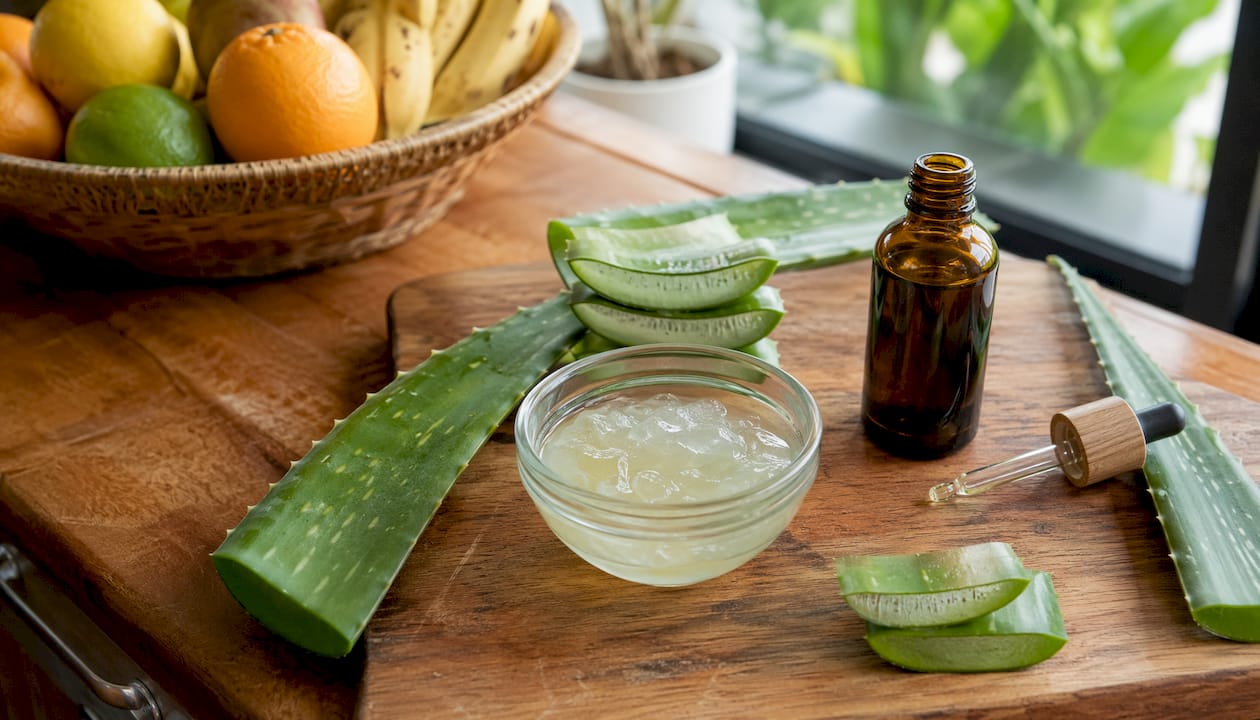
Pre-shampoo clarifying treatment (oily scalp)
Apply plain aloe gel to the scalp 20–30 minutes before shampooing. The enzymes loosen sebum and product residue so your shampoo does less work and strips less moisture.
Deep conditioning hair mask
Mix 3–4 tablespoons of aloe gel, 6–8 tablespoons of coconut oil, and 1–2 tablespoons of honey. Apply to wet hair and scalp, wrap in a warm towel, and rinse after 30 minutes. This combination leaves hair noticeably softer.
Safety notes for mixing:
- Never add water to an oil-only macerate — it creates conditions for bacterial growth.
- If adding essential oils (lavender, tea tree), keep them at 1% or below of the total formula.
- Avoid mixing aloe with incompatible preservatives; if you're unsure, buy a preserved commercial product instead.
Allergies, contamination risks, and when to skip aloe topically
Patch test — always. Apply a small amount of your aloe product to the inside of your wrist or behind your ear. Wait 48 hours. If you see redness, swelling, or itching, don't use it on your scalp.
People with latex allergy have a higher chance of reacting to aloe, specifically to a compound called aloin found in the outer leaf. Most commercial gels use inner-leaf gel and remove aloin, but DIY preparations from whole leaves may contain it.
Avoid aloe topically if:
- You have open wounds or active scalp sores.
- You're using prescription topical steroids without checking with your doctor first.
- You've had a previous reaction to aloe or related plants (agave, tulips).
For DIY preparations, refrigerate immediately and discard after several weeks depending on your method and carrier. Signs of spoilage include an off smell, color change, or visible cloudiness in the oil.
Pro Tip: Homemade aloe oil is a common source of inconsistent concentration and contamination. Unless you understand preservation chemistry, a professionally preserved commercial product is the safer, more consistent choice.
How to choose an aloe vera hair product: a label checklist
Not all aloe products are equal. Here's what to look for when shopping:
- Form: Decide first — oil for scalp massage and sealing, gel for clarifying and leave-in hydration.
- INCI name: Look for Aloe Barbadensis Leaf Extract or Aloe Barbadensis Leaf Juice in the first five ingredients for meaningful concentration.
- Carrier oil: Jojoba and sunflower are lightweight; castor is heavy and sealing. Match to your hair's porosity.
- Preservatives: Phenoxyethanol, sodium benzoate, or potassium sorbate in a water-based product are normal and safe. No preservative in a water-based product is a red flag.
- Fragrance: "Fragrance" or "parfum" without further detail can hide irritants. Fragrance-free is safer for sensitive scalps.
- Aloe percentage claims: "With aloe" on the front label means nothing without checking the INCI order. Marketing language is not a concentration guarantee.
| Hair concern | Best form | Key ingredient to pair |
|---|---|---|
| Oily, flaky scalp | Aloe gel (pre-shampoo) | Salicylic acid or tea tree |
| Dry, high-porosity | Aloe-infused oil | Castor or jojoba oil |
| Dandruff | Preserved aloe gel | Zinc pyrithione (separate product) |
| Breakage, brittle ends | Aloe gel + sealing oil | Coconut or argan oil |
For scalp care products that combine aloe with complementary actives, look for formulas where aloe appears alongside anti-inflammatory botanicals rather than buried under synthetic fillers. Drugstore options work fine for basic clarifying; specialty natural brands tend to offer higher aloe concentrations and cleaner preservative systems, usually at a higher price point.
Is aloe vera oil right for your hair type?
Aloe works well across most hair types, but it shines in specific situations:
- Irritated or flaky scalp: Aloe's anti-inflammatory and antimicrobial properties address the root cause of itching and flaking, not just the symptoms.
- Product buildup: The enzyme-based clarifying action is gentler than a clarifying shampoo and won't leave your scalp feeling stripped.
- High-porosity hair: Aloe smooths the cuticle and adds moisture without silicones, making it a strong fit for chemically treated or heat-damaged hair.
- Oily scalp with dry ends: Apply aloe gel to the scalp only, then seal the ends with a carrier oil. The two-zone approach addresses both concerns without overloading either area.
Knowing your hair's porosity, density, and scalp condition makes a real difference in choosing the right form and frequency. Myhair's AI hair analysis reads your scan and gives you a personalized breakdown, including which ingredients and application frequencies suit your specific hair profile. It's not a medical diagnosis, but it's a practical way to stop guessing about which formulation actually fits your hair.
Key Takeaways
Aloe vera oil is a well-supported scalp and conditioning tool, most effective when matched to your hair type and used consistently as part of a broader routine.
| Point | Details |
|---|---|
| Scalp health, not a cure | Aloe soothes inflammation and clears buildup; it does not clinically reverse hair loss. |
| Match form to need | Use gel for clarifying and leave-in hydration; use aloe-infused oil for scalp massage and sealing. |
| DIY safety matters | Refrigerate homemade preparations and discard after 3–6 weeks to avoid contamination. |
| Read the label carefully | "Aloe Barbadensis Leaf Extract" should appear in the first five INCI ingredients for real concentration. |
| Personalize with Myhair | Myhair's AI hair analysis identifies your hair type and recommends the right aloe formulation and frequency. |
The case for keeping aloe in perspective
Most of the enthusiasm around aloe vera for hair is justified, but it's aimed at the wrong target. People reach for aloe hoping it will regrow thinning hair, and when it doesn't, they dismiss it entirely. That's a mistake in both directions.
What aloe actually does, it does reliably: it calms an irritated scalp, clears buildup without harsh detergents, and adds moisture to the shaft without silicone weight. For anyone dealing with a reactive scalp, product buildup, or high-porosity hair that loses moisture fast, those benefits are genuinely useful and often underestimated.
The gap is in treating topical care as a substitute for systemic health. If your hair is thinning because of nutritional deficiency, hormonal shifts, or chronic stress, no amount of aloe oil will close that gap. Topical care and internal health work on different tracks. Aloe belongs on the topical track, paired with good nutrition and, when the shedding is significant, a conversation with a dermatologist.
Your hair deserves a more precise starting point
Choosing between aloe gel, aloe-infused oil, or a blended formula is easier when you know your actual hair profile. Myhair uses AI-driven analysis to assess your scalp condition, hair density, and porosity from a simple scan, then gives you tailored product and frequency recommendations based on what your hair actually needs. It's not a medical treatment, but it removes the guesswork from building a routine that fits. Start your personalized hair analysis and get specific guidance on whether aloe oil, gel, or a blend is the right call for your hair type.
Useful sources and further reading
- WebMD: Benefits of Aloe Vera for Your Hair — Accessible summary of aloe's active nutrients and conditioning effects, with practical application notes.
- Healthline: Aloe Vera for Hair — Covers benefits, limitations, and the distinction between topical conditioning and systemic hair loss treatment.
- Medical News Today: Aloe Vera Hair Mask — DIY recipes, hair-type guidance, and a balanced look at risks.
- Prevention: Dermatologist Perspective on Aloe for Hair — Expert quotes setting realistic expectations around scalp health vs. hair regrowth.
- Formula Chemistry: Aloe Vera Essential Oil — Formulation-level detail on INCI names, solubility, and usage rates for aloe oil products.
- Times of India: How to Make Aloe Vera Oil at Home — DIY safety guidance, shelf-life timelines, and contamination warnings.
- Economic Times: Aloe Vera Oil for Hair Growth — What the Science Says — Research summary on the limits of clinical evidence for aloe-driven hair regrowth.
- NCBI: Aloe Vera Review — Peer-reviewed overview of aloe's bioactive compounds and documented therapeutic properties.
FAQ
Is aloe vera oil actually good for your hair?
Yes, for scalp health and conditioning. Aloe vera oil soothes inflammation, gently clears buildup, and smooths the cuticle, but dermatologists are clear that it is not a clinical treatment for hair loss.
How long can you leave aloe vera oil in your hair?
For a scalp massage with aloe-infused oil, 1–2 hours or overnight is fine. For a gel-based mask, rinse after 20–30 minutes. Fresh or DIY preparations should not be left on overnight due to contamination risk.
Does aloe vera increase hair growth?
Indirectly, at best. Systematic reviews find no strong clinical evidence that aloe alone drives follicle regrowth. It supports a healthier scalp environment, which can reduce breakage and shedding, but it is not a proven hair-regrowth treatment.
Which is better for hair, coconut oil or aloe vera?
They do different jobs. Coconut oil penetrates the shaft and reduces protein loss; aloe vera soothes the scalp and clarifies buildup. Combining them, as in the aloe-coconut-honey mask recipe above, gives you both effects at once.
How do I know which aloe form is right for my hair?
Match form to your primary concern: gel for oily or flaky scalps, aloe-infused oil for dry or high-porosity hair, and a blended mask for damaged or brittle strands. For a precise match, Myhair's hair analysis tool assesses your specific scalp and hair profile and recommends the right formulation and frequency.