TL;DR:
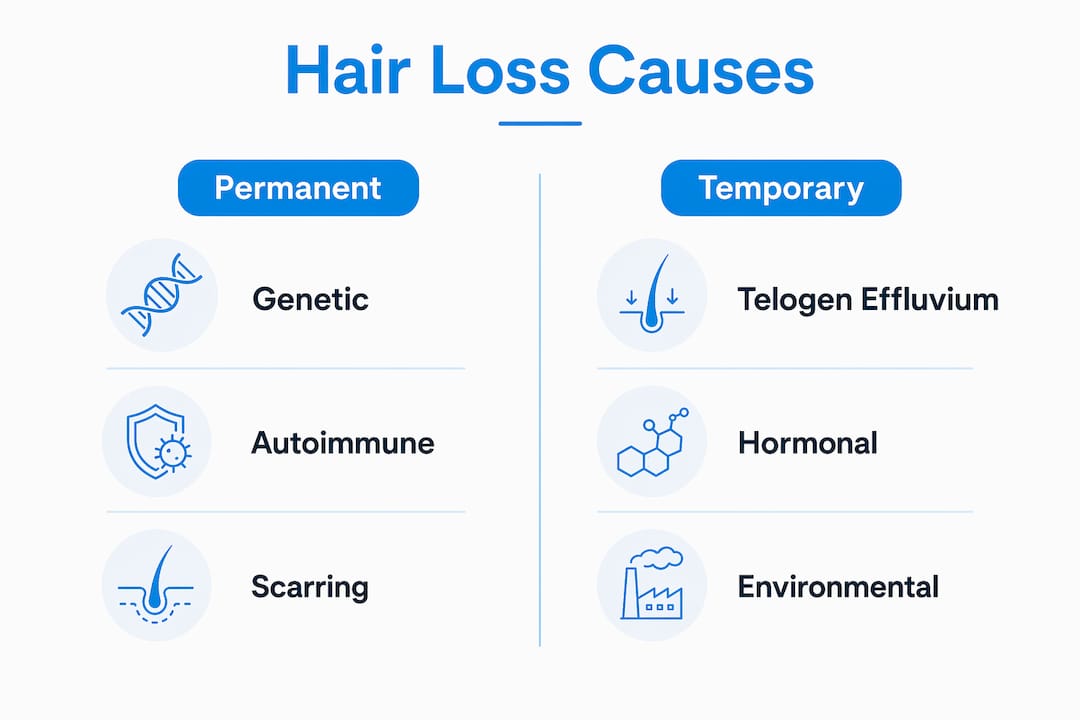
- Hair loss caused by alopecia results from disruption to the hair follicle's growth cycle due to genetics, autoimmunity, hormones, or environment.
- Identifying the specific type of alopecia is essential because some forms are reversible, while others cause permanent follicle damage if untreated.
Alopecia is defined as hair loss caused by disruption to the hair follicle's normal growth cycle, triggered by genetics, autoimmune responses, hormonal shifts, or environmental stressors. Alopecia types have distinct mechanisms, and identifying the right subtype is the first step toward understanding your prognosis. Some forms are temporary and fully reversible. Others cause permanent follicle damage if left untreated. Knowing which category applies to you changes everything about how you approach treatment.
What are the genetic and hormonal causes of alopecia hair loss?
Androgenetic alopecia is the most common cause of hair loss in both men and women, driven by a combination of genetic predisposition and the effects of androgens like dihydrotestosterone (DHT) on hair follicles. Androgenetic alopecia involves follicle miniaturization, meaning DHT gradually shrinks follicles until they can no longer produce visible hair. The condition runs in families, but it does not require both parents to carry the gene.
The pattern of loss differs clearly by sex. Men typically experience a receding hairline at the temples and thinning at the crown, which can progress to complete baldness on top. Women more often develop diffuse thinning across the top of the scalp, with the part line widening over time. A bald spot on the crown is a common early sign in men, while women rarely lose hair at the hairline. Both patterns tend to worsen gradually with age.
Hormonal changes beyond DHT also contribute. Thyroid disorders, polycystic ovary syndrome (PCOS), and the hormonal shifts after childbirth or menopause can all accelerate or trigger hereditary hair loss factors in people who are already genetically susceptible. The follicle does not die in androgenetic alopecia. It shrinks. That distinction matters because FDA-approved treatments like minoxidil and finasteride work by either widening blood vessels to feed follicles or blocking DHT production.
Key signs of androgenetic alopecia include:
- Gradual thinning over months or years rather than sudden shedding
- A bald spot on the head that grows slowly at the crown or temples
- Diffuse thinning along the part line in women
- Family history of similar patterns in parents or grandparents
- No scalp inflammation, scaling, or pain
Pro Tip: Take a photo of your part line in the same lighting every month. A widening part is often the earliest visible sign of androgenetic alopecia in women, and tracking it gives your dermatologist concrete evidence of progression.
How does autoimmune alopecia (alopecia areata) cause hair loss?
Alopecia areata is a chronic autoimmune disorder in which the immune system attacks hair follicles, causing patchy, non-scarring hair loss. About 2% of people will experience alopecia areata in their lifetime, making it one of the most common autoimmune conditions worldwide. The hair loss appears suddenly, often as one or more smooth, coin-sized bald spots on the scalp or body.

The biological mechanism is specific. T-cell-mediated immune privilege collapse in the hair follicle triggers the attack. Normally, hair follicles hide from immune surveillance. In alopecia areata, that protection breaks down, and the JAK-STAT signaling pathway activates an inflammatory response that halts hair growth. This is not caused by poor hygiene, stress alone, or any personal behavior. It is an immune system malfunction with a genetic component.
Environmental triggers can set off or worsen the condition in genetically susceptible people. Common triggers include:
- Acute physical illness or infection
- Prolonged psychological stress
- Recent vaccination in rare cases
- Hormonal changes, including postpartum shifts
The clinical range is wide. Some people develop one or two patches that regrow within a year without treatment. Others progress to alopecia totalis, which is total scalp hair loss, or alopecia universalis, which affects the entire body. Nail pitting and ridging appear in a subset of cases, signaling deeper immune involvement.
"Alopecia areata is an immune-mediated disease, not a reflection of lifestyle or hygiene. Understanding that distinction reduces stigma and helps patients pursue the right treatment sooner."
Treatment options include corticosteroid injections directly into affected patches, topical immunotherapy, and newer JAK inhibitor medications like baricitinib, which the FDA approved for severe alopecia areata in 2022. Because alopecia areata typically spares follicle stem cells, regrowth is biologically possible even after years of loss.
Pro Tip: If you notice nail changes alongside patchy hair loss, mention both to your dermatologist. Nail involvement helps confirm an autoimmune diagnosis and can influence which treatment protocol is chosen.
What temporary and trigger-related causes lead to hair shedding?
Telogen effluvium is the medical term for diffuse, temporary hair shedding triggered by a physiological shock that pushes large numbers of follicles into the resting phase simultaneously. Common triggers include illness, stress, nutritional deficiencies, childbirth, and thyroid disorders. The shedding typically begins 1–3 months after the triggering event, which is why many people fail to connect the two.
Clinicians trace telogen effluvium causes by working backward through the timeline. If the trigger is unclear, iron levels and thyroid function are checked first, since both deficiencies are common and correctable. The good news is that once the underlying cause is addressed, hair usually regrows within 6–12 months without any specific hair loss treatment.
Other reversible causes include:
- Medications: Chemotherapy drugs, anabolic steroids, anticoagulants, and some antidepressants can all disrupt the hair growth cycle.
- Nutritional deficiencies: Low iron, vitamin D, zinc, and protein are all linked to diffuse thinning.
- Thyroid dysfunction: Both hypothyroidism and hyperthyroidism cause what causes hair thinning across the whole scalp.
- Scalp infections: Fungal infections like tinea capitis cause patchy loss with scaling and require antifungal treatment.
| Cause | Type of loss | Reversible? |
|---|---|---|
| Telogen effluvium | Diffuse shedding | Yes, once trigger resolved |
| Chemotherapy | Diffuse, rapid | Usually yes, post-treatment |
| Iron deficiency | Diffuse thinning | Yes, with supplementation |
| Thyroid disorder | Diffuse thinning | Yes, with medication |
| Fungal infection | Patchy with scaling | Yes, with antifungals |
The key difference between temporary and permanent forms is follicle survival. Temporary causes disrupt the growth cycle but leave the follicle intact. Permanent causes destroy the follicle itself. Identifying which category applies to you determines whether waiting and treating the trigger is enough, or whether faster intervention is needed.
How do scarring alopecias differ from other hair loss causes?
Scarring alopecia, also called cicatricial alopecia, is a group of disorders that permanently destroy hair follicles by targeting the stem cell niche in the follicle bulge. Immune-mediated scarring alopecias destroy the bulge niche, which means regrowth is biologically impossible once the damage is done. This makes early diagnosis the single most important factor in limiting permanent loss.
Frontal fibrosing alopecia (FFA) is one of the most recognized scarring types. It causes a band of hair loss at the front and sides of the scalp, often with eyebrow loss as an early sign. FFA involves fibrotic transformation, genetics, and environmental triggers including certain cosmetic products and sunscreens, though the exact mechanism is still being studied. Lichen planopilaris is another common type, causing inflammation and scarring in patches across the scalp.
| Feature | Non-scarring alopecia | Scarring alopecia |
|---|---|---|
| Follicle status | Intact, can regrow | Destroyed, permanent loss |
| Skin appearance | Smooth, normal texture | Inflamed, fibrotic, or shiny |
| Regrowth possible? | Yes | No |
| Urgency of diagnosis | Moderate | High |
| Examples | Alopecia areata, androgenetic | FFA, lichen planopilaris |
Distinguishing scarring from non-scarring alopecia requires a scalp examination and often a biopsy. Smooth, unscarred skin under a bald patch points toward alopecia areata. Inflamed, shiny, or fibrotic skin signals a scarring process. For anyone with alopecia on the hairline combined with eyebrow recession, an urgent dermatology referral is warranted.
Pro Tip: Ask your dermatologist specifically whether your scalp shows any signs of fibrosis or follicular dropout under dermoscopy. That single question can determine whether your condition is still treatable or has already caused permanent damage.
How can you identify the specific cause of your hair loss?
Accurate diagnosis requires more than looking at the pattern of loss. Determining the underlying cause rather than assuming one trigger is the foundation of effective treatment, and overlapping symptoms often require targeted testing to separate one condition from another.
A structured approach to diagnosis typically follows these steps:
- Document your timeline. Note when shedding started, how fast it progressed, and any illness, stress, dietary changes, or new medications in the 1–3 months before onset.
- Scalp examination. A dermatologist checks for inflammation, scaling, follicular dropout, or fibrosis. Smooth skin under a bald spot suggests alopecia areata. Scaling or redness suggests infection or scalp disease.
- Scalp scraping. If a fungal infection is suspected, a scraping is sent for microscopy. This rules out tinea capitis before any immunosuppressive treatment is started.
- Blood tests. Iron, ferritin, vitamin D, thyroid hormones, and androgen levels are checked to identify metabolic or hormonal contributors.
- Scalp biopsy. When the diagnosis remains unclear or scarring is suspected, a 4mm punch biopsy gives a definitive answer about follicle status and inflammation type.
A hair loss clinic evaluation that combines all five steps gives the clearest picture of what is driving your specific pattern. Self-diagnosis based on internet photos is unreliable because androgenetic alopecia, alopecia areata, and telogen effluvium can all look similar in early stages. Getting the diagnosis right the first time saves months of ineffective treatment.
Key Takeaways
Alopecia hair loss causes fall into four main categories: genetic, autoimmune, hormonal, and environmental, and each requires a different diagnostic and treatment approach.
| Point | Details |
|---|---|
| Genetics drive the most common type | Androgenetic alopecia is caused by DHT shrinking follicles and runs in families. |
| Autoimmune attack is reversible | Alopecia areata spares stem cells, so regrowth is possible with the right treatment. |
| Temporary causes need a trigger search | Telogen effluvium resolves once the underlying trigger, such as iron deficiency or thyroid disease, is corrected. |
| Scarring alopecia requires urgent action | Follicle stem cell destruction is permanent, making early diagnosis critical to limiting loss. |
| Diagnosis must be specific | Blood tests, scalp biopsy, and clinical history together identify the true cause and guide effective treatment. |
What I've learned from watching people misread their own hair loss
The most damaging misconception I see is people assuming their hair loss has one cause. They read about stress and blame a difficult year at work. They read about diet and cut out every food group. Meanwhile, the real driver, often androgenetic alopecia accelerated by a thyroid issue, goes unaddressed for years. Hair loss is almost never monocausal.
The second misconception is that alopecia areata is somehow earned. Patients describe feeling embarrassed, as if they did something wrong. The science is unambiguous: immune privilege collapse in the follicle is a biological event, not a lifestyle consequence. Framing it that way changes how people engage with treatment. They stop waiting for the "right" behavior to fix it and start pursuing actual medical options.
What I tell anyone newly diagnosed is this: the pattern of your loss is data, not a verdict. A bald spot on the head with smooth skin underneath is a different disease than a bald spot with redness and scaling. Both look alarming. Only one is urgent. Learning to read those differences, ideally with a dermatologist who uses dermoscopy, is the most practical thing you can do in the first 90 days after noticing loss.
Patience matters in a specific way here. Treatments for androgenetic alopecia take 6–12 months to show visible results. JAK inhibitors for alopecia areata can take just as long. People who quit after two months conclude the treatment failed when it had not yet started. Managing that timeline expectation is as important as choosing the right drug.
— Cyriac
AI-powered hair analysis for understanding your hair loss pattern
Knowing the category of your hair loss is one thing. Seeing exactly how your scalp is changing over time is another. Myhair uses AI-powered scanning to analyze your hair health from photos, identify loss patterns, and track changes across weeks and months.
The AI hair scanner detects thinning patterns consistent with androgenetic alopecia, diffuse shedding, and patchy loss, giving you a visual baseline before your first dermatologist visit. That baseline makes clinical conversations faster and more specific. You can also use the hair health onboarding to receive product recommendations matched to your specific pattern and scalp condition. Myhair does not replace a clinical diagnosis, but it gives you the data to walk into that appointment informed.
FAQ
What is the most common cause of alopecia hair loss?
Androgenetic alopecia, driven by genetics and DHT, is the most common cause of hair loss in both men and women. It causes gradual, patterned thinning rather than sudden shedding.
Can alopecia areata go away on its own?
Yes. Alopecia areata often resolves without treatment, especially in mild cases with one or two patches. Because the condition spares follicle stem cells, regrowth remains possible even after extended loss.
What blood tests diagnose the cause of hair loss?
Dermatologists typically check ferritin, iron, thyroid hormones, vitamin D, and androgen levels. These tests identify metabolic and hormonal contributors that can cause or worsen diffuse hair thinning.
How do I know if my hair loss is permanent?
Scarring alopecias cause permanent loss by destroying follicle stem cells, while non-scarring types like alopecia areata and androgenetic alopecia leave follicles intact. A scalp biopsy is the most reliable way to confirm whether scarring has occurred.
Does stress cause alopecia?
Stress can trigger telogen effluvium, a temporary form of diffuse shedding that begins 1–3 months after the stressful event. It can also worsen alopecia areata in genetically susceptible people, but stress alone does not cause permanent hair loss.