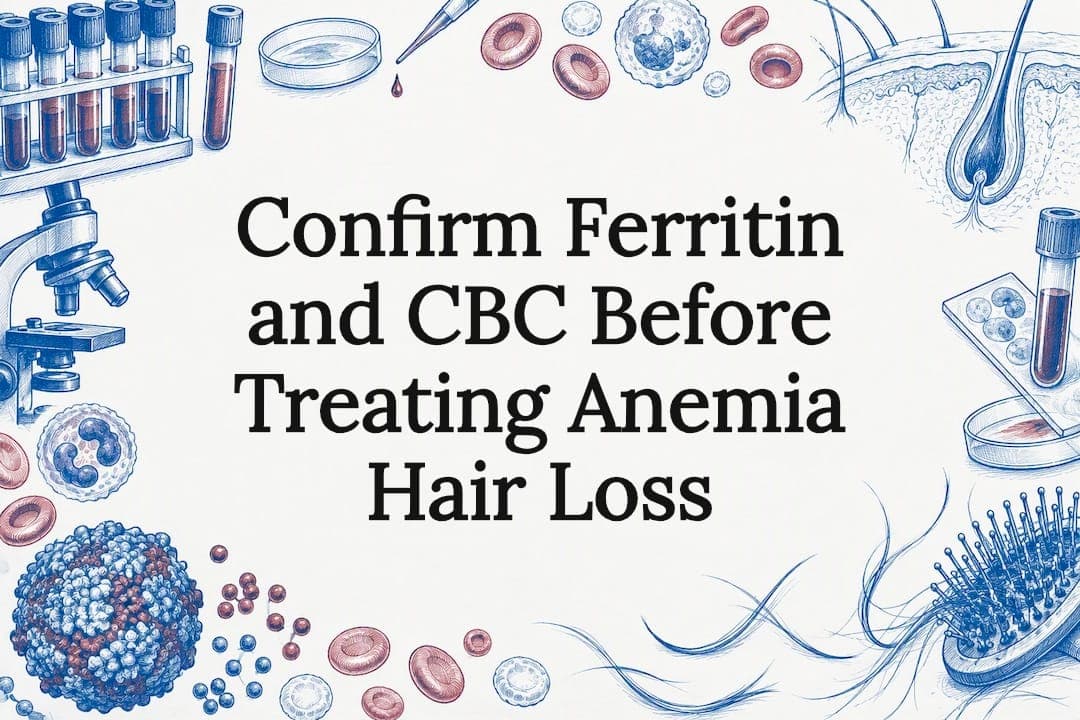
Yes, iron deficiency can cause diffuse hair shedding known as telogen effluvium, and in many cases it reverses once iron stores are corrected. Before taking any supplement, confirm the cause with blood tests, specifically ferritin and a complete blood count, since unsupervised iron use carries real risks. If deficiency is confirmed, shedding often slows within a few months, with visible regrowth typically starting 3 to 6 months after treatment begins.
TL;DR:
- Correcting iron deficiency usually leads to hair regrowth within three to six months, but persistent shedding after six months may require further evaluation.
- Ferritin levels below 40 ng/mL are typically considered relevant to shedding, but inflammation or other factors can mask true deficiency, making comprehensive testing essential.
- Blood tests such as complete blood count with hemoglobin, serum ferritin, serum iron, and TIBC provide a full picture of iron status and guide treatment decisions.
- Iron supplements should only be taken under medical supervision to avoid toxicity, with oral iron doses around 65 mg of elemental iron daily for about three months.
- Tracking hair density over time with AI scans supports assessment of treatment efficacy and helps identify if other causes, like pattern baldness or medical conditions, may be involved.
Table of Contents
- How anemia shows up in your hair and body
- Why iron deficiency triggers hair shedding
- What tests confirm iron deficiency behind hair loss
- How doctors treat iron deficiency and related shedding
- When to expect regrowth after treating the deficiency
- Diet and daily habits that protect your iron stores
- How MyHair.ai helps you track, validate, and find care
- A cautious, evidence-first way to think about regrowth
- Scan your hair and track your regrowth with MyHair.ai
- FAQ
- Sources
How anemia shows up in your hair and body
Iron deficiency rarely announces itself through hair alone. The NHS lists hair loss alongside a cluster of other signs that tend to appear together, which makes the full picture more useful than any single symptom.
- Fatigue and pallor, often the first things people notice.
- Pica, an unusual craving to chew ice or non-food items.
- Restless legs at night, sometimes mistaken for simple poor sleep.
- Brittle nails and a sore or swollen tongue, both listed as common iron-deficiency features.
The hair pattern itself is a clue too. Telogen effluvium causes diffuse thinning across the whole scalp rather than a receding hairline or a widening part, and it typically begins 2 to 4 months after whatever depleted your iron, whether that was heavy menstrual bleeding, pregnancy, or a restrictive diet. Acute telogen effluvium can push daily shedding well past the usual 100 hairs, and if you are also experiencing chest pain, severe dizziness, or very heavy bleeding, that warrants urgent medical attention rather than a wait-and-see approach.
Why iron deficiency triggers hair shedding
Hair follicles are metabolically demanding tissue, and they are sensitive to drops in iron long before anemia shows up on a standard blood count. Ferritin, the protein that stores iron, tends to fall first, while hemoglobin, the oxygen-carrying molecule that defines anemia, often stays in range until deficiency is more advanced. That gap matters: follicles can be starved of iron while you are still technically not anemic by hemoglobin alone.

When iron stores drop low enough, a share of actively growing (anagen) follicles shift prematurely into the resting (telogen) phase. Weeks later, those hairs shed, producing the diffuse thinning described above. This is a stress response, not permanent follicle damage, which is why correcting the deficiency usually allows normal cycling to resume.
The evidence is less settled when it comes to pattern (androgenetic) hair loss. Low ferritin is sometimes found in people with pattern baldness, but it is not an established cause of it, and treating iron deficiency in someone with genetic thinning will not reverse the underlying pattern loss, even if it helps with any overlapping diffuse shedding.
What tests confirm iron deficiency behind hair loss
A useful workup starts with a complete blood count (checking hemoglobin) and serum ferritin, often paired with serum iron and TIBC (total iron-binding capacity) to clarify the overall iron picture. Many clinicians treat a ferritin below roughly 40 ng/mL as potentially relevant to hair shedding, though the World Health Organization cautions that ferritin cutoffs should be interpreted in context, since inflammation can push ferritin up and mask a true deficiency underneath.
- CBC with hemoglobin: flags anemia itself.
- Serum ferritin: the earliest and most sensitive marker of depleted iron stores.
- Serum iron and TIBC: adds detail when ferritin alone is ambiguous.
- CRP, TSH, and vitamin B12: reasonable follow-up tests if initial results are unclear or symptoms suggest another cause.
Timing and prep matter. If you take biotin supplements, clinical lab guidance recommends pausing them for at least 8 hours, and sometimes up to 72, before testing, since biotin can skew certain immunoassay results and produce a false-normal reading.
Pro Tip: Bring a rough timeline of when shedding started and, if you have them, monthly photos or app scan results. That timeline helps a clinician connect the onset to a likely trigger.
How doctors treat iron deficiency and related shedding
Once deficiency is confirmed, treatment is medical, not cosmetic. A standard adult protocol calls for about 65 mg of elemental iron daily, continued for roughly 3 months after hemoglobin normalizes, with follow-up blood counts checked periodically, often every 3 months for up to a year, to confirm the deficiency does not recur.
- Start oral iron at the dose your clinician prescribes, rather than an over-the-counter amount chosen on your own.
- If oral iron causes nausea or constipation, ask about alternate-day dosing or switching the iron salt before giving up on treatment.
- For severe or treatment-resistant cases, a clinician may consider IV iron instead of oral.
- If diffuse shedding overlaps with pattern thinning, a dermatologist may discuss topical minoxidil, which the FDA has approved for androgenetic alopecia, alongside correcting the deficiency.
High-dose, unsupervised iron is not a shortcut. Iron toxicity is a genuine risk, particularly for anyone without confirmed deficiency, so treatment should always follow a positive blood test rather than symptoms alone.

When to expect regrowth after treating the deficiency
Patience matters more than most people expect. Telogen effluvium often improves within 6 to 9 months once the underlying cause is addressed, with many people noticing reduced shedding in the first 3 to 6 months and fuller density returning by the 6 to 12 month mark.
- Prolonged deficiency before diagnosis tends to slow the recovery curve.
- Age and overall health influence how quickly follicles resume normal cycling.
- Concurrent issues, such as thyroid disease or certain medications, can mute the response even after iron is corrected.
If shedding has not noticeably slowed by around 6 months, or if the pattern looks more like gradual, localized thinning than diffuse loss, it is worth asking for a dermatology referral to rule out a second, overlapping cause.
Diet and daily habits that protect your iron stores
Food choices will not fix an existing deficiency fast enough on their own, but they support recovery and help prevent a repeat. Heme iron, found in red meat, poultry, and fish, absorbs more efficiently than the nonheme iron in plant sources like lentils and spinach, and pairing nonheme sources with vitamin C, such as citrus or bell peppers, meaningfully improves absorption. Tea and coffee near meals have the opposite effect and are worth spacing out.
- Pair iron-rich meals with vitamin C, not with tea or coffee.
- Flag heavy periods, pregnancy, or digestive conditions to a clinician, since these commonly drive ongoing iron loss.
- Go gentle on your hair during recovery: skip harsh bleaching or heat styling and keep a simple photo log of progress.
A dietitian referral is reasonable if deficiency keeps recurring despite dietary effort, and more detailed meal ideas can help translate these principles into an actual weekly plan.
How MyHair.ai helps you track, validate, and find care
We built MyHair.ai to work alongside, not instead of, the lab work described above. Our AI scans establish a baseline for your hair density and pattern, then track month-to-month changes so you have objective evidence to bring to a clinician rather than a guess about whether shedding has improved. Our platform also pairs those scans with product and clinic recommendations related to hair care. We are clear about the limits: a scan documents visible change, it does not diagnose deficiency, so we recommend pairing your MyHair.ai results with ferritin and CBC testing before starting any iron regimen.
A cautious, evidence-first way to think about regrowth
Most cases of iron-related shedding genuinely reverse once the actual deficiency is found and corrected, and that is worth holding onto when a few extra hairs in the shower feel alarming. The order of operations matters: get the labs first, resist the urge to self-prescribe iron, and document your hair's progress consistently. If three to six months of proper treatment brings no change, a dermatologist deserves your next phone call, not another supplement.
— Cyriac
Scan your hair and track your regrowth with MyHair.ai
Testing confirms the cause, but watching your own progress is what keeps you from losing confidence halfway through treatment. Our free plan lets you run a baseline scan today, and our Monthly subscription, priced at $9.99 per month on our subscription page, adds ongoing tracking so you can see density changes month over month alongside your lab results.
If your workup points toward a cause that needs specialist input, our clinic directory connects you with hair restoration doctors and clinics for a more detailed evaluation. Start with a scan on our scanner page and build a record you can bring to any appointment.
This article is general information, not a substitute for advice from a qualified doctor. Consult a qualified healthcare professional about your own circumstances before acting on anything here.

FAQ
Does hair loss from anemia grow back?
In most cases, yes. Once ferritin and hemoglobin are corrected, telogen effluvium typically resolves and normal density returns over several months rather than staying permanent.
What are 5 symptoms of anemia?
Common signs include fatigue, pale skin, brittle nails, restless legs, and unusual cravings known as pica, along with hair loss in some cases. The NHS lists these alongside a sore or swollen tongue as typical iron-deficiency features.
Can hair thinning be reversed?
Diffuse thinning from a corrected iron deficiency often reverses, with shedding easing within a few months and visible regrowth following. Pattern (androgenetic) thinning behaves differently and usually needs dermatologic treatment rather than nutritional correction alone.
What vitamin deficiency causes hair loss?
Iron deficiency is the most commonly cited nutritional cause, but vitamin B12 deficiency and folate deficiency can also contribute to anemia-related shedding. A clinician can narrow this down with targeted blood tests rather than guesswork.
Sources
- Adult iron deficiency anaemia pathway (Barnsley CCG)
- Telogen effluvium (Harvard Health)
- Iron deficiency anaemia (NHS)
- WHO guideline on use of ferritin concentrations to assess iron status
- Biotin interference with lab assays (Clinical Labs guidance)