
Finding a hair analysis app that gives clear, image-based measurement without expensive clinic visits or limited ingredient transparency is still difficult. Many apps lock advanced scan features behind logins, restrict device or platform access, or do not share how results are measured. This comparison ranks five hair analysis apps by scan method, device support, and product recommendation logic so readers can match one to their own needs and routine.
Table of Contents
MyHair.ai
At a Glance
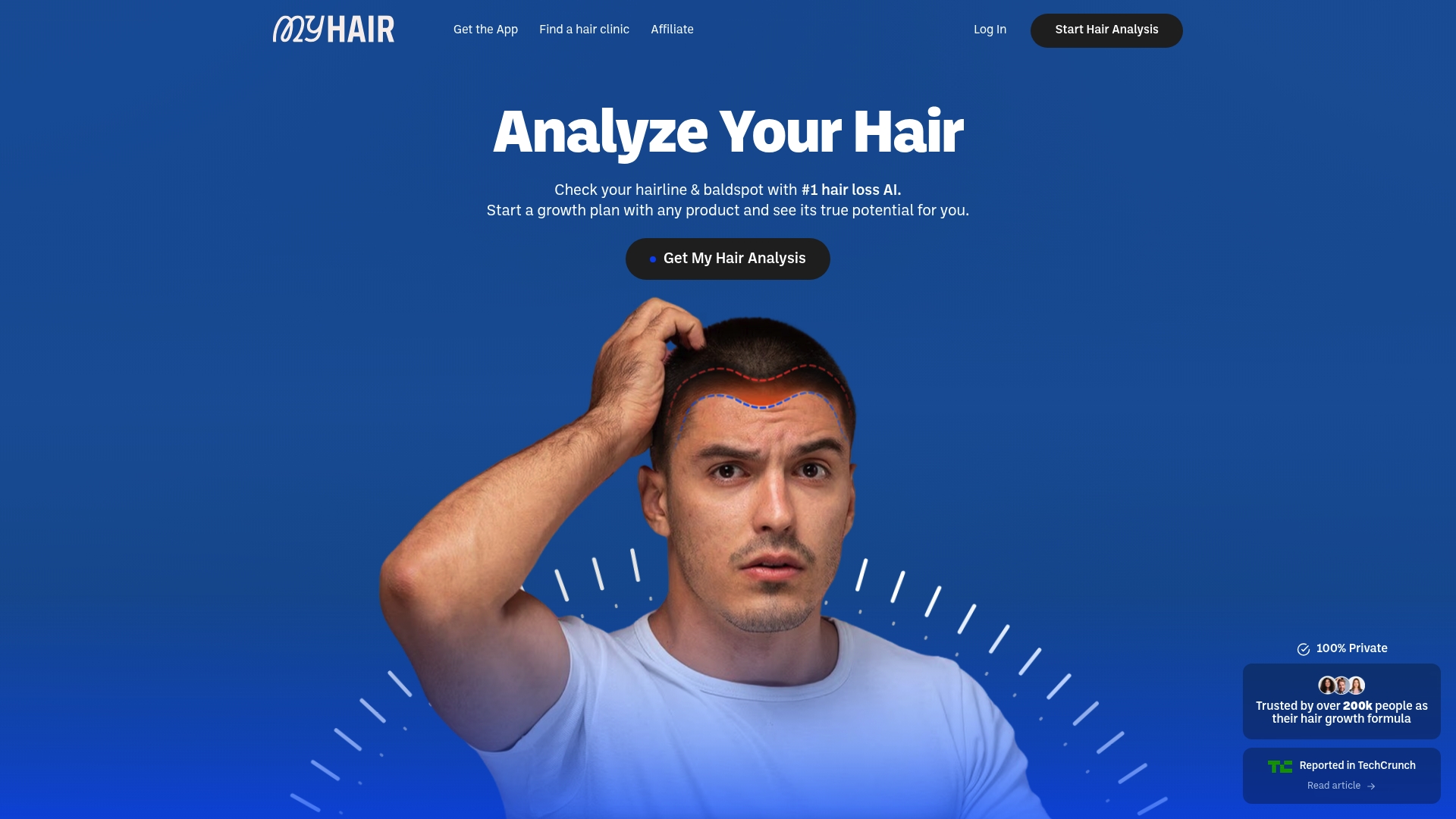
MyHair.ai reports more than 200,000 users globally. The platform uses photo scans and questionnaires to generate hair counts and map bald spots. That combination makes tracking hair change over time straightforward for people worried about thinning.
Core Features
The service runs AI-powered hair analysis from uploaded images and a high-precision auto-scan that maps hairline and bald spots. It pairs those scans with personalized treatment plans and product recommendations based on each analysis. The site also helps you locate and compare verified hair clinics worldwide and offers an app download option for mobile access.
Key Differentiator
The vendor states the platform uses advanced AI and computer vision to produce its hair counts and tailored recommendations. That specific focus on image-based measurement separates it from general wellness apps that rely on questionnaires alone. The feature set centers on objective mapping of hair density and visible loss patterns.
Pros
The scanning workflow produces detailed maps that make monthly progress visible and easy to compare. Partnerships with medical hair clinics feed clinical perspectives into recommended treatment options and local clinic listings. The product mix includes free and premium access levels, and user reviews emphasize practical value and usefulness for ongoing hair health management.
Cons
- The app requires a subscription or login to reveal full premium features and detailed plan capabilities.
Who It's For
People concerned about hair loss who want quantified, image-based tracking will get the most from MyHair.ai. The service fits those who plan to try products or consult clinics and want a record of change over time. It also suits users who prefer a mobile workflow for uploads and follow up.
Unique Value Proposition
The high-precision auto-scan for mapping hairline and bald spots serves as the economic and workflow lever. That scan turns sporadic anecdotal observations into a repeatable measurement you can show a clinician or use to evaluate product performance. For anyone comparing treatments or clinic options, the scan plus clinic finder reduces guesswork and saves time.
Real World Use Case
A person uploads a front and crown photo, then receives a quantified hair count and a visible heat map of thinning areas. The app suggests product types tailored to the analysis and lists nearby verified clinics for consultation. Over months the user repeats scans to confirm whether a chosen product or clinic treatment is changing the hair count.
Website: https://myhair.ai
compar
At a Glance
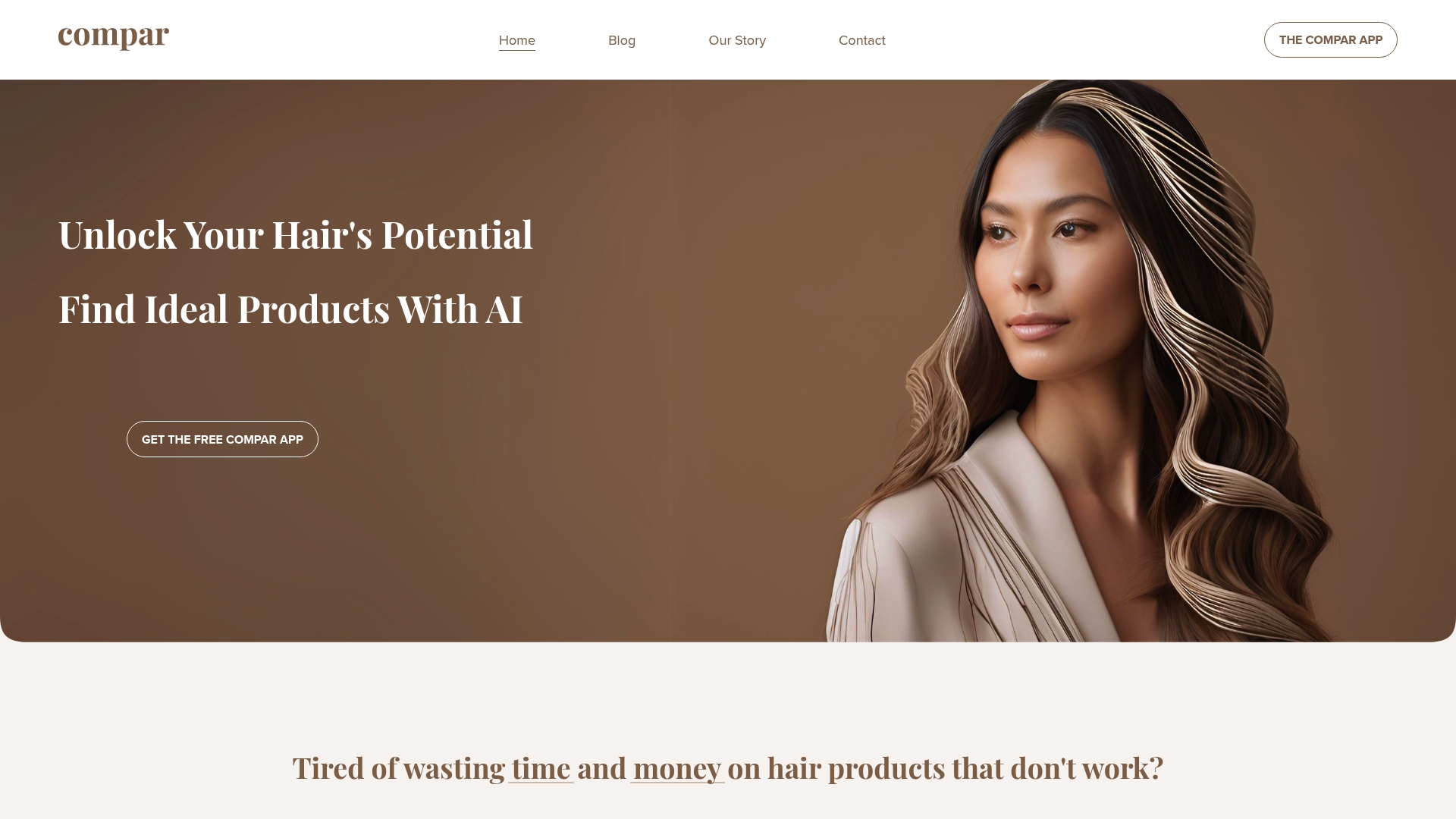
compar reads a selfie and a simple at-home test to produce a hair and scalp profile. It links that profile to ingredient-level guidance and tailored routines so recommendations map to real hair needs. The app is free to use and includes direct purchase options for recommended items while highlighting sustainable choices and support for diverse hair types.
Core Features
The app performs AI hair and scalp analysis from selfies and home tests, then builds a personalized hair profile that drives product matches and routines. It explains ingredient effects so you can compare formulas and avoid common irritants. The app also offers in-app shopping for recommended products and routine reminders to track progress.
Key Differentiator
compar blends machine learning with dermatology and trichology insights to produce recommendations that aim to be objective and brand neutral. That combination narrows recommendations to scientifically oriented choices rather than trending product lists. The focus on ingredient transparency and sustainability further separates its approach from generic recommendation engines.
Pros
The app pairs automated analysis with specialist input so recommendations feel grounded in hair science, not marketing. Being free to use lowers the barrier for trying a personalized routine, and direct purchase links remove friction when you decide to buy. The product list emphasizes ingredient clarity and clean beauty so people interested in formulation detail can make informed decisions.
Cons
- Requires a smartphone with a functioning camera for scans, which excludes people without those devices.
- The usefulness of recommendations depends on the model's accuracy, which may vary across individuals and hair conditions.
- The scope focuses on hair and scalp analysis only, so it does not replace a full beauty or medical evaluation.
When It May Not Fit
If you lack reliable camera access, compar cannot perform its core analysis and will not be useful. Professionals who need clinic-grade diagnostics should look for medically certified tools instead. If you want a single app that covers skin, makeup, and wellness beyond hair, this product will feel narrowly focused.
Who It's For
People who want science-focused hair advice and who are comfortable using an app to scan their hair will get the most value. It fits shoppers who care about ingredient transparency and want to reduce wasted trial purchases. Tech-savvy consumers seeking a low-cost way to test product matches will also benefit.
Real World Use Case
A user scans their scalp and hair images, answers a short home test, and receives a tailored routine with ingredient notes. They compare two recommended shampoos by ingredient and buy the cleaner option through the app. The user follows the suggested routine and uses the app to log changes over weeks.
Website: https://compar.app
Hairalyze
At a Glance
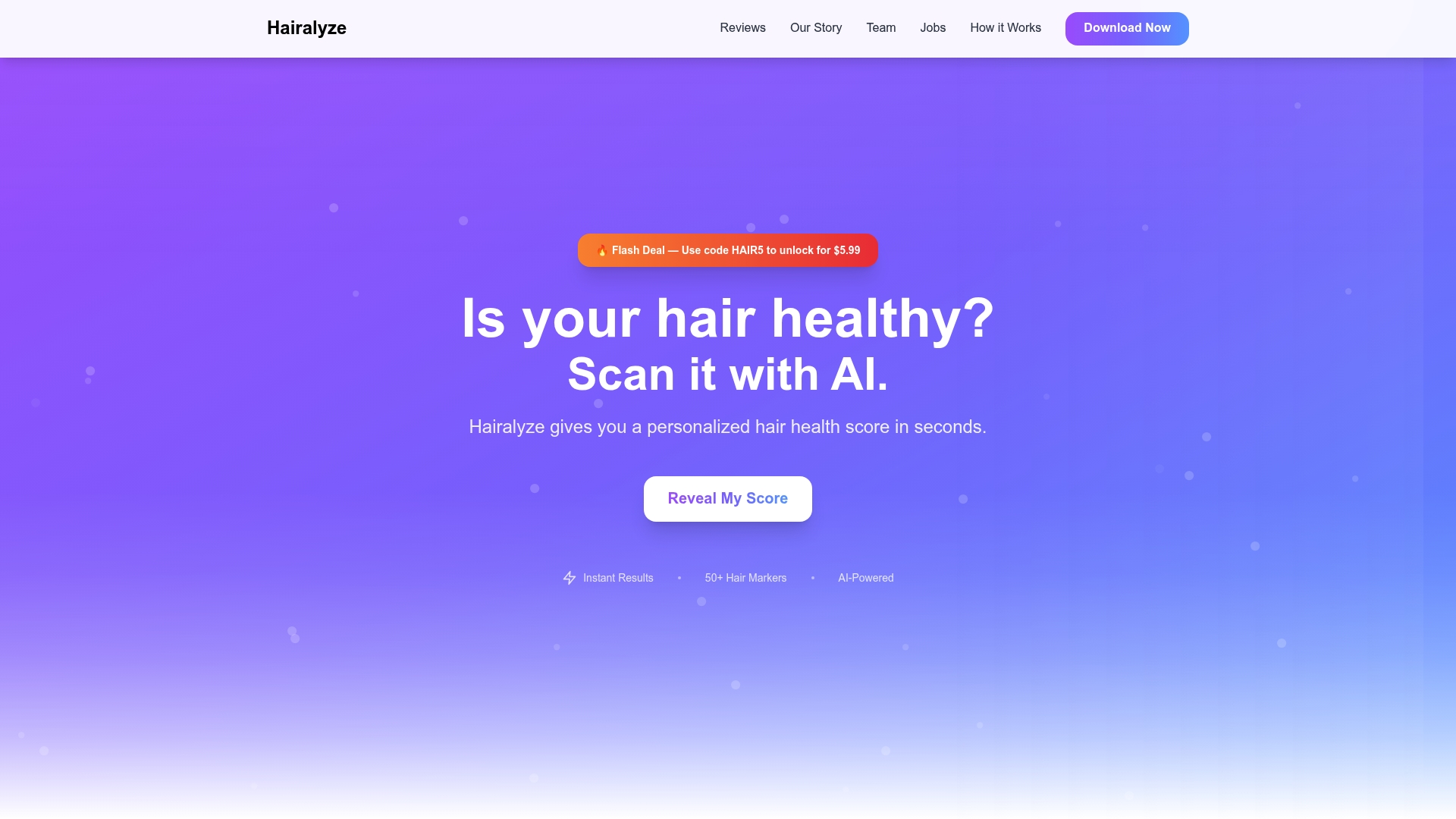
Hairalyze reports it analyzes over 50 hair markers from a single photo. That quick scan produces a hair health score and a damage-focused report. Results arrive in seconds, which suits users who want fast, actionable feedback.
Core Features
The app uses AI to analyze photos and generate a personalized hair damage report and score. It tracks progress over time and offers an AI stylist chat that recommends products and routines. Scans are designed to be fast and easy for busy users, letting people check changes between sessions.
Key Differentiator
That marker count lets Hairalyze detect many small signs of hair stress from a single photo. The combination of rapid scoring and the stylist chat separates it from basic selfie analyzers. The platform targets individual consumers rather than clinic or salon workflows.
Pros
The app delivers instant, personalized results from photos, which makes at home checks practical. The vendor advertises personalized routine suggestions with proven effectiveness, and the tracking feature helps you compare changes over weeks or months. Hairalyze is a cost effective alternative to salon consultations and reports compatibility with a range of hair types, with useful handling of curly hair.
Cons
- Limited explanation: Reviews and in app notes offer little deep detail about how each hair marker is measured or interpreted.
- Validation gap: The product focuses on individual use and does not list clinical validation or formal studies supporting its claims.
- Platform lock: Access requires the app store version initially, which blocks desktop or web workflows.
- Photo sensitivity: Results rely heavily on photo quality and lighting, so inconsistent images reduce accuracy.
When It May Not Fit
If you need clinical grade measurements or formal validation, this app is not the right choice. Teams such as salons or research groups looking for multi station workflows will find the mobile only model restrictive. People who require consistent results independent of photo conditions may need hardware instruments or in person assessments.
Who It's For
People who want quick, affordable hair health checks and simple routine guidance will get the most value. Busy students and casual users who prefer scanning with a phone fit the ideal profile. It also suits anyone who wants to compare progress over time without booking salon appointments.
Real World Use Case
A college student scans her hair after a long night to identify breakage and dryness. The app returns a damage score and tailored product recommendations via the AI stylist chat. She follows the routine for several weeks and uses the tracker to confirm visual improvement.
Pricing
Current offer: use code HAIR5 to unlock the app for $5.99. The promotion appears as a flash deal in the app listing and applies at checkout.
Website: https://hairalyze.com
VARL Hair
At a Glance
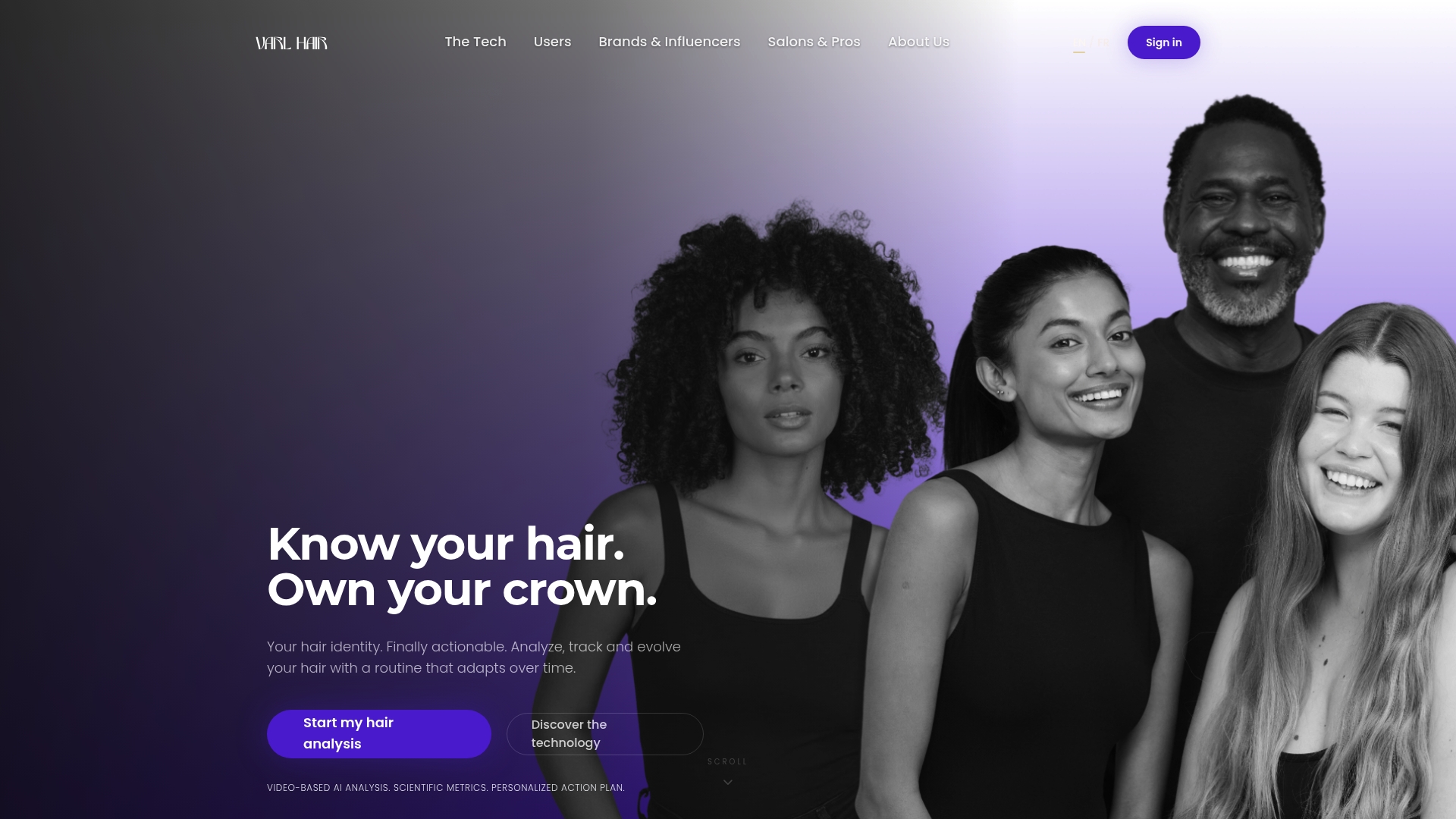
VARL Hair's marketing materials state ScanHairID™ delivers rapid, clinical-grade hair mapping via video-based analysis. The platform creates a dynamic biometric profile that tracks density, porosity, elasticity, curl structure, and scalp condition. That profile feeds product recommendations and a shared Hair Passport for use by consumers, salons, and brands.
Core Features
Video capture drives the analysis workflow, producing a Biometric ID™ that quantifies density, porosity, elasticity, curl pattern, and scalp health. The system generates a living Hair Passport that updates over time and plugs into a calendar to schedule routines and reminders. Real-time product matching works for both online and in-store interactions to align recommendations with the biometric profile.
Key Differentiator
The vendor advertises a proprietary biometric analysis tied to an ecosystem that connects consumers, professionals, and brands. That linkage aims to move product recommendations from guesswork to data driven matches using the biometric profile. The combination of hair mapping plus marketplace connections sets VARL Hair apart from simple diagnostic tools.
Pros
VARL Hair centralizes hair metrics into a reusable Biometric ID™, which helps salons repeat treatments and track progress with a shared record. The product matching feature uses those metrics to narrow recommendations to items that fit measured hair needs. Connecting brands and salons to the same dataset supports more consistent retail and in person advice. Automation of routines and calendar integration improves adherence by turning analysis into scheduled care.
Cons
- Accuracy depends heavily on the user device camera quality and lighting conditions, which can reduce analysis precision.
- The platform is in a pre launch beta, so some features may be incomplete or change frequently.
- Public third party validation is limited beyond early testimonials, leaving some vendor claims unverified.
- The depth of biometric output can overwhelm casual users who prefer simple, rule based guidance.
When It May Not Fit
If you primarily use low end phones or inconsistent lighting, this tool may not deliver reliable metrics. Teams that need fully validated clinical trials will find public validation thin at present. Casual shoppers who want fast, minimal guidance may prefer a simpler recommendation engine without biometric detail.
Who It's For
Individuals with textured hair who want measurable, science based routines will get the most from VARL Hair. Professional stylists and salons that want shared client records and repeatable metrics will benefit from the Hair Passport workflow. Brands seeking to improve product targeting with biometric inputs will find the ecosystem useful.
Real World Use Case
A user records a short video and receives a detailed biometric profile showing curl pattern, porosity, and scalp condition. The app schedules a tailored routine and suggests compatible products matched to the profile. A salon imports the Hair Passport to prepare a targeted treatment and avoids guesswork during the consultation.
Pricing
VARL Hair offers a free tier plus paid subscriptions. Plans run at €0, €4.99, and €8.99 per month with different feature sets and integration options. The tiers separate basic scanning from advanced routines and expanded professional or brand features.
Website: https://varl.fr
When It May Not Fit
If your clinic requires the highest-fidelity trichoscopic imaging, Hairscope may not replace an in-person examination. Practices that cannot control incoming photo quality will see weaker analysis results. Larger dermatology centers that need formal audit trails or specific certifications should verify security and compliance before adopting.
Genpulse
At a Glance
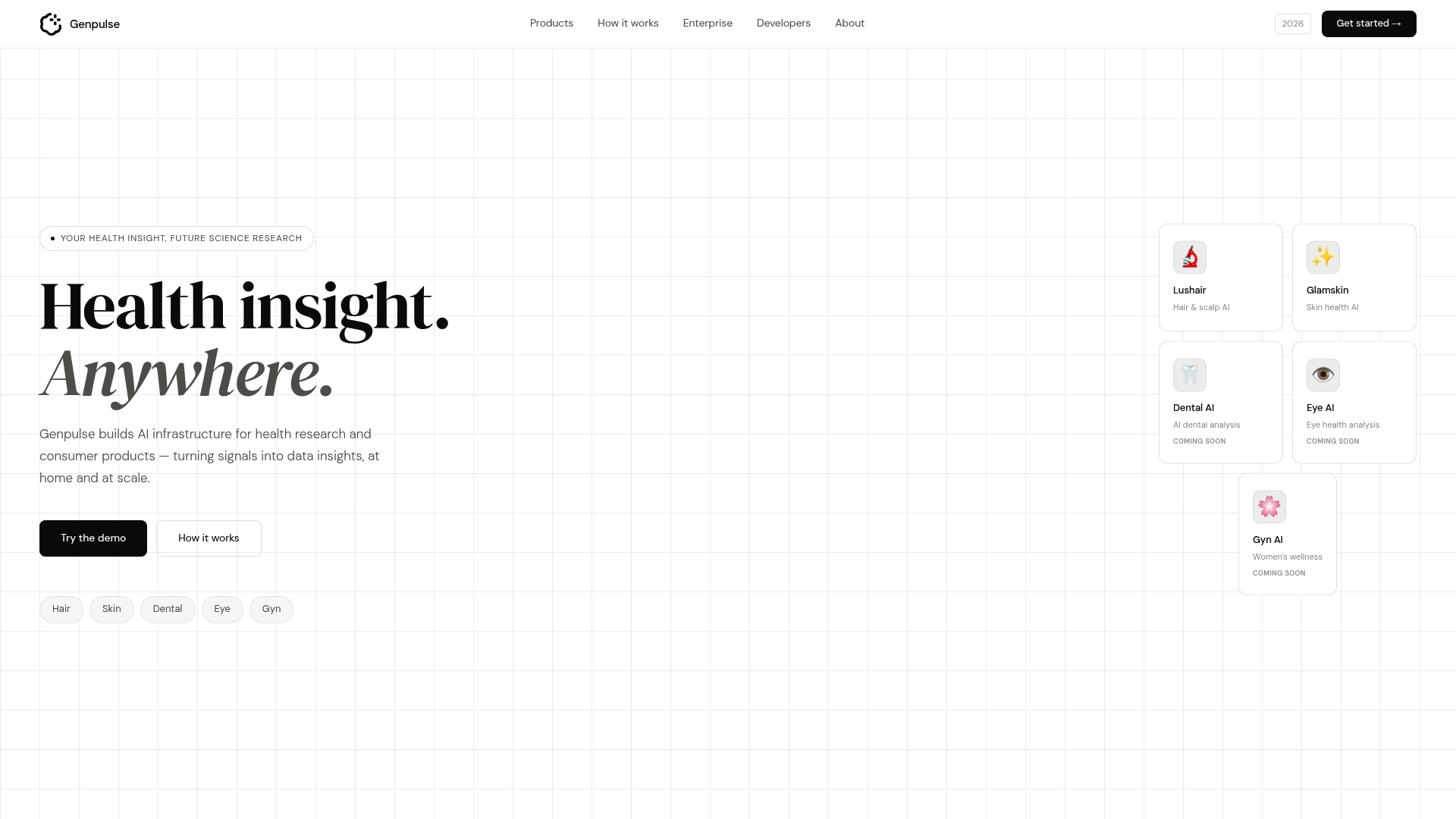
Genpulse reports real time analysis with high accuracy across purpose-built sensors for hair, skin, dental, eye, and women’s health. The company offers devices for research, enterprise deployments, and custom branded solutions. This combination targets clinics, research teams, and developers building diagnostic workflows.
Core Features
Genpulse pairs specialized sensors with AI models to capture and analyze physiological signals in real time, and it supports longitudinal tracking and comparative scans for treatment monitoring. The platform includes enterprise grade infrastructure, and according to the company, that infrastructure supports clinical scale workloads with high uptime and security compliance. Developers can extend the stack using APIs and SDKs and access datasets for model development.
Key Differentiator
Genpulse combines purpose built sensors with on device and cloud analysis while exposing datasets and developer tools for customization. The vendor advertises extensive research datasets alongside device telemetry and developer interfaces. That combination makes customization and white label deployment straightforward for teams that need both hardware and a development platform.
Pros
Genpulse delivers research grade accuracy claims across multiple health domains and provides hardware built specifically for each assessment type, which helps collect higher fidelity signals than generic imaging. Its enterprise grade infrastructure and security posture fit clinics and research institutions that require data controls and deployment support. The offering includes consumer facing reporting plus B2B APIs and SDKs, allowing clinics and developers to integrate screening or monitoring into existing workflows.
Cons
- Some product categories such as dental, eye, and women’s health are still coming soon and are not yet available for commercial use.
- Specific clinical validation details are not provided in the available material.
- Several solutions and APIs require engineering resources to integrate and deploy.
When It May Not Fit
Genpulse is not a good match for teams that need immediate, off the shelf commercial devices in the dental or eye categories. It is a poor fit for organizations without developer capacity to integrate APIs or build custom front ends. Buyers who require publicly reported clinical validation studies before procurement should look elsewhere.
Who It's For
Genpulse fits healthcare providers, research teams, and developers building health diagnostics solutions that combine hardware and software. It suits clinics that want to track treatment response over time and research groups needing high fidelity sensor data. Enterprise teams that plan white label deployments or custom integrations will find the offering aligned with those goals.
Real World Use Case
A dermatology clinic uses Genpulse’s AI skin analysis device to capture standardized scans at each visit. Clinicians compare scans over time to document treatment response, and the development team exports anonymized datasets for internal model validation. That accuracy claim supports more consistent monitoring than informal photo records.
Pricing
Not applicable — informational only. Pricing and commercial terms are handled through enterprise sales and custom quotes, with device, deployment, and licensing components typically discussed during vendor evaluation.
Website: https://gen-pulse.com
Comparison of alternatives
For readers exploring alternatives, diverging approaches to hair analysis present notable tradeoffs. Below, we delve into key performance differences among MyHair.ai, compar, Hairalyze, and VARL Hair.
Focus on Data Depth
MyHair.ai excels in transforming uploaded images into detailed maps of hair density and thinning areas, which enable longitudinal tracking. Compar's clean product recommendation system based on ingredient transparency appeals to users prioritizing eco-friendly choices. Hairalyze highlights scoring simplicity for fast at-home health checks, useful for casual users. VARL Hair offers high-dimensional biometric analysis ideal for salons that rely on repeatable, client-specific measurements.
Tailored Recommendations vs. Expert Connectivity
Compar emphasizes product-specific science and sustainable routines in a format simplifying informed consumer decision-making. MyHair.ai pairs its unique AI scans with clinic listing integrations, blending personalized diagnostics with professional treatment access. Meanwhile, VARL Hair's shared Hair Passport enables salons and brands to align product choices with precise biometric insights, suiting professional stylist workflows. Hairalyze's focused simplicity appeals to individuals preferring quick evaluations over detailed diagnostics.
Best fit
- People wanting image-based density quantification with clinical integration should choose MyHair.ai.
- Those prioritizing ingredient transparency and sustainable product picks find compar as a prime choice.
- Individuals seeking rapid photo-based scoring for casual checks will appreciate Hairalyze.
- Stylists requiring biometric data exchange for informed client care benefit from VARL Hair.
Our pick
While various apps cater to specific needs, for photo-driven tracking coupled with clinic-focused features, MyHair.ai stands out. It provides quantified diagnostics that combine high AI precision with clinic pathways, fitting users embracing professional guidance.
For those seeking effective solutions for hair analysis and management, here's a comparison of popular apps based on their core features and unique capabilities.
| Product Name | Core Feature | Key Differentiator | Best For | Notable Limitation |
|---|---|---|---|---|
| MyHair.ai | AI-powered image hair analysis and clinic integration | Advanced AI for visual hair density mapping | People tracking hair changes over time | Requires a subscription for premium features |
| compar | AI hair and scalp analysis with ingredient transparency | Science-focused, brand neutral guidance | People seeking ingredient clarity for products | Requires a smartphone for scans |
| Hairalyze | AI photo analysis for quick hair health scoring | High marker count for detailed individual feedback | Busy individuals needing rapid assessments | Relies heavily on photo quality for accuracy |
| VARL Hair | Video-based hair biometric analysis | Integration of biometric profiles with retail and salon workflows | Textured hair users needing shared records | Pre-launch beta with limited public validation |
| Genpulse | Real-time analysis via purpose-built sensors | Research-grade sensor accuracy and developer APIs | Clinics and research teams tracking treatment response | Requires engineering resources for integration |
Choosing the Right Hair Analysis App Among apps.apple.com Alternatives
Many people worried about hair loss want a clear way to track changes over time. They need personalized, image-based assessments that show hair health and guide treatment decisions. Myhair offers this by analyzing your photos with AI. It maps hairlines, identifies bald spots, and recommends products tailored to your unique pattern. This approach moves beyond subjective guesses to data-driven insights.
If you seek ongoing progress tracking combined with expert product suggestions, Myhair fits your needs. Benefit from a user-friendly platform with mobile app access to upload photos and view improvements over time. Explore how Myhair supports your hair health management at Myhair. Take control of your hair care with detailed scans and personalized plans today.
Myhair makes hair analysis simple and precise. Try it now to see clear results you can measure and share with your clinician or stylist.
Myhair
FAQ
How does Myhair's scanning workflow enhance hair health tracking?
Myhair generates detailed maps that allow for easy monthly comparisons of hair density and bald spots. The platform's high-precision auto-scan captures hairline and bald spots, making it straightforward for users to track changes over time. Utilize this feature to monitor your hair health effectively and make informed decisions on treatments.
What is the difference between compar and Myhair?
Compar excels in blending machine learning with dermatological insights, providing objective and brand-neutral recommendations. Myhair, on the other hand, focuses primarily on photo scans to deliver precise hair counts and tailor personalized treatment plans. Choose Myhair for detailed analysis driven by image data, while compar is better for ingredient-based recommendations.
Which platform offers personalized treatment plans?
Myhair provides personalized treatment plans based on each user's scan results. This capability stems from combining AI-powered hair analysis with personalized recommendations, tailoring solutions specifically to the user's needs. Users seeking customized hair care should consider starting with Myhair for effective treatment options.
Can I use Myhair on mobile devices?
Myhair offers an app download option for mobile access, enhancing usability for users who prefer using their smartphones. This mobile capability allows you to easily upload images and track your hair health from anywhere, making it convenient for regular monitoring of changes.
How does the AI analysis in Myhair support hair health improvements?
The AI analysis in Myhair produces personalized recommendations that are informed by both scan data and the user's specific hair needs. By leveraging these recommendations and tracking progress over time, users can effectively improve their hair health with tailored products and treatments.