TL;DR:
- Argan oil contains over 80% unsaturated fatty acids, supporting skin barrier health and elasticity. Clinical studies confirm that regular topical use improves skin elasticity within 60 days, especially for aging or dry skin. To maximize benefits, apply 1-3 drops on damp, clean skin with proper technique and choose cold-pressed, virgin oil.
Most people assume facial oils are the enemy of clear, balanced skin. That logic made sense decades ago, but argan oil for skin works differently than the heavy, pore-clogging oils that earned that reputation. Sourced from the kernels of Argania spinosa trees in Morocco, this lightweight oil has a biochemical profile that genuinely supports skin health at the cellular level. This guide covers what the science actually says, how to use it correctly, which skin types benefit most, and what to watch out for before making it part of your daily routine.
Table of Contents
- Key takeaways
- What argan oil for skin actually contains
- The anti-aging research behind argan oil
- How to use argan oil on your face correctly
- Which skin types benefit most from argan oil
- My honest take on argan oil for skin
- Personalize your skincare with Myhair
- FAQ
Key takeaways
| Point | Details |
|---|---|
| Clinically proven elasticity boost | Regular topical use improves skin elasticity measurably within 60 days, backed by clinical data. |
| Composition matters | Over 80% unsaturated fatty acids plus vitamin E make argan oil a genuine skin barrier supporter. |
| Less is more | One to three drops warmed between palms and pressed onto damp skin is all you need per application. |
| Not for fungal acne | Oleic acid in argan oil can feed Malassezia yeast, making it unsuitable for fungal acne conditions. |
| Quality determines results | Cold-pressed, virgin oil preserves the antioxidants that make argan oil effective. Refined versions lose them. |
What argan oil for skin actually contains
Before you understand what argan oil does, you need to understand what it is. The composition of argan oil sets it apart from most plant oils on the market. It contains over 80% unsaturated fatty acids, with oleic acid ranging from 43 to 49% and linoleic acid accounting for 29 to 36%. These two fatty acids work together in a way that single-fatty-acid oils simply cannot replicate.
Oleic acid penetrates deeply into the skin, delivering nutrients and improving the feel of the lipid barrier. Linoleic acid, meanwhile, is a component the skin cannot produce on its own. Deficiency in linoleic acid is directly linked to a compromised skin barrier, meaning increased water loss and heightened sensitivity. Argan oil provides both in a naturally balanced ratio, which explains why it suits most skin types without tipping into greasiness or irritation.
The antioxidant profile is equally notable. Tocopherols (vitamin E) reach roughly 62 mg per 100g, which is higher than many commonly used seed oils. These tocopherols neutralize free radicals that degrade collagen and accelerate visible aging. Beyond vitamin E, argan oil contains polyphenols, ferulic acid, squalene, and phytosterols. Ferulic acid stabilizes vitamin E and amplifies its free radical scavenging ability, creating a synergistic antioxidant effect that outperforms either compound alone.
Here is a quick look at how the key components function at the skin level:
- Oleic acid (43 to 49%): Penetrates the stratum corneum, softens skin texture, and supports deep hydration
- Linoleic acid (29 to 36%): Restores the lipid barrier, reduces transepidermal water loss, and calms inflammation
- Vitamin E (tocopherols): Neutralizes oxidative damage, protects against UV-induced aging, and supports cell membrane integrity
- Ferulic acid and polyphenols: Amplify antioxidant activity, protect collagen and elastin, and reduce visible signs of photoaging
- Squalene and phytosterols: Soften skin, reduce inflammation, and support barrier repair without clogging pores
Pro Tip: Look for the term "cold-pressed and virgin" on the label. Cold-pressed argan oil preserves heat-sensitive antioxidants like gamma-tocopherol and ferulic acid. Refined versions are cheaper but significantly less effective.
The anti-aging research behind argan oil
The benefits of argan oil for anti-aging are not marketing language. They are measurable. A clinical trial with postmenopausal women measured skin elasticity using Cutometer readings before and after 60 days of regular argan oil application. The results showed statistically significant improvements in gross elasticity, net elasticity, and biological elasticity (p < 0.05). These are objective, instrument-based measurements, not self-reported perceptions.
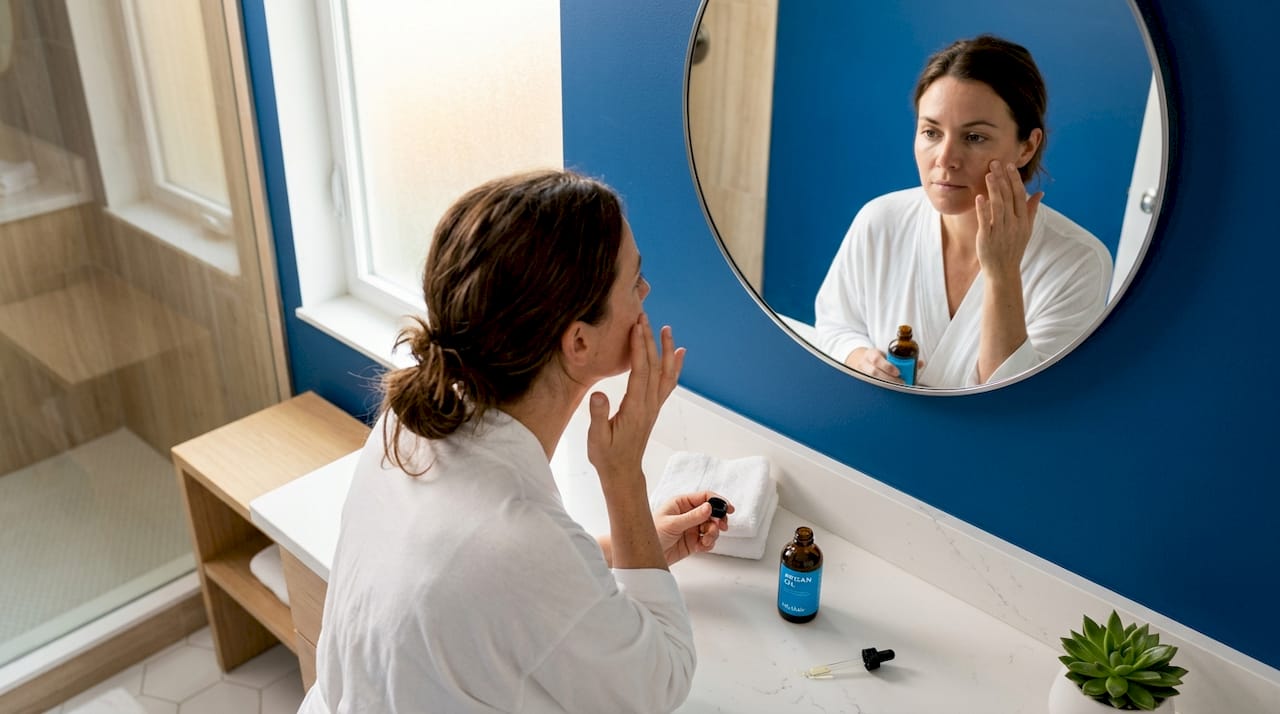
Why does postmenopausal skin respond so well? Estrogen decline after menopause depletes ceramide 1-EOS levels in the skin. This specific ceramide is responsible for binding water within the lipid matrix. Postmenopausal skin benefits uniquely from argan oil's fatty acid profile because it helps restore that depleted barrier function faster than many synthetic moisturizers can.
The research also distinguishes between topical and oral use, and both show results. A separate group of women consuming 25 grams of argan oil daily showed marked improvements in biological elasticity and resonance running time. Oral consumption delivers systemic benefits by increasing circulating fatty acids that support the skin from the inside out. Topical application, by contrast, works directly on the barrier and surface.
"Argan oil is one of the few natural ingredients where both the topical and dietary research point in the same direction. The fatty acid profile supports the skin barrier whether it arrives from the outside or the inside." — dermatological summary, North Biomedical
The argan oil skin treatment angle for mature skin is particularly strong because of how ferulic acid and polyphenols work together. These compounds protect collagen and elastin from oxidative degradation, which is the primary mechanical cause of wrinkles and sagging. This is not moisturization masking the problem. It is antioxidant activity addressing one of its root causes. If you want to understand more about how argan oil supports mature tissue, the research on argan oil and skin elasticity connects directly to these same mechanisms in hair and scalp health.
How to use argan oil on your face correctly
Most people who are disappointed with argan oil results made an application error. The technique matters as much as the product itself.
- Start with clean, slightly damp skin. Wash your face, then wait about 30 seconds. Do not towel dry completely. Applying to damp skin locks in residual moisture and helps the oil absorb rather than sit on the surface.
- Use 1 to 3 drops only. More is not better. Experts consistently recommend a small number of drops for the full face. Using too much is the most common cause of the greasy feel people complain about.
- Warm the oil between your palms before applying. Press your palms together, rub gently, then press them onto your face. This emulsifies the oil slightly and opens absorption. Dragging cold oil across dry skin gives poor results.
- Press, do not rub. Apply with a pressing motion rather than rubbing. Rubbing creates friction that can cause pilling if you have other products underneath.
- Layer it correctly. If you use serums, apply them first. Argan oil goes after water-based layers and before SPF in the morning. At night, it works well as your final step after moisturizer if your skin is particularly dry, or as a replacement for moisturizer on normal to dry skin.
- Time your usage. PM use is ideal for most skin types because oil-based products work well during skin's natural overnight repair cycle. AM use is fine but keep it minimal so SPF sits cleanly on top.
Pro Tip: Argan oil works as an excellent buffer with retinoids. If retinoids or benzoyl peroxide are drying out your skin, applying a drop or two of argan oil after them reduces irritation without blocking their efficacy.
Which skin types benefit most from argan oil
Argan oil is broadly well-tolerated, but it is not universally appropriate. Understanding where it excels and where it can cause problems saves you wasted time and money.
Skin types that respond well
Dry skin benefits most. The fatty acid combination repairs the barrier, reduces water loss, and softens texture noticeably within days. If you struggle with tight, flaky, or rough skin, this is one of the most effective natural fixes available. The moisturizing properties of argan oil translate directly from scalp to skin. The same barrier-repair mechanisms apply.
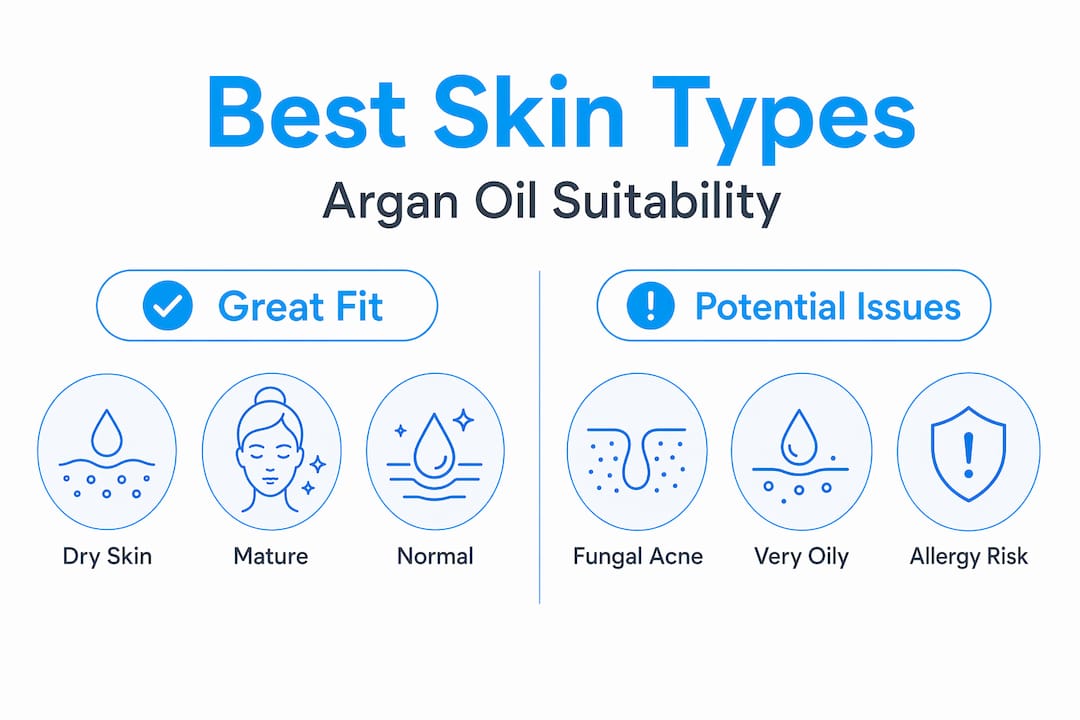
Mature and normal skin also respond strongly. The antioxidant load is high enough to make a measurable difference, and the non-greasy finish makes daily use practical.
Combination skin can use argan oil strategically. Apply it only to the drier zones (cheeks and around the mouth) and skip the T-zone entirely.
Considerations for sensitive and acne-prone skin
The argan oil comedogenic rating is zero, meaning it will not clog pores under normal circumstances. Dermatologists generally consider it safe for most acne-prone skin when used sparingly. Here is where it gets more nuanced:
| Skin condition | Argan oil suitability | Notes |
|---|---|---|
| Dry skin | Excellent | Primary use case; repairs barrier quickly |
| Normal skin | Very good | Works as a daily moisturizer or supplement |
| Combination skin | Good with care | Apply only to dry areas, avoid T-zone |
| Acne-prone (non-fungal) | Generally safe | Use sparingly; comedogenic rating is zero |
| Fungal acne (Malassezia) | Avoid | Oleic acid feeds Malassezia yeast |
| Oily skin in humid climates | Use with caution | May feel heavy; test with minimal amounts first |
The fungal acne caveat is one most skincare guides skip over. Oleic acid can feed Malassezia yeast, which drives fungal acne breakouts. If you have ever experienced small, uniform, itchy bumps across your forehead or cheeks, particularly in warm weather, fungal acne may be the cause. Argan oil would make that condition worse, not better. In that case, look toward squalane (a standalone product) or rosehip oil, which has a much lower oleic acid content.
Always patch test before applying any new oil to your full face. Apply a small amount inside your forearm or jaw area for 24 to 48 hours and watch for redness, itching, or breakouts.
My honest take on argan oil for skin
I have watched argan oil move from niche natural beauty ingredient to mass-market staple, and that shift has created a lot of confusion. People expect it to do everything. It does not.
What I have seen work consistently is using quality argan oil as a targeted barrier-support oil for skin that is aging, stressed, or compromised by active treatments like retinoids. In that role, it genuinely delivers. The clinical data on elasticity improvements is real, and the fatty acid profile is more functional than most plant oils you will find at the same price point.
What I have seen fail consistently is people pouring it on like a moisturizer substitute without considering their skin type, then concluding it does not work. Application technique and amount matter enormously. Two drops pressed into damp skin is not the same as four drops rubbed into dry skin. The results are completely different.
The quality issue is not trivial either. Cold-pressed, unrefined, organic argan oil from a transparent source will outperform a refined version every time. The shelf-life stability of cold-pressed argan oil is actually better than many plant oils, so paying slightly more for the right version makes sense. If the bottle smells rancid or nutty in a sharp way, the oil has oxidized and you should discard it.
My advice: treat it as a precision tool, not a cure-all. Use it correctly, choose the right source, and it earns its place in almost any serious skincare routine.
— Cyriac
Personalize your skincare with Myhair

Understanding ingredients like argan oil is one piece of the puzzle. Knowing exactly how your skin and hair are responding over time is another. Myhair uses AI-powered analysis to give you a detailed picture of your hair and scalp health, tracking changes and flagging patterns that are easy to miss on your own. The same principles that make argan oil effective for skin, including barrier support and nutrient delivery, apply directly to scalp health. If you want tailored product guidance based on your actual hair condition rather than generic recommendations, Myhair's AI hair analysis tool gives you that clarity. You can also get started quickly through the personalized onboarding to see your hair health score and get recommendations that match your specific needs.
FAQ
What does argan oil do for your skin?
Argan oil moisturizes, strengthens the skin barrier, and provides antioxidant protection against aging. Clinical research shows it improves skin elasticity measurably within 60 days of regular use.
Is argan oil good for acne-prone skin?
Argan oil has a comedogenic rating of zero, making it generally safe for most acne-prone skin types when used sparingly. However, people with fungal acne should avoid it because its oleic acid content can worsen Malassezia-related breakouts.
How many drops of argan oil should I use on my face?
One to three drops warmed between your palms is sufficient for the full face. Using more than that typically causes a greasy residue and reduces absorption effectiveness.
What is the best argan oil for skin?
Cold-pressed, virgin, cosmetic-grade argan oil preserves the most antioxidants and delivers the best results. Refined oils are cheaper but lose the heat-sensitive compounds that make argan oil effective for anti-aging and barrier repair.
Can I use argan oil on my face every day?
Yes. Argan oil is stable, non-irritating for most skin types, and well-suited to daily use. Apply it to slightly damp skin at night for best results, or use a minimal amount in the morning before SPF.