TL;DR:
- Avocado oil nourishes hair by moisturizing strands and supporting scalp health without creating new follicles. It improves elasticity, reduces breakage, and adds shine but does not directly promote hair growth. Regular scalp massage and treatment help retain length by minimizing breakage, not stimulating follicle growth.
Avocado oil for hair is defined as a nutrient-rich, plant-based oil that moisturizes strands, increases elasticity, and supports scalp health without directly stimulating new follicle growth. Composed of 56–77% monounsaturated oleic acid, it penetrates the hair shaft more deeply than many other oils, making it one of the more effective natural conditioning agents available. It works across all hair types, from fine and straight to thick and coily, though the amount you use should vary by texture. The core truth about this oil: it improves the conditions your hair needs to thrive, but it does not create new hair where none is growing.
What are the main benefits of avocado oil for hair?
Avocado oil delivers measurable benefits at both the strand and scalp level, backed by its unique fatty acid and vitamin profile.
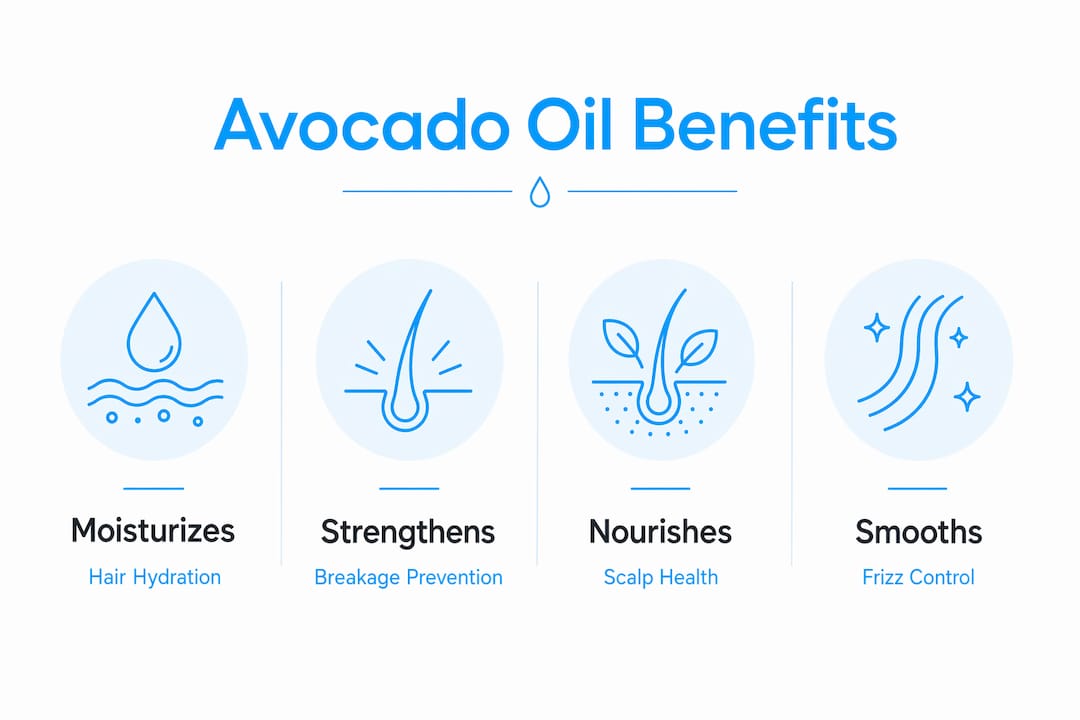
- Deep moisture and strand protection. Oleic acid is small enough to slip past the cuticle layer and hydrate the cortex of the hair shaft. That internal moisture reduces brittleness and makes strands more resistant to snapping during brushing or styling.
- Increased elasticity and flexibility. Hair with better moisture retention stretches before it breaks. This is the mechanical reason avocado oil reduces breakage, not a chemical repair process.
- Vitamins E, B complex, and K. Vitamin E neutralizes oxidative damage from UV exposure and pollution. Vitamin K may prevent scalp calcification, a condition where mineral deposits physically block follicles and slow growth. B-complex vitamins support overall scalp maintenance and cell turnover.
- Slip and friction reduction. Hair care contributor Morgan Reed notes that avocado oil's lubricity is one of its most underrated qualities. When you detangle wet hair, the oil reduces the friction between strands, which cuts down on the mechanical breakage that most people mistake for slow growth.
- Shine and manageability. A thin coating of oleic acid on the outer cuticle reflects light and smooths the surface, giving hair a polished appearance without the greasiness associated with heavier oils like castor oil.
Pro Tip: Add three drops of avocado oil to your regular conditioner before rinsing. You get the slip and shine benefits without committing to a full pre-shampoo treatment every wash day.
The antioxidant properties of avocado oil also matter for long-term hair health. Free radical damage from sun, heat tools, and environmental pollution degrades the protein structure of hair over time. Regular oil application creates a partial barrier against that damage, slowing the cumulative wear that makes hair look dull and feel rough.
Does avocado oil actually grow new hair?
No clinical evidence supports the claim that avocado oil creates new hair follicles or functions as a direct growth stimulant. This is the most common misconception surrounding avocado oil hair treatment, and it is worth addressing directly before you build expectations around it.
What avocado oil does is improve the conditions for growth. A healthier scalp with better circulation and fewer blocked follicles is a scalp where existing hair grows without obstruction. Vitamin K's role in preventing follicle calcification is a real mechanism, but it removes a barrier to growth rather than creating new growth capacity.
"If you're experiencing sudden shedding, bald patches, or significant thinning, no oil will address the underlying cause. Those are signs of conditions like alopecia areata, telogen effluvium, or hormonal imbalance that require a dermatologist's evaluation." — naturalhaircares.com
The more practical growth benefit is length retention. Many people believe their hair is not growing when it is actually breaking off at the same rate it grows. Avocado oil's slip effect reduces that daily friction breakage, so the hair you grow actually stays on your head long enough to show length. That is a real, measurable outcome. It just is not the same as stimulating follicles.
Pro Tip: Track your hair length monthly with a photo against a fixed reference point. If your length is increasing after adding avocado oil to your routine, the oil is working through breakage reduction, not follicle stimulation.
For anyone dealing with pattern hair loss or unexplained shedding, see a board-certified dermatologist. Avocado oil complements medical treatment. It does not replace it.
How to use avocado oil for the best results
The technique you use matters more than the quantity you apply. A thorough scalp massage with the correct amount of oil delivers far more benefit than simply coating the hair shaft and rinsing.
Here is a step-by-step routine that works for most hair types:
- Measure your oil. Experts recommend 2–3 tablespoons of avocado oil for a full scalp treatment. Fine hair should start with one tablespoon and adjust from there.
- Warm the oil slightly. Place the oil in a small bowl set inside a cup of hot water for two minutes. Warm oil absorbs faster and feels more comfortable on the scalp.
- Section your hair. Work in four sections so you reach the entire scalp, not just the top layer.
- Massage for 5–10 minutes. Use your fingertips, not your nails, in small circular motions. This step improves circulation and absorption more than any other part of the routine.
- Extend to the lengths. After the scalp is covered, smooth the remaining oil down the mid-lengths and ends where split ends and dryness concentrate.
- Leave on for at least one hour. Overnight application under a satin cap gives maximum penetration. One hour is the minimum for moisture retention benefits.
- Shampoo twice. One shampoo pass often leaves residue. Two passes remove the oil fully without stripping the moisture it deposited.
For a quick avocado oil hair mask, mix two tablespoons of avocado oil with one ripe mashed avocado and one tablespoon of honey. Apply to damp hair, cover with a shower cap, and leave for 30 minutes before rinsing. The combination of oil and fruit provides both lipid and water-based hydration simultaneously.
Pro Tip: If your hair feels heavy or greasy after using avocado oil, you used too much or did not shampoo thoroughly enough. Reduce the amount by half and try a clarifying shampoo on the second wash pass.
You can also use avocado oil as a leave-in conditioner on dry or damp hair. One or two drops worked through the ends controls frizz and adds shine without buildup, provided you do not overdo it. For natural remedies for hair breakage, avocado oil fits naturally into a broader oil routine alongside lighter options like argan or jojoba.
Which hair types benefit most from avocado oil treatment?
Thick, curly, coily, and color-treated hair benefit most from avocado oil because these textures have higher porosity, more surface area, and greater moisture needs. Curly and coily hair also has more points of curvature where the cuticle lifts, making it more vulnerable to moisture loss and breakage. Avocado oil's density fills those gaps and seals the cuticle effectively.
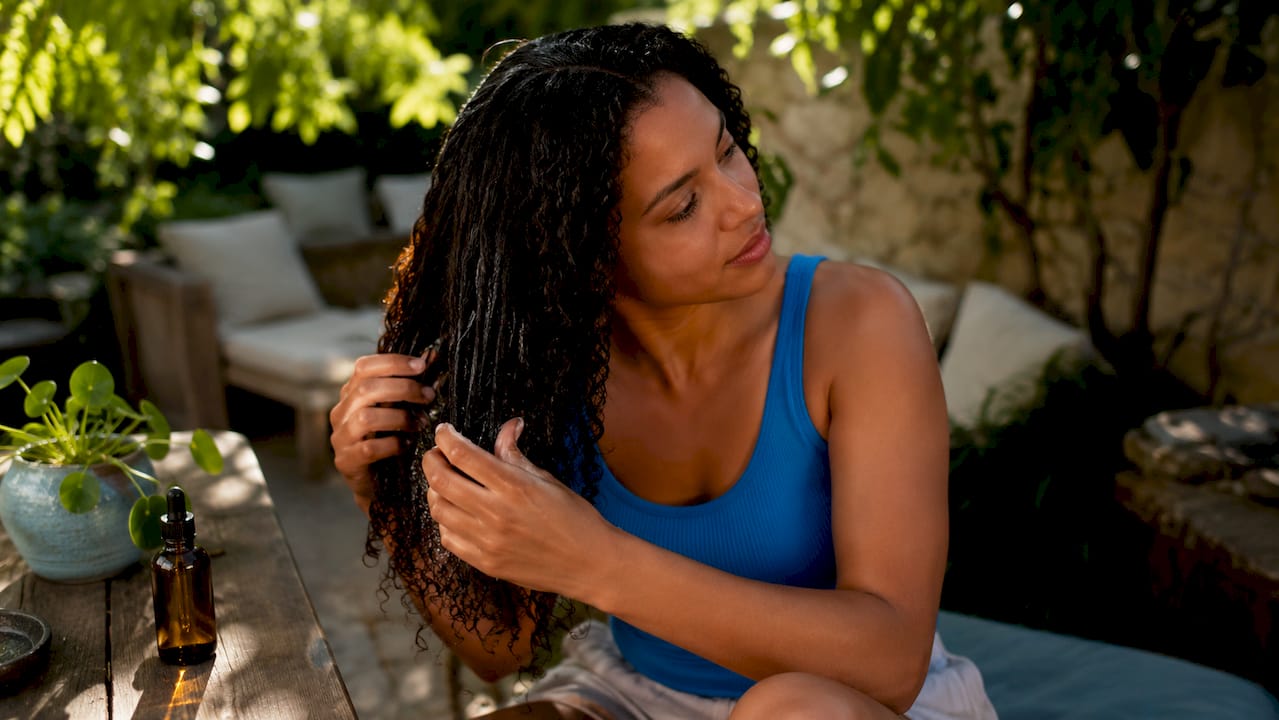
For avocado oil for dry hair specifically, the oleic acid content makes it one of the better single-ingredient options. Dry hair lacks lipid content in the cuticle layer, and oleic acid directly replaces what is missing.
| Hair type | Suitability | Recommended amount |
|---|---|---|
| Thick, coily, or curly | Excellent | 2–3 tablespoons for scalp treatment |
| Dry or damaged | Excellent | 2 tablespoons, focus on ends |
| Color-treated | Very good | 1–2 tablespoons, weekly treatment |
| Normal or wavy | Good | 1 tablespoon, bi-weekly |
| Fine or low-porosity | Use sparingly | 3–5 drops as a finishing oil only |
Fine or low-porosity hair sits at the bottom of this list for a specific reason. Low-porosity hair has a tightly sealed cuticle that resists absorption. Heavy oils sit on the surface rather than penetrating, which leads to buildup and limpness. If you have fine hair, use avocado oil as a finishing touch on the ends rather than a full scalp treatment.
For frizz control, avocado oil works by smoothing the cuticle and reducing the hair's tendency to absorb ambient humidity. For dandruff, its anti-inflammatory fatty acids soothe the scalp and reduce flaking over time, though it is not a substitute for medicated shampoos in cases of seborrheic dermatitis. Building an effective oil hair routine around your specific texture will get you to results faster than applying any oil without a plan.
One clarification worth making: avocado oil does not repair split ends. It coats the hair shaft and prevents new mechanical damage, but it cannot chemically bond a split end back together. The only fix for split ends is a trim. Avocado oil buys you time between trims by slowing the rate of new damage.
Key takeaways
Avocado oil improves hair health through deep moisture, breakage prevention, and scalp support, but it does not directly stimulate new follicle growth.
| Point | Details |
|---|---|
| Core mechanism | Oleic acid penetrates the hair shaft to hydrate from within and reduce brittleness. |
| Growth clarification | Avocado oil supports length retention by reducing breakage, not by creating new follicles. |
| Best application | Massage 2–3 tablespoons into the scalp for 5–10 minutes, then leave on for at least one hour. |
| Best hair types | Thick, curly, coily, dry, and color-treated hair absorb and benefit most from regular use. |
| Split end reality | Avocado oil prevents new damage by coating the shaft but cannot repair existing split ends. |
Why I think most people are using avocado oil wrong
After spending years looking at how people integrate natural oils into their hair care routines, the pattern I see most often is this: someone buys a bottle of avocado oil, applies it once, does not see dramatic growth in a month, and concludes it does not work. That is the wrong test entirely.
Avocado oil is not a treatment you evaluate by growth rate. You evaluate it by breakage rate. Take a close look at your brush after a wash day before you start using the oil, then again after six weeks of consistent use. If you are losing fewer strands to mechanical breakage, the oil is doing exactly what it is supposed to do.
The second mistake I see is applying too much too often on fine hair. Avocado oil is dense. Fine hair does not need a full scalp treatment. Three drops worked through the ends on wash day is enough to get the protective and shine benefits without the heaviness.
The third mistake is expecting avocado oil to replace medical care. I have seen people delay seeing a dermatologist for months because they were convinced an oil routine would fix their thinning. Oils are supportive tools. They work best when the underlying scalp environment is healthy. If something looks wrong, get it checked. Avocado oil will still be there after your appointment.
The underrated use case, in my experience, is pre-shampoo application the night before wash day. Overnight penetration time makes a noticeable difference in how soft and manageable hair feels after rinsing. It is the simplest upgrade to an existing routine and the one most people skip because they do not want to sleep with oil in their hair. A satin pillowcase or a loose satin cap solves that problem completely.
— Cyriac
See what your hair actually needs before adding more products
Understanding which oils and treatments your hair genuinely needs starts with knowing your hair's current condition, not guessing based on texture alone.

Myhair uses AI-powered analysis to assess your hair health from a scan, identifying patterns of thinning, breakage, and scalp condition that are invisible to the naked eye. Instead of applying avocado oil across the board and hoping for results, you get a personalized hair analysis that tells you exactly where your hair needs support and which treatments are most likely to help. Myhair's app onboarding takes minutes and gives you a starting point grounded in your actual hair data, not generic advice. If you are serious about natural hair care, that kind of precision changes everything.
FAQ
Is avocado oil good for all hair types?
Avocado oil works for most hair types, but thick, curly, and dry hair benefit most. Fine or low-porosity hair should use only a few drops to avoid buildup and limpness.
How often should I use avocado oil on my hair?
Once a week as a pre-shampoo scalp treatment is the standard recommendation for most hair types. Color-treated or very dry hair can use it twice weekly without issue.
Can avocado oil fix split ends?
No. Avocado oil coats the hair shaft to prevent new breakage but cannot chemically repair a split end. Only trimming removes split ends permanently.
How long should I leave avocado oil in my hair?
Leave it on for a minimum of one hour before shampooing. Overnight application under a satin cap gives the deepest moisture penetration and the best results.
Will avocado oil make my hair grow faster?
Avocado oil does not directly stimulate follicles or accelerate the growth cycle. It supports length retention by reducing breakage, which makes hair appear to grow faster when breakage was the original problem.