TL;DR:
- Ayurvedic hair loss treatment focuses on balancing internal doshas and external herbal therapies to address root causes and stimulate regrowth. It primarily targets Pitta imbalance, nutrient deficiencies, and systemic inflammation through herbs like Bhringraj and Amla, combined with scalp massage and dietary adjustments. Consistent practice over at least four to six months is necessary for visible results, especially in lifestyle-related hair loss cases.
Ayurvedic hair loss treatment is a holistic system that combines internal dosha balancing with external herbal therapies to reduce shedding and stimulate regrowth. Unlike conventional approaches that target symptoms at the scalp surface, Ayurveda addresses root causes including Pitta imbalance, nutritional deficiencies, and systemic inflammation. Key herbs like Bhringraj and Amla, warm oil scalp protocols, and targeted dietary changes form the core of this practice. Clinical reports show around 60% efficacy for lifestyle-related hair loss cases, with one documented patient showing measurable improvement after just four months of consistent treatment.
What causes hair loss in Ayurveda and how does treatment target these causes?
Ayurveda classifies hair loss under the term Khalitya, a condition driven primarily by excess Pitta dosha generating heat in Rakta (blood) and Rasa dhatu (plasma). This heat damages hair follicles from within, causing progressive thinning and shedding. Excess Pitta in blood and tissues is the classical explanation for why some people lose hair in response to stress, sun exposure, or a diet heavy in spicy and fermented foods.
The contributors to Khalitya read like a modern stress inventory: emotional intensity, irregular sleep, chemical scalp products, and prolonged sun exposure all amplify Pitta. What makes this framework clinically useful is that it points directly to correctable behaviors. You are not just managing a symptom. You are identifying and removing the source of follicular damage.
Ayurvedic treatment operates through two primary strategies. Shodhana refers to purification therapies that clear accumulated toxins (Ama) from the body. Shamana refers to palliative measures that calm aggravated doshas without aggressive detox. For most people experiencing early to moderate hair loss, Shamana is the practical starting point.
- Internal herbs like Bhringraj powder, Amla, and Brahmi reduce systemic Pitta and nourish the dhatus that feed hair follicles.
- External oils applied warm to the scalp deliver active compounds directly to follicle tissue while cooling local heat.
- Dietary shifts away from Pitta-aggravating foods reduce the internal fire that drives follicle damage.
- Lifestyle adjustments including stress management and sleep regulation address the emotional and behavioral triggers of Khalitya.
Pro Tip: If you are unsure whether Pitta is your dominant imbalance, track your hair loss patterns. Pitta-type loss typically presents as diffuse thinning across the crown, often worsening in summer or during high-stress periods.
Which herbs and oils work best for Ayurvedic hair regrowth?
The best ayurvedic oils for hair and the herbs that power them are not interchangeable. Each works through a distinct biological mechanism, and understanding those mechanisms helps you build a protocol that actually fits your hair loss pattern.

Bhringraj (Eclipta alba) is the most widely used herb in Ayurvedic hair care and earns that status through both classical reputation and modern evidence. Bhringraj combined with Amla addresses hair loss by stimulating follicle growth while simultaneously cooling the follicular heat that causes damage. Applied as a warm oil, Bhringraj penetrates the scalp to improve circulation and reduce inflammation. Taken internally as a powder, it works systemically to lower Pitta and nourish Rasa dhatu.
Amla (Emblica officinalis) cools Pitta and supports collagen synthesis, which directly strengthens the follicle structure. Collagen degradation around the follicle is one of the less-discussed contributors to hair miniaturization, and Amla's high vitamin C content addresses this at the source. It also acts as a natural antioxidant, protecting follicle cells from oxidative stress.
Polygonum multiflorum (He Shou Wu) is a classical Chinese herb that has gained significant attention in Ayurvedic-adjacent herbal medicine. Plant-derived nanovesicles from Polygonum multiflorum activate β-catenin signaling in human hair follicles, promoting measurable shaft elongation in ex vivo studies. This molecular pathway is the same one targeted by some pharmaceutical hair loss drugs, which validates the herb's mechanism at a cellular level.
Kukui nut oil is less commonly discussed but scientifically compelling. Kukui nut oil promotes hair growth by activating Nrf2 antioxidant signaling and increasing prostaglandin F2α production in follicle tissue. A randomized human trial confirmed its efficacy, making it one of the few Ayurvedic-adjacent oils with direct clinical trial support.
| Herb or oil | Primary mechanism | Best use case |
|---|---|---|
| Bhringraj oil | Stimulates follicles, reduces scalp Pitta | Diffuse thinning, Pitta-type loss |
| Amla | Collagen support, antioxidant protection | Brittle hair, follicle weakening |
| Polygonum multiflorum | β-catenin signaling, follicle proliferation | Early androgenetic thinning |
| Kukui nut oil | Nrf2 activation, prostaglandin pathway | Oxidative stress-related loss |
Pro Tip: Customize your oil base to your dosha. Coconut oil suits Pitta types because of its cooling properties. Sesame oil suits Vata types because of its warming and grounding nature. The herb infused in the oil matters, but so does the carrier.
How to apply Ayurvedic treatments for the best results
Knowing which herbs to use is only half the equation. Application protocol determines whether those herbs actually reach and activate your follicles. Consistency and duration are not optional variables here. They are the treatment.
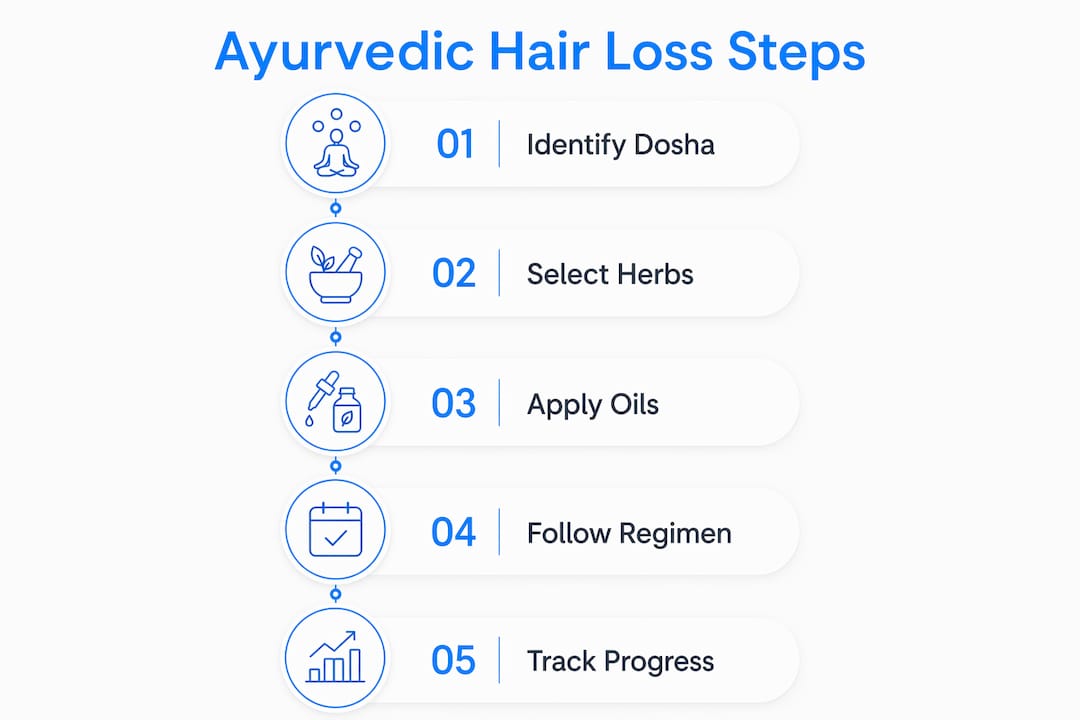
- Warm your oil before application. Heat the oil to body temperature or slightly above. Warm oil penetrates the scalp more effectively than room-temperature oil and enhances circulation during massage. Never use oil that is uncomfortably hot.
- Massage for at least four minutes. Daily scalp massage increases blood flow and has been shown to improve hair thickness in standardized studies. Use your fingertips, not your nails, and work in small circular motions from the hairline inward.
- Apply oil two to three times per week. Leave it on for 30 to 60 minutes minimum. Overnight application yields the best absorption. Rinse with a mild, sulfate-free shampoo the following morning.
- Take internal herbs daily. The standard protocol combines 3g Bhringraj powder with 3g Amla powder taken daily, typically mixed with warm water or honey. This systemic approach addresses the internal Pitta imbalance that topical oils cannot reach alone.
- Adjust your diet. Excess spicy, fermented, and sour foods increase Pitta and worsen follicle damage. Replace them with cooling, nourishing options: cucumber, coconut, leafy greens, sweet fruits, and dairy if tolerated.
- Commit to a minimum of four to six months. Visible results require at least four months of consistent practice. Most people who abandon Ayurvedic treatment do so in the first six weeks, before any measurable change has occurred.
Pro Tip: Track your shedding count weekly rather than looking in the mirror daily. Shedding reduction is the first sign that treatment is working, and it shows up weeks before visible regrowth. A simple count on your shower drain gives you objective data to stay motivated.
For a broader look at natural hair regrowth methods that complement this protocol, Myhair has compiled research-backed home approaches that pair well with Ayurvedic practice.
How does Ayurvedic treatment compare to conventional hair loss options?
Ayurveda excels at early-stage, lifestyle-related hair loss. For diffuse thinning driven by stress, poor diet, or hormonal fluctuation, a well-executed Ayurvedic protocol addresses the cause rather than masking the symptom. Ayurvedic and herbal approaches support follicle health in mild to moderate cases, with visible results possible within 6 to 12 months of consistent practice.
The honest limitation is androgenetic alopecia (AGA), the genetic form of hair loss driven by DHT sensitivity. Ayurveda cannot reverse advanced AGA alone. Medical interventions including minoxidil, finasteride, or hair transplant surgery remain the standard of care for significant genetic loss. This is not a failure of Ayurveda. It is a scope issue.
Where Ayurveda holds a genuine advantage over minoxidil and similar topical treatments is in systemic effect and side effect profile. Minoxidil works only while you use it and does not address the internal conditions that drive loss. Ayurvedic treatment, when practiced correctly, targets imbalance not just symptoms, which means the improvements can persist after treatment ends.
- Ayurveda works best for: stress-related loss, postpartum shedding, nutritional deficiency hair loss, early diffuse thinning, scalp inflammation.
- Medical treatment is necessary for: advanced AGA, alopecia areata, scarring alopecias, and cases showing no response after 6 months of natural treatment.
- The strongest outcomes come from combining both. Ayurvedic protocols reduce scalp inflammation and improve follicle environment, which makes medical treatments more effective when used together.
Getting an accurate diagnosis before committing to any protocol saves months of misdirected effort. Understanding your vitamins and stress-related hair loss patterns is a useful starting point for identifying whether your loss has a nutritional or hormonal driver that Ayurveda can directly address.
Key takeaways
Ayurvedic hair loss treatment works by correcting internal Pitta imbalance and nourishing follicles through a combined protocol of herbal oils, internal supplementation, dietary change, and consistent scalp massage over a minimum of four to six months.
| Point | Details |
|---|---|
| Root cause focus | Ayurveda targets Pitta imbalance and systemic factors, not just surface symptoms. |
| Core herbs | Bhringraj and Amla are the most evidence-supported herbs for follicle stimulation and cooling. |
| Application protocol | Warm oil massage two to three times weekly, combined with 3g each of Bhringraj and Amla powders daily. |
| Realistic timeline | Expect four to six months minimum before visible improvement; shedding reduction comes first. |
| Scope of effectiveness | Ayurveda excels at lifestyle-related loss but cannot replace medical treatment for advanced genetic alopecia. |
Why I think most people get Ayurvedic hair treatment wrong
After spending years reviewing hair loss protocols and watching people cycle through treatments without results, the pattern I see most often is this: people treat Ayurveda like a topical product rather than a system. They buy Bhringraj oil, apply it twice, and expect results in three weeks. When nothing happens, they conclude Ayurveda does not work.
The real issue is that premature abandonment is the primary reason Ayurvedic treatment fails. Not the herbs. Not the oils. The timeline mismatch between expectation and biological reality.
What I have found actually works is treating the internal protocol as non-negotiable. The oil is visible and satisfying to apply. The daily powder in warm water is boring and easy to skip. But combining internal herbs with topical oils addresses both systemic inflammation and localized follicular health. Skipping the internal component cuts the treatment's effectiveness roughly in half.
The other thing most guides miss is dosha personalization. A Pitta-dominant person using sesame oil is adding heat to an already overheated system. A Vata-dominant person using coconut oil in winter is cooling an already cold and dry scalp. The herb matters. The carrier oil matters. Getting that combination right is where Ayurveda's personalized approach genuinely outperforms generic natural hair care.
My honest recommendation: work with a qualified Ayurvedic practitioner for at least the first consultation to identify your dosha profile and hair loss type. Then commit to the full protocol for six months before evaluating results. Ayurveda is not slow because it is weak. It is slow because it is fixing the right thing.
— Cyriac
See how AI can personalize your Ayurvedic hair protocol
Understanding your hair loss pattern is the first step toward choosing the right Ayurvedic protocol. Generic advice only gets you so far. Myhair's AI-powered scanner analyzes your scalp condition and hair loss pattern to give you a personalized baseline before you start any treatment.
With a clear picture of your current hair health, you can track whether shedding is reducing, whether density is improving, and whether your protocol needs adjustment. The Myhair AI hair scanner gives you objective data to replace guesswork, so you know when your Ayurvedic treatment is working and when it needs to change. Start with a scan, build your protocol around real data, and track your progress over the months that matter.
FAQ
What is Ayurvedic hair loss treatment?
Ayurvedic hair loss treatment is a holistic approach that combines herbal oils, internal supplementation, dietary changes, and lifestyle adjustments to reduce hair shedding and stimulate regrowth by correcting dosha imbalances, particularly excess Pitta.
How long does Ayurvedic treatment take to show results?
Most people see measurable shedding reduction within 6 to 8 weeks, but visible regrowth requires a minimum of four to six months of consistent treatment. Gradual improvement over this timeline is normal and expected.
Can Ayurveda reverse genetic hair loss?
Ayurveda supports follicle health and can slow progression in early androgenetic alopecia, but it cannot reverse advanced genetic hair loss. Medical interventions like minoxidil or hair transplant surgery are required for significant AGA.
Which is the best Ayurvedic oil for hair loss?
Bhringraj oil is the most widely recommended and evidence-supported option for Pitta-type hair loss. Kukui nut oil offers strong antioxidant and prostaglandin-based mechanisms for oxidative stress-related shedding. The best choice depends on your dosha and hair loss type.
How often should I apply Ayurvedic oil to my scalp?
Apply warm Ayurvedic oil two to three times per week, leaving it on for 30 to 60 minutes or overnight for maximum absorption. Pair this with daily internal herbal powders for the full protocol effect.