
Keeping a simple, consistent hair journal is one of the most effective ways to actually understand your hair instead of just guessing about it. A 2025 clinical tracking study found that objective monitoring boosts treatment adherence and calms the anxiety that comes with unexplained shedding. Pair that habit with an objective tool like Myhair, and you get both the personal context and the hard data.
TL;DR:
- Tracking hair density through AI scans provides objective data that can distinguish between normal shedding and actual hair loss trends.
- Consistent journal entries focusing on specific products, techniques, and environmental factors help identify patterns affecting hair health over time.
- Short, weekly notes paired with monthly photos or shed counts improve progress measurement without requiring extensive effort.
- Combining manual journaling with AI-based analysis offers a comprehensive approach that enhances accuracy and supports targeted treatment decisions.
- Bringing a concise, patterned timeline to a professional appointment allows for quicker diagnosis and more effective hair loss management.
Table of Contents
- What Are the Benefits of Hair Journaling?
- How Do You Start a Hair Journal That You'll Actually Keep?
- What Should You Actually Record in Each Entry?
- How Do You Measure Progress and Understand Normal Shedding?
- Should You Use a Paper Journal, an App, or AI Tracking?
- How Do You Stay Consistent With Hair Journaling?
- When Should You Bring Your Journal to a Professional?
- Complement Your Journal With an AI Hair Scan
- Sources
- FAQ
What Are the Benefits of Hair Journaling?
The core value of hair care journaling comes down to one thing: it turns vague impressions into evidence you can act on. Instead of thinking "my hair feels off lately," you have three weeks of entries showing exactly when the dryness started and what you changed right before it did.
Here's what consistent hair diary advantages actually look like in practice:
- Motivation and accountability. Writing down what you did makes you more likely to keep doing it. Behavior-change research on self-monitoring shows that tracking a habit, even informally, increases the odds you'll stick with it, which is exactly why gamified adherence tools work so well for health routines.
- Faster troubleshooting. If your scalp gets irritated or your ends start snapping, a journal lets you scroll back and spot the pattern. Maybe it's the new sulfate shampoo. Maybe it's the heat tool you started using in October.
- Fewer wasted purchases. Once you know which leave-in actually calms your frizz, you stop buying five versions of the same product hoping one finally works.
- Objective progress tracking. Photos and shed counts separate a bad hair week from a real trend. Without a record, normal seasonal shedding can feel like a crisis.
- More productive appointments. A dermatologist or stylist who sees three months of dated notes can skip the guesswork and get straight to a plan.
- Lower stress. Writing down a worry, rather than carrying it around in your head, tends to defuse it. A logged observation is easier to sit with than a spiraling thought.
- Real savings. Fewer trial-and-error purchases and fewer "emergency" salon visits add up over a year.
Pro Tip: Skim your entries once a month and highlight anything that repeats three times or more. Patterns that show up once are noise. Patterns that show up three times are signal.
That single behavior, reviewing your own data instead of reacting to it in the moment, is what separates someone who tracks their hair growth effectively from someone who just complains about it. It's a small shift, but it changes how you experience your own routine.
How Do You Start a Hair Journal That You'll Actually Keep?
The format that survives is the one with the least friction. If journaling adds ten minutes to wash day, most people quit within a month.
- Pick your cadence first. Wash-day entries work well if you wash two or three times a week. If you wash daily or your routine barely changes day to day, a weekly summary entry is more realistic.
- Choose paper or an app, not both. A notebook is tactile and private, with zero learning curve, but you can't search it or attach real photos easily. An app or even a simple notes file on your phone is searchable and keeps images attached to the right date, though it requires you to actually open the app.
- Use a minimal template. Date, exact product names used, method (finger detangle, wide-tooth comb, protective style), a quick photo, one line on the outcome, and any lifestyle notes worth flagging.
- Write your first four entries now, even if imperfect:
- Entry 1: "Washed with [Shampoo Name], deep conditioned 20 minutes. Hair soft, minimal shedding. Good day."
- Entry 2: "Same routine, added new leave-in. Ends feel dry by evening. Watch this product."
- Entry 3: "Noticed more hair in the shower drain than usual. Stressful work week, slept poorly."
- Entry 4: "Two weeks on biotin supplement. Shedding seems lower. Will confirm next month."
- Add measurements once the habit sticks. After two or three weeks of simple notes, layer in a monthly photo from the same angle or a rough shed count if something feels off.
What Should You Actually Record in Each Entry?
A journal only helps as much as the details in it. Vague notes like "hair felt good today" won't mean much three months from now.
Build entries around this checklist:
- Exact products and amounts. "A dime-size amount of [Product Name]" is far more useful later than "conditioner."
- Technique and timing. How long you left a mask on, whether you air-dried or used heat, how you detangled.
- Consistent photos. Same lighting, same angle, ideally the same time of day. Inconsistent photos make comparison nearly worthless.
- Shed-hair counts, if shedding is a concern, even a rough tally from a hairbrush or drain catch over a few minutes.
- Texture notes. Dryness, frizz, elasticity, breakage at the ends versus the roots.
- Lifestyle and health changes. New medication, a stressful month, poor sleep, a diet change, a new supplement.
- Environmental factors. Hard water at a new apartment, a humid vacation, a change of season.
- Chemical and heat services. Color, relaxer, keratin treatment, or a stretch of protective styling, all dated.
Even a partial version of this checklist beats a memory that reconstructs events weeks after they happened.
How Do You Measure Progress and Understand Normal Shedding?
Most people who start tracking hair growth panic the first time they see hair on their pillow, without knowing what's actually normal. It's genuinely useful context: losing 100 to 150 hairs a day is typical, and at any given moment, roughly 9% of your follicles are sitting in the resting (telogen) phase before they shed and get replaced.
Your hair cycles through four phases: anagen (active growth, lasting years), catagen (a short transition), telogen (rest), and exogen (the shed itself). A journal entry that says "lots of shedding this week" means something different once you know whether you're looking at normal exogen turnover or an actual increase in telogen hairs.
Practical ways to measure progress without overcomplicating things:
- Take a standardized photo monthly, not weekly. Hair growth is slow enough that weekly comparisons often show nothing.
- Do a simple density check by parting your hair the same way each time and comparing scalp visibility.
- If shedding worries you, do a 60 second shed count while brushing, on the same day each week.
- Flag rapid, sudden loss or patchy, scarring-looking bald spots as reasons to stop self-monitoring and call a dermatologist.
The 2025 clinical tracking study found that over half of patients felt more motivated to stick with treatment once they saw objective density numbers instead of relying on memory alone. That's the entire case for measuring instead of guessing.
Should You Use a Paper Journal, an App, or AI Tracking?
Each format solves a different problem, and most people who actually stick with hair care journaling end up combining two of them.
A paper notebook is fast, private, and requires zero setup, but it's hard to search and photos don't attach cleanly. A basic notes app fixes the search and photo problem, and research on electronic self-monitoring tools shows digital formats can match or beat paper diaries on adherence while cutting the effort involved. AI-supported scanning goes a step further: instead of relying on your own eye to judge density or thickness, an AI-personalized regimen trial reported measurable improvements in growth and shedding when people used objective, personalized data instead of gut feel.
- Paper: best for quick, reflective notes. Weakest for objective comparison.
- Apps: best for consistency and photo storage. Still relies on your own judgment.
- AI scanning tools: best for objective density and thickness measurements, paired with tailored recommendations based on your specific scan.
Pro Tip: Keep the manual notes for context (stress, new products, life events) and let a monthly AI scan or standardized photo handle the objective measurement. The two together tell a fuller story than either alone.
Gamification and built-in reminders measurably increase how long people stick with self-monitoring, which is one reason app-based tracking tends to outlast a notebook that gets buried in a drawer by March.

How Do You Stay Consistent With Hair Journaling?
Consistency beats intensity here. A rough entry logged every week for six months teaches you more than a detailed one written twice and abandoned.
- Make the entry tiny. A photo and one sentence takes under a minute. Save the deep analysis for your monthly review.
- Attach it to an existing habit. Log right after you finish your wash-day routine, not "sometime today."
- Use reminders, not willpower. A calendar block or app notification removes the need to remember on your own.
- Add light accountability. Share a monthly photo with a friend doing the same thing, or use an app with streaks or check-ins.
- Review monthly, not daily. Set one recurring 10 minute session to scan back through the past month's entries for patterns.
- Restart without guilt. If you miss three weeks, just start again on your next wash day. Skip the "since I'm already behind" excuse that kills most habits for good.
When Should You Bring Your Journal to a Professional?
Clinicians and stylists don't want a diary. They want a one-page timeline: dates, products, supplements or new medications, major life events, and a few consistent photos. That format lets them spot a pattern in minutes instead of piecing one together from memory during a rushed appointment.
Early diagnosis matters most with hereditary hair loss, where dermatology guidance is clear that catching it sooner keeps more treatment options on the table. Before your appointment, condense weeks of entries into a short summary, then bring the full journal as backup if your provider wants more context.
— Cyriac
Complement Your Journal With an AI Hair Scan
Manual notes explain the why. An objective scan confirms the what. That's the gap Myhair is built to close, using AI analysis to measure hair density, thickness, and change over time from a simple scan, then pairing that with product recommendations suited to what it actually finds on your scalp.
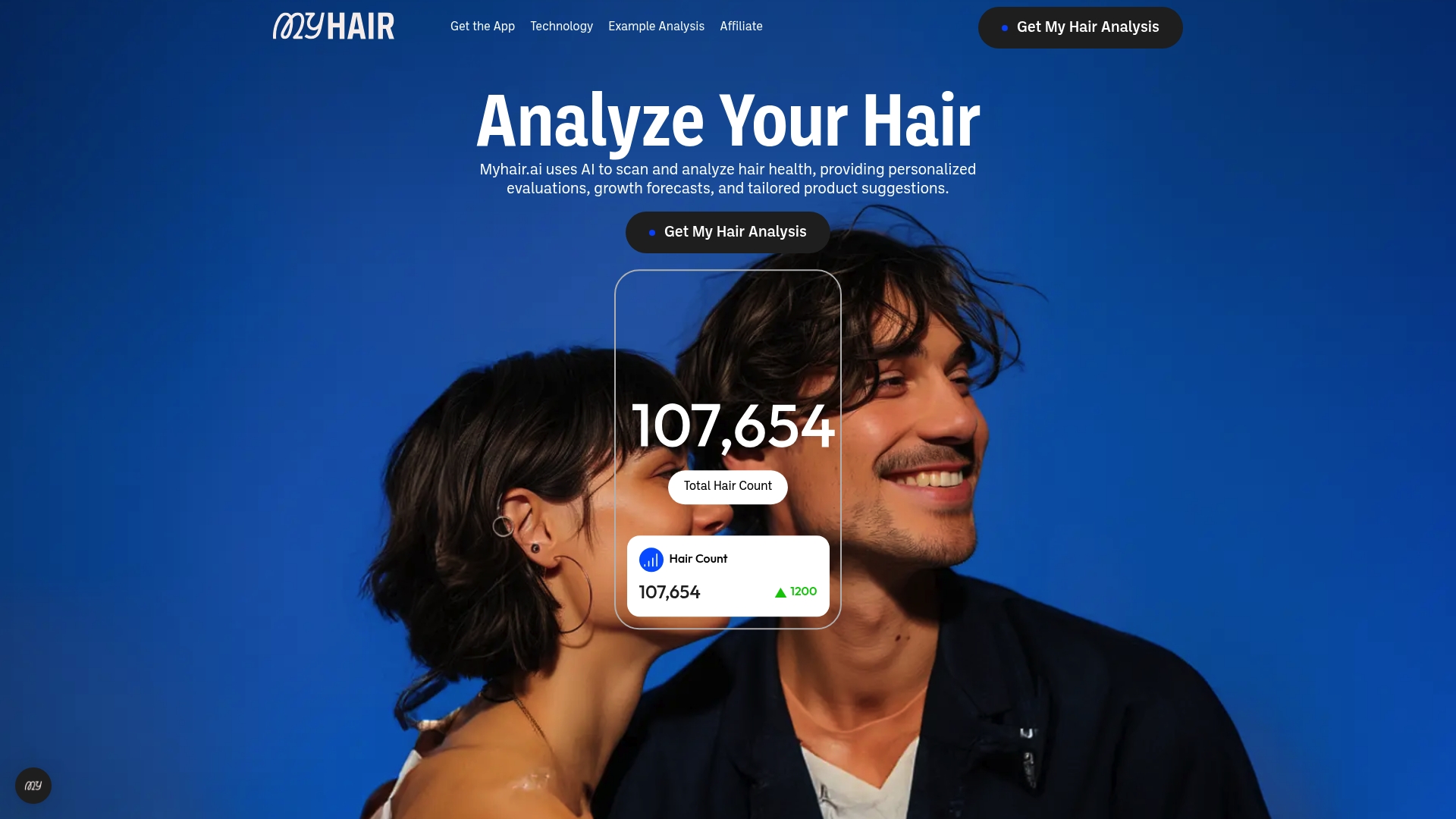
A hybrid workflow works best: keep your quick manual entries for context (new products, stress, supplements), then run a Myhair scan every few weeks to get an objective baseline you can compare against your notes. When your journal says "shedding feels worse," a scan tells you whether density has actually dropped or whether it's normal telogen turnover. The research behind Myhair's approach breaks down how AI-based measurement compares to self-tracking alone.
Getting started costs nothing. The free plan lets you run your first scan and see where you stand, and if you want ongoing tracking, the monthly subscription runs $9.99 a month. If your scan or journal points toward something that needs professional attention, Myhair's clinic directory can connect you with someone qualified to take the next step.
Sources
- PubMed record (2025 clinical tracking study)
- PMC review on hair biology and shedding
- Artificial intelligence-based personalization of treatment regimen for hair loss: 6-month clinical trial (JDDonline)
- BMC Medical Informatics study on gamification and adherence (2025)
FAQ
Which Organ Is Connected to Hair?
Hair grows from follicles rooted in the skin, technically an organ itself, and each follicle is tied to blood vessels, nerves, and sebaceous glands that regulate growth and oil production. There's no single separate "hair organ": scalp health and circulation directly affect what shows up in your journal entries.
What Is the 3/2/1 Method of Journaling?
Definitions vary depending on the source, but in hair care contexts it generally refers to logging three product details, two technique notes, and one outcome observation per entry to keep things quick and consistent. The exact structure matters less than picking one simple template and sticking with it.
What Happens if You Don't Cut Your Hair for 10 Years?
Hair has a genetically determined growth phase (anagen) that typically lasts several years before the strand sheds naturally, so most hair won't grow indefinitely even without cutting. Ends left uncut for a decade usually accumulate significant damage and breakage long before reaching any theoretical maximum length, which is exactly the kind of trend a journal would catch early.
Why Is Japanese Hair Often Described as Healthy?
This is largely attributed to genetics, diet, and haircare habits emphasizing gentle handling, minimal heat, and consistent moisture, rather than any single secret product. The bigger lesson for hair care journaling is that consistency in gentle, low-damage habits tends to matter more than any one product choice.
How Much Does Myhair Cost?
Myhair offers a free plan for a basic scan and analysis, with a monthly subscription at $9.99 for ongoing tracking. Yearly pricing is available on the site.