Choosing the right hair products for thinning hair can feel overwhelming when store shelves overflow with promises but deliver mixed results. Research reveals that combining topical minoxidil with finasteride produces significantly better outcomes than minoxidil alone, yet many people waste time and money on unproven formulas. This guide cuts through the noise to show you which treatments actually work, backed by clinical trials and expert recommendations. You'll discover how to match products to your specific hair loss pattern, understand the science behind effective ingredients, and learn practical steps to restore thickness and density.
Table of Contents
- Key Takeaways
- How hair thinning occurs and why choosing the right products matters
- Topical treatments backed by research: minoxidil and finasteride combinations
- Nutritional and botanical supplements for enhancing hair growth
- Comparing oral treatments: dutasteride, finasteride, and topical options
- Explore personalized hair analysis and tailored solutions with MyHair
- Frequently asked questions
Key Takeaways
| Point | Details |
|---|---|
| Minoxidil finasteride combo | Clinical trials show that adding finasteride to topical minoxidil increases hair density by 9.22 hairs per square centimeter and hair diameter by 2.26 micrometers versus minoxidil alone. |
| Consistency matters | Most users see initial results in three to four months, with continued improvement through month twelve, and missing applications reduces effectiveness. |
| Pregnancy risk | Pregnant women, those planning pregnancy, or nursing should avoid finasteride because of birth defect risks. |
| Professional assessment | Identify thinning pattern and underlying causes through a professional assessment to match treatments with proven efficacy. |
| Nutritional support | Combine topical treatments with nutritional strategies to support results for thinning hair. |
How hair thinning occurs and why choosing the right products matters
Hair thinning stems from multiple biological triggers that interact in complex ways. Genetics play a primary role through androgenetic alopecia, where hormones like dihydrotestosterone (DHT) shrink hair follicles over time. Hormonal shifts during menopause, postpartum recovery, or thyroid dysfunction also disrupt the growth cycle. Chronic stress elevates cortisol levels, which can push more follicles into the resting phase prematurely.
Metabolic factors including poor nutrition, inflammation, and oxidative stress damage follicle cells and weaken hair shafts. Understanding these mechanisms helps you target treatments effectively rather than guessing with generic products. Many over-the-counter formulas lack rigorous clinical testing and rely on marketing claims instead of peer-reviewed evidence.
Effective hair care for thinning hair requires a strategic approach:
- Identify your specific thinning pattern and underlying causes through professional assessment
- Select treatments with documented clinical efficacy for your condition
- Combine topical applications with nutritional support for comprehensive results
- Monitor progress systematically to adjust your regimen as needed
- Avoid harsh chemicals and heat styling that further damage weakened hair
The right product selection makes the difference between wasted effort and measurable improvement. Scientific evidence shows certain combinations outperform individual treatments, but only when matched correctly to your hair loss type and health profile.
Topical treatments backed by research: minoxidil and finasteride combinations
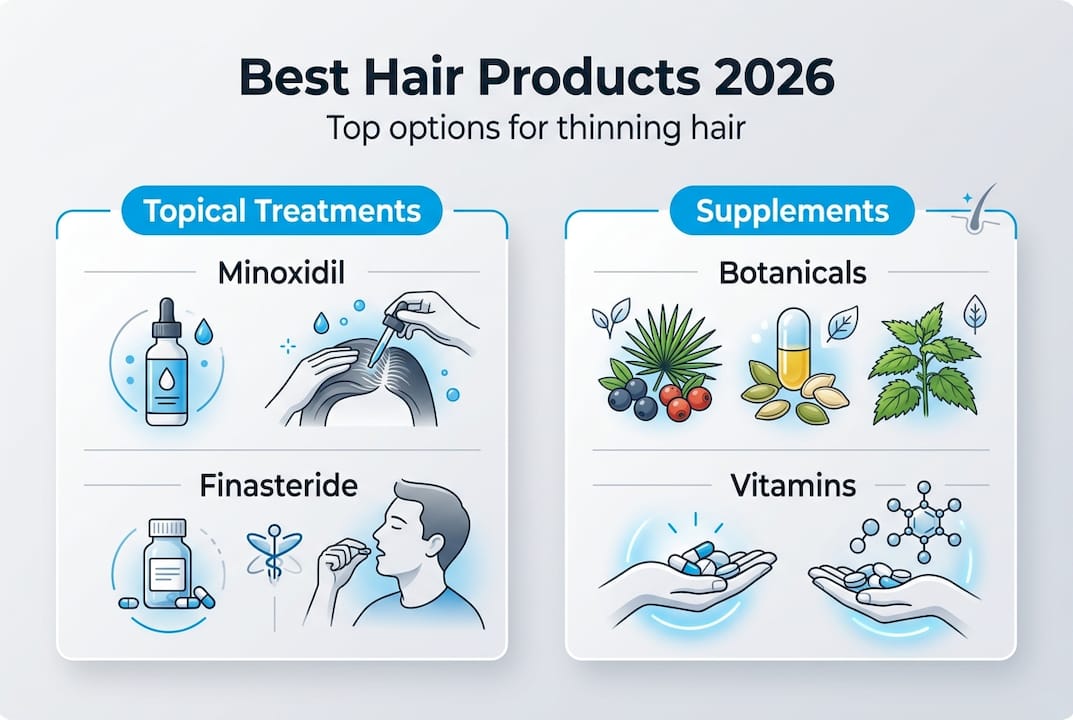
Clinical trials demonstrate that topical minoxidil-finasteride combinations increase hair density by 9.22 hairs/cm² compared to minoxidil alone. This represents a substantial improvement for people experiencing pattern baldness or diffuse thinning. The combination also increases hair diameter by 2.26 µm, creating visibly thicker strands that improve overall appearance.
Minoxidil works by widening blood vessels around follicles, delivering more oxygen and nutrients to support growth. Finasteride blocks the enzyme that converts testosterone to DHT, reducing the hormone that miniaturizes follicles. Together, they address thinning through complementary mechanisms that produce synergistic effects.
| Treatment | Hair Density Gain | Hair Diameter Increase | Application |
|---|---|---|---|
| Minoxidil 5% alone | Baseline | Baseline | Twice daily |
| Minoxidil 5% + Finasteride 0.1% | +9.22 hairs/cm² | +2.26 µm | Once or twice daily |
| Minoxidil 5% + Finasteride 0.25% | +9.22 hairs/cm² | +2.26 µm | Once or twice daily |
Application consistency determines success with these formulas. Most users see initial results within three to four months, with continued improvement through month twelve. Missing applications reduces effectiveness significantly, so building a reliable routine matters.
Pro Tip: Apply topical treatments to a completely dry scalp after showering, then wait at least four hours before washing to ensure maximum absorption into follicles.
Women who are pregnant, planning pregnancy, or breastfeeding should avoid finasteride entirely due to birth defect risks. Men generally tolerate topical finasteride well, with fewer systemic side effects than oral versions. Some users experience temporary scalp irritation or increased shedding during the first few weeks as follicles reset their growth cycle.
Exploring must-know hair products helps you understand how combination treatments fit into a complete hair care system. Pairing topical medications with gentle shampoos and conditioners protects your investment by maintaining scalp health.
Nutritional and botanical supplements for enhancing hair growth
Botanical nutraceuticals target hair loss through multiple pathways that topical treatments cannot reach. Nutrafol supplements improve hair growth and fiber thickness while reducing shedding across diverse populations including men, women, postpartum individuals, and those experiencing menopausal changes. The formula combines saw palmetto, ashwagandha, curcumin, and marine collagen to address hormonal imbalances, inflammation, and oxidative stress simultaneously.
Randomized controlled trials show participants experience measurable improvements in hair shaft diameter within three to six months of consistent use. Women report reduced hair fall during washing and styling, while men notice increased coverage in thinning areas. The botanical blend works by modulating stress hormones, supporting healthy inflammatory responses, and providing building blocks for keratin production.
Key mechanisms include:
- Saw palmetto inhibits 5-alpha-reductase, reducing DHT formation similar to finasteride but through plant compounds
- Ashwagandha lowers cortisol levels, protecting follicles from stress-induced damage
- Curcumin provides powerful antioxidant protection against free radical damage
- Marine collagen supplies amino acids essential for hair structure and strength
- Tocotrienols support scalp circulation and follicle health
These supplements work particularly well for people who cannot use prescription medications or prefer natural approaches. Vegan formulations substitute plant-based proteins for marine collagen, making them accessible to more users. Postpartum women benefit from hormone-balancing effects that address telogen effluvium without pharmaceutical intervention.
Pro Tip: Take hair growth supplements with a meal containing healthy fats to maximize absorption of fat-soluble nutrients like tocotrienols and curcumin.
Combining natural products for hair growth with topical treatments creates a comprehensive approach that addresses internal and external factors. Many users find this strategy produces better results than either method alone. Real experiences shared in Nutrafol Reddit reviews provide insights into typical timelines and outcomes across different hair types.
Supplements require patience and consistency. Most clinical studies measure results at three and six-month intervals, with continued improvement through twelve months. Missing doses disrupts the steady nutrient supply follicles need for optimal function.
Comparing oral treatments: dutasteride, finasteride, and topical options
Oral medications offer systemic approaches to hair loss but come with important considerations regarding effectiveness and safety. Dutasteride 0.5mg oral treatment outperforms finasteride 1mg and topical minoxidil 5% in hair density gains, making it the most powerful pharmaceutical option for men. Dutasteride blocks both type I and type II 5-alpha-reductase enzymes, reducing DHT more completely than finasteride, which only inhibits type II.
| Treatment | Hair Density Improvement | Safety for Women | Prescription Required | Common Side Effects |
|---|---|---|---|---|
| Dutasteride 0.5mg oral | Highest | No (birth defect risk) | Yes | Sexual dysfunction, mood changes |
| Finasteride 1mg oral | Moderate | No (birth defect risk) | Yes | Sexual dysfunction, depression |
| Minoxidil 5% topical | Good | Yes | No (OTC available) | Scalp irritation, unwanted facial hair |
| Finasteride 0.1-0.25% topical | Very good | Caution advised | Yes | Minimal systemic effects |
Choosing between these options requires weighing benefits against potential risks:
- Assess your hair loss severity and how quickly you want results
- Review your medical history for conditions that might contraindicate certain treatments
- Consider your gender and reproductive plans, as oral DHT blockers carry serious pregnancy risks
- Discuss side effect profiles with your healthcare provider to understand personal risk factors
- Evaluate cost and insurance coverage, as oral medications typically require ongoing prescriptions
- Plan for long-term commitment, since stopping treatment often leads to gradual return of hair loss
Finasteride is not recommended for women due to birth defect risks, even with barrier contraception. Pregnant women or those planning pregnancy should avoid handling crushed or broken tablets. Men using these medications should inform partners about potential risks if conception is planned.
Topical minoxidil remains the safest option for most users, with decades of safety data and over-the-counter availability. It works well for both men and women without the hormonal effects of DHT blockers. However, it requires twice-daily application and can cause temporary increased shedding when first started.
Exploring best treatments for women reveals that topical minoxidil combined with botanical supplements often provides the optimal balance of safety and effectiveness. Understanding all hair treatment options helps you make informed decisions aligned with your health priorities and lifestyle.
Explore personalized hair analysis and tailored solutions with MyHair
Generic product recommendations only take you so far when your hair loss pattern and triggers are unique to you. MyHair transforms how you approach thinning hair by combining artificial intelligence with clinical expertise to deliver truly personalized insights. The platform analyzes your specific condition through detailed scalp imaging, identifying patterns that generic assessments miss.
Our AI-powered hair analysis evaluates density, follicle health, and thinning progression with precision that rivals dermatology office equipment. You receive customized product recommendations that match your exact needs, eliminating guesswork and wasted money on ineffective formulas. The system tracks changes over time, showing you exactly how treatments are working and when adjustments might optimize results.
Getting started is straightforward with our hair analysis onboarding process that guides you through initial assessment and goal setting. The platform builds a complete picture of your hair health, then connects you with evidence-based solutions proven effective for your specific situation. Regular monitoring helps you stay on track and celebrate progress as your hair responds to targeted care. Explore the science behind our recommendations through MyHair research to understand how cutting-edge technology meets proven clinical approaches.
Frequently asked questions
What are the safest hair products for thinning hair?
Look for products containing clinically tested ingredients like minoxidil, which has decades of safety data across millions of users. Botanical supplements with research backing, such as saw palmetto and marine collagen, offer natural alternatives with minimal side effects. Always check ingredient lists for potential allergens and avoid formulas with harsh sulfates or alcohols that can irritate sensitive scalps. Consulting a healthcare provider before starting prescription treatments ensures you avoid medications that might interact with existing conditions or other drugs you take.
How long does it take to see results from hair thinning products?
Most evidence-based treatments show visible improvements within three to six months of consistent daily use. Initial changes often include reduced shedding and improved hair texture before you notice increased density. Individual response times vary based on the severity of thinning, your age, overall health, and how consistently you apply treatments. Some people see early results at eight to twelve weeks, while others need the full six months to observe meaningful changes. Patience and adherence to your regimen are essential, as stopping too early prevents you from experiencing the full benefits.
Can women safely use finasteride or dutasteride for hair loss?
Finasteride and dutasteride are not recommended for women due to significant birth defect risks if pregnancy occurs during treatment. These medications can cause severe abnormalities in male fetuses, making them unsafe even with contraception. Women of childbearing age should avoid handling crushed or broken tablets, as the medication absorbs through skin. Safe alternatives for women include topical minoxidil, botanical supplements like Nutrafol, and low-level light therapy. Postmenopausal women sometimes use finasteride under close medical supervision, but this remains controversial and requires thorough discussion with a specialist.
Are natural supplements effective for thinning hair?
Clinically studied natural supplements like Nutrafol demonstrate significant improvements in hair quality, thickness, and reduced shedding across diverse populations. These botanical formulas work through mechanisms including hormone modulation, stress reduction, and antioxidant protection that support follicle health. While supplements can produce meaningful results, they typically work best as part of a comprehensive approach that includes topical treatments and proper hair care practices. Natural options cannot replace prescription medications for severe androgenetic alopecia, but they offer valuable support for mild to moderate thinning and work well for people who cannot use pharmaceutical options.