
Watching your hair grow at a snail's pace despite trying countless products is frustrating. You've experimented with different shampoos, conditioners, and treatments, yet your hair seems stuck at the same length. The problem isn't your dedication, it's that generic hair care advice ignores your unique hair biology. A personalized natural hair care routine tailored to your specific porosity, density, and strand thickness can transform your results. When you combine this understanding with AI-driven product recommendations and proven natural growth enhancers like rosemary and peppermint oils, you create a system that actually works for your hair, not against it.
Table of Contents
- Understanding Your Hair: Beyond Basic Hair Typing
- Assessing Hair Porosity And Its Impact On Moisture Retention
- Formulating Your Natural Hair Care Routine For Growth And Retention
- Incorporating Natural Oils And Serums Proven To Boost Hair Growth
- Elevate Your Hair Care With Ai-Powered Personalization
Key takeaways
| Point | Details |
|---|---|
| Hair characteristics matter | Understanding porosity, density, and strand thickness is essential for choosing effective products and routines. |
| Moisture retention drives growth | Keeping hair hydrated and maintaining scalp health at pH 5.5 creates optimal conditions for growth. |
| Natural oils boost follicles | Peppermint and rosemary oils extend growth phases and perform comparably to chemical treatments. |
| AI personalizes your approach | Technology can analyze your unique hair biology and recommend tailored routines and products. |
| Protective practices prevent breakage | Minimizing heat, chemicals, and mechanical stress helps you retain length and see visible growth. |
Understanding your hair: beyond basic hair typing
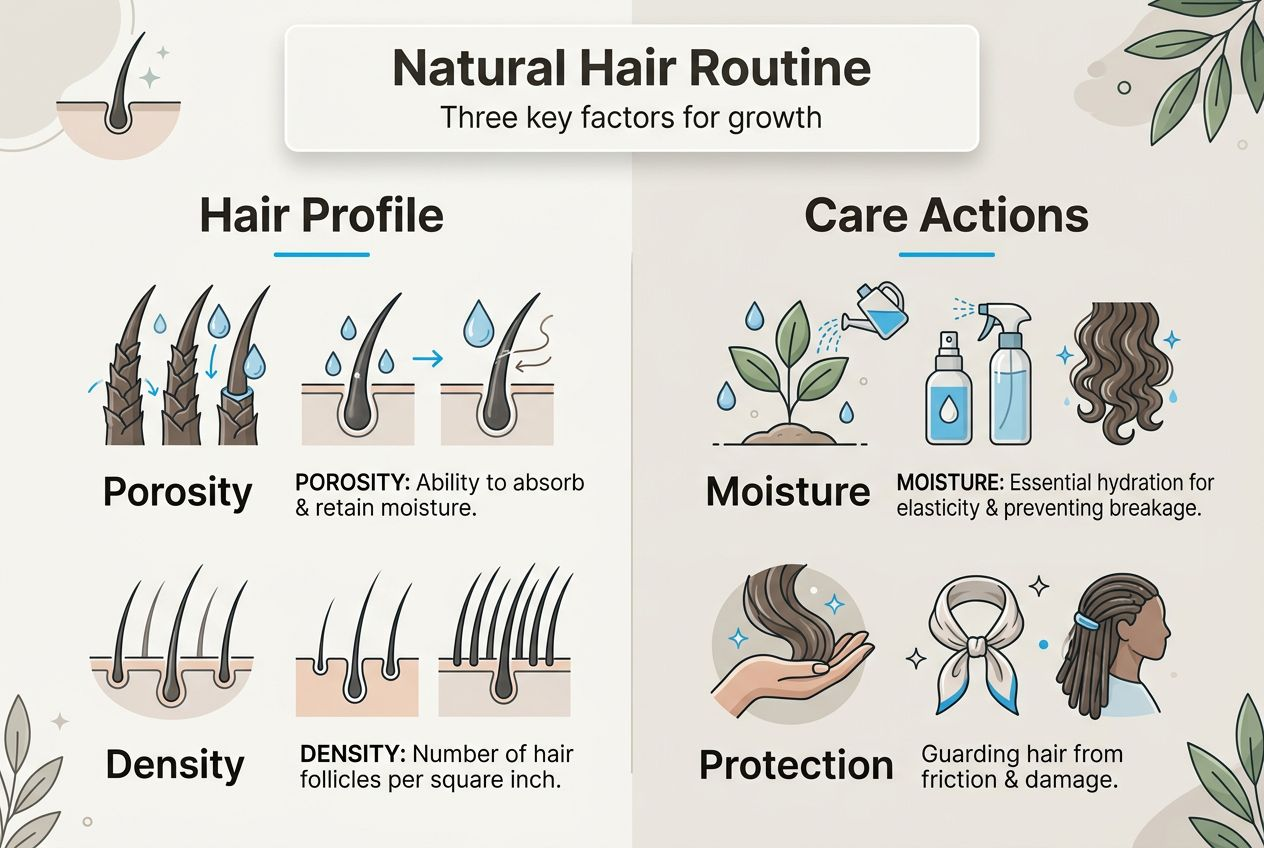
Most people rely on the Andre Walker hair typing system, categorizing hair from 1 (straight) to 4 (coily). While this gives a general curl pattern, the Andre Walker system is insufficient for creating truly effective routines. Three deeper characteristics determine how your hair responds to products and care: porosity, density, and strand thickness.
Hair porosity describes how easily your hair absorbs and retains moisture. Low porosity hair has tightly closed cuticles that resist water and product penetration, making it challenging to hydrate. Normal porosity hair maintains moisture balance naturally with minimal effort. High porosity hair has raised cuticles that absorb moisture quickly but lose it just as fast, requiring heavier sealants to lock in hydration.
Density refers to how many individual hair strands grow from your scalp. Low density means fewer strands per square inch, often requiring volumizing products and lighter formulations that won't weigh hair down. Medium density is the most common and works with a wide range of products. High density hair has many strands packed closely together, needing more product and potentially stronger formulations to penetrate through all layers.
Strand thickness measures the width of individual hair fibers. Fine strands are delicate and prone to breakage, benefiting from protein-rich treatments and gentle handling. Medium strands offer balanced strength and flexibility. Coarse strands are sturdy and resistant to damage but can feel dry because natural oils struggle to travel down thick fibers.
These three factors interact to create your unique hair profile. A natural hair routine for optimal growth must account for all three, not just curl pattern. Someone with low porosity, high density, coarse hair needs completely different products than someone with high porosity, low density, fine hair, even if they share the same curl type.
Pro Tip: Test your hair characteristics at home by taking a clean strand and dropping it in water. If it floats for several minutes, you have low porosity. If it sinks slowly, you have normal porosity. If it sinks immediately, you have high porosity.
Assessing hair porosity and its impact on moisture retention
Porosity is the single biggest factor determining whether your routine succeeds or fails. Hair porosity significantly impacts which products work and how you should apply them. The water float test gives you a starting point, but you can also observe how your hair behaves during washing and styling.
Low porosity hair presents unique challenges. Tightly packed cuticles hinder water and product from entering the hair shaft. You might notice products sitting on your hair surface rather than absorbing, or that your hair takes hours to air dry. Heat helps open these resistant cuticles temporarily, so applying products to damp hair under a hooded dryer or steamer improves absorption. Lightweight, water-based products penetrate better than heavy butters and oils, which just create buildup.
Normal porosity hair is the easiest to manage. Cuticles open and close appropriately in response to water and pH changes. You can use a wider range of products without worrying about buildup or dryness. A basic hair care routine for hair growth works well, focusing on consistent moisture and protection rather than correcting porosity issues.
High porosity hair absorbs everything but holds onto nothing. These raised cuticles often result from chemical processing, heat damage, or environmental stress. Your hair might feel dry within hours of moisturizing. The solution involves layering humectants to attract moisture, then sealing with heavier oils or butters to trap that moisture inside. Products containing proteins help temporarily patch gaps in damaged cuticles.
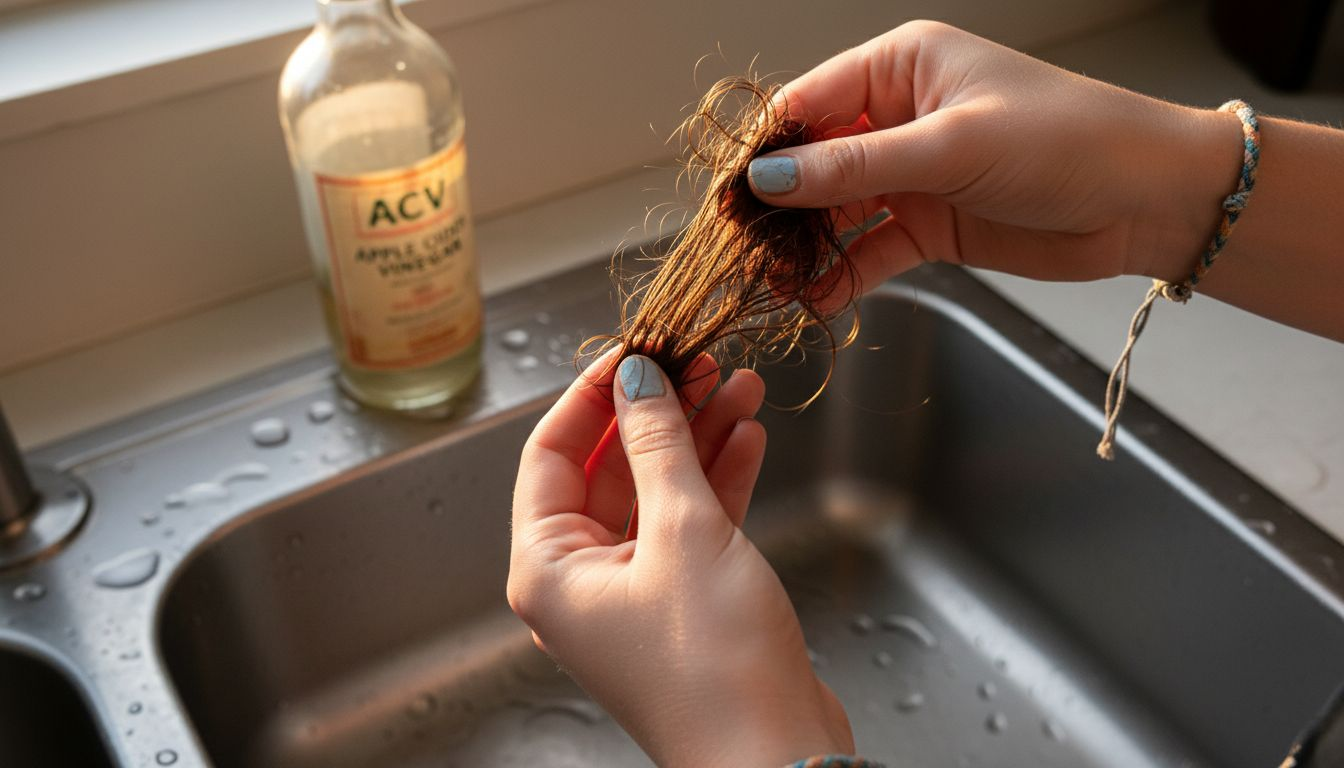
Pro Tip: If you have low porosity hair, clarify monthly with an apple cider vinegar rinse to remove buildup that blocks absorption. Mix one part vinegar with three parts water and pour through hair after shampooing.
Understanding porosity transforms your product choices and application methods. It explains why your friend's favorite deep conditioner does nothing for you, or why that expensive serum just sits on your hair. When you improve scalp health and match products to your porosity level, you create the foundation for consistent growth.
Formulating your natural hair care routine for growth and retention
Hair growth happens in three phases: anagen (active growth lasting 2 to 7 years), catagen (transition lasting 2 to 3 weeks), and telogen (resting phase lasting 2 to 4 months). Understanding hair biology reveals that you can't speed up the anagen phase significantly, but you can maximize retention during growth. Your scalp environment directly impacts follicle health and determines whether hair completes its full growth cycle.
Maintaining scalp pH around 5.5 creates optimal conditions for beneficial microbes and follicle function. Alkaline products disrupt this balance, causing inflammation and flaking that interfere with growth. Choose sulfate-free shampoos and avoid products with high pH levels. Your scalp produces sebum to protect and nourish follicles, so over-washing strips this natural defense.
Moisture retention matters more than growth speed because dry hair breaks before reaching visible length. Deep condition weekly using products matched to your porosity level. Apply conditioner to soaking wet hair for better penetration, then cover with a plastic cap for 20 to 30 minutes. The combination of moisture and gentle heat allows ingredients to penetrate the hair shaft.
Protective styling reduces manipulation and shields hair from environmental damage. Braids, twists, and updos keep ends tucked away and minimize friction against clothing and pillows. However, protective styles pulled too tightly cause traction alopecia, permanently damaging follicles along your hairline. Keep styles loose enough to avoid tension headaches.
Avoid practices that compromise hair structure. Heat styling and chemical treatments alter protein bonds, creating weak points where hair snaps. If you must use heat, apply a heat protectant and keep temperatures below 350°F. Space chemical treatments at least 12 weeks apart to allow recovery time.
Key retention practices include:
- Sleep on silk or satin pillowcases to reduce friction and moisture loss
- Detangle gently from ends to roots using fingers or wide-tooth combs
- Trim split ends every 8 to 12 weeks before damage travels up the shaft
- Protect hair from sun exposure with hats or UV-protectant sprays
- Stay hydrated and maintain balanced nutrition for internal hair support
Pro Tip: The pineapple method preserves curls overnight. Gather hair loosely at the crown using a silk scrunchie, allowing curls to cascade down. This prevents crushing and maintains definition.
Consistency matters more than perfection. A simple routine followed religiously outperforms an elaborate system you abandon after two weeks. Focus on tips for healthy hair growth that fit your lifestyle, then build from there. Your long hair care routine should feel sustainable, not burdensome.
Incorporating natural oils and serums proven to boost hair growth
While retention forms the foundation of length gains, certain natural ingredients actively promote follicle health and extend the anagen phase. Research validates that some plant-based oils perform as well as pharmaceutical treatments without harsh side effects.
Peppermint oil promotes follicle growth by increasing blood flow to the scalp and extending the active growth phase. In studies comparing peppermint oil to minoxidil, the natural oil produced comparable increases in follicle number and depth. Apply diluted peppermint oil (2 to 3 drops per tablespoon of carrier oil) to your scalp, massage for 5 minutes, then leave for 30 minutes before washing.
Rosemary oil is as effective as 2% minoxidil for androgenetic alopecia. Participants using rosemary oil experienced significant hair count increases after 6 months with fewer side effects than the pharmaceutical group. The oil improves cellular metabolism and stimulates follicles directly. Mix 5 drops into your regular shampoo or create a pre-wash scalp treatment.
Redensyl serums represent a newer category of growth enhancers targeting stem cells in hair follicles. Redensyl serum significantly improves hair growth rate, density, and diameter while reducing hair fall and premature graying. These serums work by reactivating dormant follicles and prolonging the anagen phase.
| Treatment | Growth Mechanism | Application | Typical Results | | --- | --- | --- | | Peppermint Oil | Increases blood flow, extends anagen phase | Diluted scalp massage 2 to 3 times weekly | Visible growth in 3 to 4 months | | Rosemary Oil | Stimulates cellular metabolism, follicle activation | Mixed in shampoo or pre-wash treatment | Comparable to minoxidil at 6 months | | Redensyl Serum | Targets stem cells, reactivates dormant follicles | Daily application to scalp | Improved density in 8 to 12 weeks | | Minoxidil 2% | Widens blood vessels, prolongs growth phase | Twice daily topical application | Results in 4 to 6 months, requires continuous use |
Application timing and consistency determine effectiveness. Apply growth oils to clean, dry scalp before bed to maximize absorption time. Massage stimulates blood flow and helps ingredients penetrate. Wash out in the morning to prevent buildup. For serums, follow manufacturer instructions carefully since concentrations vary.
Combining multiple growth enhancers can amplify results, but introduce one at a time to identify what works for your hair. Start with rosemary or peppermint oil for 6 weeks, then add a Redensyl serum if desired. Track progress with monthly photos in consistent lighting to measure actual growth versus perceived changes.
Key application tips:
- Always dilute essential oils in carrier oils like jojoba, coconut, or sweet almond
- Perform patch tests 24 hours before full application to check for sensitivity
- Focus application on scalp, not hair length, since follicles are the target
- Maintain consistent use for at least 12 weeks before evaluating effectiveness
Pro Tip: Create a custom growth oil by mixing 2 tablespoons jojoba oil, 3 drops peppermint oil, 3 drops rosemary oil, and 2 drops lavender oil. Store in a dark glass bottle and apply 2 to 3 times weekly.
Natural growth enhancers work best within a comprehensive routine addressing porosity, moisture, and protection. Hair oil for natural hair growth strength provides the boost while your daily practices create the environment for sustained results.
Elevate your hair care with AI-powered personalization
You now understand the science behind effective natural hair care, but translating that knowledge into your specific routine requires precision. Generic advice only takes you so far when your hair has unique porosity, density, and thickness characteristics. This is where technology bridges the gap between theory and personalized action.

AI-powered hair analysis uses advanced algorithms to assess your individual hair biology through simple scans. The technology evaluates factors invisible to the naked eye, providing detailed insights into your hair health, growth patterns, and specific needs. Instead of guessing which products match your porosity or wondering if your routine addresses your actual challenges, you receive data-driven recommendations tailored to your hair profile.
The hair analysis onboarding process takes minutes but delivers insights that would require weeks of trial and error. You track changes over time, seeing exactly how your routine modifications impact growth, density, and overall health. MyHair research continuously validates new approaches and ingredients, ensuring your recommendations reflect the latest scientific understanding of natural hair care and growth optimization.
FAQ
How do I know if my hair is low porosity?
Perform the water float test by placing a clean strand in a glass of water. If the hair floats on the surface for several minutes before sinking, you have low porosity. You'll also notice products sitting on your hair rather than absorbing, and extremely long air-dry times. Low porosity hair has tightly closed cuticles that resist moisture penetration.
Can natural oils really promote faster hair growth?
Yes, research demonstrates that peppermint and rosemary oils actively stimulate follicles and extend the growth phase. Studies show rosemary oil performs as effectively as 2% minoxidil for hair growth when used consistently over 6 months. These oils work by increasing blood flow to the scalp and improving cellular metabolism in follicles, not just by moisturizing hair externally.
Why is scalp pH important for hair growth?
A scalp pH around 5.5 maintains the optimal environment for beneficial microbes and healthy follicle function. When pH becomes too alkaline, it disrupts the scalp's protective acid mantle, leading to inflammation, flaking, and bacterial imbalances. These conditions interfere with the hair growth cycle and can push follicles into premature resting phases, slowing visible growth.
How can I protect my hair to retain length and prevent breakage?
Use protective styles like braids or twists that minimize manipulation and shield ends from friction. Avoid excessive heat styling and space chemical treatments at least 12 weeks apart. Deep condition weekly and moisturize daily to maintain hair elasticity and strength. Sleep on silk or satin to reduce overnight friction. Remember that retention, not growth speed, determines visible length gains over time.
Recommended
- Master Your Natural Hair Routine for Optimal Growth | MyHair
- Natural Hair Growth Routine 2025: Proven Steps for Fast Results | MyHair
- Proven 2025 Hair Routine for Hair Growth Success Guide | MyHair
- Long Hair Care Routine 2025: Grow Stronger and Fuller Hair | MyHair
- Herbal wellness routine steps for natural health in 2026
- Hair Care - Body Care - mybestpharmacy.net | Mybestpharmacy.net | Online Pharmacy