
Hair loss and damage leave you searching for solutions that actually work. A personalized coconut oil routine can strengthen strands, reduce breakage, and support scalp health, but the key lies in using it correctly. AI-driven insights now make it possible to tailor your approach, ensuring you get maximum benefits without the guesswork or trial and error that wastes time and money.
Table of Contents
- Understanding Coconut Oil's Benefits For Hair Health
- Prerequisites: What You Need Before Starting Your Coconut Oil Routine
- Step-By-Step Coconut Oil Hair Routine For Damaged Or Thinning Hair
- Common Mistakes And How To Avoid Them
- Tracking Progress And Setting Realistic Expectations
- Expected Outcomes From A Well-Executed Coconut Oil Hair Routine
- Enhance Your Coconut Oil Routine With MyHair AI Insights
- Frequently Asked Questions
Key takeaways
| Point | Details |
|---|---|
| Lauric acid penetrates deeply | Coconut oil's lauric acid reduces protein loss and strengthens hair from within. |
| Moderate use prevents problems | Apply 2-3 times weekly for 20-40 minutes to avoid scalp irritation and buildup. |
| AI personalizes your routine | Tools analyze your unique hair health patterns and recommend optimal application frequency. |
| Virgin oil ensures purity | Cold-pressed, unrefined coconut oil delivers antifungal and anti-inflammatory benefits safely. |
| Results take consistent effort | Expect reduced breakage and improved scalp condition within 8-12 weeks of regular use. |
Understanding coconut oil's benefits for hair health
Coconut oil stands out because of its molecular structure. Lauric acid penetrates the hair shaft, reducing protein loss and strengthening each strand from the inside. Unlike mineral or sunflower oils, coconut oil's unique composition allows it to bond with hair proteins, creating a protective barrier that prevents damage during washing and styling.
This oil also supports your scalp ecosystem. Its antifungal and anti-inflammatory properties reduce dandruff, soothe irritation, and maintain a balanced microbiome. A healthy scalp creates the foundation for stronger hair growth and less shedding over time.
Key advantages include:
- Moisture retention that keeps hair hydrated without weighing it down
- Natural shine that signals healthy cuticles and reduced surface damage
- Protection during heat styling when applied as a barrier before blow drying
- Reduction in frizz and split ends through consistent conditioning
Research confirms that coconut oil outperforms other oils in preventing protein loss. This matters because protein is what gives hair its structure and strength. When you lose protein, strands become weak, brittle, and prone to breakage.
For those dealing with damaged hair, understanding coconut oil's restorative properties helps you make informed choices. Combining this knowledge with top hair growth oils creates a comprehensive strategy. The complete hair oil guide offers additional context for building your personalized routine.
Pro Tip: Warm coconut oil slightly before application to improve absorption. The heat helps the oil penetrate deeper into the hair shaft, maximizing the protective benefits without requiring longer treatment times.
Prerequisites: what you need before starting your coconut oil routine
Before you apply coconut oil, gather the right materials and assess your starting point. Virgin, cold-pressed, unrefined coconut oil ensures you get the full spectrum of beneficial compounds without harmful additives. Refined versions lose many active properties during processing.
Evaluate your scalp and hair condition first. Look for signs of irritation, infection, or severe damage that might require professional attention before starting any oil routine. AI diagnostic tools can provide objective assessments of your hair density, scalp health, and damage patterns.
Essential items for your routine:
- Virgin coconut oil (organic when possible)
- Applicator brush or fingertips for even distribution
- Warm water bowl or gentle heating device
- Soft hair towel or wrap
- Mild, sulfate-free shampoo
- Timer to track application duration
Understand your current hair washing schedule. The coconut oil routine works best when integrated thoughtfully with your existing habits. If you wash daily, you may need to adjust frequency to avoid over-cleansing. If you wash weekly, timing your oil treatment becomes crucial.
| Preparation Step | Purpose | Tools Needed |
|---|---|---|
| Scalp assessment | Identify irritation or infection | Mirror, AI analysis app |
| Oil selection | Ensure purity and efficacy | Virgin coconut oil label check |
| Application tools | Enable even distribution | Applicator brush, towel |
| Timing alignment | Match washing schedule | Calendar, routine planner |
Check for allergies by applying a small amount of coconut oil to your inner arm. Wait 24 hours to ensure no reaction occurs. This simple test prevents scalp problems down the line.
Explore personalized AI hair care approaches to understand how technology can guide your routine. Learning about coconut oil for hair loss gives you realistic expectations before you begin.
Step-by-step coconut oil hair routine for damaged or thinning hair
Now that you have everything ready, follow these steps for optimal results. Start by warming a small amount of coconut oil in your palms or a bowl of warm water. The oil should feel comfortably warm, not hot. Heat enhances absorption and makes application easier.
- Section your hair into manageable parts using clips
- Apply oil to your scalp first, focusing on areas with visible thinning or dryness
- Work the oil down the length of your hair, paying extra attention to damaged ends
- Massage your scalp gently for 5-10 minutes using circular motions
- Leave the oil on for 20-40 minutes (set a timer)
- Rinse thoroughly with lukewarm water
- Shampoo once or twice to remove excess oil without stripping natural moisture
- Follow with conditioner if needed, focusing on ends only
The scalp massage matters more than you might think. It increases blood circulation, which delivers nutrients to hair follicles and helps the oil penetrate deeper. Gentle pressure works better than aggressive rubbing, which can cause breakage.
Applying coconut oil before washing protects against water-induced swelling that weakens hair structure. This preventive approach reduces the cumulative damage that leads to breakage over months of regular washing.
For heat styling protection, apply a thin layer of coconut oil before using hot tools. This protective barrier reduces dryness and prevents heat damage that weakens protein bonds. The oil creates a shield without making hair greasy if you use the right amount.

Repeat this routine 2-3 times weekly for consistent benefits. Spacing treatments allows your scalp to maintain its natural oil balance while still receiving the strengthening benefits of coconut oil.
Pro Tip: If your hair feels greasy after shampooing, you used too much oil or did not rinse thoroughly enough. Next time, reduce the amount by half and add an extra rinse cycle before shampooing.
Discover specific coconut oil applications for hair fall to target thinning areas. Combining coconut oil with other growth-promoting oils creates synergistic effects. The natural hair loss routine provides additional context for maximizing results.
Common mistakes and how to avoid them
Even with good intentions, several errors can sabotage your coconut oil routine. Recognizing these pitfalls helps you stay on track and avoid setbacks that discourage consistency.
Applying too much oil ranks as the most common mistake. Excessive coconut oil clogs pores, causing inflammation and potentially triggering more hair breakage than you started with. A tablespoon or two suffices for most hair lengths. More does not equal better results.
Leaving oil on too long creates problems. Application for 30-40 minutes allows penetration without attracting dust and debris that irritate your scalp. Overnight applications seem convenient but often lead to buildup and discomfort unless you protect your scalp properly with a shower cap.
Frequency errors undermine progress. Daily application disrupts your scalp's natural oil production, leading to either excessive dryness or overcompensation with excess sebum. Both extremes damage hair health over time.
Key mistakes to avoid:
- Using refined or chemically processed coconut oil that lacks beneficial compounds
- Skipping the patch test and discovering allergies the hard way
- Applying oil to wet hair, which prevents proper absorption
- Forgetting to massage the scalp, missing circulation benefits
- Inconsistent application that prevents you from seeing results
"The key to coconut oil success lies in moderation and consistency. Overuse causes the very problems you are trying to solve."
When you notice scalp irritation, stop using coconut oil immediately and let your scalp recover for a week. Resume with a smaller amount and shorter application time. Listen to what your body tells you.
Pro Tip: Keep a routine log noting how much oil you use, how long you leave it on, and any scalp reactions. This data helps you identify your optimal formula and catch problems early.
Learn from common coconut oil mistakes others have made to accelerate your learning curve without the trial and error.
Tracking progress and setting realistic expectations
Measuring improvement keeps you motivated and helps you adjust your routine based on actual results rather than guesswork. Before starting, document your baseline hair condition with photos in consistent lighting. Capture your hairline, crown, and any problem areas from multiple angles.
Weekly tracking creates accountability. Note how many hairs you lose during washing and brushing. While some shedding is normal (50-100 hairs daily), you should see a gradual reduction as your routine takes effect. Record scalp comfort levels, itchiness, and any changes in oil production.
Expect noticeable improvements within 8-12 weeks of consistent use. Hair growth cycles mean that changes happen gradually. New growth takes months to become visible, but reduced breakage shows up faster. Stronger strands that resist damage signal that your routine works.
AI-driven analysis tools provide objective measurements that beat subjective assessment. These platforms track hair density changes, measure strand thickness, and identify patterns you might miss. Data removes guesswork and reveals whether adjustments are needed.
Progress indicators to monitor:
- Reduction in hair found on your brush or in the shower drain
- Decreased scalp itchiness and flaking
- Improved hair texture and manageability
- Enhanced shine and smoothness
- Reduced split ends and breakage at tips
| Timeframe | Expected Changes | Measurement Method |
|---|---|---|
| Weeks 1-4 | Reduced scalp irritation, less flaking | Daily scalp comfort log |
| Weeks 5-8 | Decreased hair shedding during washing | Weekly shed count |
| Weeks 9-12 | Improved texture, shine, and strength | Photo comparison, AI analysis |
| Months 4-6 | Visible reduction in thinning areas | Density measurements |
Patience matters because hair responds slowly to treatments. Cells that form new hair strands take time to incorporate the benefits of better nutrition and reduced damage. Trust the process when you follow the routine correctly.
Explore comprehensive hair oiling routines that integrate tracking methods. Compare different personalized hair care approaches to find what fits your lifestyle. Discover how AI personalizes growth strategies based on your unique patterns.
Expected outcomes from a well-executed coconut oil hair routine
When you follow the routine consistently and avoid common mistakes, specific benefits become measurable. Clinical observations show up to 41.8% reduction in breakage with proper coconut oil use. This significant decrease translates to visibly fuller, healthier hair over several months.
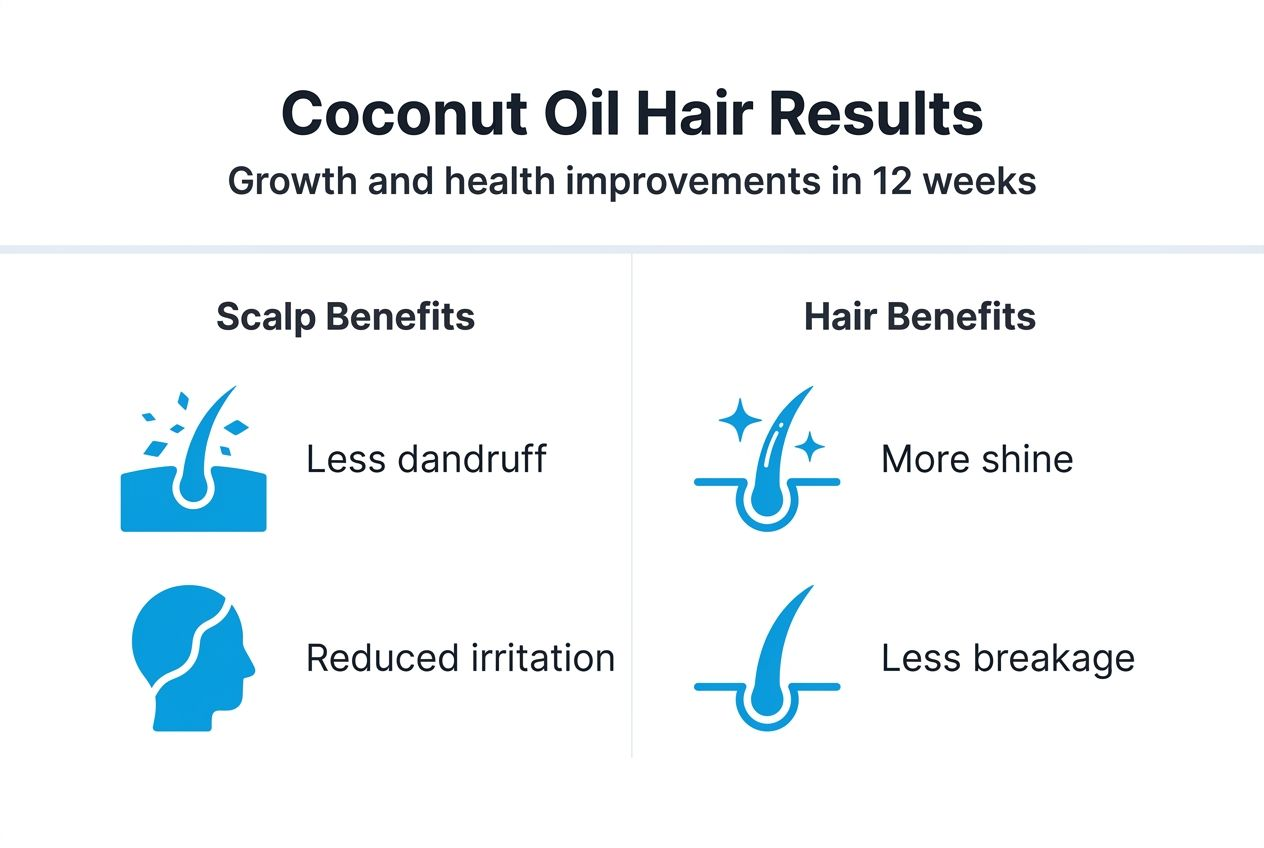
Scalp health improvements appear first. Reduced dandruff, less inflammation, and balanced oil production create the foundation for better hair growth. A healthier scalp supports stronger follicles that produce more resilient strands.
Moisture retention increases noticeably. Hair feels softer, looks shinier, and resists environmental damage better. The protective coating coconut oil provides prevents moisture loss during styling and exposure to dry air or sun.
Long-term users report thicker, stronger individual strands. While coconut oil does not increase the number of follicles you have, it maximizes the health and diameter of existing hairs. This creates the appearance of fuller, more voluminous hair.
Documented benefits include:
- Significant breakage reduction through protein protection
- Enhanced scalp microbiome balance reducing fungal issues
- Improved natural shine indicating healthier cuticles
- Stronger hair that withstands styling stress
- Better moisture retention in dry climates
| Benefit Category | Coconut Oil | Mineral Oil | Sunflower Oil |
|---|---|---|---|
| Protein loss prevention | High | Low | Low |
| Scalp health support | Excellent | Moderate | Moderate |
| Heat protection | Good | Fair | Fair |
| Moisture retention | Excellent | Good | Good |
| Breakage reduction | Up to 41.8% | Minimal | Minimal |
These outcomes depend entirely on consistency and proper application. Skipping treatments or using too much oil negates the benefits and can cause new problems. The routine works when you respect the process and give it time.
Realistic expectations prevent disappointment. Coconut oil strengthens and protects existing hair exceptionally well. It creates optimal conditions for growth. However, it cannot reverse genetic hair loss patterns or regrow hair in areas where follicles have died.
Understand the full scope of coconut oil benefits for hair health to set appropriate goals for your journey.
Enhance your coconut oil routine with MyHair AI insights
You have learned how coconut oil strengthens hair and supports scalp health when used correctly. Taking your routine to the next level requires personalization based on your unique hair patterns and needs.

MyHair offers AI-powered assessment tools that analyze your scalp condition, hair density, and damage patterns. These insights help you determine the optimal frequency for coconut oil application and identify which areas need the most attention. Real-time tracking shows how your hair responds to treatment, allowing you to adjust your approach for maximum effectiveness.
Get started with hair analysis to receive personalized recommendations that complement your coconut oil routine. For professional guidance, explore clinic onboarding options that connect you with experts who understand AI-driven hair care strategies.
Frequently asked questions
How often should I apply coconut oil to avoid damaging my scalp?
Apply coconut oil 2-3 times weekly for best results. Daily use clogs pores and disrupts natural oil production, leading to irritation and inflammation. Space treatments to allow your scalp to maintain healthy balance.
Can coconut oil alone regrow lost hair?
Coconut oil strengthens existing hair and creates favorable scalp conditions but does not guarantee regrowth on its own. It works best as part of a comprehensive approach that addresses underlying causes of hair loss. Genetic patterns require additional interventions beyond topical oils.
What type of coconut oil is best for hair care?
Virgin, cold-pressed, unrefined coconut oil delivers maximum benefits without harmful additives. Refined versions lose beneficial compounds during processing. Check labels carefully to ensure you get pure oil that supports scalp health and hair strength.
How long should I leave coconut oil on my hair?
Apply coconut oil for 20-40 minutes per session to allow proper penetration without causing buildup. Longer applications attract dust and irritate the scalp. Avoid overnight treatments unless you use proper scalp protection to prevent inflammation.
Recommended
- Coconut Oil for Hair Loss: Boost Your Growth Naturally | MyHair
- Hair Oiling Routine 2025: Boost Growth and Reduce Hair Loss | MyHair
- Hair Care Routine for Hair Growth: Achieve Stronger Hair | MyHair
- Understanding Coconut Oil for Damaged Hair: A Deep Dive | MyHair
- Business Strategy AI for Startups: Smarter Growth Strategies