
TL;DR:
- Most hair growth myths are false, and follicles, not habits, determine growth rate.
- Regular trims prevent split ends and improve hair appearance, but do not affect growth speed.
Most popular beliefs about hair growth are myths that clinical research has repeatedly disproven. From the idea that trimming your hair makes it grow faster to the claim that castor oil can unlock new follicles, these misconceptions shape how millions of people spend money and time on their hair. Understanding the truths about hair growth means you stop chasing false promises and start making decisions that actually work.
1. Does cutting hair make it grow faster?
Hair grows from follicles in the scalp, not from the ends you trim. Follicular growth averages about 0.5 inches (1.25 cm) per month, and scissors have zero influence on that rate. Trimming is a cosmetic act, not a biological one.
That said, regular trims do serve a real purpose. Split ends travel up the hair shaft over time, causing breakage that makes hair appear shorter and thinner. Trimming every 8–12 weeks prevents that damage from progressing. Your hair will look fuller and healthier, even though the growth rate stays exactly the same.
- Split ends cannot be permanently repaired by any product. Products coat hair temporarily but do not fuse split ends back together.
- Trimming removes the damaged portion and stops further breakage.
- Hair appears to grow faster after a trim because it retains its length instead of snapping off.
Pro Tip: Use a wide-tooth comb on wet hair before trimming to reduce tension and avoid creating new split ends during the process.
2. Does shampooing cause hair loss?
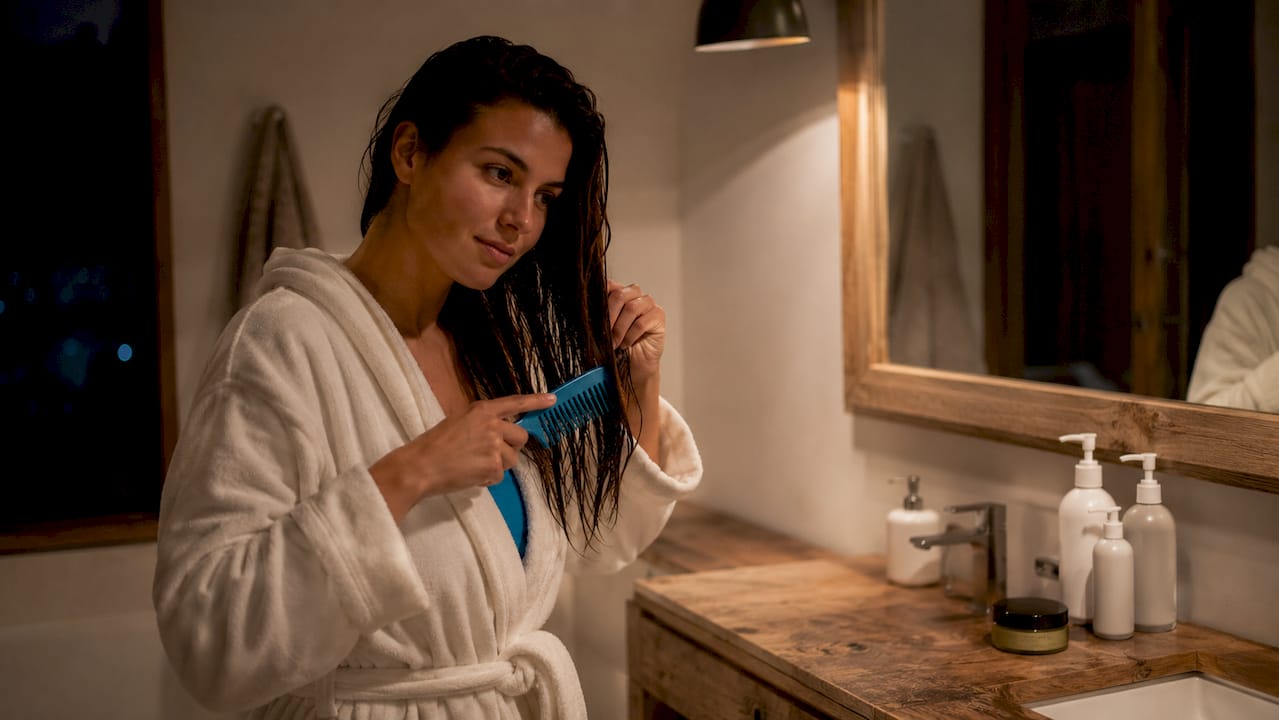
Washing your hair does not cause hair loss. Normal daily shedding is 50–100 hairs, and those hairs become visible in the shower drain simply because water dislodges them. The shedding happened before you turned on the tap.
People who wash less frequently often panic when they finally do wash and see a large clump of hair. That clump represents several days of normal shedding, not damage from the shampoo. Avoiding washing does not stop hair from shedding. It only delays when you notice it.
Scalp hygiene is not optional. Hair training, the practice of stretching time between washes to "train" your scalp to produce less oil, does not work. The scalp's sebum production is not adjustable through behavior. Infrequent washing leads to sebum buildup, clogged follicles, and scalp irritation.
Pro Tip: If you notice heavy shedding that lasts more than two months, that is worth a dermatologist visit. Seasonal shedding peaks in september and october, so a temporary increase during those months is normal.
A healthy hair wash routine keeps follicles clear and supports the conditions your hair needs to grow.
3. Do natural oils accelerate hair growth?
Natural oils hydrate the hair shaft and can improve the appearance of dry or brittle hair. They do not speed up follicle activity. The follicle determines growth rate based on genetics, hormones, and nutrition. No topical oil changes that equation.
Rosemary oil lacks robust clinical evidence compared to 5% minoxidil, the only topical treatment with consistent clinical backing for hair growth. Rosemary oil's popularity comes largely from social media, not peer-reviewed trials. That does not make it harmful, but it does mean the marketing claims far outpace the science.
- Castor oil thickens the appearance of hair by coating the shaft, not by stimulating follicles.
- Coconut oil reduces protein loss in damaged hair but does not increase growth speed.
- Minoxidil (5%) is FDA-approved and clinically proven for hair growth, making it the benchmark against which other treatments should be measured.
- Scalp massage improves circulation and may support a healthier follicle environment, but the effect on growth rate is modest.
If you want to use oils, use them for what they actually do: moisture, shine, and reduced breakage. Pair that with a natural hair growth shampoo that is formulated without ingredients known to cause buildup or irritation.
4. Does wearing hats cause hair loss?
Hats do not cause hair loss. Follicles receive oxygen from blood circulation, not from air exposure. A hat sitting on your head has no effect on follicle function or androgenetic alopecia, the most common form of genetic hair loss.
The confusion likely comes from people noticing hair loss while also wearing hats regularly. The hair loss has a different cause, usually genetics or hormones, and the hat is coincidental. Wearing a clean hat every day will not thin your hair.
Tight hairstyles are a different story. Prolonged tension from tight braids, extensions, or ponytails causes traction alopecia, a real and preventable condition. The "fringe sign," a receding hairline along the front and temples, is a clinical indicator of traction alopecia from long-term mechanical tension. Caught early, traction alopecia is reversible. Left untreated, the follicle damage becomes permanent.
- Loose, low-tension styles protect the hairline.
- Avoid sleeping with tight braids or extensions in place.
- Silk or satin hair ties reduce friction compared to rubber bands.
- Rotate your part line regularly to avoid repeated tension in the same spot.
5. Does brushing 100 strokes a day grow hair faster?
Brushing 100 strokes a day does not grow hair faster. Excessive brushing causes breakage, particularly on dry or fragile hair. The old advice about 100 strokes originated before modern hair science and has no clinical support.
Gentle detangling is the goal, not stimulation through repetition. Use a wide-tooth comb on wet hair and a soft-bristle brush on dry hair. Start from the ends and work upward to avoid snapping strands at the root.
- Brushing distributes natural scalp oils along the hair shaft, which adds shine. That benefit requires only a few strokes, not 100.
- Over-brushing creates friction that lifts the cuticle, leading to frizz and breakage.
- Hard water compounds this problem. Hard water binds to keratin and coats the hair shaft, making it more prone to damage during brushing.
Pro Tip: If your water is hard, a clarifying shampoo used once a month removes mineral buildup. Products like the Acid & Heat Repair Shampoo from Spyra Verified are formulated to address mineral and heat damage.
6. Do hair vitamins actually work?
Hair vitamins work only when a deficiency is the underlying cause of your hair loss. If your iron, biotin, or vitamin D levels are normal, taking supplements will not accelerate growth. The follicle already has what it needs.
Biotin is the most marketed hair supplement, but biotin deficiency is rare in people who eat a varied diet. Studies show biotin supplementation improves hair growth in people who are deficient. For everyone else, the benefit is negligible. The same logic applies to collagen supplements, zinc, and most hair-specific vitamin blends.
Visible results from any hair growth treatment take 3–4 months because of the hair growth cycle. People abandon effective treatments too early because they expect fast results. Patience is not optional when it comes to hair health.
Get a blood panel before spending money on supplements. If a deficiency shows up, address it with targeted supplementation or dietary changes. For a detailed comparison of what actually works, the Myhair guide on hair growth supplements for men breaks down the evidence clearly.
7. Is dandruff caused by a dry scalp?
Dandruff is not caused by dryness. It is caused by an overgrowth of a yeast-like fungus called Malassezia, which feeds on scalp oils. A dry scalp flakes differently and for different reasons. Treating dandruff with heavy moisturizing oils can make it worse by feeding the fungus.
Dandruff is not curable but is manageable with the right treatment and consistent scalp cleansing. Medicated shampoos containing zinc pyrithione, ketoconazole, or selenium sulfide control the fungal overgrowth. Stopping treatment causes symptoms to return. Avoiding washing, which some people do to "rest" the scalp, worsens dandruff by allowing Malassezia to thrive.
Understanding the real cause of dandruff matters because the wrong treatment wastes time and money. The Myhair article on dandruff and hair loss covers the connection between scalp condition and shedding in detail.
Key takeaways
Most hair growth myths collapse under basic biology: follicles drive growth, genetics set the rate, and no topical product or habit changes that fundamental fact.
| Point | Details |
|---|---|
| Trimming does not grow hair | Growth happens at the follicle; trimming only removes split ends and prevents breakage. |
| Washing does not cause shedding | Daily shedding of 50–100 hairs is normal and becomes visible during washing, not because of it. |
| Oils hydrate, they do not grow | Natural oils improve hair appearance but do not stimulate follicle activity or increase growth rate. |
| Supplements need a deficiency | Hair vitamins only help when a specific nutrient deficiency is confirmed through blood work. |
| Results take 3–4 months | The hair growth cycle is slow; abandoning treatments early is the most common reason they appear to fail. |
Why I stopped trusting hair growth hacks
The most damaging thing about hair growth myths is not that they waste money. It is that they delay real solutions. I have watched people spend months massaging castor oil into their scalps while an underlying iron deficiency went unaddressed. The oil felt productive. It was not.
Social media has made this worse. A 30-second video showing "before and after" rosemary oil results gets millions of views. A peer-reviewed study showing minoxidil outperforms it gets none. The algorithm rewards drama, not accuracy.
What actually moves the needle is scalp health. A clean, well-circulated scalp with no buildup or inflammation gives follicles the best environment to do their job. That means regular washing, gentle handling, and addressing any underlying deficiencies. No miracle product required.
The other thing I keep coming back to is patience. Visible results take 3–4 months at minimum. Most people quit at week six. If you are using a clinically backed treatment and you quit before the hair cycle completes, you will never know if it worked. That is a costly mistake.
— Cyriac
Get a real picture of your hair health with Myhair
Debunking myths is the first step. Knowing exactly what is happening with your own scalp is the second.
Myhair uses AI to analyze your hair and scalp from a simple scan, giving you a personalized hair score and product recommendations based on your actual condition, not generic advice. Instead of guessing whether your shedding is normal or your scalp is inflamed, you get a clear, objective read. Start with the AI hair analysis to see where your hair health stands today. If you want a deeper breakdown, the hair health score tracks your progress over time so you can see what is actually working.
FAQ
Does cutting hair make it grow faster?
No. Hair grows from follicles in the scalp at a fixed rate of about 0.5 inches per month. Trimming removes split ends and prevents breakage but has no effect on growth speed.
How many hairs is it normal to lose per day?
Losing 50–100 hairs daily is normal. Shedding that consistently exceeds that range for more than two months warrants a visit to a dermatologist.
Do hair vitamins work for everyone?
Hair vitamins only produce results when a nutrient deficiency is the cause of hair loss. Supplementing without a confirmed deficiency provides little to no benefit.
Can you train your scalp to produce less oil?
No. Sebum production is not adjustable through washing habits. Stretching time between washes leads to buildup and scalp irritation, not reduced oil output.
Is dandruff a sign of poor hygiene?
No. Dandruff is caused by a fungal overgrowth on the scalp, not by infrequent washing. However, regular cleansing with the right medicated shampoo is the most effective way to manage it.