Most styling damage comes down to a handful of repeated errors: using heat tools without protection, working with hair that's too wet, grabbing the wrong products, rough towel-drying, overwashing, skipping trims, and never cleaning your tools. Here's the short version before the full breakdown:
- Heat without protection → apply a heat protectant spray every single time
- Styling soaking-wet hair → let hair dry at least 70–80% first, or use heatless methods
- Wrong product for your hair type → identify your hair type and match accordingly
- Too much product → use less, clarify monthly
- Rough towel-drying → switch to a microfiber towel or cotton T-shirt, blot only
- Overwashing → cut back gradually; expect a short adjustment period
- Skipping trims → schedule trims regularly every few months
- Dirty brushes and tools → clean them monthly
The American Academy of Dermatology flags heat damage, rough handling, and incorrect brushing as the leading causes of preventable breakage. Stylist roundups from Real Simple echo that. If you want to know which of these errors apply most to your specific hair, Myhair's AI scan can personalize the picture.
Key Takeaways
Avoiding the most common hair styling mistakes comes down to consistent protection, matched products, and gentle handling at every step.
| Point | Details |
|---|---|
| Always use heat protection | Apply a heat protectant spray to damp hair before any hot tool, every session. |
| Stop styling soaking-wet hair | Let hair reach at least 70–80% dry before heat or tension to prevent breakage. |
| Match products to your hair type | Wrong products cause buildup and limp results; clarify monthly to reset. |
| Switch to a microfiber towel | Blotting instead of rubbing cuts frizz and cuticle damage immediately. |
| Myhair for personalized insight | Myhair's AI scan identifies your specific hair condition and tailors recommendations beyond general advice. |
Table of Contents
- 1. The most common hair styling mistakes, explained
- How to build a routine that avoids these mistakes
- What dermatologists and stylists actually say
- Personalized hair analysis, not just general advice
- Sources
- FAQ
1. The most common hair styling mistakes, explained
1. Skipping heat protection before hot tools
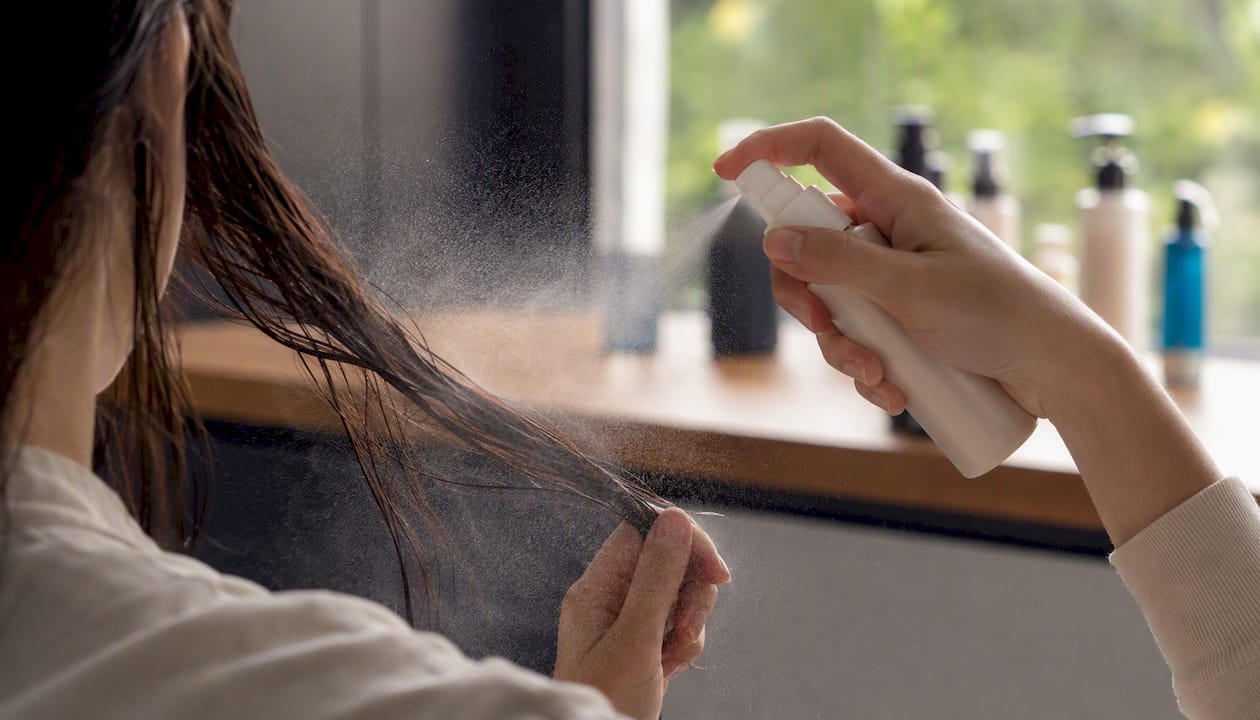
This is the single most widespread styling error. Flat irons, curling wands, and blow dryers all strip moisture from the cuticle. Without a heat protectant, that damage compounds with every session until you're dealing with chronic dryness, split ends, and breakage. A thermal protectant spray creates a barrier that slows moisture loss and reduces cuticle lifting. Apply it to damp hair before any heat tool, every time, no exceptions.
2. Styling hair when it's too wet
Wet hair is structurally weaker than dry hair. The protein bonds that give strands their strength are temporarily loosened by water, which makes wet hair far more prone to stretching and snapping under tension or heat. Blow-drying soaking-wet hair at high heat, or pulling it into a tight ponytail right after a shower, puts mechanical stress on the most vulnerable state your hair can be in.

3. Using the wrong products for your hair type
A volumizing mousse designed for fine hair will flatten thick, coarse strands. A heavy butter meant for 4C curls will weigh down wavy hair and leave it greasy. Product mismatch is one of the most common styling pitfalls because most people choose products based on marketing claims rather than their actual texture, porosity, and density. Salon guidance consistently points to incorrect product selection as a driver of limp, dull results. Start by knowing your hair type, then read the label with that in mind.
4. Using too much product
More is rarely better. Over-applying leave-in conditioner, serum, or styling cream creates residue that builds up on the scalp and shaft, weighing hair down and making it look greasy within hours. That buildup also traps dirt and old product, which can eventually affect scalp health. Use a pea-sized amount for most products and work up only if your hair genuinely needs more. Clarify with a clarifying shampoo once every few weeks to reset.
Pro Tip: If your hair looks flat or greasy by midday despite washing it that morning, product buildup is usually the culprit, not your scalp. A monthly clarifying wash solves it faster than switching shampoos.
5. Using the wrong tools or wrong heat settings
Fine or color-treated hair rarely needs more than 300°F (148°C) on a flat iron. Running it at 450°F because that's the default setting is how you fry strands in a single pass. Thick, coarse hair can handle higher heat, but even then, a lower starting point is smarter. Test on a small inside section first, then increase only if needed. Beyond temperature, using a round brush with too-tight a grip, or a paddle brush on soaking-wet hair, causes just as much mechanical damage as heat.
6. Overwashing or applying conditioner to your roots
Daily shampooing strips the scalp's natural sebum, which triggers the sebaceous glands to overproduce oil to compensate. That's the greasy cycle most people mistake for naturally oily hair. A top NYC hairstylist notes that cutting back on daily shampooing often leads to a short scalp adjustment period as oil production rebalances. Stick with it. On the conditioner side: apply it from mid-shaft to ends only. Roots don't need it, and putting conditioner there adds weight and accelerates greasiness.
7. Rough towel-drying and brushing wet hair
Rubbing hair with a regular terry cloth towel creates friction along the cuticle, which causes frizz and breakage. The same goes for dragging a brush through wet hair from root to tip. Wet strands snap under that kind of tension. Instead, blot and squeeze with a microfiber towel or a soft cotton T-shirt. When detangling, use a wide-tooth comb and start at the ends, working upward in sections. The AAD recommends this end-to-root approach specifically to reduce mechanical breakage.

8. Skipping regular trims
Split ends don't heal. Once the cuticle splits, it travels up the shaft unless you cut it off. Skipping trims for months means the split travels further, and you end up losing more length later than you would have with a small trim every 8–12 weeks. Trims also keep the style looking intentional rather than scraggly at the ends.
9. Ignoring your hair type when choosing styles or techniques
Curl specialists at Ouidad point out that curly-hair routines fail most often because people apply products at the wrong wetness level or touch their curls while they're drying. For curls, product goes on soaking-wet hair, and then you leave it alone. That's the opposite of what works for straight or wavy hair. Matching your technique to your texture isn't optional — it's the difference between a style that holds and one that falls apart by noon.
10. Not sectioning hair before styling
Trying to curl or straighten all your hair in one pass leads to missed sections, uneven heat distribution, and a result that looks inconsistent. Sectioning takes two extra minutes and makes every other step more effective. Clip the top half up, work through the bottom in 1–2 inch sections, then release and repeat. The style lasts longer and looks more deliberate.
11. Never cleaning your styling tools
Product residue and oil accumulate on flat irons, curling wands, and brushes. When you run a dirty flat iron through your hair, you're essentially baking old product onto the shaft. Brushes transfer scalp oil and old product back into clean hair. Cleaning your tools monthly, and wiping flat iron plates after each use, prevents that transfer and keeps your results consistent.
How to build a routine that avoids these mistakes
A few structural habits prevent most of the errors above from ever happening.
Before styling:
- Hair is at least 70% dry before any heat tool touches it
- Heat protectant is applied to damp hair, not dry
- You've chosen products matched to your texture and porosity
During styling:
- Heat settings start low; fine or damaged hair stays at or below 300°F (148°C)
- Hair is sectioned before curling or straightening
- Detangling starts at the ends and works upward
Post-wash:
- Blot with a microfiber towel; no rubbing
- Conditioner goes on mid-shaft to ends only
- Never tie wet hair tightly
Weekly and monthly:
- Clarify once every 2–4 weeks if you use styling products regularly
- Clean brushes monthly; wipe tool plates after each use
- Schedule a trim every 8–12 weeks
Pro Tip: Not sure what heat setting is safe for your hair? Start at 300°F (148°C) on a small inside section. If the style holds, stay there. Move up only if your hair type genuinely needs it, and never exceed 400°F (204°C) on any hair.
Pro Tip: To find the right products for your texture, understanding your hair type is the fastest shortcut. Porosity, density, and curl pattern each change what works.
What dermatologists and stylists actually say
The evidence behind these fixes isn't just stylist opinion. The AAD explicitly identifies heat tools without protection, rough drying, and incorrect brushing as habits that increase breakage and long-term structural damage. That's a clinical endorsement of what most stylists have been saying for years.
On the heat side, Real Simple's stylist roundup found that skipping heat protection and using excessive heat are the primary causes of split ends and chronic dryness, and that alternating heatless styles gives hair time to recover between sessions.
For overwashing, the stylist insight is consistent: the scalp needs time to recalibrate when you cut back on shampoo frequency. That 1–2 week window of excess oil is temporary, not a sign that you need to wash more.
A note from the editor
The fix that moves the needle fastest isn't the most complicated one. It's usually heat protection, applied consistently, combined with stopping the rough towel-dry habit. Those two changes alone reduce visible frizz and breakage within a few weeks. Pick one mistake from this list that you know you're making, and change just that this week. Small, repeated adjustments compound faster than a complete routine overhaul.
Personalized hair analysis, not just general advice
General guidance gets you most of the way there. But if you've been applying heat protectant, trimming regularly, and still seeing thinning or breakage, the issue may be specific to your scalp condition, hair density, or growth cycle rather than your styling habits.

Myhair's AI-powered hair analysis uses scan data to assess your hair health individually, tracking changes over time and surfacing product recommendations matched to your actual condition. It's a low-pressure next step: upload a scan, get a personalized read, and see whether your styling routine is working or working against you. This article covers general best practices; a Myhair analysis adds the layer of personalization that general advice can't.
Sources
- 10 hair care habits that can damage your hair
- 6 Common Hair Styling Mistakes That Are Damaging Your Hair
- Common Curly Hair Styling Mistakes | Ouidad
- The Top 10 Hair Styling Mistakes You're Probably Making
FAQ
What is the most damaging hair styling mistake?
Using heat tools without a protectant is consistently identified by the AAD and stylists as the top cause of preventable breakage, split ends, and chronic dryness.
How often should you wash your hair to avoid damage?
Most people wash too frequently. Cutting back to every 2–3 days allows the scalp to regulate oil naturally, though expect a 1–2 week adjustment period as sebum production recalibrates.
Does rough towel-drying really cause frizz?
Yes. Terry cloth creates friction along the cuticle, lifting it and causing frizz. Switching to a microfiber towel or cotton T-shirt and blotting instead of rubbing makes a noticeable difference quickly.
How do I know which products are right for my hair type?
Start by identifying your hair's porosity, density, and curl pattern. Myhair's AI hair analysis can assess these factors from a scan and recommend products matched to your actual condition.
How often should you trim your hair to prevent split ends?
Every 8–12 weeks is the standard recommendation. Split ends travel up the shaft if left untreated, so regular small trims preserve more length over time than infrequent large cuts.