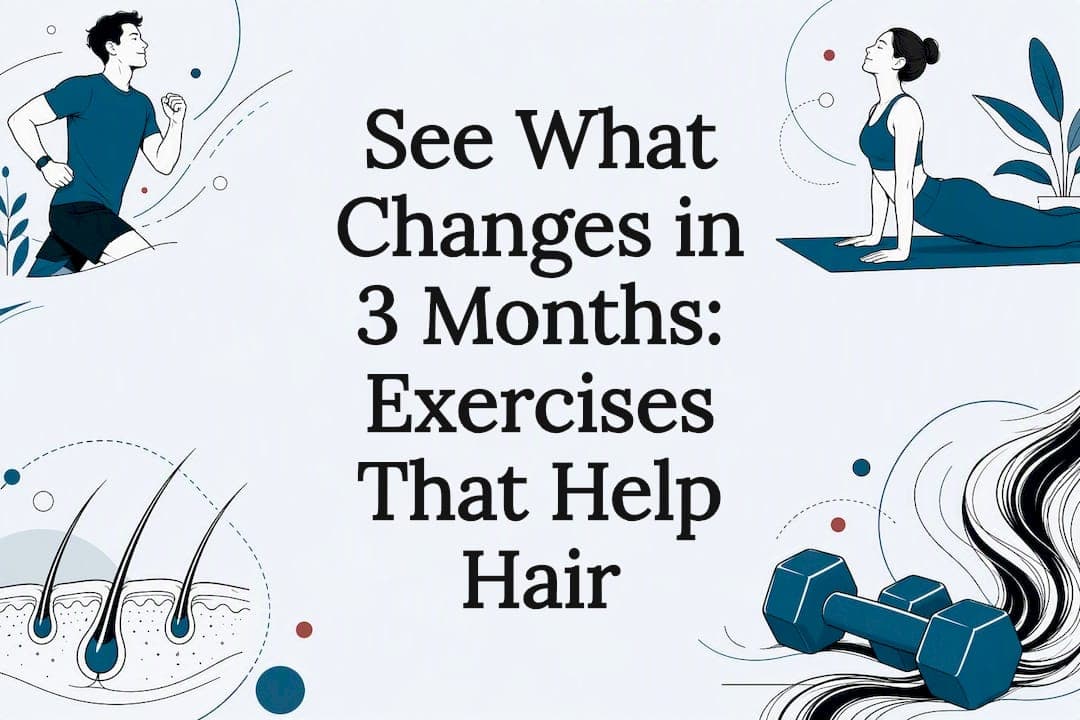
Cardio, scalp massage, yoga and gentle inversions, resistance training, and stress-reduction practices may support healthier hair, mainly by improving scalp circulation, lowering cortisol, and balancing hormones tied to hair growth. None of this reverses genetic hair loss overnight. Give any of these habits a couple of months of consistency before expecting to see or measure a difference.
TL;DR:
- Consistent scalp massage, combined with moderate cardio and stress-reduction practices, can increase hair thickness but may take several months to show results.
- Regular resistance training helps regulate hormones related to hair thinning, especially for hormonal imbalances like PCOS, without requiring high intensity or bulking.
- Performing gentle inversions such as downward-facing dog or supported shoulder stands enhances scalp blood flow without the risks associated with unsupported headstands.
- Overtraining can elevate cortisol levels and counteract hair health benefits, so exercise routines should be balanced and tailored to individual health conditions.
- Using AI-powered scalp analysis tools can objectively track progress and provide personalized recommendations, ensuring efforts are effectively supporting hair growth.
Table of Contents
- Exercises That Benefit Hair: A Practical Breakdown by Type
- How Exercise Actually Changes What's Happening on Your Scalp
- Building a Weekly Routine You'll Actually Stick To
- What the Scalp Massage Research Actually Shows
- Yoga Poses Worth Trying, and the Ones to Approach Carefully
- Strength Training's Underrated Role in Hormonal Hair Health
- Cautions, Limits, and Red Flags Worth Taking Seriously
- What I Tell People Who Ask if This Actually Works
- Track What's Working With MyHair
- Sources
- FAQ
Exercises That Benefit Hair: A Practical Breakdown by Type
Each category below works through a different channel, so combining them tends to outperform picking just one.
1. Cardio for scalp circulation
Brisk walking, jogging, cycling, and swimming all push more oxygenated blood through the small vessels feeding hair follicles. Aim for about half an hour at a moderate pace, most days of the week. You don't need to run marathons. A dermatologist quoted in coverage of cardio's link to hair health points to improved circulation and antioxidant defenses as the main reasons regular aerobic movement seems to correlate with better scalp condition over time. Swimming carries a caveat: chlorine dries out hair and scalp skin, so rinse and condition immediately after.
2. Scalp massage
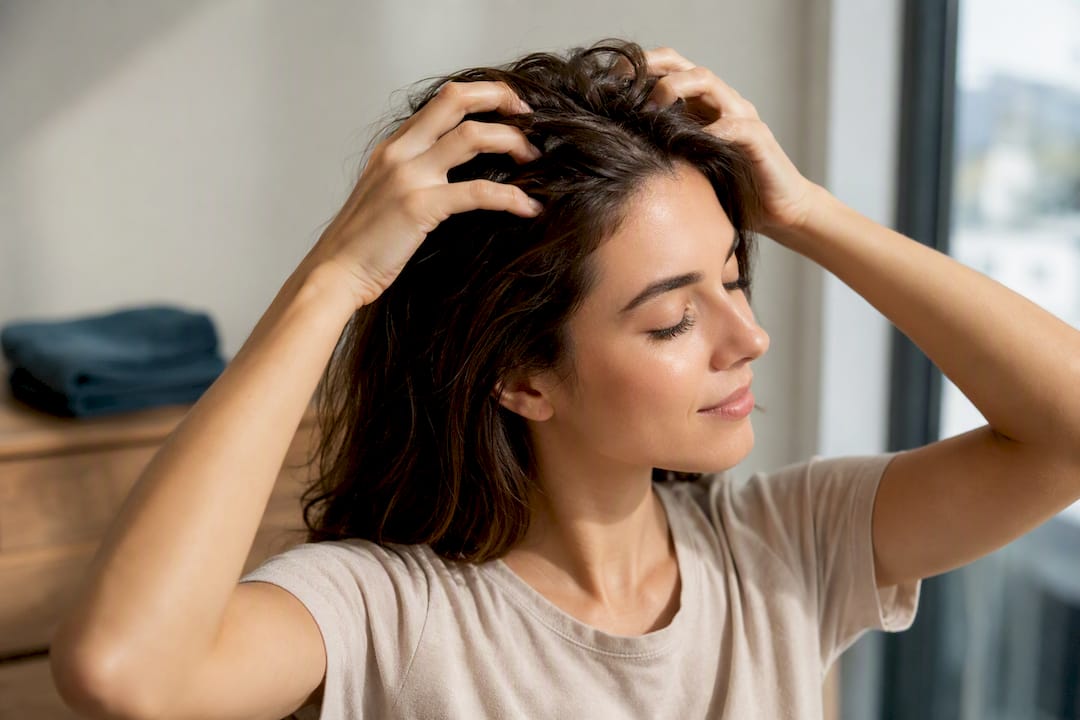
This is the cheapest, lowest-risk option on the list, and it has actual research behind it. Spend several minutes a day using your fingertips (not nails) in small circular strokes across the whole scalp, or use a silicone massage tool if your hands tire. Consistency matters more than pressure.
3. Yoga and gentle inversions
Downward-facing dog, standing forward fold, and supported shoulder stands may increase blood flow to the head while also lowering stress hormones. Skip unsupported headstands unless you have real experience and a spotter. Wall-supported variations get you most of the circulation benefit with a fraction of the neck strain.
4. Resistance training
A few sessions weekly of compound lifts (squats, deadlifts, rows, presses) can improve insulin sensitivity and help regulate androgen levels, which matters for anyone whose hair thinning is tied to hormonal imbalance. This isn't about building bulk. It's about the metabolic ripple effect strength training has on the rest of the body.
5. Stress-reduction practices
Short daily habits like slow breathing or an unhurried walk outside can help lower cortisol, which supports hair follicles staying in their growth phase rather than pushing them prematurely into shedding.
Here's how to combine these depending on your schedule:
- Beginner: 20-minute walk (5 days), scalp massage (daily), one yoga session (weekend)
- Time-poor: Scalp massage (daily), 15 minutes of brisk walking or stairs (most days), 10-minute bodyweight strength circuit twice a week
- Intermediate: Cardio (4 days, 30 minutes), strength training (3 days), yoga or stretching (2 days), scalp massage (daily)
Pro Tip: Do your scalp massage right after showering, when hair is damp and product has been rinsed out. It takes less than five minutes and you'll actually remember to do it if it's stacked onto a habit you already have.
How Exercise Actually Changes What's Happening on Your Scalp
The connection between movement and hair isn't mystical. It runs through a handful of concrete pathways.
- Circulation: More blood flow to the scalp means more oxygen and nutrients reaching the dermal papilla, the structure at the base of each follicle that drives hair production.
- Cortisol: Chronic stress hormone elevation is a documented trigger for hair shedding. Regular movement is one of the more reliable ways to bring cortisol down, according to Mayo Clinic's overview of exercise and stress.
- Hormones and metabolism: Resistance training and cardio both improve insulin sensitivity, which is directly relevant for conditions like PCOS where androgen imbalance drives hair thinning.
- Sleep and digestion: People who exercise regularly tend to sleep better and digest more efficiently, both of which affect how well the body absorbs the protein, iron, and zinc that hair needs to grow.
None of this is a cure. Cleveland Clinic's health team is explicit that there's no single proven way to speed up hair growth. Exercise works as one piece of a broader approach that includes diet, scalp care, and reduced heat or chemical damage. Treat it as a supporting lever, not a switch you flip.
Building a Weekly Routine You'll Actually Stick To
A realistic week looks less like a training plan and more like a rhythm you repeat.
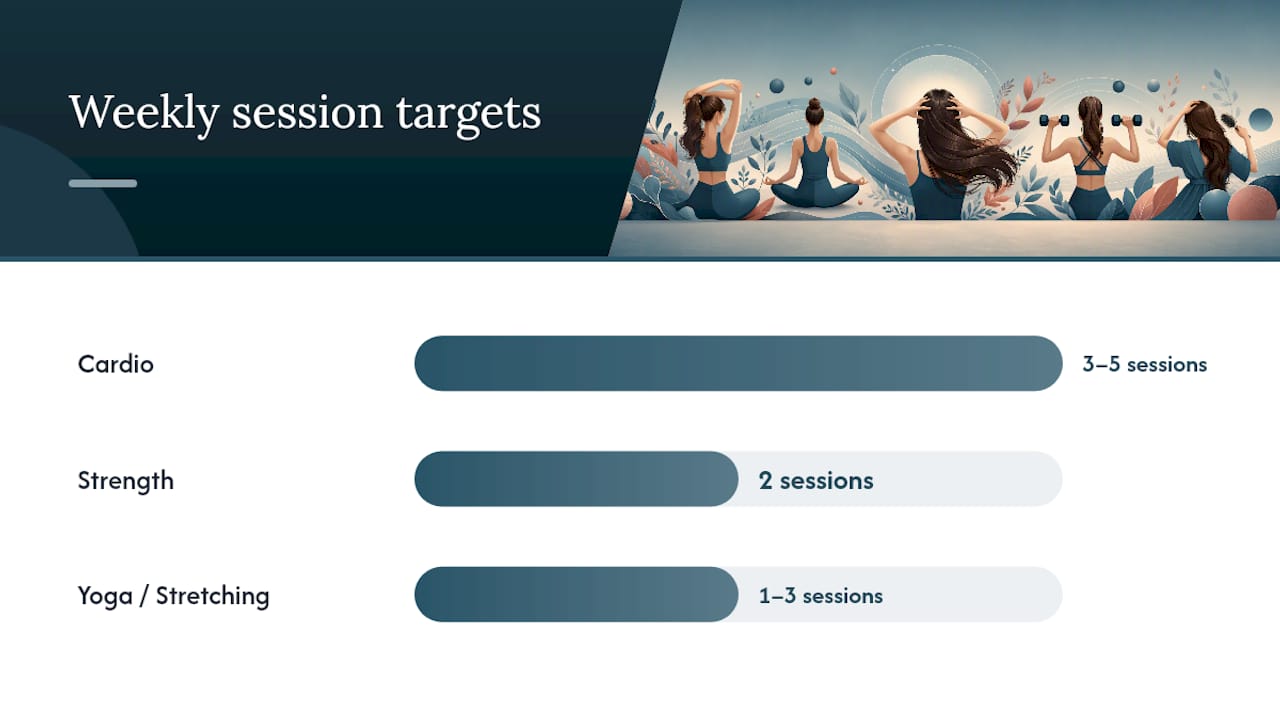
- Cardio, 3 to 5 sessions: 20 to 40 minutes each, moderate intensity. Walking counts.
- Strength training, 2 sessions: Full-body compound lifts, 30 to 45 minutes.
- Yoga or stretching, 1 to 3 sessions: 15 to 30 minutes, including at least one gentle inversion pose.
- Scalp massage, daily: 4 to 10 minutes, ideally after showering.
Beginners should start with three cardio sessions and one strength session, then add volume every two weeks as it feels manageable. If you have a busy schedule, stack the massage onto an existing habit and treat a 15-minute walk as your baseline cardio, non-negotiable. Anyone managing a medical condition, whether that's a thyroid disorder, PCOS, or a cardiovascular issue, should check with a physician before increasing training intensity.
Pair the routine with adequate protein intake and 7 to 9 hours of sleep. Hair is built from protein, and the body prioritizes vital organs over hair follicles when nutrients or rest run short, so supplements and dietary support matter as much as the workouts themselves.
Pro Tip: Hydrate before and after workouts, not just during. Sweat pulls water and electrolytes from the body, and dehydration shows up in hair as dullness and brittleness before it shows up anywhere else you'd notice.
What the Scalp Massage Research Actually Shows
The most-cited study on this topic followed 9 healthy men who performed a standardized 4-minute scalp massage every day for 24 weeks. Researchers measured an increase in hair shaft thickness afterward and observed gene expression changes in the dermal papilla cells responsible for hair growth signaling.
That's a genuinely interesting finding. It's also a small, uncontrolled study of 9 people, which means it can't tell you whether massage alone reverses pattern hair loss or works the same way for women, older adults, or anyone with a different hair-loss cause.
To replicate the protocol:
- Use clean fingertips (not nails) in small circular motions.
- Cover the entire scalp: hairline, crown, back of the head, and sides.
- Apply firm but comfortable pressure for 4 minutes, once a day.
- Do it consistently for at least several weeks before evaluating results.
Pair massage with topical care rather than treating it as a replacement for it, and see a dermatologist if shedding is sudden, patchy, or accompanied by scalp irritation.
Yoga Poses Worth Trying, and the Ones to Approach Carefully
Certain poses put your head below your heart, which temporarily increases blood flow to the scalp. Coverage of yoga poses commonly recommended for hair health points to a handful of accessible options:
- Downward-facing dog: Gentle inversion, low risk, good for daily practice.
- Standing forward fold: Easiest entry point if you're new to inversions.
- Fish pose: Opens the chest and neck without inverting fully.
- Supported shoulder stand: Use a wall or folded blanket for support rather than attempting it freehand.
Full headstands are where caution matters most. Unsupported headstands put significant pressure on the cervical spine, and the evidence for pose-specific hair benefits doesn't come close to justifying that neck risk for beginners. Practice 2 to 4 times a week, and remember that yoga's stress-lowering effect is doing at least as much work for your hair as the inversion itself.
Strength Training's Underrated Role in Hormonal Hair Health
Resistance training doesn't get talked about much in hair-care circles, but its effect on insulin sensitivity and androgen regulation makes it relevant, especially for anyone dealing with hormone-linked thinning like PCOS-related hair loss.
- Simple twice-weekly plan: Squats, rows, and deadlifts (or supported regressions for beginners), 3 sets of 8 to 12 reps.
- Nutrition support: Adequate protein intake helps the body use the hormonal benefits of training to actually support hair-building processes.
- Rest matters: Muscles and follicles both need recovery time; training the same muscle group daily without rest works against you, not for you.
Cautions, Limits, and Red Flags Worth Taking Seriously
More exercise isn't automatically better. Overtraining raises cortisol instead of lowering it, which can undercut the exact benefit you're going for.
- Exercise supports hair health but rarely reverses genetic (androgenetic) hair loss on its own.
- Watch for sudden shedding, patchy bald spots, or scalp inflammation. None of those are normal, and none respond to exercise alone.
- Hair loss tied to a new medication needs a conversation with the prescribing doctor, not a new workout plan.
- Persistent thinning warrants iron and thyroid testing, plus a dermatology referral, since nutrient deficiencies and thyroid issues are common underlying causes that exercise can't fix.
What I Tell People Who Ask if This Actually Works
Consistency beats intensity here, every time. The people who see real change aren't doing anything extreme. They're doing the boring version: a daily massage, a few walks, some strength work, repeated for months without skipping around between routines.
Pair it with the basics: eat enough protein, sleep enough, and don't layer heat damage on top of the progress you're trying to make. What I'd actually recommend is tracking it. Guessing whether your hair looks different after 10 weeks is unreliable. A monthly scan gives you something a mirror can't: an actual measurement.
— Cyriac
Track What's Working With MyHair
Myhair gives you the one thing a home routine can't: proof of whether it's actually working. Instead of guessing whether that daily scalp massage or new cardio habit is paying off, an AI-powered hair analysis scans your scalp and tracks density, thickness, and coverage over time, so change shows up in data instead of vague impressions in the mirror.
Upload a scan every few weeks alongside your exercise routine, and Myhair flags whether your follicle count and coverage are trending up, flat, or down. It also serves up product recommendations suited to what your scan actually shows, rather than generic advice aimed at nobody in particular. If you're already putting in the work with cardio, massage, and strength training, get a baseline scan through the onboarding page and see what three months of consistency actually produces.
Sources
- Standardized scalp massage resulted in increased hair thickness by inducing stretching forces to dermal papilla cells in the subcutaneous tissue. (PMC)
- Exercise and stress: Mayo Clinic
- Is there any way to make your hair grow faster? — Cleveland Clinic Health Essentials
This article is general information, not a substitute for advice from a qualified doctor. Consult a qualified healthcare professional about your own circumstances before acting on anything here.
FAQ
What is the best exercise for hair growth?
No single exercise is proven best, but a combination of moderate cardio, daily scalp massage, and stress-reducing practices like yoga has the strongest support for improving circulation and lowering cortisol.
What are the "big 3" for thinning hair?
Outside of exercise, the commonly cited "big 3" refers to minoxidil, finasteride, and low-level laser therapy. Exercise and scalp massage work alongside these as supportive lifestyle measures, not replacements for them.
Finasteride is FDA-indicated for men only. Women who are or may become pregnant must not handle crushed or broken finasteride tablets, due to the risk of harm to a male fetus. It can also cause sexual side effects (reduced libido, erectile dysfunction) in a minority of men, which usually resolve after stopping treatment. Discuss these risks with a physician before starting.
Can thin hair become thick again?
Hair shaft thickness can improve with consistent scalp massage, as shown in a small study where 24 weeks of daily massage increased thickness, but results vary and genetic thinning often needs medical treatment alongside lifestyle changes.
What stimulates hair growth best?
The most consistent stimulators combine improved scalp circulation (cardio, massage, gentle inversions), lower stress hormones, and adequate nutrition. Tracking your scalp with tools like Myhair's hair-score feature helps you see which habits are actually moving the needle for you.