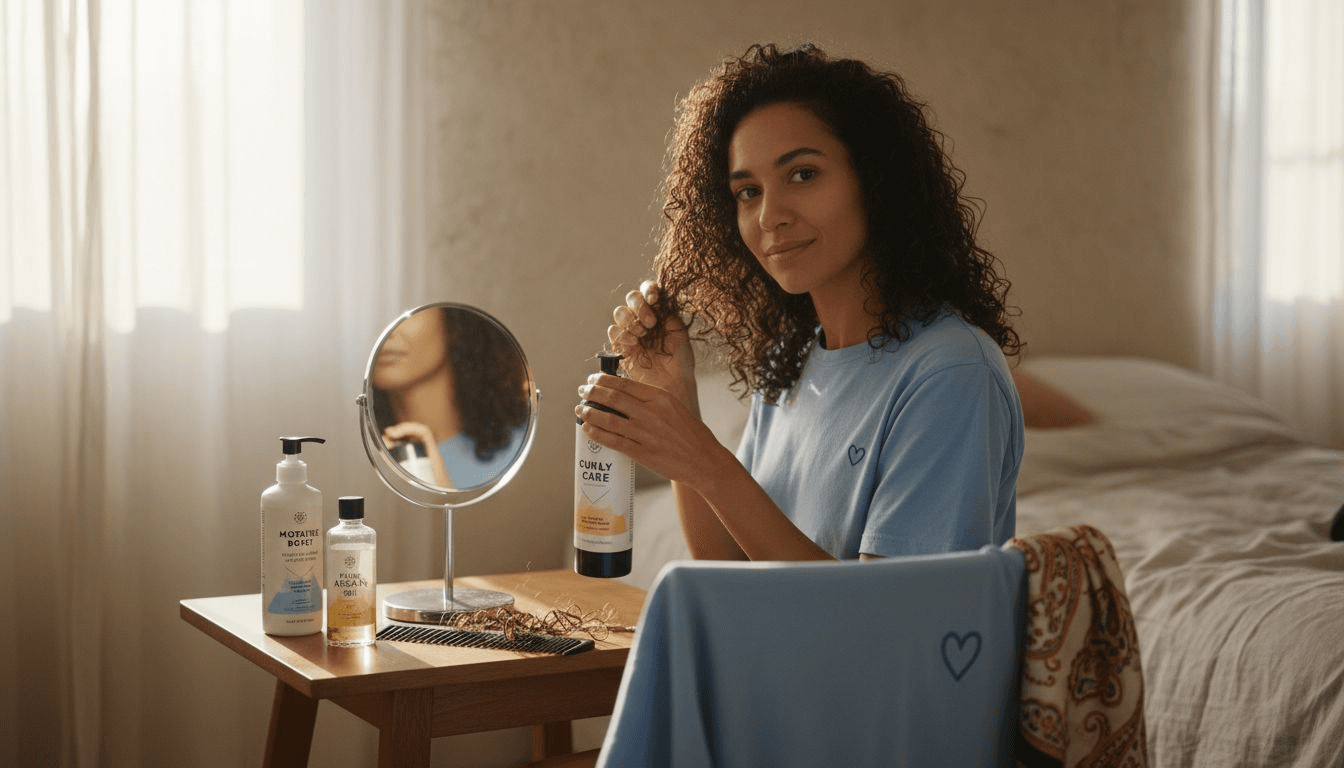
Natural hair thrives when it gets the care and attention it truly needs, but finding products and routines that actually work for your curls can be confusing. You might struggle with dryness, breakage, or products that weigh your hair down instead of keeping it balanced and healthy. The good news is you can transform your routine by focusing on proven steps that help restore moisture, boost definition, and protect the delicate structure of natural hair.
This guide shares specific, research-backed strategies tested by people with natural hair, from choosing a gentle cleanser to using lightweight leave-ins and nourishing oils. Each step delivers practical tips you can use today for softer hair, a healthier scalp, and better-defined curls. Get ready to discover simple changes that will make your natural hair routine more effective—and your results more beautiful.
Table of Contents
- 1. Start With a Gentle, Sulfate-Free Cleanser
- 2. Choose Lightweight Leave-In Conditioners
- 3. Moisturize With Natural Oils and Creams
- 4. Strengthen With Protein-Rich Treatments
- 5. Seal Moisture Using Protective Styling Gels
- 6. Personalize Hair Care Using Smart Tech Tools
Quick Summary
| Key Message | Explanation |
|---|---|
| 1. Use sulfate-free cleansers | Sulfate-free shampoos preserve natural moisture, allowing curls to thrive by reducing frizz and promoting healthier scalp conditions. |
| 2. Opt for lightweight leave-in conditioners | Lightweight formulas provide hydration without weighing down curls, ensuring they maintain definition and volume throughout the day. |
| 3. Sealing moisture is essential | Natural oils and creams lock in moisture and prevent dryness, crucial for keeping curls healthy and resilient. |
| 4. Introduce protein-rich treatments regularly | Protein treatments strengthen the hair shaft, helping to repair damage and reduce breakage, essential for maintaining healthy curls. |
| 5. Personalize hair care with technology | Smart applications help tailor your hair care routine based on specific needs, ensuring maximum effectiveness and minimizing product waste. |
1. Start With a Gentle, Sulfate-Free Cleanser
Your hair care routine begins at the scalp. The first step should always be choosing the right cleanser to remove buildup without stripping away natural oils.
Sulfates are harsh detergents commonly found in conventional shampoos. They strip moisture from your hair and scalp, leaving natural hair dry, brittle, and prone to breakage.
Sulfate-free cleansers work differently. They gently remove dirt, oil, and product residue while preserving the moisture your natural hair desperately needs. This matters because natural hair has a tighter curl pattern, making it harder for natural oils to travel down the hair shaft.
When you use gentle cleansers without sulfates, you maintain your scalp's natural moisture barrier. Your scalp stays healthier, itchier less, and your curls become more defined and bouncy.
What makes a cleanser truly gentle:
- Absence of sulfates (sodium lauryl sulfate, sodium laureth sulfate)
- Moisturizing ingredients like coconut oil and apple cider vinegar
- pH-balanced formula that respects your scalp's natural environment
- Clarifying ability without over-stripping
Most people with natural hair notice results within 2-3 washes. Your curls start to pop, frizz decreases, and your hair feels softer.
Why? Sulfate-free shampoos help control dandruff and scalp irritation while supporting natural moisture. You're not fighting against your cleanser; you're working with your hair's biology.
This foundational step sets up everything else in your routine. Without a gentle cleanser, no deep conditioner or growth serum can fully do its job. Your scalp needs to start clean and healthy.
A sulfate-free cleanser is the non-negotiable foundation of any natural hair routine. Everything else depends on this first step being done right.
Pro tip: Massage your cleanser into your scalp for 3-5 minutes using your fingertips, not your nails, to stimulate blood flow and ensure thorough removal of buildup without damaging your curl pattern.
2. Choose Lightweight Leave-In Conditioners
Leave-in conditioners are the secret weapon for keeping natural hair hydrated throughout the day. But not all conditioners are created equal, especially for your curl pattern.
The key word here is lightweight. Heavy conditioners can weigh down your curls, flatten volume, and create a greasy appearance within hours of application. You want moisture without the burden.
Lightweight leave-in conditioners deliver hydration and detangling benefits while maintaining your natural hair's bounce and definition. They work by coating each strand with protective moisture that lasts all day without buildup accumulation.
Why does this matter? Natural hair has a unique structure. Your curl pattern makes it harder for natural oils to travel down the hair shaft, so external moisture is crucial. Lightweight formulas help maintain healthy hair while providing essential hydration and preserving curl definition.
Think of lightweight leave-in conditioners as the ongoing moisture that your cleanser started. While your shampoo removes buildup, your leave-in conditioner keeps strands nourished and protected throughout the day.
What to look for in a lightweight leave-in conditioner:
- Moisturizing ingredients without heavy oils or butters
- Formulas that nourish without creating residue
- Products designed specifically for natural hair textures
- Ingredients that provide protection against breakage
Apply leave-in conditioner to damp hair, focusing on the mid-lengths and ends. Use your fingers or a wide-tooth comb to distribute it evenly through each section. You should feel a light, silky coating, not a heavy product.
Many people see results immediately. Your curls define better, detangle easier, and feel softer without looking weighed down. This is how natural hair is supposed to feel.
Lightweight leave-in conditioners help reduce the risk of buildup while avoiding harsh chemicals that damage your curls. You're feeding your hair moisture, not suffocating it.
The best leave-in conditioner is one that hydrates without weighing down your natural texture. You should see volume and definition, not flatness.
Pro tip: Apply your leave-in conditioner to soaking wet hair, not damp hair, and it will distribute more evenly and absorb better into each curl without creating heavy buildup.
3. Moisturize With Natural Oils and Creams
After cleansing and conditioning, natural oils and creams seal the moisture into your hair. This step is non-negotiable for natural hair that tends to be drier and more fragile than other hair types.
Natural hair's curl pattern prevents oils from traveling down the hair shaft naturally. Your scalp produces sebum, but it sits at the roots while your ends remain dry. That's where oils and creams come in.
Natural oils and creams work as sealants. They lock in moisture from your conditioner and prevent water loss throughout the day. Without this sealing step, your curls become dry, brittle, and prone to breakage within hours.
Coconut oil commonly appears in moisturizing scalp creams to prevent dryness and maintain softness. It's not the only option, but it remains one of the most effective for natural hair.
Why natural oils beat synthetic alternatives:
- They protect hair from environmental damage and pollution
- They work with your hair's natural lipids for better retention
- They reduce the need for harsher chemical treatments
- They improve curl definition and shine
The key is balance. Too much oil weighs down your curls. Too little leaves them dry. Most people find success using a dime-sized amount of oil for shoulder-length hair, working it through from mid-length to ends.
Using natural oils supports hair moisture and reduces breakage while maintaining strength. Your curls become more resilient and bounce back better after styling.
Cream-based moisturizers offer another option if you prefer lighter products. Many people alternate between oils and creams depending on their hair's needs on any given day. Your hair will tell you what it needs.
Natural oils and creams are the final seal that keeps your moisture inside your curls and your breakage outside of your routine.
Pro tip: Apply natural oils to damp hair rather than completely dry hair, as moisture helps the oil spread more evenly and prevents product buildup on your scalp.
4. Strengthen With Protein-Rich Treatments
Natural hair breaks easily. Without regular protein support, your curls become weak, snap off, and struggle to grow long. Protein treatments rebuild what styling, weather, and time wear away.
Think of your hair like a building. Proteins are the structural blocks holding everything together. When those blocks deteriorate, the entire structure weakens. Your hair cuticle develops gaps, and moisture escapes. Breakage follows.
Protein treatments fill those gaps. They work at the molecular level to strengthen the hair shaft and restore resilience. Your curls become more elastic, bend without breaking, and last longer between trims.
Natural hair especially needs regular protein support. The curl pattern creates stress points along each strand where breakage starts. Protein-rich treatments strengthen hair by rebuilding the cuticle and cortex where damage accumulates.
Look for treatments containing keratin or hydrolyzed proteins. These ingredients penetrate the hair shaft and provide lasting support. You'll notice the difference within one application. Your curls feel stronger, detangle easier, and hold their shape better.
Signs your hair needs protein:
- Excessive breakage or split ends
- Limp, droopy curls that won't hold definition
- Hair feels mushy or overly stretchy when wet
- Frizz that looks like flyaways rather than texture
Protein treatments enhance hair growth by repairing damage at the molecular level, reducing hair loss and strengthening follicles. This matters because strong hair means less shedding and more length retention over time.
Use protein treatments every two to four weeks, depending on your hair's condition. If your hair feels soft and supple, you can wait. If it's weak or breaking, increase frequency until strength returns. Your hair will signal when it needs more.
Protein and moisture must balance. Too much protein makes hair stiff and brittle. Too little leaves it weak. Most people find success alternating protein and moisture treatments weekly.
Protein treatments are your hair's strength insurance. Without them, every style, every wash, every day weakens what you're trying to grow.
Pro tip: Apply protein treatments to clean, damp hair and leave them on for the full recommended time, as this allows the proteins to properly penetrate and bond with your hair shaft for maximum strengthening results.
5. Seal Moisture Using Protective Styling Gels
Protective styling gels are the unsung heroes of natural hair care. They lock in all the moisture from your cleansers, conditioners, and oils while keeping your style intact throughout the day.
Your hair loses moisture constantly through evaporation and friction. Each time your curls rub against fabric, your pillow, or your shoulders, water escapes. Without a moisture barrier, your carefully applied products disappear within hours.
Protective styling gels create that barrier. They form a seal around each hair strand, reducing porosity and preventing water loss. Your curls stay hydrated, defined, and bouncy from morning until night.
This matters most when styling. During manipulation, your hair experiences friction and stress that can cause breakage. Styling gels designed for natural hair help preserve moisture while protecting strands during styling and throughout the day.
The best gels for natural hair do more than just hold. They moisturize while they style. Look for formulas that list water as the first ingredient, followed by conditioning agents. These gels provide hold without the crunch or flaking that old-school gels created.
What protective styling gels should do:
- Form a moisture seal around hair strands
- Provide flexible hold that bends with your curls
- Protect from environmental damage and friction
- Reduce shrinkage while maintaining definition
- Leave no residue or white cast
Protective styling gels reduce breakage by forming a protective barrier around your strands during daily wear and manipulation. This protection is essential for maintaining healthy curl integrity and length retention.
Apply gels to soaking wet hair for best results. Use a praying hands method or raking technique to distribute the gel evenly through each section. Your curls will clump together naturally as they dry, creating definition that lasts all day.
One application can last 3 to 5 days depending on your lifestyle. If you sleep with your hair, use a silk bonnet or pillowcase to preserve your style longer. The gel works best when your curls stay undisturbed.
Protective styling gels are your moisture insurance policy. They keep what you put in your hair actually staying in your hair.
Pro tip: Mix a small amount of gel with your leave-in conditioner before applying to create a lighter formula that provides moisture and hold without the heavy feel of gel alone.
6. Personalize Hair Care Using Smart Tech Tools
One-size-fits-all hair care doesn't work for natural hair. Your curl pattern, porosity, density, and scalp condition are uniquely yours. Smart tech tools finally make personalized care accessible to everyone.
Traditional hair care relies on guesswork. You buy products based on marketing claims and hope they work. Most don't. Smart technology removes the guesswork by analyzing your hair scientifically.
Smart tech tools assess your hair objectively. They measure moisture levels, protein balance, scalp health, and curl pattern through apps, devices, or both. Based on this data, you receive customized product recommendations and routine adjustments designed specifically for your hair.
This matters because natural hair is complex. What works for someone with 4A curls might damage someone with 3B curls. What hydrates a porous scalp might build up on a non-porous scalp. Personalized approaches using technology tailor treatments based on individual hair characteristics rather than guessing.
Many women in your age group already use apps for fitness and wellness. Hair care tech works the same way. You track your routine, take regular scans, and watch your hair improve over time with data-backed recommendations.
How smart tech tools help your natural hair:
- Identify your specific hair needs before buying products
- Track progress and see measurable improvements
- Receive customized product recommendations
- Adjust your routine based on seasonal changes
- Prevent expensive mistakes with wrong products
Wearable technology and smart devices monitor scalp health in real time, providing personalized recommendations that align with your individual hair needs. This data-driven approach transforms hair care from trial and error into precision maintenance.
Start by downloading a personalized hair care app or taking a hair scan. Answer questions about your hair honestly. The tool will analyze your responses and provide a baseline assessment. From there, follow the customized recommendations and track results.
Most people see noticeable improvements within 4 to 6 weeks. Your curls define better, breakage decreases, and you spend less money on products that don't work. You're investing in what actually helps your hair, not what brands want you to buy.
Smart tech tools turn hair care from guesswork into precision. Your hair is unique, and your routine should reflect that.
Pro tip: Take your initial hair scan in consistent lighting and with your natural hair texture fully visible, as accurate baseline data ensures the most relevant and effective personalized recommendations for your unique hair needs.
Below is a comprehensive table summarizing the key methods, actions, and benefits for optimal natural hair care as discussed in the article.
| Care Step | Detailed Actions | Benefits |
|---|---|---|
| Gentle Cleansing | Use sulfate-free cleansers with moisturizing and pH-balanced ingredients. Massage for 3–5 minutes. | Removes buildup without stripping natural oils; maintains moisture balance. |
| Lightweight Conditioning | Apply lightweight leave-in conditioners focusing on damp hair's mid-lengths and ends. | Hydrates hair with bounce, prevents buildup. |
| Moisture Sealing | Use natural oils and creams on damp hair to lock in hydration. | Prevents dryness, enhances shine, reduces breakage. |
| Protein Treatments | Weekly to biweekly use of keratin or hydrolyzed protein treatments as needed for hair strength. | Restores resilience, reduces breakage, promotes healthy growth. |
| Styling Gels | Apply moisture-sealing gels to wet hair for styling and hold. | Maintains moisture throughout the day, reduces environmental impact. |
| Smart Tech Tools | Use personalized apps and devices for customized hair care routines. | Provides tailored solutions for individual needs, tracks improvement. |
Unlock Your Best Natural Hair with Personalized Care
The journey to healthy, vibrant natural hair starts with understanding your unique hair needs. This article highlights critical challenges like maintaining moisture without buildup, balancing protein and hydration, and protecting your curls from breakage. You deserve tailored solutions that adapt to your specific curl pattern, scalp health, and hair goals instead of one-size-fits-all products.
Discover how MyHair.ai uses advanced AI technology to analyze your hair’s condition and provide personalized insights to optimize your routine. From gentle cleansing to strengthening protein treatments and protective styling, our platform helps you choose the right products and practices that match your unique hair profile. Start your transformation today with a simple scan, experience real improvement in curl definition and strength, and stop wasting time on guesswork. Take control of your natural hair care with scientifically-backed recommendations by visiting https://myhair.ai now.
Frequently Asked Questions
What are the key benefits of using sulfate-free cleansers for natural hair?
Sulfate-free cleansers gently remove dirt and product buildup without stripping natural oils. Start by incorporating a sulfate-free cleanser into your routine to maintain your scalp's moisture and promote healthier, more defined curls.
How should I choose a lightweight leave-in conditioner for my natural hair?
Select a lightweight leave-in conditioner that hydrates without weighing down your curls. Look for moisturizing ingredients that provide nourishment and apply after washing your hair to keep your strands moisturized throughout the day.
Why are natural oils essential for moisturizing natural hair?
Natural oils seal moisture into your hair, preventing dryness and breakage. Apply a small amount of oil to damp hair after conditioning to lock in hydration and improve your curls' resilience and shine.
How frequently should I use protein-rich treatments on my natural hair?
For natural hair, use protein treatments every two to four weeks to rebuild strength and reduce breakage. Monitor your hair's condition and adjust the frequency based on how it responds—more often for weak hair and less for healthy strands.
What role do protective styling gels play in my hair care routine?
Protective styling gels help lock in moisture while keeping your style intact throughout the day. Apply to soaking wet hair, creating a barrier to maintain hydration and definition, while minimizing frizz and environmental damage.
How can smart tech tools personalize my natural hair care routine?
Smart tech tools assess your hair's unique characteristics to provide customized product recommendations. Use these tools to analyze your hair’s moisture levels and needs, adjusting your routine based on real-time data for optimal results.
Recommended
- 7 Essential Natural Hair Care Products for Healthier Hair | MyHair
- Good Natural Hair Products for Growth and Hair Loss (2025) | MyHair
- 7 Best Hair Growth Products for 4C Hair You Must Try | MyHair
- Top 6 Best Hair Growth Products 2025 for Healthier Hair | MyHair
- 7 die besten Kräuter für Haut – Natürliche Pflege-Tipps – Kühlkern UG (Haftungsbeschränkt)