TL;DR:
- Most women experience breakage that prevents length retention during hair growth.
- Proper habits, nutrition, and regular trims support longer, healthier hair over time.
Growing hair out for women is defined as the process of retaining length by minimizing breakage while supporting follicle health through nutrition, scalp care, and protective habits. Hair grows approximately 0.5 inches per month, which means biology sets a firm ceiling on speed. The real variable is how much of that growth you actually keep. The American Academy of Dermatology Association confirms that breakage, not slow growth, is the primary reason most women never reach their length goals. Scalp health, protein intake, and consistent daily habits determine whether your hair retains what it grows.
What is the natural hair growth rate for women?
Hair grows at roughly 0.5 inches per month, or about 6 inches per year. That rate is largely set by genetics, age, and hormonal health. No topical product changes the biological clock of your follicles in any meaningful way.
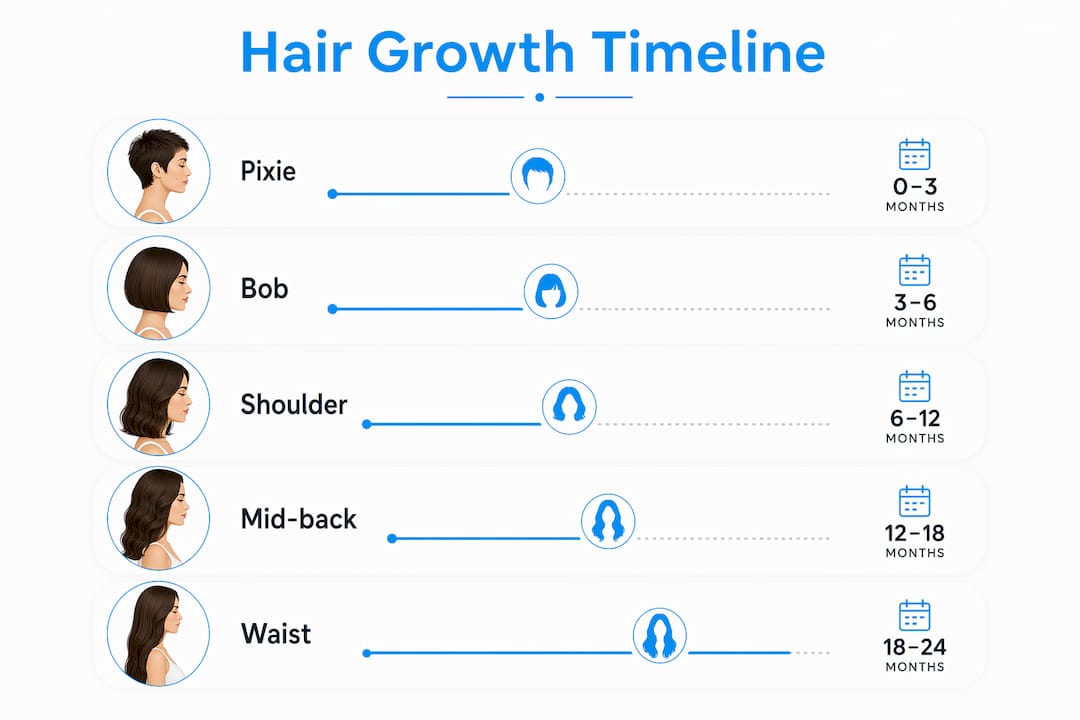
Growing from a pixie cut to shoulder length takes roughly two years under ideal conditions. Reaching mid-back length from a short style can take four years or more. That timeline assumes minimal breakage, which is where most women lose ground.
"Length retention, not growth acceleration, is the defining factor in how long your hair gets. If your hair breaks at the same rate it grows, your length never changes."
The table below shows realistic length milestones based on average growth rates.
| Starting Length | Target Length | Estimated Time |
|---|---|---|
| Pixie (2–3 inches) | Bob (8–10 inches) | 12–18 months |
| Bob (8–10 inches) | Shoulder (14–16 inches) | 12–18 months |
| Shoulder (14–16 inches) | Collarbone (18–20 inches) | 12–18 months |
| Collarbone (18–20 inches) | Mid-back (24–26 inches) | 12–18 months |
These timelines assume consistent care. Genetics set your maximum terminal length, but maintenance determines how close you get to it.
How does nutrition support healthy hair growth in women?
Follicle function depends directly on what you eat. Deficiencies in iron, biotin, and zinc impair follicle activity and reduce hair quality. Correcting those deficiencies restores normal growth cycles before any topical treatment can make a difference.
Protein is the structural building block of hair. Protein intake of 1.2–1.6 g per kilogram of body weight supports optimal follicle function. A woman weighing 140 pounds needs roughly 76–102 grams of protein daily. Eggs, Greek yogurt, lentils, and salmon are practical sources that also deliver zinc and iron.
Key nutrients for hair growth include:
- Biotin (Vitamin B7): Supports keratin production; found in eggs, almonds, and sweet potatoes
- Iron: Carries oxygen to follicles; found in red meat, spinach, and fortified cereals
- Zinc: Regulates follicle repair; found in pumpkin seeds, chickpeas, and beef
- Vitamin D3: Linked to follicle cycling; found in fatty fish and fortified dairy
- Vitamin C: Aids iron absorption and collagen synthesis; found in bell peppers and citrus
Statistic: Clinical studies show that supplements containing AnaGain™ Nu reduce hair shedding within 28 days and improve hair density within 8–12 weeks at a 100 mg daily dose. That timeline is meaningful because it sets realistic expectations rather than promising overnight results.
Women's hair growth supplements like those featuring MB40X™ biotin technology or AnaGain™ Nu are among the more clinically studied options available. Supplements support follicle health but cannot reverse genetic or hormonal hair loss. They work best as part of a broader nutrition and care plan. For a deeper look at what the research actually supports, the hair growth supplements comparison on Myhair breaks down the evidence by ingredient.
Pro Tip: Take iron supplements with vitamin C to increase absorption. Avoid taking iron alongside calcium-rich foods or coffee, which block uptake.
What daily habits prevent breakage and retain length?
Breakage prevention accounts for the majority of successful length retention. The habits below protect the hair shaft from mechanical and environmental damage every single day.
- Trim every 10–12 weeks. Regular trims remove split ends before they travel up the shaft and cause larger breaks. Skipping trims to "save length" produces the opposite result.
- Switch to a silk pillowcase. Cotton creates friction that snaps fine strands overnight. Silk and satin surfaces reduce that friction significantly.
- Use a wide-tooth comb on wet hair. Wet hair stretches before it breaks. A wide-tooth comb detangles without the tension that a brush creates on saturated strands.
- Apply a thermal protectant before heat styling. Flat irons and curling wands above 350°F damage the cuticle without a barrier product. Products like Olaplex No. 7 Bonding Oil provide both heat protection and bond repair.
- Limit heat styling to two or three times per week. Daily heat exposure degrades the cuticle layer over time, making hair porous and prone to snapping.
- Pre-treat hair before swimming. Sun exposure, chlorine, and saltwater cause measurable damage. Saturating hair with conditioner before entering a pool reduces chemical absorption into the shaft.
- Use a leave-in conditioner daily. Moisture-depleted hair breaks more easily. A leave-in conditioner maintains the elasticity that keeps strands flexible rather than brittle.
Pro Tip: Detangle from the ends upward, not from the root down. Starting at the root drags knots through the full length of the strand, causing far more breakage.
Scalp massage also plays a supporting role. A 4-minute daily scalp massage stimulates blood flow to follicles. It does not reverse genetic loss, but it supports circulation in healthy scalps. Pair it with a natural hair routine that includes gentle cleansing and consistent moisture.

How do you style hair gracefully through the awkward stage?
The awkward stage is the period when hair is too long to style like a short cut and too short to wear like long hair. It typically hits between 4 and 12 inches, depending on your starting point and face shape. Most women abandon their growth goals during this phase.
Strategic shaping trims solve the awkward stage without sacrificing length. Ask your stylist to shape the back and sides while leaving the top untouched. This maintains a clean silhouette and avoids the uneven, grown-out look that makes the phase feel unmanageable.
Transitional styles that work during this period include:
- Graduated lob: A longer back with shorter sides creates the illusion of intentional shape
- Half-up styles: Pull the top section back with a clip or elastic to control layers that are not yet long enough to blend
- Low buns and braids: Protective styles that tuck ends away and reduce daily manipulation
- Headbands and scarves: Wide headbands control shorter layers around the face without heat or product
- Texture spray: Adds grip and volume to fine or flat hair, making shorter layers look deliberate rather than grown-out
The goal during this phase is to look polished, not to rush the process. Protective styles like braids and low buns also reduce daily friction, which directly supports length retention.
What are the biggest myths about growing hair out?
The most damaging myth is that skipping trims helps hair grow faster. Trims do not affect the growth rate at the scalp. Strategic trims prevent damage from spreading, which means more of your growth survives to become visible length.
"Topical products cannot override the biological speed of hair growth. They support follicle health when nutritional deficiencies are corrected, but they do not accelerate the growth clock."
Other common mistakes that stall length progress:
- Believing rosemary oil is a growth accelerator. Rosemary oil at 5% concentration shows some early-stage support for scalp health, but it is a complementary tool, not a primary treatment. Natural hair growth remedies work best alongside proven nutritional and care practices.
- Washing hair too frequently. Daily shampooing strips natural oils from the scalp and shaft, leaving hair dry and prone to breakage. Two to three washes per week is sufficient for most hair types.
- Using harsh sulfate shampoos on color-treated or dry hair. Sulfates open the cuticle aggressively, accelerating moisture loss and fading.
- Focusing only on length and ignoring scalp health. A congested or inflamed scalp restricts follicle output. Clean, well-circulated scalp tissue produces stronger strands from the start.
- Expecting supplements to work in days. Hair supplements require 3–6 months of consistent use before meaningful density changes appear. Stopping early produces no lasting benefit.
For women curious about which natural oils actually have scientific backing, the Myhair guide on natural oils for hair growth separates evidence from marketing claims.
Key Takeaways
Successful length retention for women depends on preventing breakage, correcting nutritional deficiencies, and protecting hair from daily mechanical and environmental damage.
| Point | Details |
|---|---|
| Growth rate is fixed | Hair grows about 0.5 inches per month; focus on retaining what grows, not speeding the rate. |
| Nutrition drives follicle health | Correct iron, biotin, and zinc deficiencies before adding supplements or topical treatments. |
| Trims protect length | Trimming every 10–12 weeks removes split ends before they cause larger breaks up the shaft. |
| Breakage is the main obstacle | Silk pillowcases, wide-tooth combs, and thermal protectants reduce the daily damage that stalls length. |
| Awkward stage needs shaping, not cutting | Strategic silhouette trims keep hair looking intentional without sacrificing the length you have grown. |
What I've learned after watching hundreds of hair growth journeys
Most women who struggle to grow their hair out are not dealing with a growth problem. They are dealing with a breakage problem. The hair is growing. It is just breaking off at roughly the same rate it appears, which creates the illusion of a permanent plateau.
The shift that produces real results is almost always behavioral, not chemical. Switching to a silk pillowcase, detangling from the ends up, and committing to a trim schedule are not glamorous interventions. They are also the ones that actually move the needle. I have seen women add two inches of visible length in six months simply by stopping daily heat styling and adding a leave-in conditioner. No supplements, no special treatments.
That said, nutrition matters more than most people realize. Women who are iron-deficient or eating very low protein often see shedding slow down noticeably once they correct those gaps. The connection between hair nutrition and growth is not subtle when deficiencies are severe.
My honest advice: be patient with the awkward stage. It is temporary, and it is the phase where most women make the mistake of cutting back to a shorter style and restarting the clock. Commit to the shape trims, lean into protective styles, and trust that consistency compounds. The women who reach their length goals are almost never the ones who found a miracle product. They are the ones who stopped breaking their hair.
— Cyriac
Personalized hair analysis with Myhair
Growing out your hair is easier when you can actually see what is happening at the scalp level. Myhair uses AI-powered analysis to assess your hair health from a scan, identifying thinning patterns, density changes, and scalp conditions that are invisible to the naked eye.
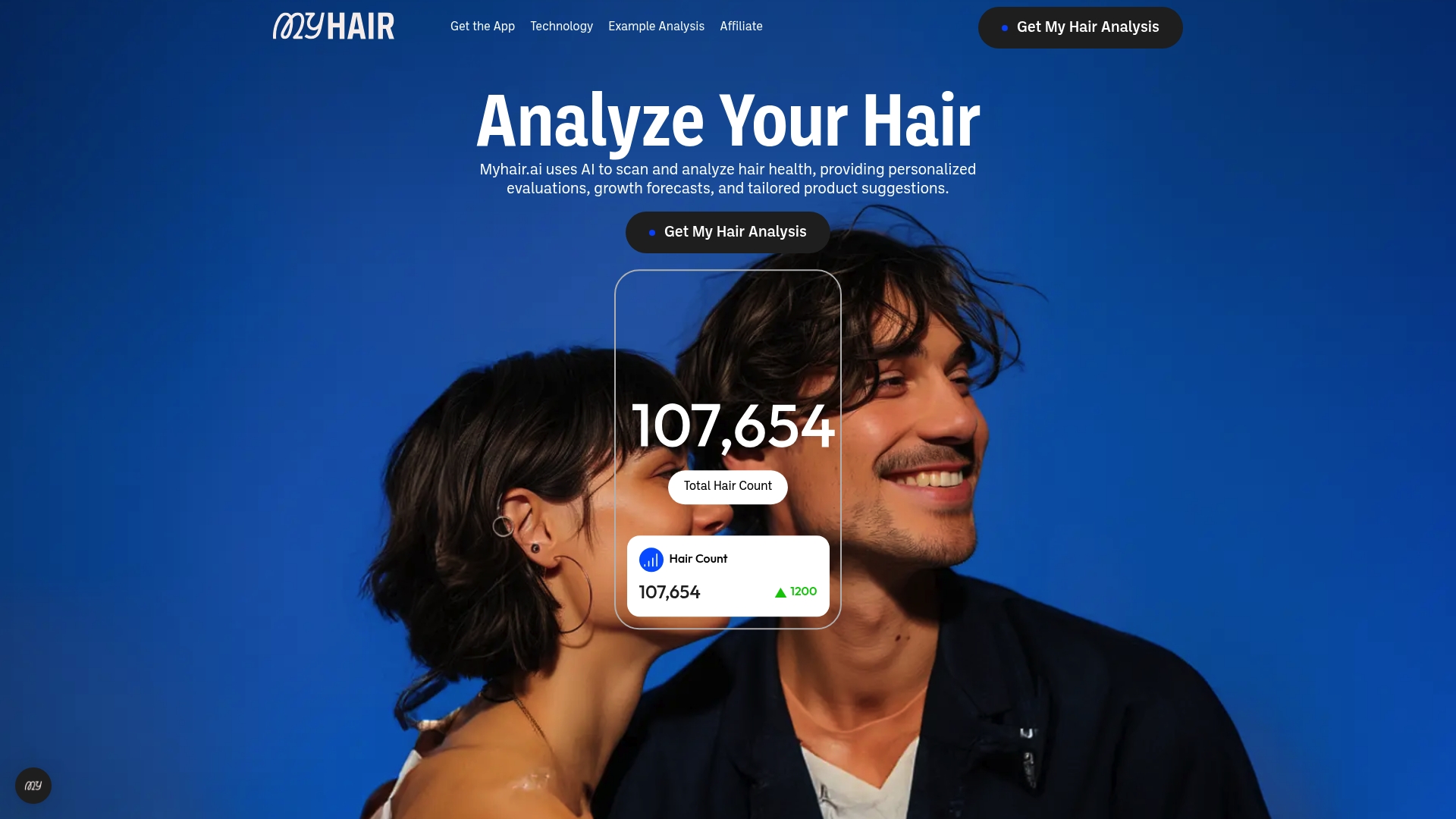
The Myhair hair analysis tool gives you a personalized hair score and tracks changes over time, so you know whether your current routine is working or needs adjustment. Instead of guessing whether your shedding is normal or your density is improving, you get data. Myhair also provides tailored product recommendations based on your specific scan results. For women serious about growing longer, healthier hair, that kind of feedback loop makes a measurable difference. You can also explore the growth insights on BabyLoveGrowth to see how others have applied similar strategies.
FAQ
How fast does hair grow for women on average?
Hair grows approximately 0.5 inches per month, or about 6 inches per year. Genetics, age, and hormonal health influence this rate, but no topical product meaningfully changes it.
What vitamins help with women's hair growth?
Biotin, iron, zinc, vitamin D3, and vitamin C are the most critical nutrients for follicle health. Deficiencies in iron and zinc are the most common causes of increased shedding in women.
How do I prevent breakage while growing my hair out?
Switch to a silk pillowcase, use a wide-tooth comb on wet hair, apply a thermal protectant before heat styling, and trim every 10–12 weeks. These habits reduce the daily mechanical damage that causes length plateaus.
Do hair growth supplements actually work?
Clinically studied supplements like those containing AnaGain™ Nu can reduce shedding within 28 days and improve density within 8–12 weeks. They support follicle health but cannot reverse genetic or hormonal hair loss.
How long does the awkward stage last when growing hair out?
The awkward stage typically lasts 6–12 months, depending on your starting length and growth rate. Strategic shaping trims every 10–12 weeks maintain a clean silhouette without cutting into the length you are trying to build.