The single most effective thing you can do for long hair is protect what you already have. Hair grows roughly 1 cm per month on average, which means a year of growth can disappear in weeks if breakage outpaces retention. The habits that matter most are not about speed. They are about gentle handling, a healthy scalp, and consistent protection.
Here is the short version of what works:
- Detangle from ends upward, never root to tip
- Limit heat tools and always apply a protectant first
- Sleep on a silk or satin pillowcase, or use a bonnet
- Apply conditioner to mid-lengths and ends, not the scalp
- Get small "dusting" trims every couple of months
- Eat enough protein and sleep 7–9 hours consistently
Pro Tip: Before you shower, spend 60 seconds detangling dry hair with a wide-tooth comb. Wet hair is far more fragile, and pre-detangling cuts mechanical stress by a significant margin.
Myhair's AI-powered scanner can help you track whether your current routine is actually working, flagging changes in density and breakage patterns before they become visible to the naked eye.
Key Takeaways
Protecting length through consistent daily habits matters far more than chasing faster growth, because hair grows roughly 1 cm per month regardless of what you apply.
| Point | Details |
|---|---|
| Retention beats growth speed | Breakage erases monthly growth; gentle handling, heat limits, and night protection preserve what grows. |
| Wash by scalp need | Base wash frequency on scalp condition, not a fixed schedule, and always condition mid-lengths to ends. |
| Trim small and often | Dustings every 8–12 weeks remove splits before they travel up the shaft and cost you real length. |
| Red flags need a clinician | Sudden heavy shedding or patchy loss warrants a physician visit, not a new product. |
| Myhair tracks your progress | Myhair's AI scanner generates a hair score from your scans, helping you measure whether your routine is working over time. |
Table of Contents
- What daily habits for long hair stop breakage before it starts?
- How often should you wash long hair without stripping it?
- Everyday conditioning and weekly deeper treatments
- How do you detangle long hair without causing breakage?
- How much heat is too much, and how do you protect your hair while styling?
- How often should you trim long hair to keep it growing?
- Scalp care, massage, and when to see a clinician
- What you eat and how you sleep affects your hair more than most products
- Night routines and protective styles that preserve your length
- How do you choose the right shampoo, conditioner, and treatment products?
- A practical sample routine: daily, weekly, and monthly
- When should you track your progress and use diagnostics?
- Why the retention mindset is the only one that actually works
- Myhair helps you personalize and track your long-hair routine
- Sources
- FAQ
What daily habits for long hair stop breakage before it starts?
The gap between people who grow long hair and those who plateau at the same length for years usually comes down to small daily decisions, not genetics. Breakage is the enemy, and most of it is mechanical.
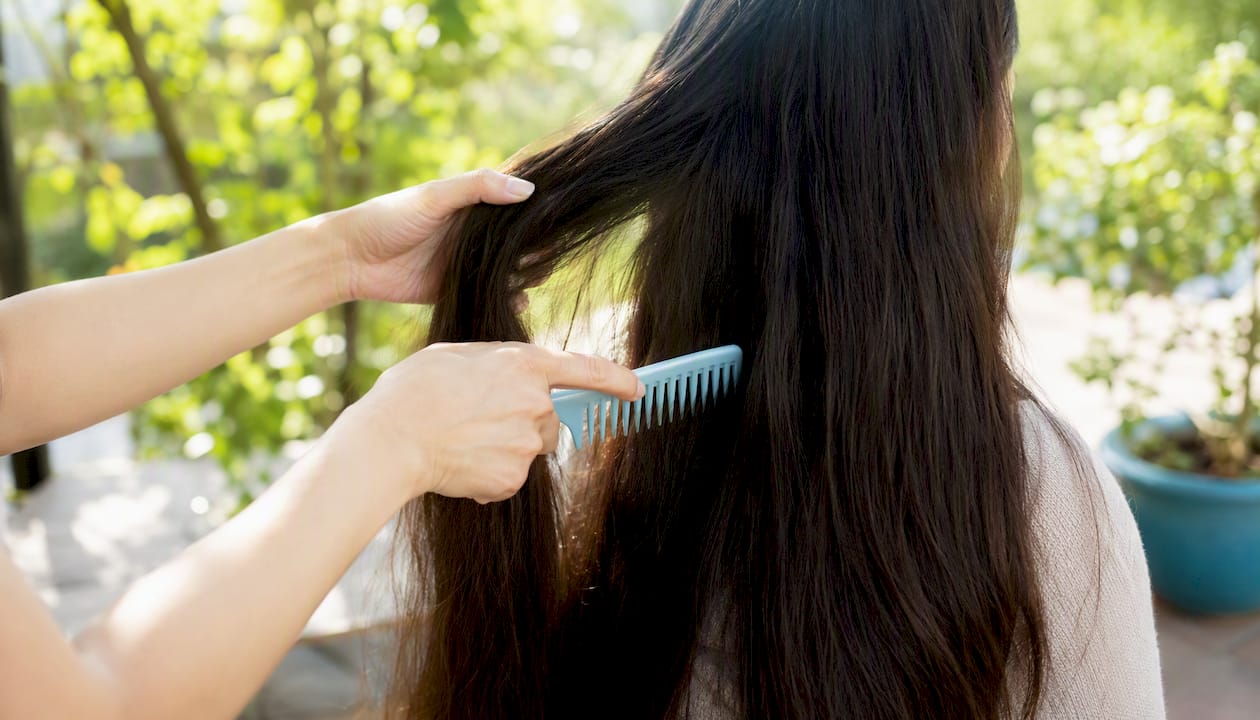
Start with your morning brush. Work in sections, hold the hair above the tangle so tension does not travel to the root, and move upward from the ends. This one change alone reduces snapping noticeably. At night, a loose braid or low ponytail keeps strands from rubbing against each other and against your pillow fabric during sleep.
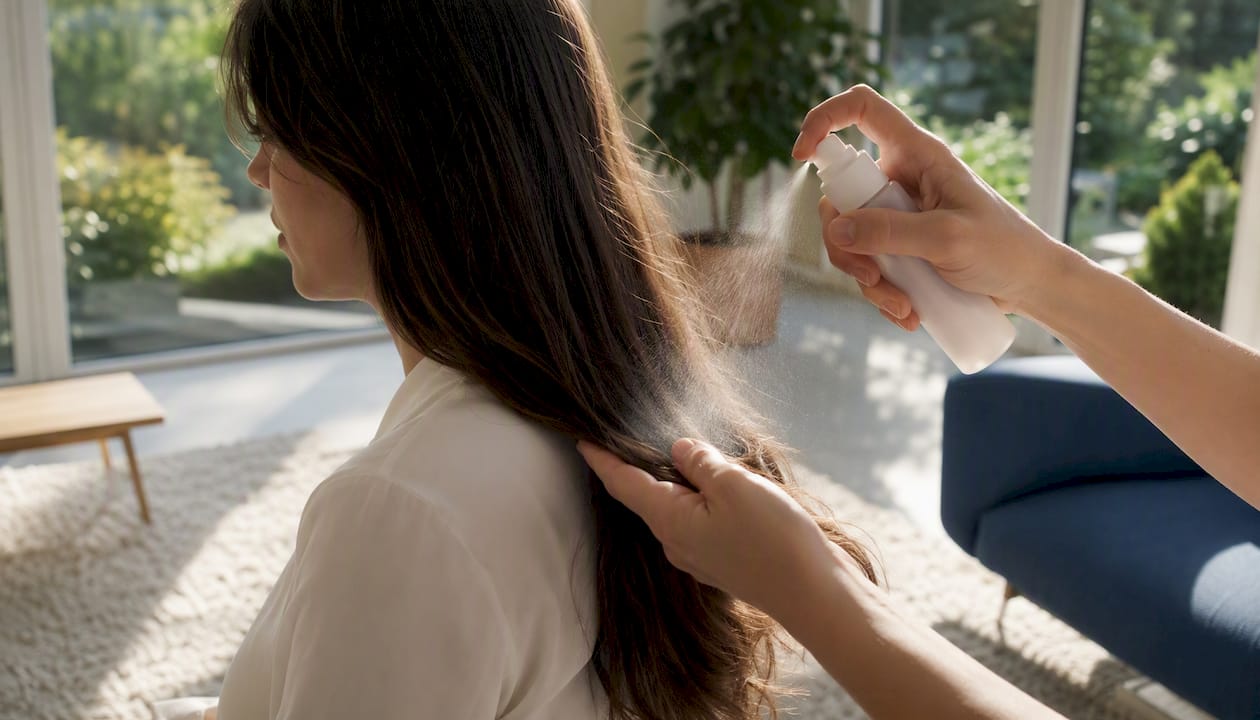
Hydration matters throughout the day, not just on wash days. A lightweight leave-in conditioner or a water-based moisturizing spray applied to mid-lengths and ends keeps the hair fiber supple. Dry hair snaps; moisturized hair bends. If you live in a dry climate or spend time in air-conditioned spaces, a small spritz mid-afternoon is not excessive.
Tight hairstyles are a slow form of damage. Repeated tension at the hairline and temples causes traction stress that accumulates over months. Swap metal elastics for fabric-covered ties or spiral hair coils, and vary where you place your ponytail so the same section is not under constant strain.
Habit stacking is the most practical way to make these steps automatic. Attach your leave-in application to your morning skincare routine. Put your silk pillowcase on at the same time you set your alarm. Small cues, repeated daily, build the consistency that actually produces results.
Pro Tip: Keep a small spray bottle of diluted leave-in conditioner on your nightstand. A quick mist before your bedtime braid takes under 30 seconds and keeps ends from drying out overnight.
How often should you wash long hair without stripping it?
Wash frequency is not a fixed number and depends on your scalp's condition rather than hair length. Factors such as an oily scalp, product buildup, or recent exercise can justify washing. Waiting an arbitrary number of days when your scalp is itchy or coated in buildup does more harm than good.
That said, most people with long hair wash too often by default. Frequent shampooing strips the natural sebum that coats and protects the hair shaft, leaving lengths dry and prone to snapping. A useful rule: wash when your scalp needs it, and condition every time you wash.
How to shampoo without damaging lengths:
- Wet hair thoroughly with lukewarm water before applying any product.
- Apply shampoo only to the scalp. Work it in with your fingertips using light circular pressure, not scratching or scrubbing.
- Let the rinse water carry the lather through the lengths as you rinse. That is enough to cleanse them without stripping.
- Follow immediately with conditioner on mid-lengths and ends.
The American Academy of Dermatology confirms this approach: shampoo targets the scalp, conditioner targets the lengths, and gentle technique throughout protects the fiber.
Sulfate-free shampoos are a good default for most long-hair routines because they cleanse without aggressively stripping oils. A clarifying shampoo, which contains stronger surfactants, belongs in the rotation once every 3–4 weeks or whenever you notice product buildup making your hair feel heavy and dull. Signs you are over-washing include persistent frizz, increased breakage, and lengths that feel dry within a day of washing.
Pro Tip: Rinse with cool water at the end of your shower. It closes the cuticle slightly, which reduces frizz and gives lengths a smoother appearance without any product.
Everyday conditioning and weekly deeper treatments
Conditioner is not optional for long hair. The ends of long hair are the oldest part of the strand, sometimes years old, and they have been through more friction, heat, and environmental exposure than the roots. They need consistent moisture to stay intact.
Apply conditioner from mid-shaft to ends every wash and avoid the scalp where buildup can clog follicles and make roots greasy. Leave it on for several minutes before rinsing. That contact time matters.
Weekly and monthly treatment rotation:
- Week 1: Moisturizing deep-conditioning mask. Apply to damp lengths, cover with a shower cap for 20–30 minutes, rinse. This restores softness and flexibility.
- Week 2: Protein or bond-building treatment. Use this when hair feels stretchy, limp, or snaps easily when wet. Do not use protein treatments every week; over-proteination makes hair stiff and brittle.
- After every wash: Apply a leave-in conditioner or lightweight oil (coconut, jojoba, or almond) to damp ends before styling.
Carrier oils like coconut, jojoba, almond, and olive oil can moisturize and protect the hair shaft, and they work well as bases for DIY treatments or as a finishing step on dry ends. WebMD notes that application method matters: a short mask of 20–30 minutes is effective for most hair types, while overnight leave-ins suit very dry or coarse textures.
On essential oils specifically: the evidence for their hair-growth benefits is limited and mixed. A critical review published on ResearchGate found variable results and flagged real irritation risk. If you use them, dilute to roughly 2–3% in a carrier oil and patch-test first. Never apply undiluted essential oils directly to the scalp.
How do you detangle long hair without causing breakage?
Hair is most fragile when wet because the cuticle swells and the fiber stretches more easily. Ripping a brush through wet hair is one of the fastest ways to create breakage, and most people do it without thinking.
Safe detangling sequence:
- After washing, blot (do not rub) with a microfiber towel or a soft cotton T-shirt. Terrycloth creates friction that roughens the cuticle.
- Apply a leave-in conditioner or detangling spray to damp lengths before touching a comb.
- Use your fingers first on any large tangles. Pull them apart gently rather than forcing a tool through.
- Switch to a wide-tooth comb and start at the ends. Work upward in small sections, holding the hair above where you are combing to absorb tension.
- Once the ends are clear, move progressively toward the root.
For dry hair, a soft-bristle brush or a gentle detangling brush with flexible teeth works better than a wide-tooth comb. These distribute natural oils from root to tip and smooth the cuticle without snagging.
The AAD's guidance reinforces this: detangle gently, especially when hair is wet, and use a wide-tooth comb as your primary wet-hair tool.
Pro Tip: Detangle before you shampoo, not after. Dry hair has more elasticity than wet hair, so working out tangles before water hits the strand reduces the total mechanical stress your hair experiences during a wash.
How much heat is too much, and how do you protect your hair while styling?
Heat is one of the most controllable sources of damage in a long-hair routine. The fiber does not regenerate. Once heat fractures the cuticle or causes internal protein damage, the only fix is a trim.
Dos and don'ts for heat styling:
- Do apply a heat protectant to damp or dry hair before any hot tool touches it. This is non-negotiable.
- Do use the lowest effective temperature for your hair texture. Fine or chemically treated hair responds to lower settings (around 300°F / 150°C). Coarser or thicker textures may need up to 375°F / 190°C, but rarely higher.
- Do keep the tool moving. Holding a flat iron or curling wand in one spot for more than a few seconds concentrates damage.
- Don't use heat tools on soaking wet hair. Blow-dry to about 80% dry first.
- Don't heat-style every day. Two to three times per week is a reasonable ceiling for most hair types.
Reducing heat styling frequency is one of the most direct ways to preserve length. Stylists consistently point to heat damage as the primary reason long hair stalls at a certain length despite continued growth.
For days when you skip the heat, air-drying with a microfiber towel wrap, braiding damp hair for waves, or using foam rollers overnight are practical alternatives that produce results without any thermal stress.
How often should you trim long hair to keep it growing?
The counterintuitive truth about trims is that skipping them costs you length. Split ends travel up the hair shaft. Left alone, a split that starts at the tip can work its way several centimeters upward, and by the time you address it, you are removing far more than a dusting would have taken.
Stylists recommend a "dusting" approach for people focused on retention: very small snips, every 8–12 weeks, that remove only the visibly damaged ends without touching healthy length. This is different from a standard trim, which typically removes 1–2 cm or more.
How to manage trims for maximum length retention:
- Schedule a dusting trim every couple of months as your default cadence.
- If you see significant splitting, fraying, or single-strand knots, move the appointment up rather than waiting.
- When you sit in the chair, be specific: ask for a "dusting" or "search and destroy" trim, where the stylist removes only split or damaged ends rather than cutting to a uniform length.
- After a trim, assess whether your routine needs adjustment. Frequent severe splits usually signal a product, heat, or mechanical issue upstream.
Pro Tip: Ask your stylist to hold sections up to the light before cutting. Splits are easier to see against a bright background, and this technique helps them remove only what is actually damaged rather than cutting by feel.
Scalp care, massage, and when to see a clinician
A healthy scalp is the foundation of healthy hair. The follicle lives in the scalp, and everything from circulation to sebum production to inflammation affects what grows from it. Scalp care is not the same as hair care, and conflating the two leads to neglect of one or the other.
Weekly scalp exfoliation, using a gentle scalp scrub or a clarifying shampoo, removes dead skin cells and product residue that can clog follicles. Scalp massage, done with fingertip pressure for 3–5 minutes during or after washing, supports circulation to the follicle. The evidence for massage as a growth accelerator is modest, but as a low-risk daily habit it costs nothing and feels good.
Sudden, heavy shedding, patchy loss, or a rapidly receding hairline are not routine hair concerns. The Cleveland Clinic is direct on this: sudden heavy shedding often reflects a systemic issue and warrants a physician visit, not a new shampoo. The Mayo Clinic notes that early intervention matters, with options including topical minoxidil, oral treatments, PRP therapy, and nutritional management depending on the underlying cause.
Low-dose oral minoxidil requires medical supervision: it can cause fluid retention, a faster heart rate, and lowered blood pressure, so clinicians typically monitor blood pressure and ask about heart conditions before prescribing. It is not recommended during pregnancy or breastfeeding. Discuss these risks with a physician before starting.
For dermatologist referrals and what to expect from a clinical evaluation, Myhair's hair loss dermatologist guide covers the diagnostic process in detail.
Pro Tip: If you want to try scalp stimulation, commit to a consistent practice for at least 12 weeks before evaluating results. Hair cycles are slow, and changes in density or texture take months to become visible.
What you eat and how you sleep affects your hair more than most products
Hair is made of protein. The follicle is one of the most metabolically active structures in the body, and it is sensitive to nutritional shortfalls. When the body is under stress or running low on key nutrients, hair is one of the first things it deprioritizes.
Nutritional priorities for hair health:
- Protein: Healthline's guidance cites around 50 g/day as a general adult baseline. Most people eating a varied diet hit this, but restrictive eaters often fall short.
- Iron: Low ferritin is one of the most common and underdiagnosed causes of increased shedding, particularly in women.
- Zinc, B-complex vitamins, and vitamin D: Deficiencies in any of these correlate with hair thinning and slower growth.
- Vitamins A, C, and E: Support sebum production, collagen synthesis, and oxidative protection at the follicle level.
The food-first approach beats supplementation for most people. Whole foods deliver cofactors and absorption pathways that isolated supplements do not replicate. If you suspect a deficiency, get bloodwork done before buying supplements. Self-prescribing high-dose biotin or vitamin A without knowing your baseline can create imbalances.
Sleep and stress:
- Aim for 7–9 hours of sleep per night. Growth hormone, which supports cell turnover including in follicles, is primarily released during deep sleep.
- Chronic stress elevates cortisol, which can push follicles into the telogen (resting/shedding) phase prematurely. This is called telogen effluvium, and it often shows up as diffuse shedding 2–3 months after a stressful event.
- Stress-reduction practices, whether exercise, meditation, or simply consistent sleep timing, reduce this risk over time.
Sudden shedding linked to stress or a suspected deficiency warrants lab work and professional guidance, not self-treatment.
Night routines and protective styles that preserve your length
What happens to your hair while you sleep is underestimated. Eight hours of friction against a cotton pillowcase, combined with movement, creates mechanical stress that accumulates nightly. The fix is simple and cheap.
Night protection essentials:
- Switch to a silk or satin pillowcase. Cotton absorbs moisture and creates friction; silk and satin let hair glide. This single change reduces morning tangles and frizz noticeably.
- If you move a lot in your sleep, a loose braid or low ponytail keeps strands from tangling around each other. Keep the elastic loose enough that it does not leave a dent.
- A silk or satin bonnet is the most protective option, especially for textured or chemically treated hair.
- Never sleep on wet hair. Wet hair is fragile, and the combination of moisture and friction causes significant breakage overnight.
Protective styles to favor and avoid:
- Favor: loose braids, low buns secured with a soft elastic, twist-outs, and styles that keep ends tucked away from friction.
- Avoid: tight ponytails worn in the same spot daily, tight buns that pull at the hairline, and any style that causes scalp tension or soreness. Repeated traction at the same points leads to traction alopecia, a form of hair loss that can become permanent.
For swimmers: wet your hair with clean water before entering a pool. Hair that is already saturated absorbs less chlorinated water. Apply a thin layer of conditioner as a barrier, wear a swim cap when possible, and rinse thoroughly with fresh water immediately after.
Pro Tip: Apply a small amount of a lightweight oil to your ends before braiding for sleep. It adds slip, reduces friction between strands, and keeps ends moisturized through the night.
How do you choose the right shampoo, conditioner, and treatment products?
The product aisle is overwhelming, and most of the marketing is noise. What actually matters is a short list of ingredient and usage decisions.
Quick product checklist:
- Sulfate-free shampoo: Your everyday default. Cleanses without stripping natural oils. Good for color-treated, dry, or fine hair.
- Clarifying shampoo: Use once every 3–4 weeks, or when buildup makes hair feel heavy. Not for daily use.
- Conditioner: Look for humectants (glycerin, panthenol) and emollients (cetyl alcohol, shea butter) in the first several ingredients.
- Leave-in conditioner: Applied to damp hair after washing. Provides ongoing moisture and some mechanical protection.
- Protein or bond-building treatment: Use when hair feels limp, stretchy, or snaps easily. Rotate with moisturizing treatments rather than stacking them.
Ingredients to use with caution:
- Strong alcohols (isopropyl alcohol, SD alcohol) near the top of an ingredient list dry out the hair fiber.
- High-concentration synthetic fragrances can irritate a sensitive scalp over time.
- Silicones (dimethicone, cyclomethicone) smooth the cuticle and reduce frizz effectively, but they build up without a clarifying shampoo in rotation.
- Essential oils for hair carry real irritation risk and limited evidence for efficacy. Always dilute in a carrier oil at roughly 2–3% and patch-test before scalp application.
| Product class | Best for | When to use | Caveats |
|---|---|---|---|
| Sulfate-free shampoo | Most hair types, everyday cleansing | Every wash | May not remove heavy buildup |
| Clarifying shampoo | Buildup removal, oily scalp reset | Every 3–4 weeks | Drying if overused |
| Leave-in conditioner | Moisture retention, detangling aid | After every wash, on damp hair | Can weigh down fine hair if over-applied |
| Protein treatment | Limp, stretchy, or over-processed hair | Every 2–4 weeks as needed | Stiffness and brittleness if used too often |
A practical sample routine: daily, weekly, and monthly
Consistency beats intensity. A routine you actually follow every week produces better results than an elaborate one you abandon after a month.
Daily checklist:
- Detangle gently with a wide-tooth comb or soft-bristle brush before any washing or styling.
- Apply leave-in conditioner or a light moisturizing spray to mid-lengths and ends.
- Style with minimal heat; use a protectant if heat is unavoidable.
- At night, switch to a silk pillowcase and secure hair in a loose braid or bonnet.
Weekly checklist:
- Wash based on scalp need (typically 2–3 times per week for most hair types).
- Alternate between a moisturizing deep mask (Week 1) and a protein or repair treatment (Week 2).
- Do a scalp massage for 3–5 minutes during or after washing.
- Clarify once if you notice product buildup or heaviness.
Monthly tasks:
- Schedule or perform a dusting trim every 8–12 weeks.
- Review your product rotation: is your hair feeling balanced (neither dry and brittle nor limp and over-conditioned)?
- Check in on nutrition and sleep patterns if you notice increased shedding or dullness.
| Timeframe | Task | Notes |
|---|---|---|
| Daily | Gentle detangle, leave-in, night protection | Adjust leave-in weight to hair type |
| 2–3x per week | Wash + condition | Scalp-driven frequency, not calendar-driven |
| Weekly | Deep mask or protein treatment | Alternate, do not stack both in one week |
| Every 3–4 weeks | Clarifying shampoo | Skip if no buildup is present |
| Every 8–12 weeks | Dusting trim | Ask for "search and destroy" to minimize length loss |
Personalization is straightforward: fine hair needs lighter products and less frequent conditioning treatments; coarser or denser hair tolerates heavier masks and benefits from more frequent oil application. If you swim, exercise heavily, or use a lot of styling products, your wash frequency and clarifying schedule will shift accordingly.
When should you track your progress and use diagnostics?
Most people assess their hair by feel and appearance, which works until something changes and they cannot tell whether the routine is helping or hurting. Tracking removes the guesswork.
Practical ways to monitor retention:
- Take a weekly photo in the same lighting and position. Length changes of 1 cm per month are nearly invisible day-to-day but clear over a 3-month comparison.
- Keep a simple log of shedding: a rough count of strands on your brush or in the shower drain. A noticeable increase over 2–3 weeks is worth noting.
- Track breakage separately from shedding. Short broken pieces in the brush indicate mechanical or chemical damage; longer strands with a white bulb at the root indicate natural shedding.
Myhair's AI-powered scanner adds a layer of precision that photos alone cannot provide. It analyzes density, scalp condition, and hair health patterns from uploaded scans, generating a hair score that tracks change over time and surfaces personalized product and routine recommendations. The onboarding process takes a few minutes and gives you a baseline to measure against.
When to move from self-monitoring to clinical evaluation:
- Sudden shedding that exceeds your normal baseline for more than 4–6 weeks
- Patchy or asymmetric loss
- Scalp changes: persistent itching, flaking, redness, or tenderness
- Suspected nutritional deficiency (fatigue, brittle nails, and hair loss together are a common cluster)
Clinicians typically order a ferritin panel, thyroid function tests, and a complete blood count as a starting point. Myhair's diagnostics support routine personalization and progress tracking. They are not a substitute for clinical evaluation when red-flag symptoms are present.
Pro Tip: Set a calendar reminder every 12 weeks to compare your current photo against the one from 12 weeks prior. The difference is almost always more visible than you expect, and it keeps you motivated when day-to-day progress feels invisible.
Why the retention mindset is the only one that actually works
The hair industry has a financial interest in selling you growth. Serums, supplements, scalp devices, and miracle oils all promise acceleration. Most of them deliver, at best, marginal improvements in growth rate for a subset of users. The real variable, the one that actually determines whether your hair gets longer, is how much of what grows you manage to keep.
Creative director Zoë Irwin and other stylists put it plainly: healthy long hair is built through disciplined daily habits that minimize physical and environmental damage, not through miracle products. The fiber is non-living. Once it is damaged, it cannot repair itself. The only real repair is a trim.
This reframe matters because it shifts attention to the right variables. Instead of asking "how do I grow faster?" the productive question is "where is my routine creating breakage?" That question has specific, answerable answers: your detangling technique, your heat frequency, your sleep setup, your product choices. Fix those, and length follows naturally from the growth that was already happening.
Patience is not passive. It means committing to a routine for 3–6 months before evaluating results, because that is how long hair cycles take to reflect changes. The readers who see the most dramatic length gains are almost always the ones who did the boring, consistent work, not the ones who found a new product.
Myhair helps you personalize and track your long-hair routine
Knowing the right habits is step one. Knowing whether they are working for your hair is where most routines stall.

Myhair's AI-powered scanner analyzes your hair and scalp from uploaded photos, generating a personalized hair score that tracks density, condition, and change over time. Instead of guessing whether your deep-conditioning rotation is helping or whether your shedding is within a normal range, you get a data-backed baseline and tailored product recommendations built around your specific scan results. Myhair supports routine personalization and progress tracking. It is not a substitute for medical diagnosis, and any red-flag symptoms (sudden heavy shedding, patchy loss, scalp changes) should go to a physician or dermatologist first.
Ready to see where your hair actually stands? Run your first hair scan and get a personalized starting point in minutes.
Sources
- Is there any way to make your hair grow faster? | Cleveland Clinic
- Hair loss - Diagnosis and treatment - Mayo Clinic
- Tips for healthy hair | American Academy of Dermatology (AAD)
FAQ
What is the best daily hair routine for long hair?
The most effective daily routine for long hair centers on gentle detangling before washing, applying leave-in conditioner to mid-lengths and ends, limiting heat tool use, and sleeping on a silk or satin pillowcase. Consistency with these small habits prevents the breakage that erases monthly growth.
What is the secret to growing and keeping long hair?
The real answer is retention, not acceleration. Hair grows roughly 1 cm per month regardless of what you apply; the difference between people who achieve long hair and those who plateau is how much breakage their routine creates. Gentle handling, regular dustings, and protective sleep habits preserve the length that is already growing.
What is the best hair routine for long hair on a weekly basis?
Wash 2–3 times per week based on scalp need, alternate between a moisturizing deep mask and a protein treatment each week, clarify every 3–4 weeks, and schedule a dusting trim every 8–12 weeks. This rotation keeps moisture and protein in balance while removing damage before it travels up the shaft.
What is the Chinese secret for long hair?
Rice water rinses are a traditional practice associated with long hair in several East Asian cultures, used as a conditioning rinse after washing. The evidence for rice water specifically is limited, but the broader principle it reflects, consistent scalp care and gentle handling, is well-supported by dermatology guidance.
When should you see a doctor about hair loss?
See a physician or dermatologist if you experience sudden, heavy shedding that lasts more than 4–6 weeks, patchy or asymmetric loss, or scalp changes like persistent redness or tenderness. The Cleveland Clinic notes that sudden heavy shedding often signals a systemic issue that warrants medical evaluation rather than a product change.