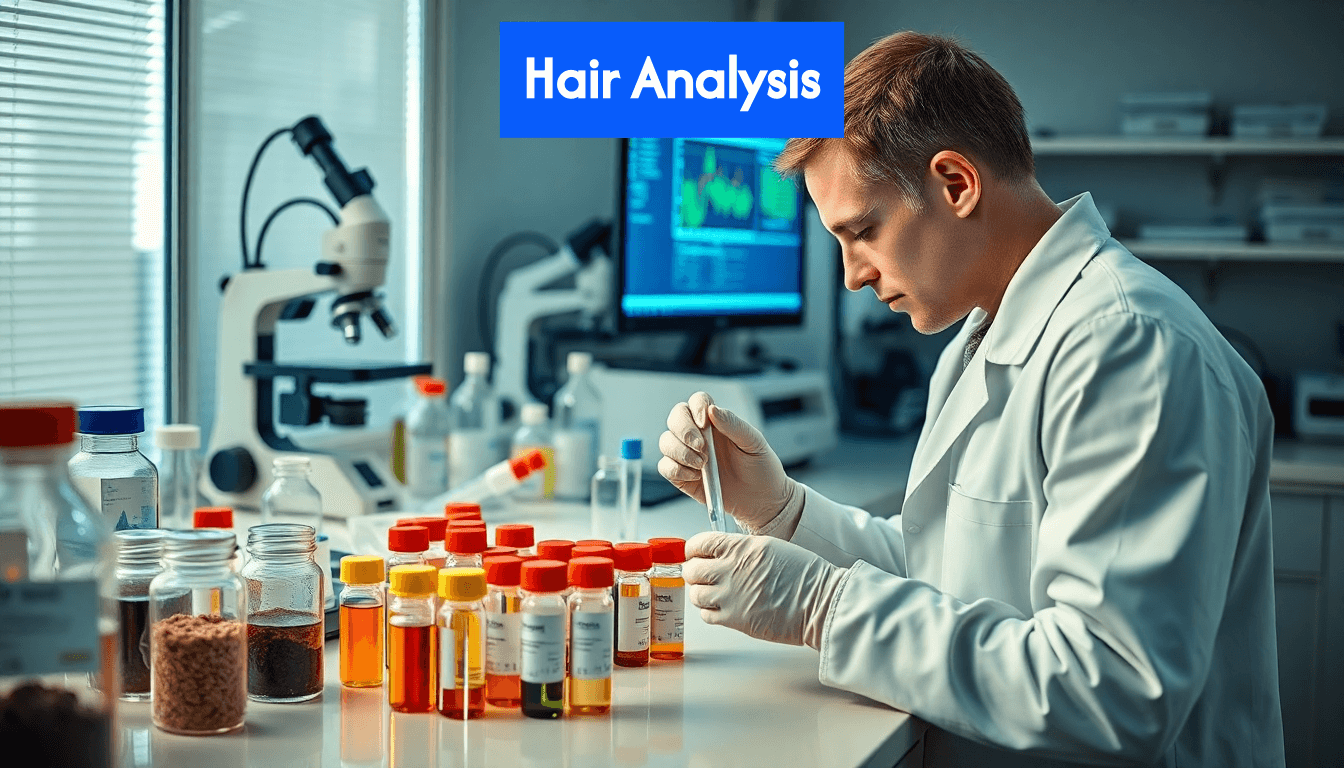
Searching for local hair analysis services can feel overwhelming. Hair mineral analysis can reveal essential insights about your mineral composition, nutritional status, and potential toxin exposure that traditional blood tests might overlook. But here’s the surprising part: many people assume it’s only for diagnosing illnesses. In reality, it's a powerful tool for optimizing overall health and well-being, helping you boost your energy and well-being in surprising ways.
Finding Local Hair Analysis Services

Understanding Hair Analysis Testing Options
When you're looking for "hair analysis near me," it's important to understand the different types of testing available. Hair analysis provides valuable insights into your body's mineral composition, nutritional status, and potential toxin exposure - information that standard blood tests might miss. Hair mineral analysis testing (HTMA) examines the mineral content and toxic elements that have been deposited in your hair over time, creating a comprehensive picture of your long-term health status.
Many people seek hair analysis for various reasons: unexplained fatigue, digestive issues, hormonal imbalances, or simply to optimize their nutritional program. The process is non-invasive, requiring only a small sample of hair typically cut from the back of the head near the scalp.
Where to Find Professional Hair Analysis Services
Finding qualified providers for hair mineral analysis testing requires some research. Here are several options to explore when searching for "hair analysis test near me":
-
Integrative Health Practitioners: Many functional medicine doctors, naturopathic physicians, and integrative health specialists offer hair analysis as part of their comprehensive health assessments. These professionals can not only provide the test but also interpret results within the context of your overall health.
-
Specialized Testing Labs: Some laboratories specialize in hair analysis and work directly with consumers. These labs typically send you a collection kit, provide instructions for proper sampling, and return detailed reports after analysis.
-
Nutritionists and Dietitians: Certified nutritional professionals often incorporate hair analysis into their practice to identify mineral imbalances and nutritional deficiencies that may be affecting your health.
When selecting a provider, verify their credentials and experience with hair analysis testing. Ask about their laboratory partnerships, as the accuracy of results can vary significantly based on testing methodology and quality control measures.
What to Expect During the Hair Analysis Process

The hair analysis process is straightforward but requires attention to detail to ensure accurate results. When you visit a local provider or order a home test kit, you'll need to provide a small hair sample (approximately 1-2 tablespoons or about 125-150 strands). The sample is typically cut from the back of the head, as close to the scalp as possible.
Proper sample collection is crucial for accurate results. Research has shown that specific washing procedures are necessary before analysis to remove external contamination that could affect readings. For instance, a study published in the Journal of Environmental and Public Health demonstrated that specialized washing procedures significantly improve the accuracy of detecting elements in hair samples.
After collection, your sample is sent to a specialized laboratory where it undergoes processing and analysis. Most labs use techniques like Inductively Coupled Plasma Mass Spectrometry (ICP-MS) to detect and measure mineral concentrations with high precision. Processing times vary, but you can typically expect results within 1-3 weeks.
When the analysis is complete, you'll receive a comprehensive report detailing the levels of essential minerals, potentially toxic elements, and important mineral ratios in your hair. Many providers offer follow-up consultations to help interpret these results and develop personalized health recommendations based on your specific mineral profile.
Taking the time to find a reputable hair analysis service near you ensures you receive accurate information that can guide meaningful improvements in your health.
Key Takeaways
| Takeaway | Explanation |
|---|---|
| Understand the Testing Options | Hair analysis provides insights into mineral composition and toxin exposure that standard blood tests may miss, making it valuable for diagnosing health issues. |
| Proper Sample Collection is Crucial | Accurate results depend on collecting a hair sample correctly, following specific guidelines to avoid contamination. |
| Choose Qualified Providers | Look for integrative health practitioners, specialized labs, and nutritionists with experience in hair analysis to ensure reliable results and interpretation. |
| Interpreting Results Requires Expertise | Mineral interactions are complex; work with knowledgeable practitioners to understand your results fully and develop personalized health recommendations. |
| Unique Benefits of Hair Analysis | This non-invasive testing method offers a long-term view of mineral status, helping identify nutritional imbalances and chronic health issues that may not show up in blood tests. |
Understanding the Testing Process
Hair analysis testing involves a methodical process designed to extract accurate information about your body's mineral composition and nutritional status. Understanding how this testing works helps you make informed decisions when searching for "hair analysis near me" and sets realistic expectations about what the process entails.
Sample Collection Guidelines
The foundation of any reliable hair analysis begins with proper sample collection. For accurate results, laboratories typically require about 1-2 tablespoons of hair (approximately 125-150 strands) cut from the back of the head, as close to the scalp as possible. This location provides the most recent growth and delivers the most relevant health information.
Hair should be clean but not freshly washed with medicated shampoos or treatments that might alter the mineral content. Most testing facilities provide detailed instructions for collecting your sample, including:
- Using clean, stainless steel scissors to cut the sample
- Avoiding hair with chemical treatments when possible (if all hair is treated, this should be noted)
- Securing the sample in the provided envelope or container with the cut ends aligned
- Completing all required paperwork with relevant health information
When collecting samples for children or individuals with very short hair, samples may need to be collected from multiple areas to achieve the required amount without creating noticeable gaps.
Laboratory Analysis Methods
Once your sample reaches the laboratory, it undergoes several precise steps before analysis. First, the hair is thoroughly washed using specialized protocols to remove external contaminants without stripping away the internal minerals being tested. Research has demonstrated that proper washing procedures are critical for accurate results, as environmental exposure can significantly impact readings.
After washing, the sample is digested in acid to break down the hair structure and release the minerals for testing. Most reputable laboratories use advanced technologies such as Inductively Coupled Plasma Mass Spectrometry (ICP-MS) for analysis. This highly sensitive method can detect minerals and toxic elements in concentrations as low as parts per billion.
The testing process generally measures three primary categories of elements:
- Essential minerals (calcium, magnesium, sodium, potassium, etc.)
- Toxic elements (lead, mercury, arsenic, aluminum, etc.)
- Trace minerals (copper, zinc, manganese, chromium, etc.)
Beyond measuring individual elements, labs also calculate important mineral ratios that provide insights into metabolic patterns and hormonal balance. These ratios often reveal more about your health status than individual mineral levels alone.
Interpreting Your Results
After analysis, which typically takes 1-3 weeks to complete, you'll receive a comprehensive report detailing your mineral levels and how they compare to reference ranges. Understanding these results requires some expertise, as mineral interactions are complex and levels must be interpreted within the context of your overall health picture.
Most quality hair analysis services include some level of interpretation with your results. This might range from basic written explanations to in-depth consultations with health practitioners who specialize in nutritional analysis. When searching for "hair mineral analysis test near me," look for providers who offer professional interpretation services.
It's important to note that hair analysis provides a different kind of information than blood tests. While blood tests show current circulating levels of minerals, hair analysis reveals mineral storage and patterns over the past three months. This longer-term perspective makes hair analysis particularly valuable for assessing chronic conditions and nutritional imbalances that develop gradually.
Understanding the testing process helps you appreciate the importance of selecting a reputable laboratory and qualified practitioner who can guide you through the hair analysis journey from sample collection to implementing personalized health recommendations based on your results.
Benefits of Hair Analysis Tests
Hair analysis offers unique advantages as a diagnostic tool that complements traditional blood and urine testing. When searching for "hair analysis near me," understanding these benefits helps you appreciate why this testing method has gained popularity among health practitioners and individuals seeking comprehensive health insights.
Long-Term Health Information
One of the most significant advantages of hair mineral analysis is its ability to provide a historical record of your body's mineral status over time. Unlike blood tests that capture a momentary snapshot of circulating nutrients, hair analysis reveals mineral patterns accumulated over approximately three months. This extended timeframe makes hair testing particularly valuable for identifying chronic imbalances and nutritional deficiencies that might not appear in standard blood work.
This historical perspective is especially useful for monitoring conditions that fluctuate, such as hormonal imbalances or periodic toxic exposures. For instance, research has shown that segmental hair analysis can serve as a retrospective diary for certain hormones, providing insights into bodily changes over time that would be impossible to capture with conventional testing methods.
The stable nature of minerals in hair also means that samples don't degrade quickly, allowing for accurate testing even when there's a delay between collection and analysis. This stability contributes to reliable results that reflect your true health status rather than temporary fluctuations.
Non-Invasive Sampling
For many people, especially children and those with anxiety about medical procedures, the non-invasive nature of hair testing is a significant advantage. Unlike blood draws that require needles and can cause discomfort, hair sampling is painless and straightforward. This accessibility makes it easier to monitor health regularly without the stress associated with more invasive procedures.
The simplicity of collection also means that samples can be taken at home with proper instructions, expanding access to testing for people in remote areas or those with limited mobility. When searching for "hair analysis test near me," you'll find that many providers offer mail-in kits with clear instructions for proper sampling.
Comprehensive Mineral Assessment
Hair analysis provides a broad spectrum evaluation of essential minerals, toxic elements, and their relationships to each other. A typical HTMA (Hair Tissue Mineral Analysis) report includes measurements of:
- Macrominerals like calcium, magnesium, sodium, and potassium that are fundamental to countless bodily functions
- Trace minerals such as zinc, copper, manganese, and chromium that serve as cofactors in enzymatic reactions
- Toxic elements including lead, mercury, arsenic, and aluminum that can accumulate in tissues and disrupt normal cellular processes
- Significant mineral ratios that reveal metabolic patterns and potential imbalances in bodily systems
This comprehensive assessment goes beyond identifying single deficiencies or excesses. It reveals the complex interplay between nutrients that collectively impact your health. For example, the calcium-to-magnesium ratio provides insights into stress response and nervous system function, while the sodium-to-potassium ratio can indicate adrenal health and energy production capacity.
Identification of Nutritional Imbalances
Hair analysis excels at identifying subclinical nutritional imbalances that may not yet manifest as obvious symptoms or abnormal blood values. These early warning signs can help you address potential health issues before they develop into more serious conditions.
For instance, marginal zinc deficiency often goes undetected in standard blood tests but may appear in hair analysis. Addressing such imbalances early can improve immune function, support proper hormone production, and enhance wound healing—all before overt symptoms develop.
The comprehensive mineral profile from hair analysis also helps healthcare practitioners develop targeted, personalized nutrition plans. Rather than following generic supplement recommendations, you can address your specific imbalances with precision, potentially improving treatment outcomes while avoiding unnecessary supplementation.
When used as part of a holistic health assessment, hair analysis provides valuable information that complements other diagnostic tools. While searching for "hair analysis for nutrients" or "mineral hair analysis test," remember that this testing method works best when interpreted by knowledgeable practitioners who understand both its strengths and limitations in the context of your overall health picture.
Interpreting Hair Analysis Results
When you receive results from your hair analysis test, understanding what the numbers and patterns mean is crucial for taking appropriate action. Hair mineral analysis provides a wealth of information, but interpreting these results requires context and knowledge about how minerals interact in the body. Here's how to make sense of your hair analysis results when you've completed testing at a "hair analysis near me" location.
Understanding Reference Ranges
Your hair analysis report will typically display your mineral levels alongside reference ranges that indicate what's considered normal or optimal. However, these ranges should be viewed as guidelines rather than absolute cutoffs. What's optimal for one person may not be ideal for another based on individual biochemistry, health conditions, and lifestyle factors.
Most reports use visual indicators like color coding, graphs, or bars to show where your levels fall within these ranges. Values may be categorized as:
- Below optimal range (potential deficiency)
- Within optimal range (balanced levels)
- Above optimal range (potential excess)
It's important to remember that both deficiencies and excesses can cause health problems. For example, while calcium is essential for bone health and nerve function, excessive levels in hair can sometimes indicate poor utilization rather than adequate intake. This distinction highlights why professional interpretation is valuable.
Key Mineral Ratios and Patterns
Beyond individual mineral levels, the relationships between certain minerals provide deeper insights into metabolic patterns and potential health imbalances. These ratios are often more revealing than isolated readings. Common significant ratios include:
- Calcium/Phosphorus ratio: Indicates calcium metabolism and thyroid function
- Sodium/Potassium ratio: Reflects adrenal function and stress response
- Zinc/Copper ratio: Important for immune function and inflammation regulation
- Calcium/Magnesium ratio: Provides insights into nervous system balance
Experienced practitioners also look for recognizable patterns in mineral readings that suggest specific metabolic types or health tendencies. For instance, a pattern called "slow metabolizer" might show elevated calcium and magnesium with lower sodium and potassium, potentially indicating reduced thyroid activity and slower metabolic processes.
These patterns help practitioners develop more targeted recommendations than would be possible by addressing each mineral individually.
Toxic Element Assessment
Your hair analysis report will likely include measurements of potentially harmful elements such as lead, mercury, arsenic, aluminum, and cadmium. The presence of these elements in hair can indicate past or ongoing exposure to environmental toxins.
When evaluating toxic element results, consider:
- The level relative to reference ranges
- Patterns of multiple toxic elements appearing together
- The relationship between toxic metals and essential minerals
In some cases, toxic elements may not appear elevated in hair tests despite known exposure. This can happen when the body lacks the energy or nutrients needed to properly eliminate these toxins. In such instances, supportive nutrients that promote detoxification may cause temporarily increased levels in follow-up testing as the body begins to excrete stored toxins.
Factors Affecting Result Interpretation
Several factors can influence how hair analysis results should be interpreted. These include:
- Hair treatments: Chemical processes like coloring, perming, or straightening can alter mineral readings. Most labs ask for this information on their submission forms.
- Medication use: Certain medications can affect how minerals are metabolized and stored in the body.
- Age and gender: Reference ranges may vary based on these factors.
- Sample location: Hair from different parts of the body may show varying mineral profiles due to growth rates and exposure to environmental factors.
Research has shown that the complex nature of hair analysis requires considering these variables for accurate interpretation. For example, studies have demonstrated that different regions of scalp hair may show varying concentrations of substances due to factors like growth rate and external exposure.
Proper interpretation of hair analysis results requires looking at the complete picture rather than focusing on individual readings in isolation. While you can gain some insights from reviewing your results independently, working with a healthcare practitioner experienced in hair mineral analysis will help you develop the most effective health strategy based on your unique mineral profile.
When searching for "hair analysis for nutrients" or "htma hair analysis," be sure to ask potential providers about their experience in results interpretation and whether consultation services are included with your test.
Frequently Asked Questions
What is hair mineral analysis?
Hair mineral analysis is a testing method that examines the mineral content and potential toxic elements in your hair. It provides insights into your nutritional status and long-term health, revealing information that traditional blood tests may miss.
How do I find hair analysis services near me?
You can find hair analysis services by searching for integrative health practitioners, specialized testing laboratories, or certified nutritionists and dietitians in your area. Make sure to verify their credentials and experience with hair analysis testing.
What can I expect during the hair analysis process?
The hair analysis process involves collecting a small sample of hair (about 1-2 tablespoons) from the back of your head. The sample is sent to a laboratory for analysis using advanced techniques. You can expect results within 1-3 weeks, along with a detailed report on your mineral levels and possible interpretations.
What benefits does hair analysis provide?
Hair analysis offers several benefits, including long-term health insights, non-invasive sampling, a comprehensive mineral assessment, and identification of nutritional imbalances. It reveals patterns that can guide personalized health recommendations and optimize overall well-being.
Unlock the Secrets to Your Hair Health with MyHair.ai
Are you struggling with hair loss or simply trying to enhance your hair’s natural growth? While traditional hair analysis can provide valuable insights into mineral levels and toxin exposure, MyHair.ai takes it a step further. With our AI-powered assessment, you can track changes in your hair health over time, gain personalized growth projections, and receive tailored recommendations to optimize your hair care routine.
Don’t let the confusion of hair analysis overwhelm you! Leverage cutting-edge technology to understand your unique hair issues and make informed decisions about your health. Visit MyHair.ai today to start scanning your way to better hair health. Act now for a clearer picture of your hair condition—and the specific products that will help you achieve your hair goals!