
TL;DR:
- Hair breakage occurs when the hair shaft snaps due to damage to the cortex, and trimming is the only long-term fix. Effective repair includes bond-repair systems, protein treatments, and moisturizing conditioners, combined with gentle daily habits and proper nutrition. Regular trims, protective routines, and professional evaluation help manage and prevent further damage.
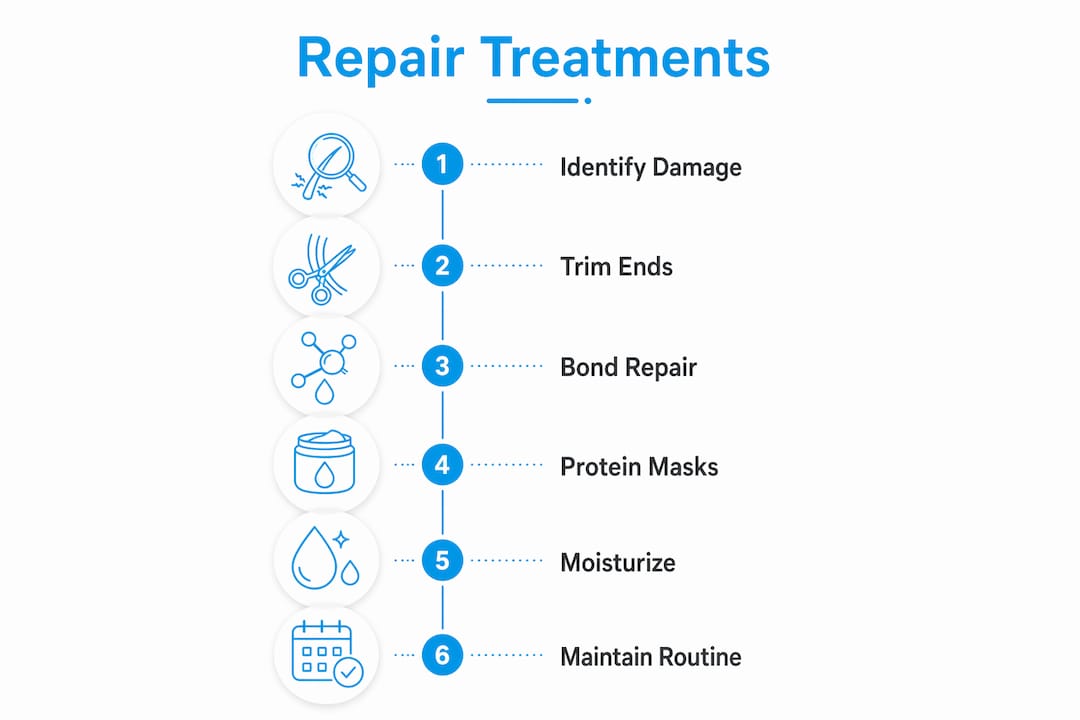
Hair breakage repair is the process of halting structural damage, strengthening weakened strands with targeted treatments, and protecting new growth through consistent care. No topical product can permanently restore a strand whose cortex has already fractured. Structurally damaged hair requires trimming as the only true long-term fix, while bond-repair systems, protein masks, and moisturizing conditioners protect the hair that grows in after. The goal is not to reverse what is broken. The goal is to stop further damage and give healthy new growth the best possible start.
What causes hair breakage and how does it affect hair structure?
Hair breakage is defined as the snapping of the hair shaft at any point along its length, as opposed to shedding, which releases the full strand from the root. The distinction matters because breakage and shedding call for completely different responses.
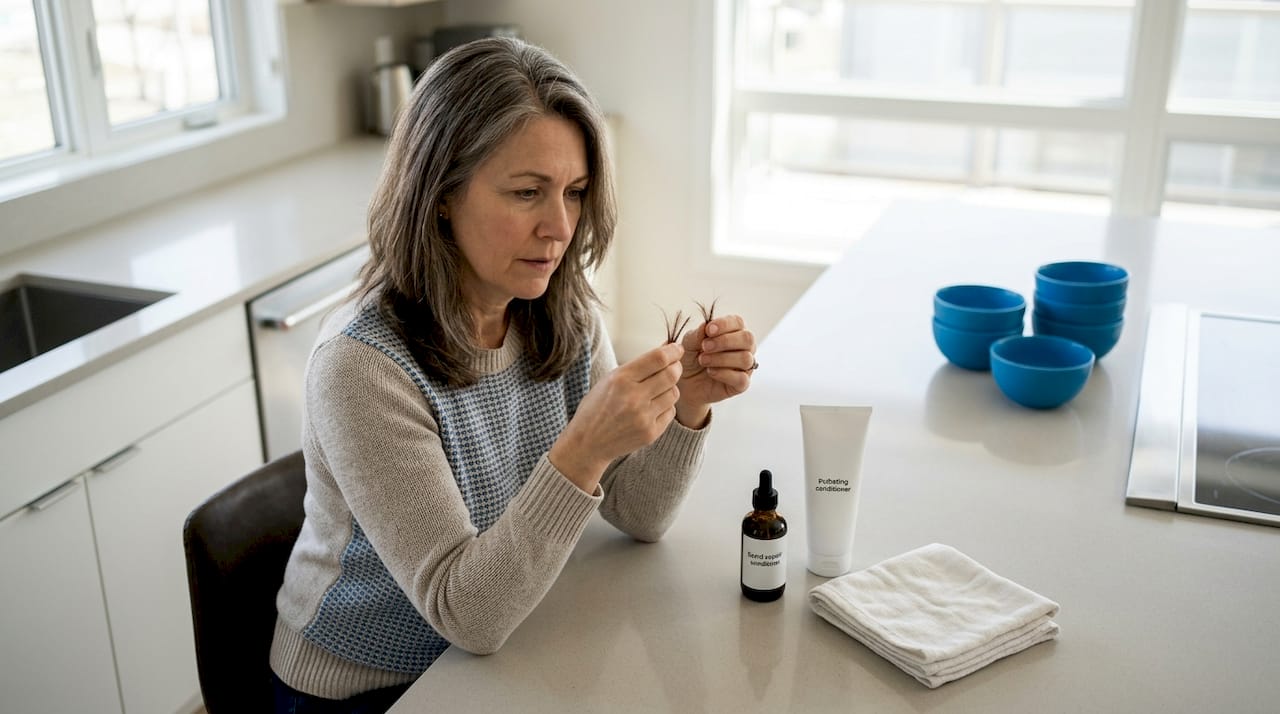
Damage begins at the cuticle, the outermost protective layer of each strand. When the cuticle lifts or chips away, the inner cortex becomes exposed. The cortex holds the disulfide bonds that give hair its strength and elasticity. Once those bonds break, the strand loses its ability to flex without snapping.
The most common causes of hair breakage include:
- Chemical treatments such as bleach, relaxers, and perms, which directly break disulfide bonds to reshape the hair
- Heat styling with flat irons, curling wands, and blow dryers above 400°F, which dehydrates the cortex and weakens its structure
- Mechanical stress from aggressive brushing, tight hairstyles, and rough towel drying, which physically snap already-fragile strands
- Chronic dryness, which leaves the cuticle brittle and prone to cracking under even light tension
- Nutritional deficiencies in biotin, iron, zinc, and vitamin D, which weaken the hair's internal structure from the inside out
Knowing which cause applies to your hair determines which repair strategy to prioritize. A person dealing with bleach damage needs bond-repair treatments. Someone with chronic dryness needs deep moisture. Treating the wrong root cause wastes time and money.
How to diagnose the severity and location of hair breakage
Accurate diagnosis separates effective treatment from guesswork. Before buying any product, inspect your hair to understand where breakage is happening and how severe it is.
- Wash and blow-dry your hair straight. This removes curl and wave patterns that can hide damage.
- Comb through sections at a 90-degree angle. A diagnostic comb test at this angle reveals frayed or shallow areas that would otherwise go unnoticed.
- Look for short pieces falling out during combing. These are broken strands, not shed hairs. Shed hairs have a white bulb at the root end.
- Check the ends under good lighting. Split ends that travel more than an inch up the shaft signal that trimming is overdue.
- Feel for texture changes along the strand. Rough, gummy, or mushy sections indicate cortex damage and require immediate attention.
Once you identify the breakage zones, you can decide how much to trim and which treatments to apply. Trimming is not a defeat. Board-certified dermatologists consistently identify it as the only effective long-term solution for severe breakage, with products serving to protect new growth rather than fix what is already gone.
Pro Tip: If you find breakage concentrated near the hairline or crown, check for tight styling habits first. Traction from ponytails and buns is one of the most overlooked causes of localized breakage.
What treatments actually repair hair breakage?
The right treatment depends on the type of damage. Using the wrong product, or the right product too often, can make breakage worse.
Bond-repair systems
Bond-repair products work by reconnecting the broken disulfide bonds inside the cortex. Dedicated bond-repair systems deliver up to 68% more repair in a single use than standard conditioners. That difference shows up in measurably reduced breakage and improved elasticity after consistent weekly use over 4–8 weeks. These products are most effective when applied weekly rather than daily, giving the hair time to respond between treatments.
Protein treatments
Protein masks replenish keratin, the structural protein that makes up the hair shaft. They temporarily fill gaps in the cuticle and add tensile strength. The risk is protein overload. Excessive use of hydrolyzed keratin or wheat protein treatments causes hair to become stiff and brittle, which increases breakage rather than reducing it. One protein treatment every two to three weeks is a safe starting point for most people.
Moisturizing conditioners and oils
Moisture treatments seal the cuticle and restore flexibility. Argan oil, jojoba oil, and glycerin-based conditioners are widely used for this purpose. They do not rebuild bonds, but they prevent the dryness that makes already-weakened strands snap under normal handling.
| Treatment type | Primary benefit | Recommended frequency |
|---|---|---|
| Bond-repair system | Reconnects disulfide bonds, reduces breakage | Weekly |
| Protein mask | Replenishes keratin, adds tensile strength | Every 2–3 weeks |
| Deep moisturizing mask | Seals cuticle, restores flexibility | Weekly |
| Lightweight oil | Locks in moisture, reduces friction | Daily or as needed |
Pro Tip: Alternate protein and moisture treatments each week. If your hair feels stiff or snaps easily after a protein session, balance protein with moisture the following week to restore softness and elasticity.
What are the best daily habits to stop hair breakage?
Daily habits cause more cumulative damage than any single styling session. Small changes in routine produce the most consistent long-term results.
- Detangle from ends upward. Wet hair is most fragile, and pulling a comb from root to tip snaps strands under tension. Start at the ends, work out knots section by section, then move upward. Use a wide-tooth comb and apply a leave-in conditioner before detangling.
- Skip the rough towel dry. Cotton towels create friction that lifts the cuticle and causes breakage. A microfiber towel or a soft T-shirt absorbs water without the abrasion.
- Use heat protectant every time you style. Heat protectants form a barrier between the strand and the tool. No protectant means direct heat exposure to an already-compromised cuticle.
- Trim every 8–12 weeks. Regular trimming at this interval prevents split ends from traveling up the shaft and causing breakage higher on the strand. Skipping trims to "save length" almost always results in more length loss later.
- Protect hair from UV exposure. Sun damage degrades the cuticle the same way heat does. A UV-protective leave-in spray or a hat during prolonged sun exposure reduces this risk.
- Support hair from the inside. Deficiencies in biotin, iron, and zinc directly weaken the hair shaft. A diet rich in leafy greens, eggs, legumes, and lean protein addresses these gaps more reliably than supplements alone.
A healthy hair care routine built around these habits does not require expensive products. It requires consistency and the willingness to handle hair gently every single day.
Key Takeaways
Effective hair breakage repair combines trimming damaged ends, using bond-repair and protein treatments on a rotating schedule, and protecting new growth through gentle daily habits and proper nutrition.
| Point | Details |
|---|---|
| Trimming is non-negotiable | Cut damaged ends every 8–12 weeks to stop split ends from spreading further up the shaft. |
| Bond-repair systems outperform conditioners | Weekly bond-repair treatments reduce breakage significantly more than standard conditioning alone. |
| Protein overload causes breakage | Alternate protein masks with moisturizing treatments every other week to avoid brittleness. |
| Detangle wet hair from ends up | Use a wide-tooth comb and leave-in conditioner to prevent snapping fragile wet strands. |
| Nutrition supports structural strength | Low iron, biotin, and zinc weaken hair internally; address deficiencies through diet first. |
What I've learned about realistic hair breakage repair
People come to hair breakage repair expecting a product to fix everything. That expectation sets them up for frustration. The honest truth is that no serum, mask, or treatment reverses structural damage that has already occurred. What products do is protect what is growing in and make handling easier so you cause less new damage.
The most underrated step is the trim. I have watched people avoid scissors for months, convinced they are preserving length, while split ends travel further up the shaft and force a much larger cut later. Trimming strategically and consistently is how you actually keep length over time.
Patience is the other factor most people underestimate. Bond-repair systems show measurable improvement over 4–8 weeks of consistent use. That timeline feels slow when you are dealing with visible breakage. But hair grows roughly half an inch per month. Protecting that growth while it comes in is the entire strategy.
If breakage persists despite a solid routine, persistent breakage may signal an underlying medical issue such as a thyroid disorder or iron-deficiency anemia. A dermatologist can run the right tests and rule out causes that no conditioner will fix. There is no shame in needing that level of evaluation. It is just the next logical step when good habits are not enough.
— Cyriac
How Myhair helps you track and improve your hair health
Knowing what your hair actually needs is harder than it sounds. Myhair uses AI-powered analysis to assess your hair condition objectively, so you are not guessing whether your strands need more protein, more moisture, or a different approach entirely.

The Myhair scanner camera analyzes your hair and scalp from photos, then generates a personalized hair score that reflects your current condition, breakage susceptibility, and care needs. That score updates as your hair changes, so you can see whether your routine is working or needs adjustment. For anyone managing breakage, having an objective baseline removes the guesswork and keeps your treatment plan on track.
FAQ
Can hair breakage be permanently repaired?
No. Structurally damaged strands cannot be permanently restored with any topical product. Trimming removes the damage, and consistent care protects new growth.
How long does it take to see results from breakage treatments?
Bond-repair systems show measurable improvement in elasticity and reduced breakage after 4–8 weeks of weekly use. Results depend on damage severity and consistency of application.
What is the difference between hair shedding and hair breakage?
Shedding releases the full strand from the root and includes a white bulb at the end. Breakage produces shorter pieces with no bulb, snapping at a point along the shaft rather than at the root.
How often should I trim to control breakage?
Trimming every 8–12 weeks prevents split ends from traveling up the shaft. Waiting longer typically results in more length loss, not less.
When should I see a dermatologist about hair breakage?
See a dermatologist if breakage continues despite a consistent, gentle routine. Persistent breakage can indicate nutritional deficiencies, thyroid issues, or other underlying medical causes that require clinical evaluation.