TL;DR:
- A personalized hair care routine should be based on your scalp's oil production and hair type to achieve better results.
- Regularly adjusting washing frequency, conditioner placement, and treatment methods according to scalp condition prevents damage and promotes healthy hair growth.
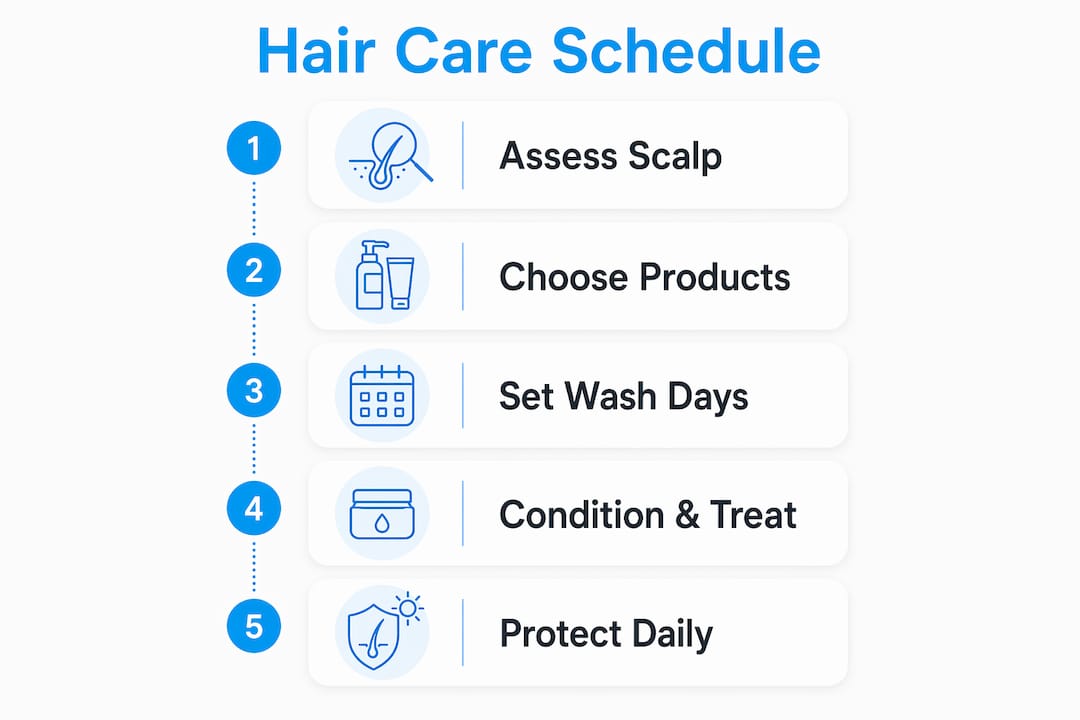
A hair care routine schedule is a deliberate, repeatable plan for cleansing, conditioning, treating, and protecting your hair based on your scalp condition and hair type. Generic routines fail because they ignore the single most important variable: your scalp's oil production. Dermatologists recommend washing frequency based on scalp oiliness rather than hair texture, which means two people with curly hair may need completely different schedules. A personalized approach, built around your actual biology, delivers visible results that a one-size-fits-all plan never will.
What is a hair care routine schedule built on?
A correct hair care routine depends on four variables: hair type, porosity, density, and scalp condition. Skipping any one of these leads to product misuse, wasted money, and real hair damage. Porosity, for example, determines how well your hair absorbs and holds moisture. High-porosity hair drinks up product fast but loses moisture just as quickly. Low-porosity hair resists absorption and needs lighter, water-based products to avoid buildup.

Hair type and texture
Hair type runs from straight (Type 1) through wavy (Type 2), curly (Type 3), and coily (Type 4). Coily hair has the tightest curl pattern and the least natural moisture distribution from root to tip. That structural reality means coily hair needs less frequent washing and more intensive conditioning than straight hair.
Scalp oil production
Scalp oil production is the most overlooked factor in routine building. An oily scalp produces excess sebum that travels down the hair shaft quickly, making hair look greasy within a day. A dry scalp produces too little, leaving hair brittle and the scalp flaky. You can assess your scalp type by checking how your roots look and feel 24 hours after washing without any product.
Porosity and density
The float test gives a rough read on porosity: drop a clean strand in a glass of water. If it sinks fast, porosity is high. If it floats, porosity is low. Hair density, meaning how many strands you have per square inch, affects how long products take to penetrate and how heavy your hair feels after application.
Pro Tip: Run your fingers along a single strand from root to tip. If it feels bumpy or rough, the cuticle is raised, which signals high porosity and a need for protein-rich or sealing products.
How often should you wash your hair?
Washing frequency is the backbone of any weekly hair care plan. Oily scalps need washing daily or every 1–2 days, balanced scalps do well at 2–3 times per week, and dry or coily hair benefits from washing only once every 7–10 days. These are not arbitrary numbers. They reflect how long it takes sebum to travel from scalp to strand for each hair type.
Overwashing strips scalp oils, triggering dryness, itching, and brittle ends. The scalp then overproduces oil to compensate, creating a cycle that feels impossible to break. Underwashing, on the other hand, allows product residue and dead skin cells to clog follicles, which can slow hair growth over time.
Sample weekly schedules by scalp type
| Scalp type | Wash days | Notes |
|---|---|---|
| Oily | Daily or every other day | Use a gentle, sulfate-free shampoo to avoid stripping |
| Balanced | Monday, Wednesday, Friday | Rotate with a clarifying shampoo every 2–4 weeks |
| Dry or coily | Once every 7–10 days | Co-wash between wash days if scalp feels tight |
| Combination | Every 2–3 days | Focus shampoo on scalp only, not lengths |
Clarifying shampoos used once every 2–4 weeks remove stubborn buildup from product residue and hard water minerals that regular shampoos miss. This step matters most for people who use dry shampoo, styling creams, or live in areas with hard tap water.
Pro Tip: Schedule your wash days around your social calendar, not the other way around. If you have an event on Saturday, make Friday your wash day. Consistency matters more than which specific days you choose.
How to condition and treat hair for real results
Conditioning is where most people make their biggest mistake. Conditioner belongs on mid-lengths to ends only, left on for 2–3 minutes before rinsing. Applying it to the scalp causes greasiness and buildup, which many people then try to fix by washing more often, compounding the problem.
A good hair routine for healthy hair follows this conditioning sequence:
- Rinse hair thoroughly with warm water before applying any product.
- Squeeze out excess water so the conditioner is not diluted before it can absorb.
- Apply conditioner from mid-lengths to ends, working it through with your fingers or a wide-tooth comb.
- Leave it on for 2–3 minutes. For a deep conditioning mask, extend to 10–20 minutes and add a shower cap to trap heat for better absorption.
- Rinse with cool water to seal the cuticle and add shine.
Deep conditioning masks belong in your schedule once per week. They restore moisture and strengthen the hair shaft, especially after heat styling or chemical treatments. Leave-in conditioners and serums applied after washing protect hair between wash days without requiring you to rewash. They seal the cuticle and reduce friction from brushing and environmental exposure.
Minimalist routines focused on hydration, protection, and gentle cleansing outperform product-heavy regimens. Layering too many products traps residue on the cuticle, dulling shine and making hair feel heavy. Stick to three core steps: cleanse, condition, protect.
Pro Tip: If your hair feels weighed down after conditioning, you are likely using too much product. A dime-sized amount is enough for medium-length hair. Start small and add more only if needed.
Styling and protective habits that protect your hair daily
Styling choices either preserve or destroy the progress your washing and conditioning routine builds. The right habits reduce mechanical stress and keep hair strong between wash days.
- Apply heat protectant every time before using a blow dryer, flat iron, or curling wand. Heat damage is cumulative and irreversible without cutting the affected length.
- Schedule low-manipulation days. Not every day needs styling. Letting hair rest in a loose braid or bun reduces breakage from repeated combing and tension.
- Never sleep with wet hair. Sleeping with wet hair weakens the hair shaft and increases breakage risk significantly. Dry hair at least 80% before bed.
- Switch to a silk or satin pillowcase or wrap hair in a satin scarf at night. Cotton pillowcases create friction that roughens the cuticle and causes frizz and breakage over time.
- Refresh hair between wash days with a light water and leave-in spray rather than dry shampoo every time. Dry shampoo absorbs oil but does not clean the scalp, and overuse contributes to follicle buildup.
- Use protective hairstyles like braids, twists, or updos on non-wash days. These styles tuck away the ends, which are the oldest and most fragile part of the hair.
A simple daily routine for maintenance takes about 5 minutes. Wash days take 20–30 minutes when you include deep conditioning. That time investment, done consistently, produces visible improvement within 30 days.
Common mistakes that derail a good hair care routine
Most people do not fail because they lack effort. They fail because they repeat the same small mistakes without realizing it.
- Washing based on a fixed schedule instead of scalp signals. Your scalp tells you when it needs cleansing. Oiliness, itching, and odor are the real cues, not the calendar.
- Applying conditioner to the scalp. Conditioner on the scalp causes buildup and greasiness that many people misread as an oily scalp problem, leading them to wash more and dry their hair out further.
- Using too many products at once. Layering five products does not give you five times the benefit. It gives you buildup, dullness, and a scalp that cannot breathe.
- Never adjusting the routine. Hair changes with seasons, hormones, diet, and age. A routine that worked perfectly last year may be wrong for your hair today.
- Skipping the clarifying step. Regular shampoo does not remove all buildup. Without a monthly clarifying wash, residue accumulates and blocks moisture from reaching the hair shaft.
"Clean hair is not about washing every day. It is about washing at the right frequency for your scalp, using the right products for your hair type, and adjusting when your hair tells you something has changed."
When your routine stops working, check three things first: washing frequency, product load, and whether your hair type has shifted due to a life change like pregnancy, stress, or a new medication. If problems persist after adjusting those variables, a dermatologist or trichologist can assess whether an underlying scalp condition is involved.
Key takeaways
A personalized hair care routine schedule built around scalp oil production and hair type delivers better results than any generic plan.
| Point | Details |
|---|---|
| Scalp type drives wash frequency | Oily scalps need daily or every-other-day washing; dry or coily hair needs only once every 7–10 days. |
| Conditioner placement matters | Apply from mid-lengths to ends only, leave on 2–3 minutes, and rinse with cool water to seal the cuticle. |
| Deep condition weekly | A 10–20 minute mask once per week restores moisture and strength, especially after heat or chemical exposure. |
| Protective habits reduce breakage | Silk pillowcases, avoiding wet-hair sleep, and low-manipulation days preserve hair between wash days. |
| Simplicity beats complexity | A three-step routine of cleanse, condition, and protect outperforms layered, product-heavy regimens. |
Why scalp health is the real starting point
I have seen people spend hundreds of dollars on treatments while completely ignoring their scalp. That is like watering a plant from the leaves instead of the roots. The scalp is where every strand begins, and no amount of conditioning fixes hair that is growing from an unhealthy foundation.
The most common mistake I see is people building routines around their hair texture rather than their scalp condition. Someone with coily hair assumes they need to wash less, but if their scalp is genuinely oily, that logic leads to clogged follicles and slower growth. The correct starting point is always the scalp, not the strand.
Simplicity is also underrated. A two-product routine done consistently beats a ten-step routine done sporadically. When people add too many steps, they skip days, lose track of what is working, and blame the products instead of the inconsistency. Build the smallest routine that addresses your actual needs, then add to it only when you have a specific problem to solve.
The other thing worth saying plainly: your routine will need to change. Hormones, seasons, diet, and stress all shift your scalp's behavior. The people with the healthiest hair are not the ones with the most elaborate routines. They are the ones who pay attention and adjust. Treat your routine as a living plan, not a fixed prescription.
— Cyriac
How Myhair helps you build the right routine
Knowing your hair type is one thing. Getting a precise read on your scalp condition and hair health is another. Myhair uses AI-powered analysis to assess your scalp and hair from a scan, then delivers personalized routine recommendations based on your actual condition rather than general hair type categories.

The platform tracks changes over time, so you can see whether your current routine is working or needs adjustment. Clinics can also integrate Myhair's tools through clinic onboarding to offer clients data-backed routine guidance at every appointment. Whether you are starting from scratch or refining an existing plan, Myhair gives you the specific information your routine needs to work.
FAQ
What is a hair care routine schedule?
A hair care routine schedule is a planned sequence of cleansing, conditioning, treating, and protecting your hair on set days each week, tailored to your scalp type and hair needs.
How do I know how often to wash my hair?
Check your scalp 24 hours after washing. If roots look oily, wash every 1–2 days. If they look normal, wash 2–3 times per week. If your scalp feels dry or tight, extend to every 7–10 days.
Can I use conditioner every day?
Daily conditioning on mid-lengths to ends is safe for most hair types. Avoid the scalp to prevent buildup, and use a lightweight formula if your hair tends to feel heavy.
How often should I use a deep conditioning mask?
Deep conditioning masks work best applied once per week, left on for 10–20 minutes, with a shower cap to enhance absorption through heat.
When should I adjust my hair care routine?
Adjust your routine when your scalp signals change, such as increased oiliness, dryness, or shedding, or when life factors like season, stress, or hormones shift your hair's behavior.