
Hair loss treatments can hit your wallet hard and the options keep growing each year. People are spending over $500 a year just on over-the-counter hair loss products and camouflaging aids, while a single hair transplant procedure can run up to $15,000. It sounds like treating hair loss is only for the wealthy, but that is not the whole story. The real surprise is that affordable options still offer results for many and the gap between budget and premium care is wider than most realize.
Table of Contents
- Hair Loss Treatment Cost Breakdown
- Factors That Influence Pricing
- Comparing Popular Hair Loss Solutions
- How to Choose the Right Treatment for You
Quick Summary
| Takeaway | Explanation |
|---|---|
| Evaluate treatment types based on budget | Hair loss treatments range from under $100 monthly for topical solutions to $15,000 for hair transplants. Choose according to financial capability. |
| Consider long-term investment in hair health | Hair loss treatments often require ongoing care and investment. Balance the initial costs with the potential psychological benefits of improved appearance. |
| Consult with professionals for personalized advice | A comprehensive assessment from a dermatologist can guide the best treatment plan tailored to your specific hair loss type and financial situation. |
| Research insurance and financing options | Many hair loss treatments are not covered by insurance. Explore financing plans that can ease the burden of upfront costs for clinical procedures. |
| Holistic approach to treatment selection | Take into account both medical effectiveness and personal preferences, including emotional impacts, when deciding on a hair loss treatment plan. |
Hair Loss Treatment Cost Breakdown
Understanding the financial investment required for hair loss treatments is crucial for individuals seeking effective solutions. The cost of managing hair loss varies significantly based on multiple factors, creating a complex landscape of treatment options and expenses.
Types of Treatment and Their Financial Impact
Hair loss treatments range from affordable over-the-counter solutions to more expensive clinical procedures. Our comprehensive guide to male pattern baldness treatments reveals the diverse pricing spectrum. According to research published in the National Library of Medicine, individuals can expect varied financial commitments depending on their chosen treatment method.
Topical treatments represent the most budget-friendly option. Minoxidil-based products typically cost less than $100 monthly, providing an accessible starting point for those experiencing hair loss. These solutions offer a low-risk, affordable approach to initial hair restoration efforts.
Prescription medications like finasteride present another tier of treatment. Monthly costs range from $30 to $80, depending on dosage and specific brand. While more expensive than topical solutions, these medications target hair loss at a hormonal level, potentially offering more comprehensive results.
Here is a table summarizing the estimated monthly and overall costs for common hair loss treatments, as discussed above:
| Treatment Type | Estimated Monthly Cost | Overall Range | Notes |
|---|---|---|---|
| Minoxidil (Topical) | <$100 | $500+/year | Over-the-counter; affordable entry point |
| Finasteride (Oral) | $30–$80 | $360–$960+/year | Prescription; hormonal approach |
| PRP Therapy (Clinical) | N/A (per session) | $500–$2,500/session | Multiple sessions often needed |
| Hair Transplant Surgery | N/A (one-time) | $4,000–$15,000 | Depends on number of grafts and technique |
| Camouflaging Products | N/A | $500+/year | Cumulative cost; often used in conjunction with other methods |
Advanced Clinical Procedures and Investments
Hair transplant procedures represent the most significant financial investment in hair loss treatment. Healthline reports that these procedures can range from $4,000 to $15,000, influenced by factors such as:
- Procedure Complexity: The number of hair grafts needed
- Surgeon's Expertise: More experienced professionals command higher fees
- Geographic Location: Urban centers typically have higher procedure costs
- Clinic Reputation: Specialized facilities may charge premium rates
Interestingly, a comprehensive study revealed that individuals with nonscarring alopecia spend over $500 annually on over-the-counter products and camouflaging agents. This highlights the cumulative financial burden of managing hair loss beyond clinical interventions.
Long-Term Financial Considerations
Potential hair loss treatment recipients should view these expenses as long-term investments in personal appearance and confidence. While initial costs might seem substantial, the psychological and professional benefits of addressing hair loss can outweigh the financial commitment.
Budget-conscious individuals should consider:
- Comparing multiple treatment options
- Consulting healthcare professionals for personalized recommendations
- Exploring insurance coverage possibilities
- Investigating financing options offered by specialized clinics
Ultimately, the most effective hair loss treatment balances medical efficacy with personal financial constraints. Careful research and professional guidance can help individuals make informed decisions that align with their health goals and budgetary limitations.
Factors That Influence Pricing
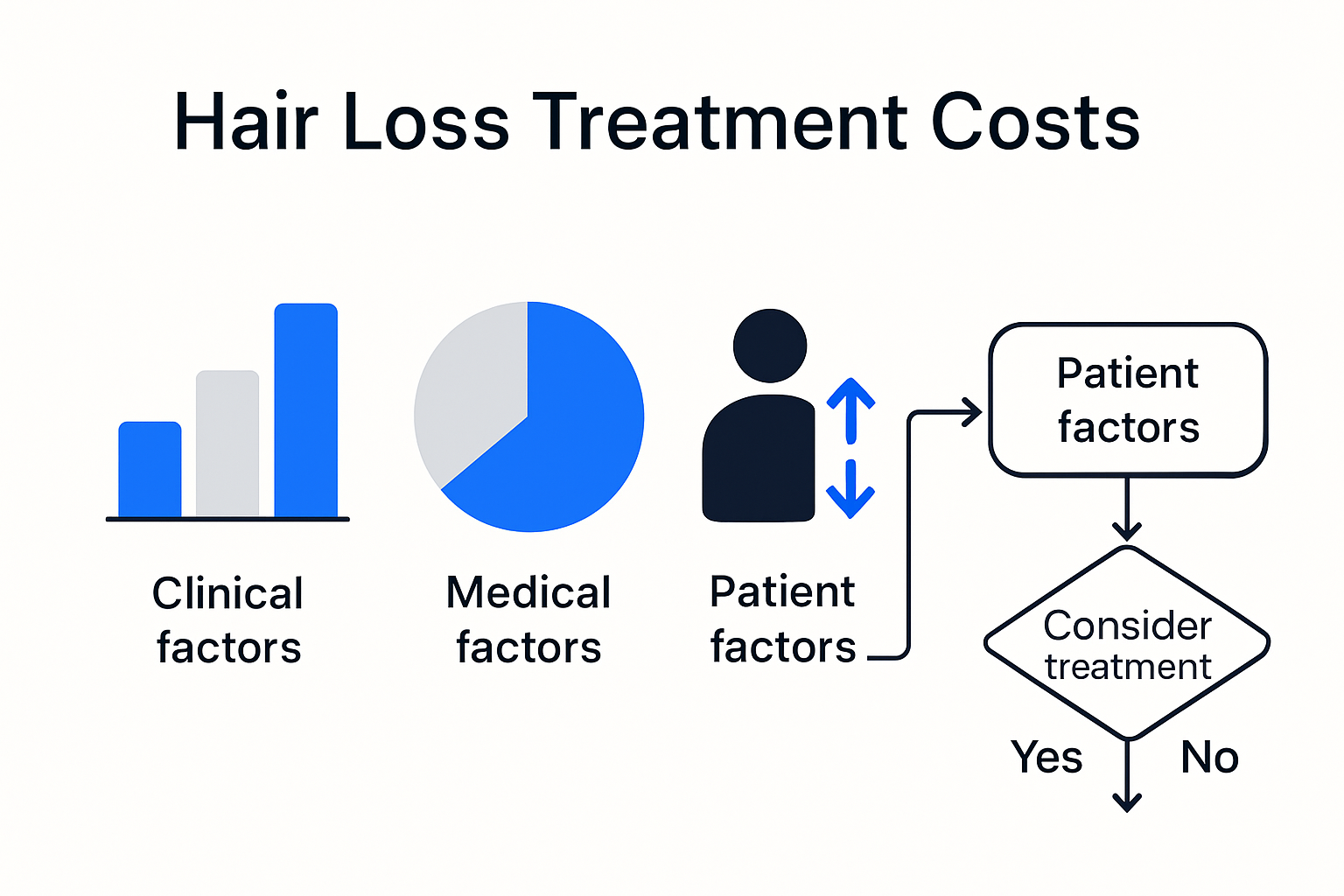
Hair loss treatment pricing is far more complex than a simple one-size-fits-all calculation. Multiple interconnected factors contribute to the final cost, creating a nuanced financial landscape that patients must carefully navigate.
Clinical and Medical Determinants
The extent and type of hair loss play a critical role in determining treatment expenses. Research from European Medical Literature indicates that the chronic nature of androgenetic alopecia necessitates lifelong therapy, which significantly impacts long-term financial planning. Different types of hair loss require unique approaches, with treatment costs varying dramatically based on specific medical conditions.
Scarring and nonscarring alopecia present distinct pricing challenges. A comprehensive survey study revealed that individuals with scarring alopecia tend to spend more on treatment and camouflaging products. Remarkably, 8% of participants reported that their hair loss product expenditures were so significant that they interfered with purchasing basic necessities.
Procedure-Specific Cost Variables
Hair transplantation costs are intricately linked to several technical and professional factors. Specialized medical research highlights that the extent of hair loss directly correlates with treatment expenses. More extensive baldness requires a higher number of hair grafts, substantially increasing the overall procedure cost.
Key variables influencing hair transplant pricing include:
- Graft Quantity: More extensive hair loss requires more grafts
- Procedure Technique: Follicular Unit Extraction (FUE) and Follicular Unit Strip Surgery (FUSS) have different cost structures
- Surgeon's Expertise: Highly experienced professionals command premium rates
- Clinic Technology: Advanced medical equipment increases procedural costs
Our guide to male pattern baldness treatments provides deeper insights into how these technical nuances impact pricing strategies.
Patient-Specific Financial Considerations
Individual patient characteristics significantly influence treatment costs. Factors such as age, overall health, genetic predisposition, and personal treatment goals create a personalized pricing matrix. Younger patients might require different intervention strategies compared to older individuals, potentially affecting long-term treatment expenses.
Geographic location also plays a crucial role. Urban medical centers with advanced technological infrastructure typically charge higher rates compared to smaller clinics. Insurance coverage variability further complicates the financial landscape, with many hair loss treatments considered cosmetic and thus not covered by standard health insurance plans.
Patients should approach hair loss treatment pricing as a comprehensive investment in personal well-being. While initial costs might seem overwhelming, understanding these intricate pricing factors enables more informed decision-making. Consulting with medical professionals, comparing multiple treatment options, and developing a strategic financial plan can help manage these expenses effectively.
Comparing Popular Hair Loss Solutions
Navigating the landscape of hair loss treatments requires a comprehensive understanding of available solutions, their effectiveness, and associated costs. Patients seeking hair restoration have multiple options, each with unique benefits and financial considerations.
Topical and Oral Medications
Topical and oral medications represent the most accessible and budget-friendly hair loss treatment approaches. A 2021 study on androgenetic alopecia treatments highlights the financial and medical nuances of these interventions.
Minoxidil stands out as a cost-effective solution, typically priced under $100 monthly. This over-the-counter treatment offers an affordable entry point for individuals experiencing early-stage hair loss. Its accessibility and relatively low cost make it an attractive initial treatment option.
Finasteride, a prescription oral medication, presents another pharmaceutical approach. Monthly costs range between $30 to $80, depending on dosage and brand. While slightly more expensive than topical treatments, finasteride targets hair loss at a hormonal level, potentially providing more comprehensive results.
Advanced Clinical Procedures
Our latest hair treatment guide explores more sophisticated hair restoration techniques. Platelet-Rich Plasma (PRP) therapy emerges as an innovative option, with treatment sessions ranging from $500 to $2,500. Multiple sessions are often required, increasing the overall investment.
Hair transplantation represents the most significant financial commitment. Procedures can range from $5,000 to $15,000, depending on the extent of hair loss and chosen technique. Follicular Unit Extraction (FUE) and Follicular Unit Strip Surgery (FUSS) offer different approaches, with costs varying based on the number of grafts and surgical complexity.
Alternative and Emerging Treatments
Low-level laser therapy and emerging technological solutions provide additional options for hair restoration. A systematic review evaluating treatment effectiveness reveals the potential of these alternative approaches.
Emergent technologies like scalp micropigmentation offer non-surgical cosmetic solutions. While not directly addressing hair growth, these treatments provide visual hair density restoration at varying price points. Costs typically range from $1,500 to $5,000, depending on the treatment area and complexity.
Considerations for selecting a hair loss solution extend beyond immediate costs. Patients should evaluate:
- Long-term effectiveness
- Potential side effects
- Personal health conditions
- Psychological impact
- Maintenance requirements
Ultimately, the most suitable hair loss treatment balances medical efficacy, personal preferences, and financial constraints. Consulting with healthcare professionals can help individuals make informed decisions tailored to their specific needs and budgetary considerations.
Below is a comparison table highlighting key features of the most popular hair loss solutions mentioned in this section:
| Solution Type | Typical Cost Range | Invasiveness | Maintenance Required | Suitability |
|---|---|---|---|---|
| Minoxidil (Topical) | <$100/month | Non-invasive | Daily | Early-stage hair loss, initial intervention |
| Finasteride (Oral) | $30–$80/month | Non-invasive | Daily | Male pattern hair loss requiring prescription |
| PRP Therapy | $500–$2,500/session | Minimally invasive | Multiple sessions/year | Patients seeking non-surgical clinical option |
| Hair Transplant | $5,000–$15,000 (one-time) | Surgical | Minimal (post-op care) | Extensive hair loss, permanent restoration |
| Scalp Micropigmentation | $1,500–$5,000 (one-time) | Non-surgical/cosmetic | Occasional touch-ups | Visual density; not hair regrowth |
How to Choose the Right Treatment for You
Selecting the most appropriate hair loss treatment requires a nuanced approach that considers multiple personal and medical factors. Understanding your unique situation is crucial in making an informed decision that balances effectiveness, cost, and individual health considerations.
Assessing Your Hair Loss Profile
A comprehensive medical review emphasizes the importance of a thorough diagnostic process before selecting any treatment. Your hair loss journey begins with understanding the specific type and underlying cause of your condition. Different types of hair loss require distinct approaches:
- Androgenetic alopecia (male pattern baldness)
- Alopecia areata (autoimmune hair loss)
- Telogen effluvium (stress-related hair shedding)
- Scarring and nonscarring hair loss variations
Consult with a dermatologist or trichologist to conduct a comprehensive scalp and hair analysis. This professional assessment will help determine the most suitable treatment strategy, considering factors like:
- Extent of hair loss
- Hair and scalp health
- Underlying medical conditions
- Genetic predisposition
Financial and Personal Considerations
Research on androgenetic alopecia treatments highlights the importance of aligning treatment choices with personal financial capabilities and lifestyle constraints. Consider the following factors:
- Treatment Duration: Some solutions require long-term commitment
- Maintenance Costs: Factor in ongoing expenses beyond initial treatment
- Side Effect Potential: Evaluate personal health risks and tolerance
- Time Investment: Consider treatment application time and frequency
Budget-conscious individuals should create a comprehensive financial plan that accounts for:
- Initial treatment costs
- Monthly maintenance expenses
- Potential additional medical consultations
- Supplementary hair care products
Personalized Treatment Strategy
An in-depth diagnostic overview recommends a holistic approach to hair loss treatment. Your strategy should be as unique as your individual hair loss pattern.
Key steps in developing a personalized treatment plan include:
- Conducting thorough medical screenings
- Understanding potential treatment interactions
- Exploring combination therapies
- Setting realistic expectations
Additionally, explore our advanced hair loss solutions to gain deeper insights into cutting-edge treatment options.
Psychological factors play a significant role in treatment selection. Hair loss can impact self-esteem and mental health, so choose a solution that not only addresses physical symptoms but also supports your emotional well-being.
Remember that no universal solution exists. The most effective approach combines medical expertise, personal research, and a tailored strategy that adapts to your changing needs. Regular follow-ups with healthcare professionals will help you refine and optimize your hair loss treatment plan over time.

Frequently Asked Questions
What is the average cost of hair loss treatments?
The average cost of hair loss treatments can vary significantly. Over-the-counter topical solutions like minoxidil can cost under $100 monthly, while prescription medications like finasteride typically range from $30 to $80 a month. Advanced treatments such as hair transplants can range from $4,000 to $15,000.
Are hair loss treatments covered by insurance?
Many hair loss treatments are considered cosmetic and are not covered by standard health insurance plans. However, it's always wise to check with your specific insurance provider to understand your coverage options and any possible reimbursement.
How often do I need to pay for hair loss treatments?
The frequency of payments depends on the type of treatment. Topical solutions usually require monthly purchases, while medications like finasteride may also have a monthly cost. Hair transplant surgery is a one-time procedure, though follow-up treatments may be necessary.
What factors influence the cost of hair loss treatments?
Several factors influence the cost of hair loss treatments, including the type of treatment chosen, the extent of hair loss, geographic location, and the expertise of the medical professional performing the procedure. Additionally, patient-specific considerations, such as health and age, play a role in determining overall costs.
Take Control of Your Hair Loss Journey with Smart, Personalized Solutions
After reading about the real costs and challenges of hair loss treatments, you might feel lost between expensive procedures and endless products that may or may not work for your unique situation. High prices, ongoing maintenance, and not knowing what is right for your specific pattern of hair loss can quickly become overwhelming. What if you could actually see detailed insights into your hair health and let data guide your next step instead of guessing?
Experience the difference with MyHair.ai. Upload your own scan and get a professional AI-based hair analysis in minutes. Discover which proven solutions and products are most likely to help you, all based on your personal data—not just marketing promises. Visit MyHair.ai now to get your assessment and see how easy it can be to make confident, cost-effective decisions about your hair health. Act today and move closer to results that fit your needs and budget.