TL;DR:
- Hair masks deliver active ingredients directly to hair follicles to improve density and scalp health.
- Evidence shows clinical formulations outperform DIY masks for lasting thickening and shedding reduction.
- Personalized treatment plans based on hair and scalp analysis lead to better, faster results.
Most people reach for a hair mask hoping for a quick fix, and most are working with incomplete information. The shelves are packed with products promising miraculous thickness and regrowth, yet a growing body of research makes it clear that not all masks are equal, and many popular DIY recipes barely scratch the surface of what your hair actually needs. Understanding what science says about mask ingredients, delivery methods, and application frequency can be the difference between spinning your wheels for months and finally seeing real change in your hair density and health.
Table of Contents
- Why hair masks matter for hair health
- What does science say about hair masks and hair loss?
- Comparing DIY masks vs. clinical innovations
- How to choose and use hair masks for your needs
- Building a long-term hair care routine
- The real secret to success with hair masks
- Take the next step toward personalized hair care
- Frequently asked questions
Key Takeaways
| Point | Details |
|---|---|
| Science-backed ingredients | Centella asiatica, rIGF-1, and rFGF-7 show evidence for boosting hair thickness and reducing loss. |
| Proven routines work best | Consistent use of clinically-tested masks outperforms random DIY approaches. |
| Personalization matters | Tailoring your routine and ingredients to your hair’s needs maximizes results. |
| Supplement support | Oral supplements can complement topical masks for a fuller hair health strategy. |
| Track progress and adapt | Monitor your results and adjust your regimen for long-term hair wellness. |
Why hair masks matter for hair health
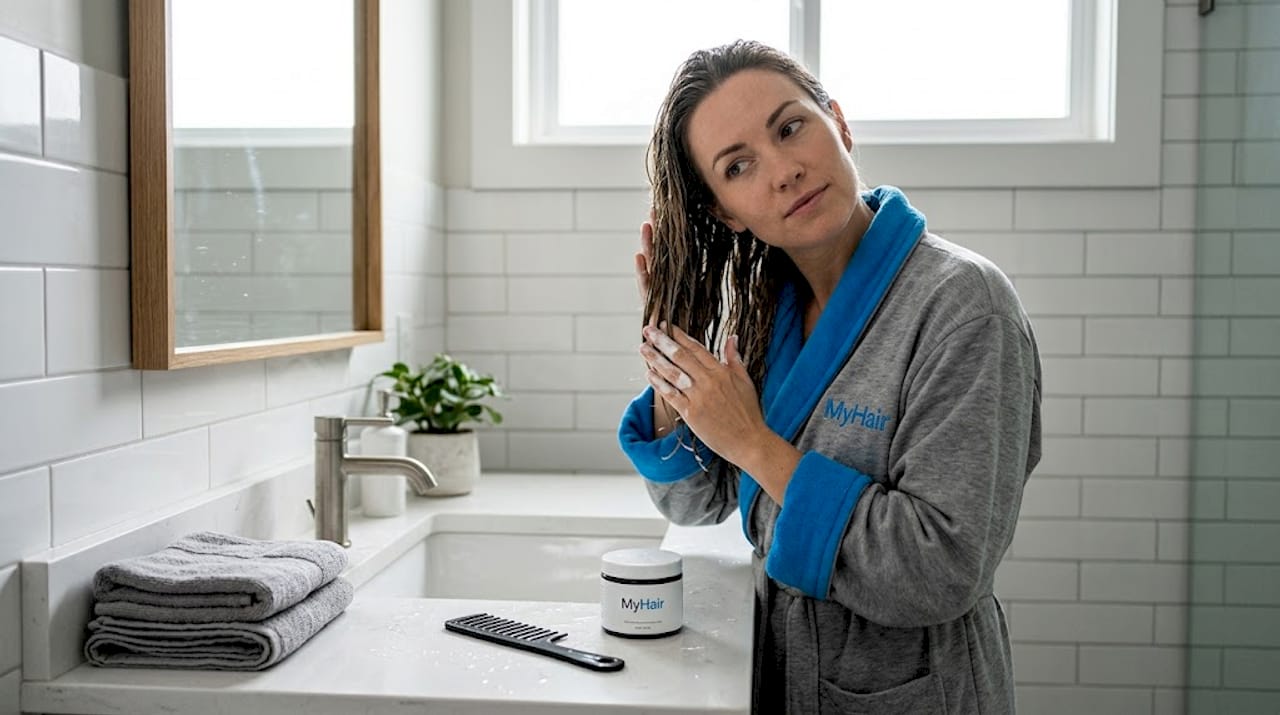
Hair masks are not just a luxury step in a Sunday routine. They are a targeted delivery system, designed to push active ingredients into the hair shaft and scalp where cellular activity actually happens. When your hair is thinning or shedding more than usual, the scalp environment is often compromised, and a well-formulated mask can help restore moisture balance, reduce inflammation, and support the follicle's ability to produce a thicker strand.
People reach for masks for a wide range of reasons:
- Damage repair from heat styling, chemical treatments, or sun exposure
- Reducing shedding during periods of stress or hormonal change
- Improving hair density when strands feel fine or flat
- Scalp care to manage buildup, excess oil, or dryness that can choke follicles
The scalp connection is especially important. A dry, inflamed, or sebum-clogged scalp slows down the hair cycle, meaning strands spend less time in the anagen (growth) phase before falling out. Evidence-based scalp treatments address this directly. Research confirms that natural thickening treatments can meaningfully support this process when formulated correctly.
"Topical Centella asiatica extracellular vesicles combined with rIGF-1 and rFGF-7 increased hair thickness, density, and length while reducing sebum production and hair loss, with measurable improvements observed by day 56."
This finding matters because it shows topical treatments, applied correctly and consistently, can produce measurable biological change at the follicular level. Not all masks will achieve this, but knowing the benchmark helps you ask better questions about what you're putting on your hair.
What does science say about hair masks and hair loss?
The research landscape has shifted noticeably in the past several years. We now have randomized controlled trials (RCTs) that go beyond small observational studies and actually measure hair shaft diameter, strand count per square centimeter, and shedding frequency before and after treatment. The results are genuinely useful for anyone navigating hair loss.
Topically applied formulations with growth factors and plant-derived compounds consistently outperform plain conditioning treatments when the goal is thickness and density. The thicker hair science behind these results shows that certain actives can signal follicle cells to extend the growth cycle, produce wider shafts, and resist premature shedding.
On the oral side, research on nutraceuticals adds another layer. Oral Nutrafol supplements were shown to increase hair shaft diameter and reduce shedding and breakage across different demographic groups, including men and women with varying degrees of thinning. This is significant because it shows the inside-out approach works alongside topical treatments, not instead of them.
Here is a quick look at how evidence levels compare across treatment types:
| Treatment type | Evidence level | Key outcome measured |
|---|---|---|
| Centella asiatica EVs + rIGF-1/rFGF-7 topical | RCT, strong | Thickness, density, length, sebum, shedding |
| Nutrafol oral nutraceutical | RCT, strong | Shaft diameter, breakage, shedding |
| Castor oil DIY mask | Anecdotal, weak | Shine, moisture (no diameter data) |
| Egg and olive oil mask | Anecdotal, weak | Short-term softness |
| Biotin-enriched conditioner | Mixed, moderate | Minimal thickness without deficiency |
The gap between clinical results and what most at-home masks deliver is real. That is not a reason to abandon DIY masks entirely, but it is a reason to know what you are realistically working toward. Proven thickening methods that combine evidence-backed actives with consistent application tend to outperform any single trendy ingredient.
Key takeaways from the research:
- Growth factors like rIGF-1 and rFGF-7 directly stimulate follicle cell activity
- Plant-derived extracellular vesicles (EVs) act as carriers that improve ingredient penetration
- Thickness improvements are measurable within 8 weeks when using clinically tested formulations
- Oral and topical strategies are complementary, not competing approaches
Comparing DIY masks vs. clinical innovations
Making a smart choice about your hair mask starts with an honest comparison between what you can whip up in the kitchen and what advanced formulations actually offer. Both have a place in a smart routine, but they serve different purposes.
Common DIY ingredients and what they actually do:
- Coconut oil softens the cuticle and reduces hygral fatigue (swelling caused by water absorption), but it does not stimulate growth
- Honey adds temporary moisture and mild antimicrobial properties
- Avocado delivers fatty acids that coat the shaft, improving softness
- Eggs provide temporary protein binding on the surface
- Apple cider vinegar rinse can smooth the cuticle by lowering pH after alkaline treatments
Clinical and advanced actives:
- Centella asiatica EVs act as nano-carriers, penetrating the scalp to deliver active compounds directly to follicle cells
- rIGF-1 (recombinant insulin-like growth factor-1) signals follicle cells to enter and sustain the anagen phase
- rFGF-7 (fibroblast growth factor-7) promotes keratinocyte (skin and hair cell) growth in the follicle
- Peptide complexes mimic growth signals without the cost of recombinant proteins
- Caffeine topicals block DHT activity at the follicle, a recognized driver of androgenetic hair loss
"An exploratory RCT confirms efficacy of advanced topical treatments that deliver measurable thickness and loss reduction, validating that formulation science matters as much as the ingredients themselves."
This distinction between ingredient quality and delivery mechanism is critical. A mask can contain all the right raw materials, but if the molecule is too large to penetrate the scalp barrier, it simply sits on the surface and rinses off.
Pro Tip: When evaluating any hair mask, look for the word "penetrating" or "follicle-stimulating" on the label and check whether there is published clinical data behind the product. Brands that invest in research tend to list study results or ingredient citations on their websites.
The time-to-results gap is also worth addressing honestly. DIY masks may improve the feel and appearance of hair within one to two uses. Clinical formulations typically require four to eight weeks of consistent use before measurable changes appear in density or shaft diameter. If you need quick softness, a conditioning DIY mask works fine. If you need to address real thinning, you need a different strategy.
Explore a curated set of hair mask recipes that balance accessible ingredients with efficacy, or look into personalized hair products matched to your specific hair profile.
How to choose and use hair masks for your needs
Choosing the right mask means starting with an honest assessment of your hair and scalp, not just grabbing whatever is trending. Here is a practical framework to guide your decision.
Step 1: Assess your specific concern. Are you dealing with visible thinning at the crown, breakage along the lengths, scalp oiliness, or dryness? Each issue points to a different active ingredient priority.
Step 2: Check your current product stack. If you are already using a medicated shampoo or topical minoxidil, some mask ingredients can enhance or interfere with those treatments. Layering without awareness can reduce effectiveness.
Step 3: Set a realistic frequency. For general moisture maintenance, once weekly is often enough. For addressing active shedding or thinning, tailored treatments applied consistently two to three times weekly tend to outperform sporadic use. Evidence supports this tailored approach for reducing hair loss and increasing thickness over time.
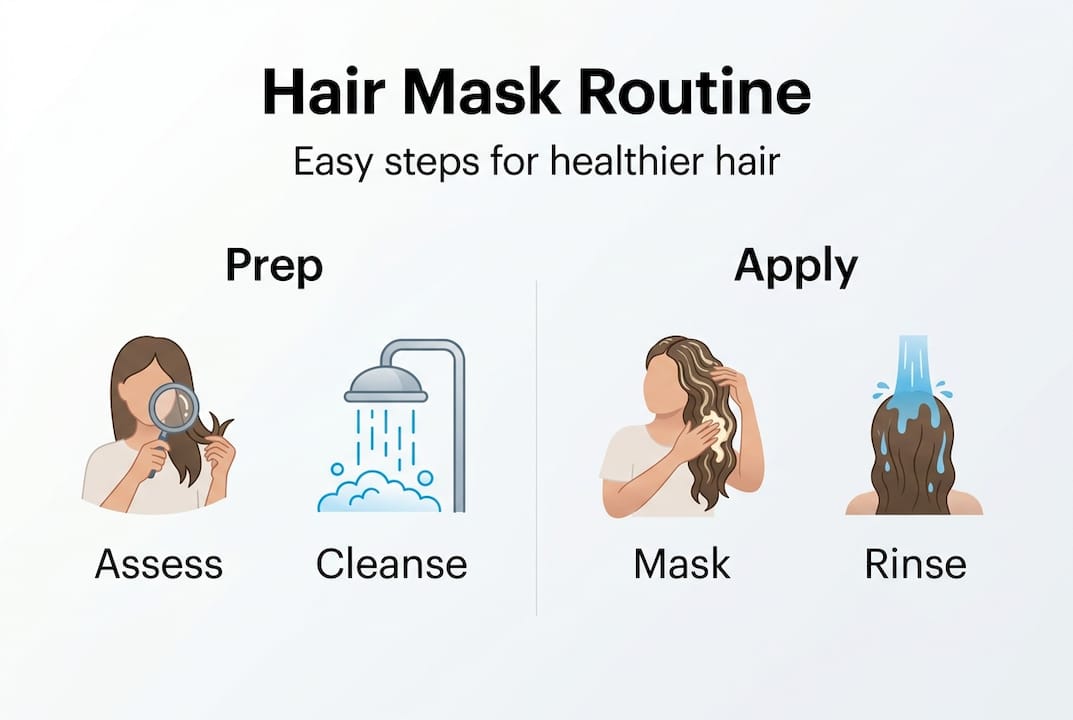
Step 4: Track your results. Take a photo of your hairline and crown every two weeks under the same lighting. This simple practice reveals change that is otherwise impossible to notice day to day.
Step 5: Mix strategies intentionally. Use a deep conditioning DIY mask for moisture maintenance, while reserving your evidence-backed clinical mask for growth and thickness goals. They are not in competition.
Pro Tip: Warm your mask gently (not hot) before applying and cover your hair with a shower cap for 20 to 30 minutes. Heat opens the cuticle and allows deeper ingredient absorption, which is especially important for clinical actives.
For anyone dealing with thinning, reviewing hair treatment options for thinning hair alongside a natural products guide gives you a much more complete picture of what tools are available to you.
Additional tips that support mask effectiveness:
- Apply to damp, not soaking wet, hair to avoid diluting the formula
- Section the hair so the mask reaches all areas of the scalp evenly
- Rinse with cool water to close the cuticle and lock in moisture after treatment
- Avoid applying heavy silicone-based products immediately after a clinical mask, as they can seal the scalp and reduce follicle access to oxygen
Building a long-term hair care routine
Hair masks deliver the best results when they are part of a consistent, adaptable routine, not a once-in-a-while effort when you notice a problem. Consistency is not just a nice idea here. Evidence consistently shows that sustained, evidence-based care yields better long-term outcomes for thickness and shedding control than high-intensity short-term treatment bursts.
Think of your routine in three time horizons:
- Weekly: Apply your chosen mask, adjust frequency based on scalp response
- Monthly: Review your photos and assess whether texture, density, or shedding has shifted
- Quarterly: Evaluate whether your routine needs adjusting as your hair needs change with seasons, stress levels, or age
Signs that you may need more than a mask:
- Visible scalp through hair that was not there six months ago
- Shedding consistently above 100 to 150 strands per day
- Patches of loss rather than diffuse thinning
- No improvement after eight to twelve weeks of consistent treatment
These signals point toward professional input, whether that means a dermatologist, a trichologist (a specialist in hair and scalp health), or an AI-driven assessment tool that can analyze your specific pattern before you invest in more products.
Pro Tip: Do not wait until hair loss is advanced before seeking help. Earlier intervention with proven growth methods gives you far more options and faster results than trying to reverse significant thinning.
Adapting your routine as your hair changes is also part of success. Postpartum hair loss, hormonal shifts, or new medications can all alter what your scalp needs. The guide to achieving thicker, longer hair covers how to adjust your mask and growth strategy through these transitions so you are never stuck with a routine that no longer fits.
The real secret to success with hair masks
Here is an uncomfortable truth that most hair content skips over: the number one reason people fail with hair masks is not the wrong ingredient. It is the wrong ingredient for their hair.
Everyone is chasing the same trending actives, yet results vary dramatically. One person adds rosemary oil to their routine and sees a noticeable improvement in density within two months. Another uses the exact same product for three months and sees nothing. This is not a failure of the ingredient. It is a failure of personalization.
Individual responses to hair mask components can vary significantly, depending on your genetic hair loss pattern, scalp microbiome, sebum production rate, and how far along hair follicle miniaturization has progressed. A product that targets DHT sensitivity will only work if DHT-driven thinning is actually your issue. A deeply hydrating mask will only help if moisture deficiency is the real problem.
The brands that push a single "miracle" ingredient are not lying, exactly. They're just selling one piece of a much more complex picture. The people who see the most dramatic results tend to do three things differently: they assess their hair type and loss pattern before buying anything, they track changes over time with photos or scans rather than memory, and they adjust based on data rather than hope.
This is where AI-driven personalization changes the game. When your product recommendations are based on an actual scan of your scalp and a pattern analysis of your specific hair loss type, you stop wasting money on treatments built for someone else's problem.
The goal is not to find the best hair mask in the world. It is to find the best hair mask for your scalp, your hair density, your loss pattern, and your lifestyle. That shift in thinking is where results start to happen.
Take the next step toward personalized hair care
You now have a clear picture of what separates a mask that feels nice from one that actually changes your hair. The next question is: what does your hair specifically need?
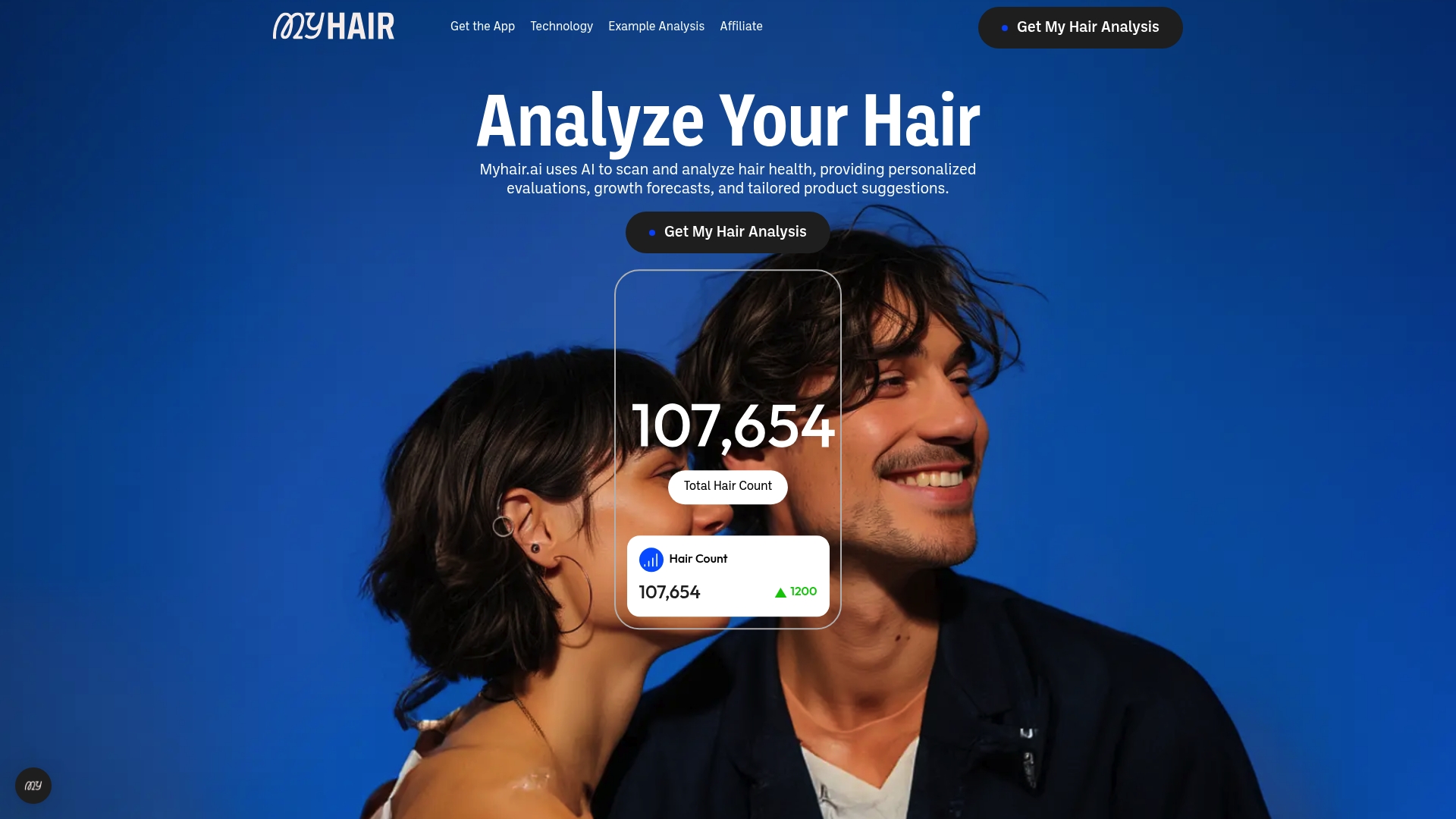
MyHair.ai uses advanced AI to analyze your hair health through a quick scan, identifying your loss pattern, scalp condition, and the specific treatments most likely to work for you. The platform's AI-powered analysis tracks your progress over time so you can see real change, not just feel it. If you are ready for a more guided, clinical approach with personalized product recommendations, you can start clinic onboarding and get matched with targeted solutions built around your unique hair profile. Stop guessing. Start growing.
Frequently asked questions
How often should I use a hair mask for thinning hair?
Most hair masks work well used one to two times weekly, but if you are targeting active shedding, up to three times per week with an evidence-based formula may produce faster results. Your scalp's oil production and sensitivity should guide the upper limit.
Are homemade hair masks effective for hair loss?
DIY masks improve moisture and surface texture but rarely address the root causes of hair loss at the follicular level. Clinical formulations with actives like Centella asiatica EVs with rIGF-1/rFGF-7 show significantly stronger outcomes for thickness and shedding reduction.
What ingredients should I look for in an effective hair mask?
Look for Centella asiatica EVs, rIGF-1, and rFGF-7 in clinically tested topical masks, as these have demonstrated measurable improvements in hair thickness, density, and reduction of sebum-related loss.
Can oral supplements help alongside hair masks?
Yes, oral Nutrafol nutraceuticals have been clinically shown to increase hair shaft diameter and reduce shedding and breakage, making them a strong complement to topical mask treatments.
When should I consider professional hair treatments?
If you have used evidence-based masks consistently for two to three months without visible improvement in density or reduction in shedding, it is time to consult a hair specialist or use an AI-based assessment to identify whether a clinical treatment plan is the right next step.
Recommended
- Achieve Thicker Hair Naturally: The Ultimate Guide to Home Remedies and Natural Treatments | MyHair
- Top hair products for thick hair: hydration, control, shine | MyHair
- Thickening of Hair Naturally: Proven Methods for 2025 | MyHair
- Natural Products for Hair Growth and Thickness: A Complete Guide | MyHair