
Did you know that almost 75 percent of people will experience some form of visible hair damage in their lives? The right hair oil routine can make a big difference, but many struggle to match products to their unique hair challenges. By understanding how to assess your hair and tailor oil treatments for specific needs, you can reverse damage and restore shine while avoiding costly mistakes.
Table of Contents
- Step 1: Assess Hair Damage and Type
- Step 2: Select Suitable Hair Oil for Damaged Hair
- Step 3: Prepare Hair and Scalp for Application
- Step 4: Apply Hair Oil Using Proper Techniques
- Step 5: Evaluate Results and Adjust Routine
Quick Summary
| Key Point | Explanation |
|---|---|
| 1. Assess hair damage type first | Understand specific damage signs like split ends and dryness for effective treatment selection. |
| 2. Choose the right hair oil | Match hair oil type to your hair structure and damage level for optimal restoration; consider coconut, argan, jojoba, or castor oil. |
| 3. Prepare hair and scalp properly | Clean hair thoroughly and detangle before oil application to enhance absorption and effectiveness. |
| 4. Apply oil using proper techniques | Section hair, warm oil, and massage from scalp to tips for even distribution and maximum benefit. |
| 5. Evaluate results diligently | Document physical changes in hair condition and adjust your routine based on observed improvements over time. |
Step 1: Assess Hair Damage and Type
Before applying any hair oil treatment, understanding your specific hair damage type becomes critical. According to a multinational study involving 19,461 individuals across nine countries, hair damage varies significantly based on multiple factors including age, gender, ethnicity, and environmental conditions.
To effectively assess your hair damage, start by performing a thorough visual and tactile examination. Look for key indicators such as split ends, excessive dryness, breakage, and overall hair texture changes. Researchers developed a systematic approach to grading hair damage by analyzing electron microscopic images, which helps identify the severity and type of damage.
Begin your assessment by examining your hair in good lighting. Gently run your fingers through your hair and observe these potential damage signs:
- Brittle texture with multiple breakage points
- Dull appearance lacking natural shine
Pro Tip: Use a white towel or light background to help identify hair breakage more accurately.
If you notice significant damage, consider using Understanding Hair Damage Types Guide for a more comprehensive assessment of your specific hair condition. This will help you select the most appropriate natural hair oil treatment for restoration.
Step 2: Select Suitable Hair Oil for Damaged Hair
Choosing the right hair oil for damaged hair requires understanding your specific hair structure and damage type. Research indicates that different hair fibers have unique characteristics that influence oil absorption and effectiveness. According to a scientific review, hair cross sectional shape directly impacts how hair responds to treatment products.
When selecting a hair oil, consider these key factors based on your hair type and damage level. Lipid replenishment becomes crucial for restoring hair health. As research from scientific studies suggests, conditioners and oils help rebuild the protective F-layer that gets stripped away during damage.
Look for natural oils that offer comprehensive restoration:
Here's a comparison of commonly used hair oils for different damage types:
| Hair Oil | Key Benefits | Ideal For |
|---|---|---|
| Coconut Oil | Deep moisture<br>Reduces protein loss | Dry or chemically-treated hair |
| Argan Oil | Smooths & protects<br>Adds shine | Frizzy or damaged hair |
| Jojoba Oil | Balances scalp oils<br>Lightweight | Oily scalp<br>Normal–fine hair |
| Castor Oil | Strengthens roots<br>Boosts thickness | Weak or thinning hair |
- Coconut oil for deep moisture penetration
- Argan oil for smoothing and protecting hair shaft
- Jojoba oil for balancing natural hair oils
- Castor oil for strengthening hair roots
Pro Tip: Match your oil selection to your specific hair texture and damage severity.
For a more comprehensive understanding of selecting the right hair care oils, check out our hair care oil selection guide. Understanding the nuanced approach to oil selection will help you restore your hair's natural health and vibrance.
The next step involves understanding how to properly apply these oils for maximum restoration and protection.
Step 3: Prepare Hair and Scalp for Application
Preparing your hair and scalp for oil application is a critical step in the restoration process. According to research assessing hair characteristics, proper preparation can significantly enhance the effectiveness of your hair treatment. A standard grading system for damaged hair provides insights into the most appropriate preparation techniques.
Start by thoroughly cleansing your hair to remove any buildup of products, dirt, or excess oils. This creates an optimal environment for oil absorption. Gently towel dry your hair until it is slightly damp not completely wet or bone dry. The moisture level is crucial for maximum oil penetration and absorption.
Follow these key preparation steps:
- Detangle hair carefully using a wide tooth comb
- Ensure scalp is clean and free from excess debris
- Check hair damage level to determine oil quantity
- Warm the oil slightly for better absorption
Pro Tip: Always perform a patch test with your chosen oil to check for any potential allergic reactions.
To gain deeper insights into maintaining optimal scalp health during your hair restoration journey, explore our guide on improving scalp health. Understanding the nuanced approach to scalp preparation will maximize your hair oil treatment results.
With your hair and scalp now prepared, you are ready to move on to the application technique that will help restore your hair's natural vitality.
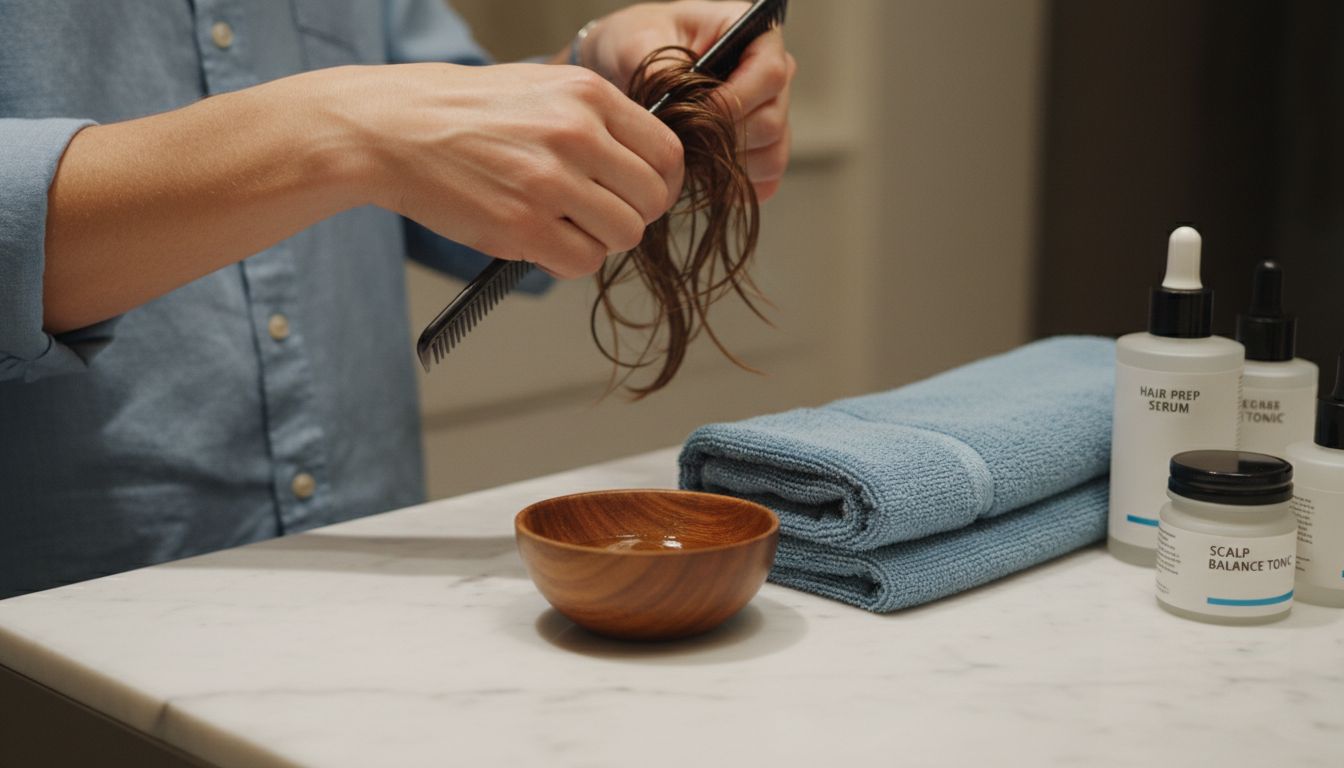
Step 4: Apply Hair Oil Using Proper Techniques
Applying hair oil requires precision and understanding of your unique hair fiber characteristics. According to research on hair properties, the technique you use directly impacts how effectively you can replenish the hair's protective lipid coating and prevent dryness.
Begin by sectioning your hair into manageable parts. This ensures even distribution and complete coverage of the oil. Using your fingertips, start massaging the oil from the scalp to the hair tips with gentle circular motions. Research emphasizes that understanding hair fiber properties is crucial for effective application techniques.
Follow these key application steps:
- Start with a small amount of oil
- Warm the oil between your palms before application
- Focus on massaging the scalp gently
- Distribute oil evenly through hair strands
- Pay extra attention to damaged or dry ends
Pro Tip: Use less oil for fine hair and more for thick or coarse hair textures.
To enhance your understanding of optimal hair oiling techniques, explore our hair oiling routine guide. Mastering these application techniques will help you maximize hair restoration and minimize potential damage.
After application, you will need to understand the best methods for leaving the oil in and washing it out effectively.
Step 5: Evaluate Results and Adjust Routine
Tracking your hair restoration progress requires systematic observation and understanding of your unique hair characteristics. A multinational study highlights the importance of personalized assessment in hair care, emphasizing that individual variations significantly impact treatment outcomes.
Begin by documenting your hair's condition before starting the oil treatment. Take clear photographs in consistent lighting to track changes objectively. According to the standard grading system for damaged hair, you will want to assess multiple factors including hair texture, breakage, shine, and overall strength.
Key evaluation criteria include:
- Reduced hair breakage
- Improved hair shine and softness
- Enhanced scalp health
- Visible reduction in split ends
- Overall hair strength and elasticity
Pro Tip: Take monthly progress photos to visually track your hair restoration journey.
To gain deeper insights into understanding your hair health transformation, explore our guide on tracking hair restoration progress. Consistent monitoring and willingness to adapt your routine will be crucial in achieving optimal results.
Remember that hair restoration is a gradual process. Be patient and attentive to your hair's changing needs, adjusting your approach as you observe improvements.
Take Control of Your Hair Health with Personalized Insights
Dealing with damaged hair can feel frustrating and overwhelming especially when you are trying to find the right natural oil treatment that truly works. The article outlined key challenges like identifying hair damage types and selecting suitable oils for deep restoration. You want proven solutions that match your unique hair texture and scalp condition instead of guesswork or generic advice. With personalized assessments, you can track your progress and adjust your routine confidently.

Unlock a new level of hair care by using AI-powered analysis to understand your hair health inside out. At MyHair.ai, we provide custom insights based on your hair scans helping you see detailed damage patterns and receive tailored product recommendations that fit your specific needs. Explore expert guides like the Understanding Hair Damage Types Guide and refine your care routine with strategies proven to boost shine, strength, and growth. Start your journey today and experience the power of data-driven hair restoration. Visit MyHair.ai now to get your personalized analysis and regain vibrant, healthy hair.
Frequently Asked Questions
How do I assess my hair damage before using hair oil?
To assess your hair damage, visually inspect it for signs such as split ends, dullness, and brittleness. Run your fingers through your hair in good lighting and note any areas that seem excessively dry or broken.
What type of hair oil should I choose for specific hair damage?
Select hair oil based on your hair type and damage severity. For example, use coconut oil for deep moisture in dry hair, and argan oil for adding shine to frizzy hair.
How should I prepare my hair and scalp for applying hair oil?
Cleanse your hair thoroughly to removed product buildup, then towel dry until slightly damp. This prepares your scalp for better oil absorption.
What are the best techniques for applying hair oil?
Section your hair into manageable parts and massage the oil gently from the scalp to the tips using circular motions. Focus on damaged areas and use less oil for fine hair to avoid weighing it down.
How can I effectively evaluate the results of my hair oil treatment?
Document your hair condition before beginning treatment and take monthly photos to track changes. Look for improvements in texture, shine, and strength to measure the effectiveness of your hair oil routine.
How long does it take to see results from using hair oil on damaged hair?
Expect to see noticeable improvements in your hair health within 30–60 days of consistent oil application. Be patient and adjust your routine based on how your hair responds over time.