
Dealing with hair loss at home often means wading through countless oil options and conflicting advice online. Natural oils can genuinely support hair growth when you select, prepare, and apply them correctly. This guide cuts through confusion to deliver clear, science-backed instructions and realistic expectations for using hair oils safely and effectively to promote healthier hair from your own home.
Table of Contents
- Introduction To Hair Oils And Their Benefits
- Key Effective Oils And Their Benefits
- Choosing The Right Hair Oil For Your Hair Type
- How To Prepare Oils Safely For Home Use
- How To Apply Hair Oils Effectively
- Common Mistakes And Safety Warnings
- Expected Results And Timelines
- Troubleshooting And Tips For Success
- Enhance Your Hair Care With Myhair Ai-Powered Analysis
- FAQ
Key takeaways
| Point | Details |
|---|---|
| Clinical evidence supports specific oils | Rosemary and peppermint oils show comparable effectiveness to 2% minoxidil in clinical trials for stimulating hair growth. |
| Proper dilution prevents irritation | Essential oils must be diluted to approximately 2% concentration in carrier oils to avoid scalp damage and hair loss. |
| Consistency drives results | Visible hair growth typically appears after 3 to 6 months of regular use, requiring patience and commitment. |
| Application technique matters | Warming oils, massaging the scalp for 5 to 10 minutes, and applying three times weekly maximizes follicle stimulation and absorption. |
| Overuse causes problems | Excessive or undiluted application leads to clogged follicles, scalp irritation, and counterproductive results. |
Introduction to hair oils and their benefits
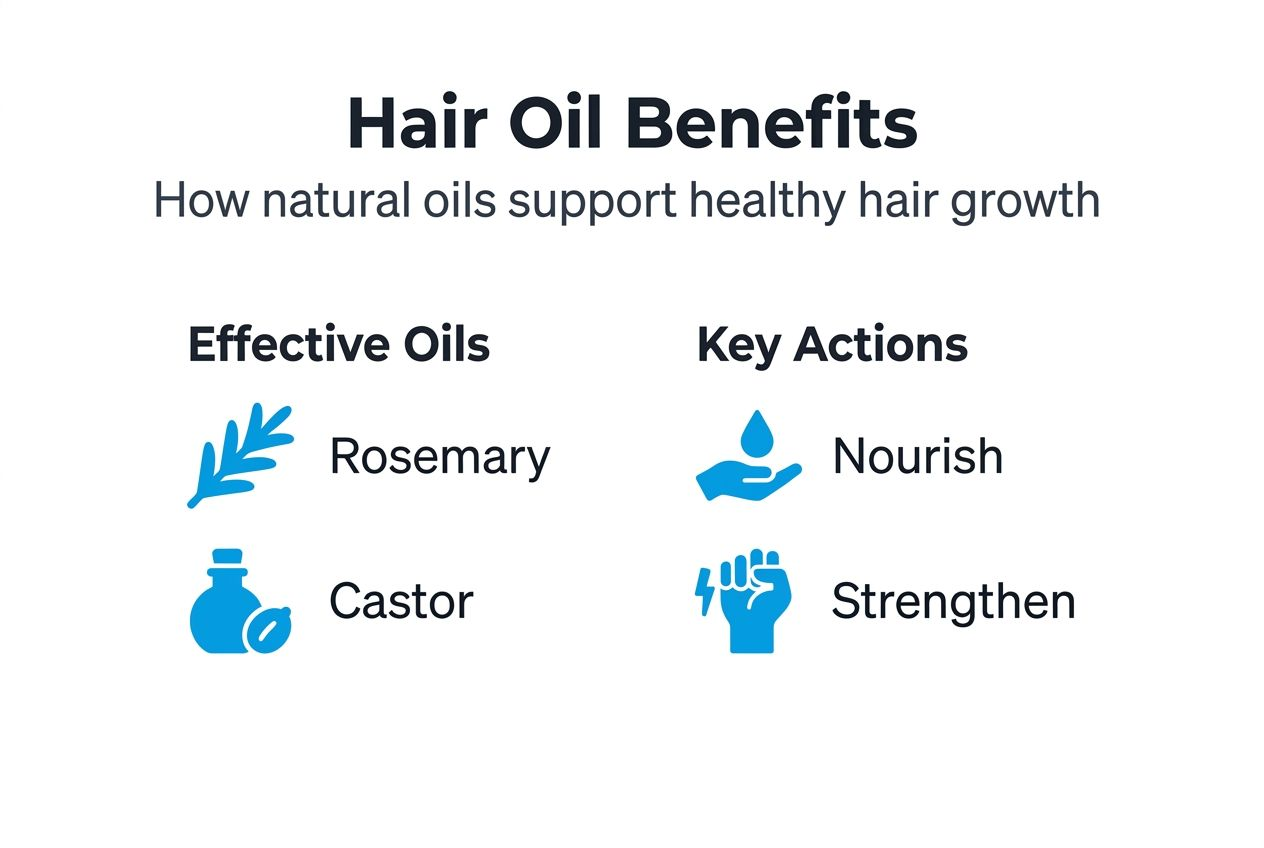
Natural oils deliver essential nutrients directly to hair follicles and the scalp, creating an optimal environment for healthy hair growth. These oils improve scalp circulation, reduce inflammation, and strengthen hair shafts by minimizing protein loss and breakage. Research shows certain oils perform as well as pharmaceutical treatments in promoting hair regrowth.
Clinical studies demonstrate that natural ingredients for hair growth can match or exceed conventional treatments without harsh side effects. Oils nourish follicles with fatty acids, vitamins, and antioxidants that support the hair growth cycle. Regular use strengthens existing hair while stimulating dormant follicles to enter active growth phases.
Key benefits of incorporating natural oils into your hair care routine include:
- Enhanced scalp circulation that delivers oxygen and nutrients to follicles
- Reduced inflammation and microbial growth that can impede hair growth
- Strengthened hair shafts that resist breakage and splitting
- Improved moisture retention in both scalp and hair strands
- Protection against environmental damage and styling stress
Understanding these mechanisms helps you select and apply oils strategically for maximum benefit. The right oils address your specific hair concerns while supporting overall scalp health for sustained growth.
Key effective oils and their benefits
Four oils stand out with strong scientific backing for stimulating hair growth and improving scalp health. Each works through distinct biological pathways to activate follicles and strengthen hair.
Rosemary oil matches 2% minoxidil effectiveness in clinical trials conducted over six months, increasing hair count with significantly less scalp irritation. It improves cellular metabolism and dilates blood vessels to enhance nutrient delivery to follicles.
Castor oil contains high concentrations of ricinoleic acid, which boosts scalp circulation and provides antimicrobial protection against bacteria and fungi that disrupt healthy hair growth. Its thick consistency makes it ideal for targeting specific thinning areas.

Peppermint oil stimulates increased follicle depth and accelerates the active growth phase faster than minoxidil in animal studies. The cooling sensation indicates improved blood flow to the scalp.
Coconut oil uniquely reduces protein loss by penetrating hair shafts, strengthening strands from within when used as a pre-wash treatment. It prevents damage during washing and styling.
| Oil Type | Primary Benefit | Best Used For | Application Frequency |
|---|---|---|---|
| Rosemary | Follicle activation comparable to minoxidil | Overall thinning and regrowth | 3 times weekly |
| Castor | Circulation boost and antimicrobial protection | Targeted thinning spots | 2 to 3 times weekly |
| Peppermint | Accelerated growth phase entry | Sluggish growth and dormant follicles | 3 times weekly |
| Coconut | Protein retention and strand strengthening | Breakage prevention and conditioning | Pre-wash as needed |
Combining these natural oils promote hair growth through complementary mechanisms. You can create custom blends or rotate oils to address multiple hair concerns simultaneously. Check top hair growth oil recommendations for specific product suggestions and blending ratios.
Choosing the right hair oil for your hair type
Matching oil weight and composition to your specific hair texture ensures optimal absorption and prevents common problems like greasiness or buildup. Hair type determines how well your strands and scalp process different oils.
Fine or thin hair benefits from lighter oils like argan, grapeseed, or jojoba that absorb quickly without coating strands heavily. These oils provide nutrients and moisture while maintaining volume and movement. Heavier oils weigh down fine hair and make it appear limp or greasy.
Coarse, curly, or thick hair thrives with richer oils like castor, coconut, or olive oil that penetrate deeply and provide lasting moisture. These hair types need more intensive conditioning to combat dryness and frizz. The denser structure absorbs heavier oils effectively without becoming oversaturated.
Your scalp condition matters as much as hair texture when selecting oils:
- Oily scalps should stick to lighter oils applied mainly to hair lengths, avoiding roots
- Dry or flaky scalps benefit from slightly heavier oils with anti-inflammatory properties
- Sensitive scalps require gentle oils like jojoba or sweet almond with minimal irritation risk
- Combination scalps may need different oils for roots versus lengths
Pro Tip: Start with small amounts of one oil for two weeks before adding others to identify what works best for your unique hair and scalp combination.
Testing different oils helps you discover your ideal match. Explore the comprehensive hair care oil guide for detailed profiles of oils suited to various hair types and concerns. Avoid applying heavy oils directly to roots if you have fine hair or an oily scalp, as this clogs follicles and creates buildup.
How to prepare oils safely for home use
Proper dilution transforms potent essential oils into safe, effective hair treatments. Undiluted essential oils cause severe irritation, inflammation, and potential hair loss.
Follow these steps to create safe oil blends at home:
- Select a carrier oil like jojoba, sweet almond, or coconut oil as your base
- Dilute essential oils to approximately 2% concentration, which equals about 9 drops of essential oil per tablespoon of carrier oil
- Mix thoroughly in a clean, dark glass bottle to preserve oil integrity
- Label your blend with ingredients and creation date for tracking
- Store in a cool, dark place away from direct sunlight and heat
Always perform a patch test before full application. Apply a small amount of your diluted blend to your inner forearm and wait 24 hours. Redness, itching, or irritation indicates sensitivity, and you should not use that blend on your scalp.
Pro Tip: Gently warm your oil blend by placing the bottle in warm water for a few minutes before application to improve scalp absorption and enhance the massage experience.
Never apply undiluted essential oils directly to your scalp or hair. Even natural ingredients for hair growth require proper preparation to avoid adverse reactions. Use clean utensils and containers to prevent contamination that reduces shelf life and effectiveness.
How to apply hair oils effectively
Correct application technique maximizes oil benefits and stimulates follicle activity for optimal hair growth. Strategic timing and massage methods enhance absorption.
Follow this proven application process:
- Warm your prepared oil blend gently to improve penetration into follicles
- Part clean, slightly damp hair into sections for thorough scalp access
- Apply oil directly to the scalp using fingertips or a dropper, focusing on thinning areas
- Massage the scalp for 5 to 10 minutes using circular motions with moderate pressure
- Distribute remaining oil through hair lengths if desired for conditioning
- Leave oil on for at least 30 minutes, or cover hair and leave overnight for deeper treatment
- Wash thoroughly with a gentle shampoo, possibly requiring two washes for complete removal
Scalp massage during application provides multiple benefits beyond simple oil distribution:
- Increases blood circulation to deliver more oxygen and nutrients to follicles
- Stimulates nerve endings that activate follicle growth signals
- Helps oil penetrate into follicle openings more effectively
- Reduces stress and tension that can contribute to hair loss
- Spreads sebum naturally along hair shafts for added protection
Apply oil treatments three times weekly for consistent results. Daily application often causes buildup and may irritate the scalp. Space treatments to allow your scalp to recover and absorb nutrients fully. Learn more about creating an effective hair oiling routine boost growth schedule.
Timing considerations matter for convenience and effectiveness. Evening applications allow overnight absorption, while morning treatments work well if you can wait 30 to 60 minutes before washing. Discover additional application strategies in hair oil for natural hair growth strength techniques.
Common mistakes and safety warnings
Avoiding frequent errors protects your scalp and hair while ensuring oils deliver benefits rather than damage. Many users unknowingly sabotage their results through misuse.
Undiluted essential oils or excessive application causes scalp irritation, itching, redness, and potentially increased hair shedding due to inflammation. Always dilute properly and respect recommended frequencies.
Heavy oil overuse clogs follicles and creates greasy buildup that attracts dirt and prevents the scalp from breathing properly. This counteracts growth efforts and can lead to breakage from weakened roots.
Watch for these warning signs requiring immediate action:
- Persistent redness, burning, or itching after application
- Increased hair shedding or thinning in treated areas
- Scalp bumps, rash, or flaking that worsens with continued use
- Severe greasiness that does not wash out completely
- Headaches or dizziness from strong scents indicating too much essential oil
Limit oil treatments to approximately three times weekly to maintain scalp health. More frequent application does not accelerate results and often causes problems. Stop using any oil immediately if you experience adverse reactions, and consult a dermatologist if symptoms persist.
Proper dilution and moderation are essential to prevent scalp inflammation and hair loss.
Respect your body's signals and adjust your routine accordingly. Review best oils for hair growth and thickness for guidance on safe usage patterns and concentration levels.
Expected results and timelines
Realistic expectations prevent premature discouragement and support consistent application necessary for success. Hair growth occurs slowly even under optimal conditions.
Visible improvements typically require 3 to 6 months of consistent oil use before you notice significant changes in hair density or regrowth. Early benefits often appear in improved scalp health, reduced flaking, and stronger existing hair before new growth becomes visible.
| Timeline | Expected Changes | What to Look For |
|---|---|---|
| Weeks 1 to 4 | Improved scalp condition | Less flaking, reduced irritation, healthier feel |
| Weeks 4 to 8 | Stronger existing hair | Less breakage, improved texture, better manageability |
| Months 3 to 4 | Early new growth | Fine baby hairs along hairline and thinning areas |
| Months 5 to 6 | Visible density increase | Noticeable thickness, more coverage in sparse zones |
Consistency determines success more than any other factor. Skipping treatments or stopping prematurely prevents you from reaching the growth phase where results become obvious. Your follicles need sustained nutritional support and stimulation.
Maintenance tips to maximize your results:
- Track progress with monthly photos in consistent lighting to see gradual changes
- Document which oils and frequencies work best in a simple journal
- Combine oil treatments with a healthy diet rich in protein and vitamins
- Manage stress through sleep, exercise, and relaxation practices
- Protect hair from heat styling and chemical treatments during your growth journey
Explore homemade hair oil recipes and results for proven formulations and realistic before and after timelines. Check fast hair growth oil top picks for products with strong user testimonials. Remember that natural ingredients for hair growth work gradually but deliver sustainable improvements.
Troubleshooting and tips for success
Common challenges have straightforward solutions when you understand the underlying causes and adjust your approach accordingly.
If your scalp feels excessively greasy after treatments, reduce the amount of oil you apply or switch to a lighter oil better suited to your hair type. You may be using too much product or choosing oils too heavy for your scalp's natural sebum production.
Dry or flaky scalp despite regular oiling might benefit from slightly heavier oils like castor or coconut applied more frequently, but increase gradually to avoid opposite problems. Ensure you massage thoroughly to distribute oil evenly across all scalp areas.
Adjustment strategies for optimal results:
- Reduce application frequency if you notice any irritation or excessive oiliness
- Increase carrier oil ratio if essential oil scent seems overwhelming or causes sensitivity
- Apply oil to damp hair for easier distribution and better absorption
- Use less oil on roots and more on lengths if you have combination hair needs
- Wash more thoroughly, potentially with two shampoo rounds, if oil residue remains
Pro Tip: Adjust your oil blends seasonally, using lighter formulations in humid summer months and richer blends during dry winter weather to match changing scalp needs.
Document your progress over several months rather than evaluating weekly. Hair growth happens slowly, and premature judgment leads many people to abandon effective routines before results appear. Patience combined with consistency creates the conditions for success.
Always perform patch tests when trying new oils or increasing essential oil concentrations. Your skin sensitivity can change over time, and what worked previously might cause reactions later. Prevention through testing beats dealing with scalp problems after they develop.
Enhance your hair care with MyHair AI-powered analysis
While natural oils provide excellent foundational support for hair growth, understanding your specific hair condition helps you optimize your approach for faster, more targeted results.
MyHair offers AI-powered hair analysis tools that precisely assess your scalp health, hair density, and individual growth patterns. The advanced scanner technology identifies areas needing focused attention and tracks improvements as your oil routine takes effect.

Personalized recommendations complement your natural oil treatments by suggesting specific products and techniques matched to your unique hair profile. The hair analysis onboarding process takes minutes and provides actionable insights immediately. Track your hair score analysis over time to maintain motivation and adjust your care routine as your hair responds to treatment. Combining traditional natural remedies with modern technology creates the most effective path to healthier, fuller hair.
FAQ
How often should I apply hair oil for best growth?
Apply hair oil approximately three times per week for optimal growth stimulation without causing scalp irritation or buildup. This frequency provides consistent follicle nourishment while allowing recovery time between treatments. Daily application often leads to clogged pores and greasiness that counteract benefits.
Can I use undiluted essential oils on my scalp?
No, you should never apply undiluted essential oils directly to your scalp as they cause severe irritation, burning, redness, and potential hair loss. Always dilute essential oils to around 2% concentration using carrier oils like jojoba or coconut. Proper dilution maintains effectiveness while preventing adverse reactions.
How long does it take to see visible hair growth results?
Consistent oil application for 3 to 6 months is typically necessary before visible hair growth becomes noticeable in density and coverage. Initial improvements usually appear in scalp health and hair strength within the first month. Patience and regular treatment are essential for achieving meaningful results.
Which hair oil is best for fine hair?
Lighter oils like argan, grapeseed, or jojoba work best for fine hair because they absorb quickly without weighing down strands or creating greasiness. These oils deliver essential nutrients and moisture while preserving volume and natural movement. Avoid heavy oils like castor or coconut on fine hair roots.