TL;DR:
- Matching your scalp goals with the right serum and comb improves hair health and styling results. Myhair's AI scan personalizes these pairings based on your scalp condition, reducing mispairing issues. Proper technique and routine consistency amplify the effectiveness of these targeted tools and formulas.
The most reliable approach to pairing hair serums and combs comes down to matching your scalp goal to the right tool and formula. For personalized matching, Myhair's AI scan identifies your specific scalp condition and recommends the right duo. For a ritual-focused routine, a scalp serum with botanical oils paired with a jade or kansa massage comb delivers circulation benefits and shine. For styling and frizz control, a silicone-free smoothing serum plus a wide-tooth detangling comb is the practical, everyday pick.
Quick picks:
- Myhair personalized recommendation — best for mixed concerns, thinning, or sensitive scalps; uses AI-driven matching to avoid mispairing serum type with tool
- Ginger Chi Jade Comb + Ginger Rosemary Hair & Scalp Oil — best for scalp stimulation and relaxation rituals; botanical actives, stone massage tool
- Living Proof No Frizz Smooth Styling Serum + wide-tooth comb — best for coarse or thick hair; frizz reduction with practical detangling
- Oribe Hair Alchemy Fortifying Treatment Serum — best for breakage-prone lengths; bond-building actives and heat protection
All products listed are available in the U.S. For a tailored serum and tool pairing based on your scan, Myhair offers personalized recommendations at myhair.ai/scanner-camera.
Table of Contents
- Which hair serums and combs work best together?
- How do you use a hair serum with a scalp-stimulating comb?
- How do you choose the right serum and comb pair?
- What safety and cleaning steps do scalp combs need?
- When does personalized analysis actually improve your results?
- Key Takeaways
- The case for pairing serums with scalp combs is stronger than most routines suggest
- Myhair takes the guesswork out of serum and comb pairing
- Useful sources
- FAQ
Which hair serums and combs work best together?
| Product | Best for | Serum actives / benefits | Comb/tool type | How to use | U.S. availability |
|---|---|---|---|---|---|
| Myhair | Mixed concerns, thinning, sensitive scalp | AI-matched actives based on scan results | Recommended per scan output | Apply per personalized plan; tracked over time | myhair.ai |
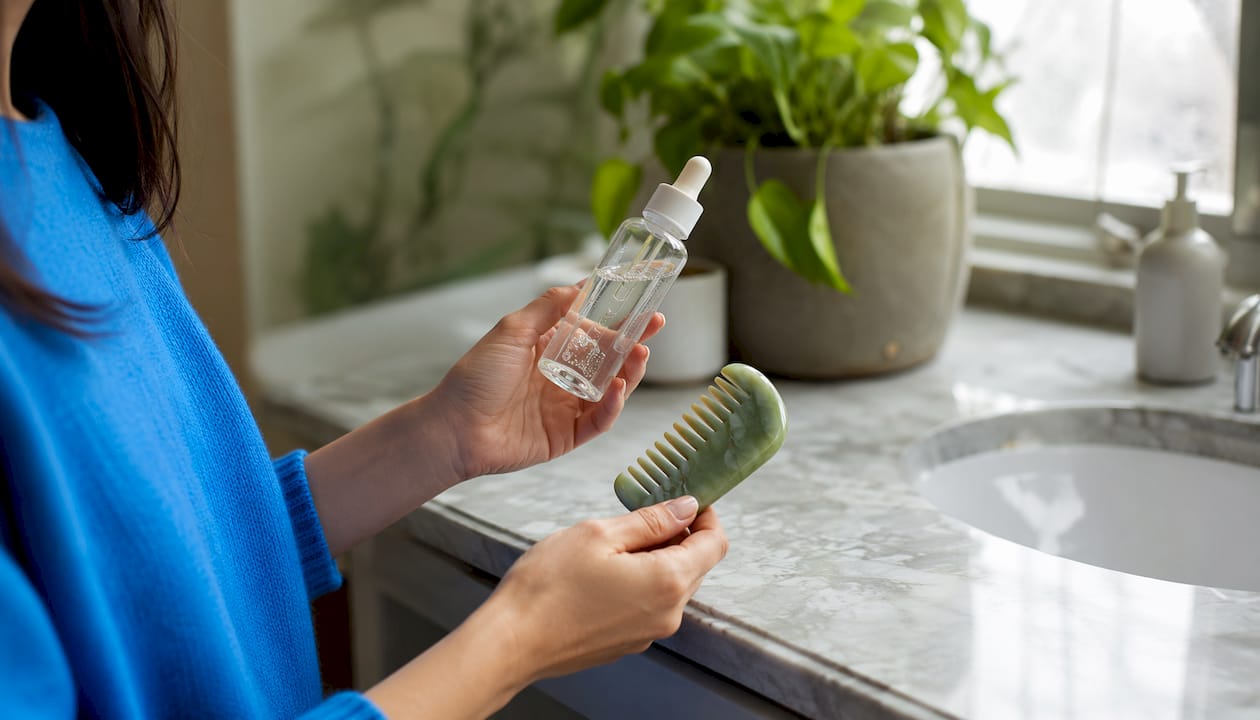
| GingerChi Jade Comb + Penetrating Hair Shine Serum | Scalp massage ritual, cosmetic shine | Botanical oils; scalp rejuvenation | Jade stone massage comb | Gentle circular massage; avoid broken skin | gingerchi.com |
| Ginger Chi Jade Comb + Ginger Rosemary Hair & Scalp Oil | Scalp therapy, circulation support | Ginger, rosemary; stimulating botanicals | Jade stone comb | Pre-wash scalp application; circular strokes | gingerchi.com |
| Oribe Hair Alchemy Fortifying Treatment Serum | Breakage prevention, strengthening lengths | Fortifying actives, heat protection to high temps | Wide-tooth or paddle comb | Mid-lengths to ends post-wash; warm in palms | oribe.com, Sephora |
| Living Proof No Frizz Smooth Styling Serum | Anti-frizz, coarse/thick hair styling | Silicone-free smoothing polymers; up to 75% frizz reduction (per brand claim) | Wide-tooth detangling comb | Apply to damp hair; comb through before blow-drying | livingproof.com, Sephora |
A few things worth knowing before you buy:
- Ginger Chi sells the jade comb and scalp oil as a kit, which is the better value entry point for a scalp therapy duo.
- Oribe and Living Proof are length-focused serums. Neither is designed for scalp application, so pairing them with a scalp massager misses the point.
- Myhair is the only option here that matches both the serum type and the tool to your actual scalp data, which matters most when you have thinning, chronic dryness, or conflicting concerns.
Stat to know: Users commonly mispair smoothing serums with scalp-targeted devices. Scalp serums are formulated for absorption at the root with different actives than length serums, which rely on polymers and silicones to coat the fiber.
How do you use a hair serum with a scalp-stimulating comb?
Start with detangling, then apply serum to the target zone, then use the comb. The order matters because combing through tangled hair after serum application causes breakage and uneven product distribution. For scalp serums, apply before the comb; for length serums, apply after detangling and use a wide-tooth comb to distribute evenly.
Pre-wash scalp serum routine:
- Detangle dry hair gently with a wide-tooth comb.
- Section hair to expose the scalp.
- Apply a few drops of scalp serum or oil directly to the scalp.
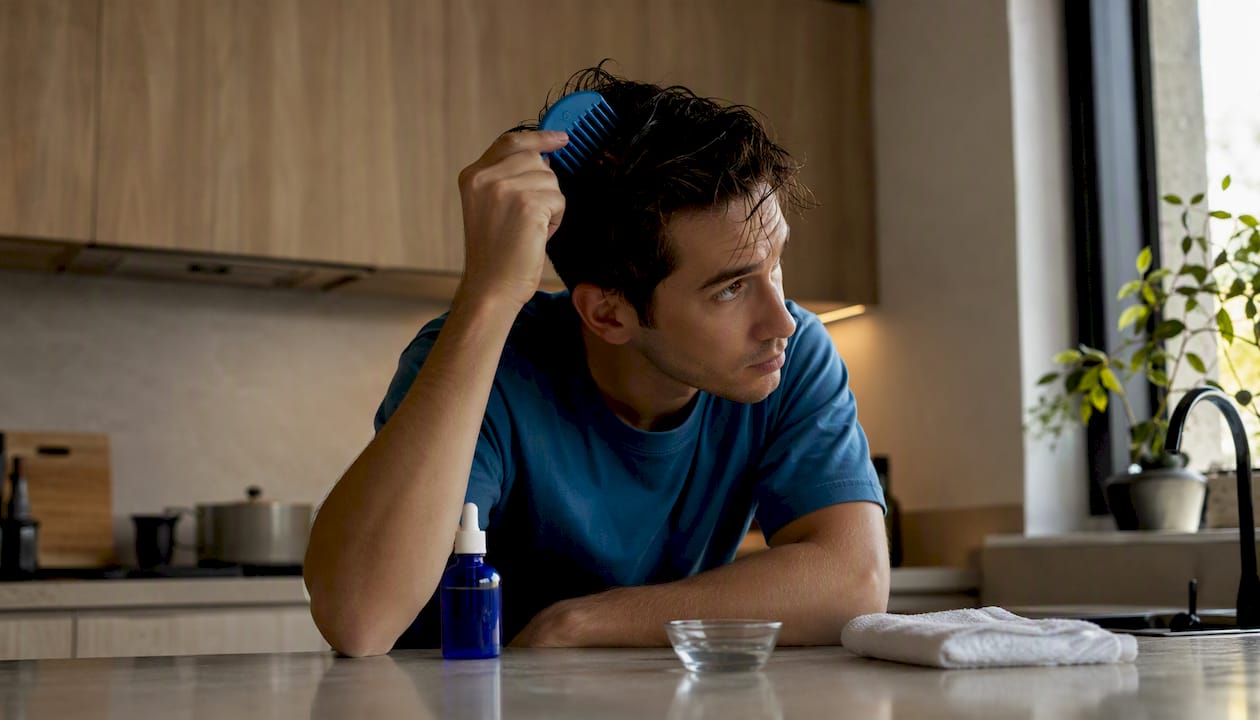
- Use a jade, kansa, or silicone massager in slow circular motions, starting at the nape and working toward the crown.
- Leave on for 15–30 minutes, then shampoo as normal.
Post-wash length serum routine:
- Towel-dry hair to damp (not dripping wet).
- Warm a small amount of serum between your palms.
- Apply from mid-lengths to ends; avoid the roots for most length serums.
- Detangle with a wide-tooth comb, working from ends upward.
- Style as usual.
Pro Tip: For coarse or thick hair, a wide-tooth comb post-application distributes serum more evenly than fingers alone and smooths the cuticle without excessive pulling.
Safety callouts:
- Never use a scalp massage tool on broken, inflamed, or infected skin. Jade and kansa combs can worsen irritation or spread bacteria across an already-compromised scalp.
- Stop immediately if you feel sharp pain or notice increased redness after a session.
- If you have a diagnosed scalp condition (psoriasis, seborrheic dermatitis, active folliculitis), consult a dermatologist before adding any massage tool to your routine.
On tech-enabled combs: LED and nano-mist delivery combs require thin, water-based serums. Heavy oils or viscous formulas can clog internal mechanisms and damage the device. Check the manufacturer's viscosity guidance before filling any built-in reservoir.
How do you choose the right serum and comb pair?
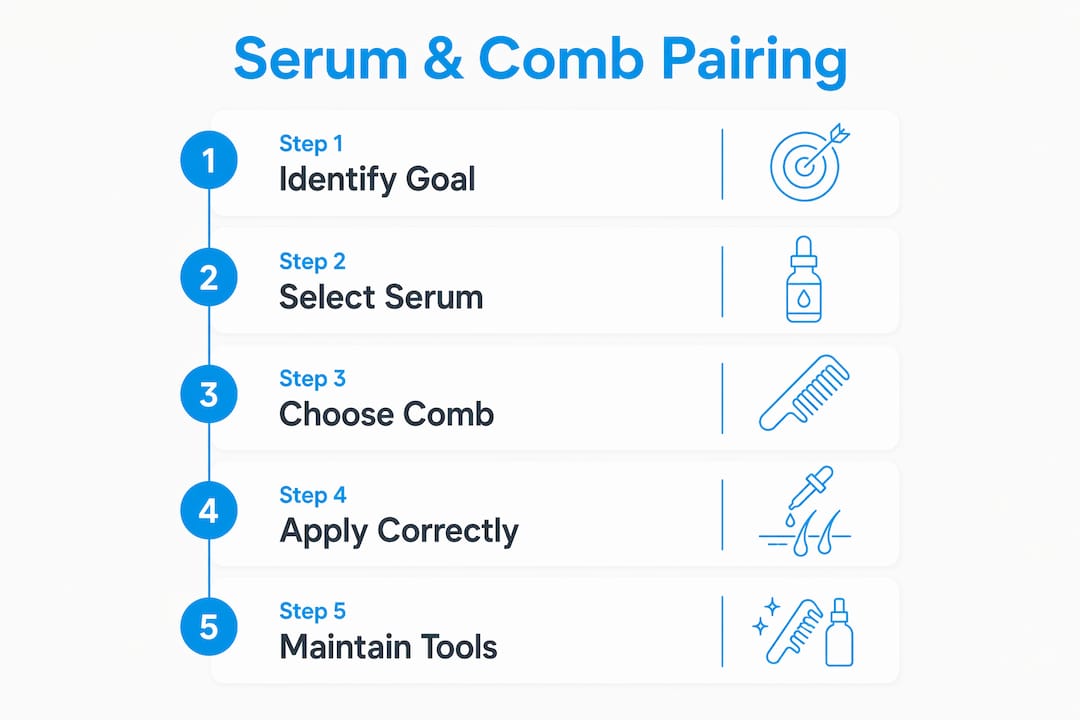
The right pairing depends on where you want results: scalp health, length repair, or frizz control. These are different goals with different actives and different tools.
Active ingredient checklist:
- Bond builders (e.g., maleic acid, bis-aminopropyl diglycol dimaleate): repair internal fiber damage; best for chemically treated or heat-damaged hair
- Peptides: support scalp health and hair resilience; look for these in scalp-targeted formulas
- Silicones (dimethicone, cyclomethicone): coat and smooth the fiber; good for frizz and shine, not for scalp application
- Lightweight botanical oils (rosemary, ginger, argan): scalp stimulation and nourishment; pair with massage combs
- Conditioning polymers: temporarily seal split ends; serums cannot biologically repair split ends, only camouflage them until the next trim
Hair-type and goal map:
- Anti-frizz, coarse hair: silicone-free smoothing serum + wide-tooth detangling comb (Living Proof is a strong fit)
- Scalp stimulation, circulation: lightweight botanical oil serum + jade or kansa massage comb
- Thinning or mixed concerns: personalized AI-matched serum + tool via Myhair
- Breakage prevention, lengths: bond-building or fortifying serum + paddle or wide-tooth comb (Oribe fits here)
- Low porosity hair: water-based, humectant-rich serum (aloe, glycerin); apply to damp hair for better absorption
Value and price:
Kits like the Ginger Chi duo offer better entry-point value than buying a stone comb and a separate scalp oil individually. Premium serums like Oribe are worth the price when breakage is a real, ongoing problem. For a $20–$30 budget, a drugstore-level lightweight serum paired with a wide-tooth comb handles everyday detangling and basic frizz control adequately. Spending more makes sense when the concern is specific: thinning, chronic scalp issues, or heat-damaged lengths.
Red flags to watch for:
- No ingredient list, or a list buried behind marketing copy
- Vague claims like "stimulates growth" with no named actives
- Heavy oils (coconut, castor) labeled for scalp use on fine or low-porosity hair — they tend to build up and block absorption
- Scalp massage tools sold with no usage or pressure guidance
For readers who want natural hair care products with transparent ingredient lists, checking for botanical actives alongside a clear application method is the baseline filter.
What safety and cleaning steps do scalp combs need?
Scalp tools sit directly against skin and collect oil, product residue, and dead cells. Skipping cleaning is the fastest way to transfer bacteria back to the scalp you are trying to help.
Immediate safety rules:
- Avoid all scalp tools on broken, irritated, or infected skin. Jade, kansa, and silicone massagers can all worsen inflammation on a compromised scalp.
- Use gentle pressure only. Scalp tools are massage devices, not exfoliators. Aggressive scrubbing causes microtears.
- Stop if you feel pain or notice redness spreading beyond the massage area.
Cleaning routine by tool type:
- Stone combs (jade, kansa): rinse under warm water after each use; wipe with a soft cloth. Once a week, soak briefly in diluted mild soap, rinse thoroughly, and air-dry flat. Avoid prolonged soaking, which can weaken adhesive in composite tools.
- Silicone massagers: wash with gentle soap and warm water after every session; silicone is non-porous and dries quickly.
- Tech combs (LED, nano): wipe bristles with a damp cloth; never submerge the device. Follow the manufacturer's cleaning instructions exactly. Remove any serum residue from the reservoir after each use to prevent clogging.
Pro Tip: Store stone combs in a dry pouch away from hard surfaces. Jade and kansa are dense but can chip if dropped on tile. A chip creates a rough edge that can snag and break hair.
Device-specific warnings:
- Do not use oil-heavy serums in nano or LED comb reservoirs. Thick formulas clog delivery tubes and can damage internal components.
- Avoid exposing stone combs to extreme heat (leaving them near a styling tool or in direct sunlight for extended periods can cause micro-fractures).
Replacement cues: visible chips on stone combs, worn or splayed bristles on silicone tools, or persistent residue that will not clean off. When in doubt, replace rather than risk scalp irritation from a degraded surface.
When does personalized analysis actually improve your results?
For most people with a single, clear hair goal, a well-chosen off-the-shelf duo works fine. Personalization matters most when the picture is complicated: thinning alongside scalp sensitivity, mixed porosity, or a history of products that made things worse rather than better.
Scenarios where Myhair's AI scan adds real value:
- You have tried multiple serums and none have worked consistently
- You are dealing with thinning and are unsure whether the problem is scalp-level or fiber-level
- Your scalp and lengths have different needs (oily roots, dry ends)
- You want to track whether a routine is actually producing change over time
Myhair.ai uses AI technology to analyze hair health from uploaded scans, offering detailed assessments of scalp condition and hair patterns. The platform provides tailored product recommendations based on those findings, not a generic quiz. Users can track changes over time, which is the part most off-the-shelf kits cannot offer. The interface is designed to be accessible without a clinical background, and the app makes scan uploads straightforward.
For readers managing thinning or density concerns, Myhair's hair products for thinning hair resource offers additional context on what to look for in a targeted routine.
Key Takeaways
Matching your serum to your scalp goal and your comb to your serum type is the single most important decision in building a serum and comb routine that actually works.
| Point | Details |
|---|---|
| Match tool to goal | Scalp massage combs (jade, kansa) pair with scalp serums; wide-tooth combs pair with length or styling serums. |
| Serums don't repair split ends | Bond builders and polymers camouflage damage temporarily; only trimming removes split ends. |
| Safety first | Never use any scalp massage tool on broken, irritated, or infected skin. |
| Clean tools after every use | Stone and silicone combs need regular washing to avoid transferring bacteria back to the scalp. |
| Myhair for complex concerns | Myhair's AI scan matches both serum type and tool to your actual scalp data, reducing guesswork for thinning or mixed concerns. |
The case for pairing serums with scalp combs is stronger than most routines suggest
Most hair care advice treats serums and combs as separate categories. Buy a serum for shine, buy a comb for detangling, use them whenever. The problem with that approach is that it ignores what actually drives results: the combination of mechanical stimulation and targeted actives applied to the right zone at the right time.
Pairing a scalp-focused serum with a gentle massage comb works because the mechanical action of the comb encourages circulation while the serum's actives are present at the follicle. That timing is not incidental. Applying a botanical oil serum and then massaging with a jade comb 20 minutes before washing is a fundamentally different intervention than applying the same serum and doing nothing. The comb is not decorative.
The part most guides miss is the mismatch problem. A silicone-heavy smoothing serum applied to the scalp before a massage comb session is not just ineffective for scalp health. It can clog follicles and leave residue that a massage tool then works further into the skin. Scalp serums and length serums are different products with different jobs. Using the wrong one in the wrong zone is one of the most common and least-discussed mistakes in hair care routines.
The other underrated factor is consistency. A jade comb used twice and abandoned does nothing. A routine that takes five minutes, uses the right serum for your scalp type, and runs three times a week for eight weeks gives you something to actually evaluate.
Myhair takes the guesswork out of serum and comb pairing
Choosing between a scalp therapy duo, a strengthening serum, and a frizz-control kit is straightforward when your concern is clear. When it is not, the wrong pairing wastes money and time.
Myhair's AI-powered scanner analyzes your scalp condition and hair patterns from a simple upload, then recommends the specific serum type and tool combination that fits your actual data. It is not a quiz with generic outputs. It tracks change over time so you can see whether a routine is working. For anyone dealing with thinning, sensitivity, or mixed scalp concerns, that level of specificity is worth more than any pre-packaged kit.
Start your personalized hair analysis at myhair.ai/scanner-camera or explore the full onboarding process at myhair.ai/app-onboarding.
Useful sources
- GingerChi Jade Comb & Penetrating Hair Shine Serum — Product page; includes ingredient list, usage instructions, and scalp massage guidance. Product page.
- Living Proof No Frizz Smooth Styling Serum — Brand page with performance claims, application tips for thick/coarse hair. Product page.
- Oribe Hair Alchemy Fortifying Treatment Serum — Product page listing fortifying actives, elasticity claims, and heat protection. Product page.
- Allure: Best Hair Serums — Editorial roundup with expert-tested serum recommendations by concern type. Editorial/expert resource.
- British Vogue: Split End Serums — Explainer on what serums can and cannot do; covers bond-building technology and polymer camouflage. Editorial/expert resource.
- Redken: How to Use a Hair Serum — Practical application guide covering timing, root avoidance, and detangling order. Brand editorial resource.
- LioRae Nano Comb — Manufacturer notes on serum viscosity compatibility for tech-enabled combs. Technical device notes.
- RANAVAT Kansa Hair Comb — Product page for a kansa metal massage comb with Ayurvedic background and pairing guidance. Product page.
- Myhair AI Scanner — Primary conversion page for personalized hair and scalp analysis. Brand/service page.
FAQ
Can you comb your hair after applying hair serum?
Yes. For length serums, combing after application helps distribute the product evenly and smooths the cuticle. Use a wide-tooth comb and work from ends upward to avoid breakage.
What is the best serum for scalp health?
A scalp-targeted serum with peptides or stimulating botanical oils (rosemary, ginger) applied before a gentle massage comb session is the most effective approach. Myhair's AI scan can match a specific formula to your scalp condition.
Are hair serums actually good for your hair?
Yes, when matched to the right concern. Length serums with bond builders or conditioning polymers reduce breakage and improve manageability. Scalp serums with botanical actives support circulation. Neither type biologically repairs split ends. For frizz, a smoothing serum like Living Proof No Frizz Smooth Styling Serum delivers measurable frizz reduction up to 75%.
Should you brush or comb before or after applying serum?
Detangle before applying serum to avoid dragging product through knots and causing breakage. For scalp serums, section and apply first, then use a massage comb. For length serums, detangle first, then apply and comb through.
What makes a serum and comb duo worth buying as a kit?
A kit is worth it when the serum and tool are formulated to work together, like the Ginger Chi scalp therapy duo. Buying separately makes sense when you need a specific serum type (such as a bond builder) that no bundled kit includes.