TL;DR:
- Personalized hair care focuses on matching products and routines to hair type, porosity, density, and scalp condition. Implementing a five-step routine—cleanse, condition, treat, protect, and style—prevents damage and enhances results. Proper assessment and tracking improve hair growth and scalp health outcomes by addressing individual variables effectively.
Hair something is the tailored strategy for caring for your hair and scalp by matching products and routines to your unique hair characteristics. Generic advice fails people experiencing hair loss because it ignores the variables that actually drive results: hair type, porosity, density, and scalp condition. Getting these four factors right is the difference between a routine that works and one that wastes your time and money. Myhair's AI analysis approach is built on exactly this principle, and the science backs it up.
What variables determine your personalized hair care needs?
Most people focus hair care solely on hair type, but true success requires matching products and routines to four distinct variables. Each one shapes what your hair needs and how it responds to treatment.
-
Hair type defines your curl pattern, from straight (Type 1) through wavy (Type 2), curly (Type 3), and coily (Type 4). Curl pattern determines how quickly natural oils travel down the hair shaft. Straight hair gets oily fast; coily hair stays dry longer because oils cannot travel the tight bends.
-
Hair porosity controls how well your hair absorbs and retains moisture. Porosity is a crucial, often overlooked variable that most people never test. Low-porosity hair resists moisture absorption, so lightweight liquid products work best. High-porosity hair absorbs quickly but loses moisture just as fast, so heavier butters and sealants are needed.
-
Hair density and strand thickness determine how much product you actually need. Fine, dense hair gets weighed down by heavy creams. Thick, coarse strands need richer formulas to coat each strand properly.
-
Scalp condition is the most overlooked variable of all. An oily scalp needs more frequent cleansing. A dry or sensitive scalp needs gentler formulas and longer gaps between washes. Scalp health is the foundation of hair growth, and no amount of length-focused product fixes a neglected scalp.
Pro Tip: Do the float test to check your porosity. Drop a clean strand of hair into a glass of water. If it sinks quickly, you have high porosity. If it floats for several minutes, you have low porosity. This one test changes which products you should buy.
How do you build an effective hair care routine?
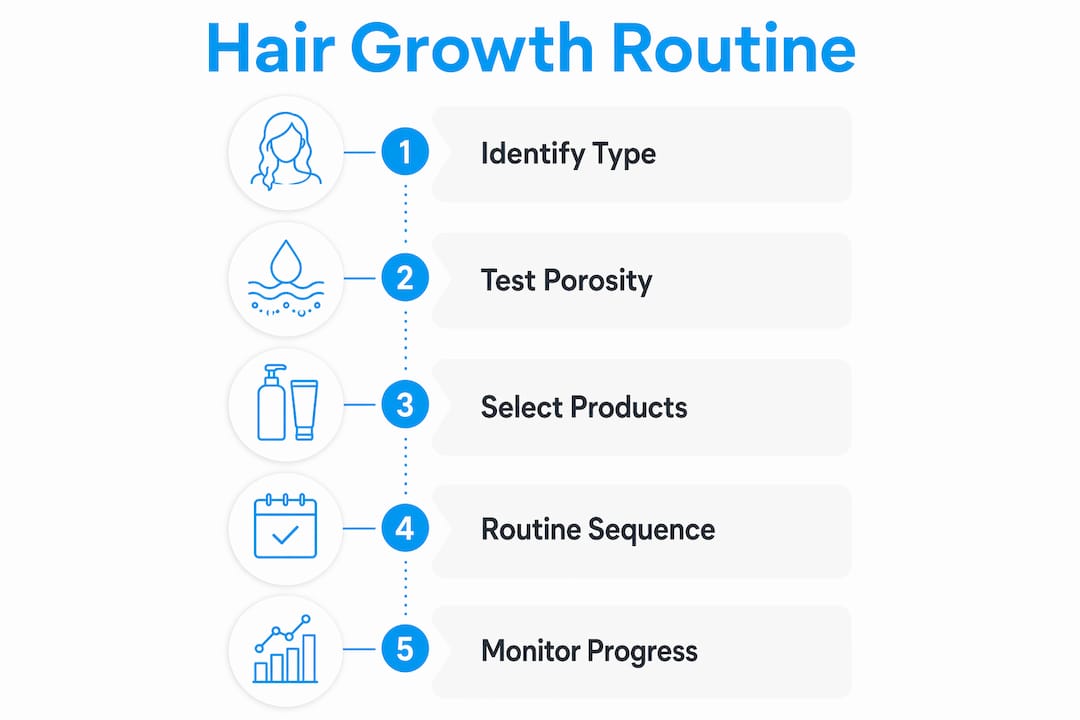
A professional hair routine follows five steps in sequence: cleanse the scalp, condition the lengths, treat specific issues, protect from heat and UV, then style. Skipping steps or reversing the order undermines the whole routine.
-
Cleanse the scalp. Use a quarter-sized amount of shampoo and focus entirely on the scalp and roots. The lengths get cleaned as the product rinses through. Scrubbing lengths with shampoo causes friction damage and frizz.
-
Condition the lengths. Apply conditioner from mid-length to ends, never the scalp. Conditioner on the scalp disrupts natural oil balance and causes the greasy, weighed-down look many people blame on their hair type. Leave it on for 2–3 minutes before rinsing.
-
Treat targeted issues. Treatments include scalp serums for thinning hair, protein treatments for damaged strands, and scalp masks for persistent dryness or buildup. Apply treatments after cleansing and before styling, not as a substitute for conditioner.
-
Protect before heat. Heat protectants guard hair from temperatures above 400°F that break down protein structures. This step is non-negotiable if you use a blow dryer, flat iron, or curling wand. UV protectant sprays serve the same purpose for people who spend significant time outdoors.
-
Style last. Styling products go on top of protection, never before. Applying styling products to unprotected hair traps heat damage inside the strand.
Pro Tip: Washing frequency matters as much as technique. Most people wash 2–3 times weekly, but oily scalps may need daily washing while dry, curly, or coily hair may only need once weekly or biweekly. Match your wash schedule to your scalp, not to habit.
For a detailed breakdown of sequencing by hair type, the simple hair routine guide from Myhair covers each step with type-specific adjustments.
Common mistakes that undermine your hair care results
Conventional shampoo routines often create damage that subsequent products merely mask. This is the core problem with most people's approach to hair care. They add more products to fix problems that the wrong cleanser created.
-
Using detergent-heavy shampoos on sensitive or dry scalps. Sulfate-free shampoos preserve natural scalp lipids better than sulfate formulas and reduce dryness and brittleness over time. Sulfates strip oils effectively, but they also trigger the scalp to overproduce oil in response. The result is a cycle of stripping and overproduction that never resolves.
-
Applying conditioner to the scalp. This is one of the most common errors and one of the easiest to fix. Conditioner near the roots clogs follicles and creates buildup that slows hair growth over time.
-
Mismatching products to porosity. Using heavy oils on low-porosity hair causes buildup without delivering moisture. Using lightweight serums on high-porosity hair leaves strands dry within hours. Porosity matching is the single fastest way to improve how your hair feels and behaves.
-
Ignoring scalp symptoms. Persistent rashes, pimples, redness, or unexplained itching require professional assessment. These are not cosmetic issues. They signal underlying scalp conditions that no shampoo or serum will fix without a proper diagnosis.
-
Failing to adjust seasonally. Humidity, temperature, and UV exposure all change what your hair needs. A routine that works in summer may cause dryness and breakage in winter. Adjusting product weight and wash frequency with the seasons prevents cumulative damage.
How do you apply these principles for hair growth and scalp health?
Scalp health is the direct driver of hair growth. Follicles sit in the scalp, and their environment determines whether hair grows, thins, or sheds. A clean, balanced scalp with good circulation and no chronic inflammation gives follicles the best conditions to produce strong strands.
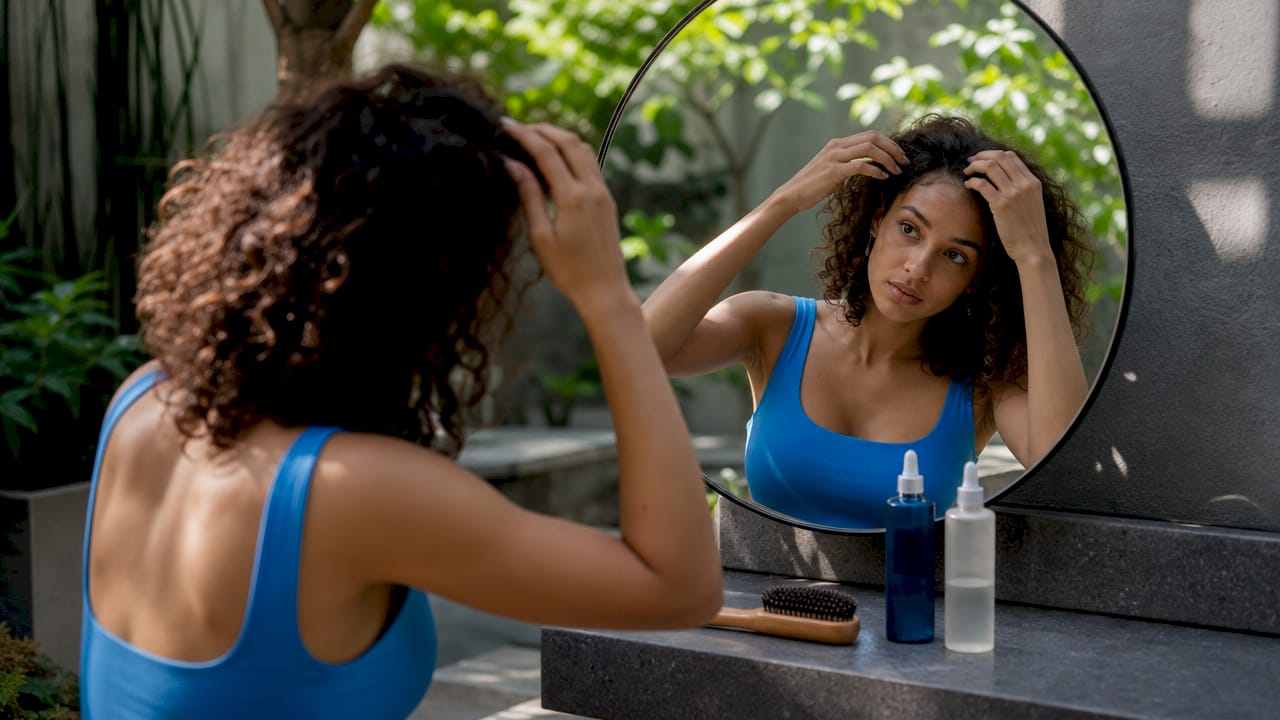
For people experiencing hair loss, building a personalized hair care routine for growth starts with identifying whether the issue is scalp-based or strand-based. Scalp issues include seborrheic dermatitis, follicle clogging from product buildup, and chronic dryness. Strand issues include breakage from heat damage, protein deficiency, or mechanical stress from tight styles.
Ingredient selection matters at this stage. Scalp serums with niacinamide support barrier function and reduce inflammation. Biotin-enriched products support keratin production. Collagen supports hair structure and growth when taken consistently, particularly for people with nutritional gaps. Scalp massage with lightweight oils like jojoba or rosehip increases blood flow to follicles without clogging pores.
Routine personalization also improves how well hair growth treatments work. A scalp that is clean, balanced, and free of buildup absorbs topical minoxidil or growth serums more effectively than one coated in product residue. The routine is not separate from the treatment. It is the foundation that makes treatment possible.
Pro Tip: Track your hair and scalp condition monthly with photos taken in the same lighting. Changes in shedding, scalp texture, or strand thickness are easier to spot in photos than in the mirror. Myhair's AI scan does this automatically, giving you a data-based view of progress over time.
| Growth strategy | What it targets | Key ingredient or method |
|---|---|---|
| Scalp cleansing routine | Follicle environment | Sulfate-free shampoo, regular wash schedule |
| Scalp massage | Blood flow to follicles | Lightweight oil, 5 minutes daily |
| Targeted serum application | Inflammation and barrier function | Niacinamide, peptide serums |
| Nutritional support | Keratin and collagen production | Biotin, collagen supplements |
| Professional assessment | Underlying scalp conditions | Dermatologist or telehealth consult |
For people who want professional guidance without an in-person visit, telehealth services for hair health offer access to licensed providers who can assess scalp conditions and recommend treatments remotely.
Key takeaways
Personalized hair care built around your specific hair type, porosity, density, and scalp condition is the most effective strategy for improving hair growth and reducing loss.
| Point | Details |
|---|---|
| Know your four variables | Hair type, porosity, density, and scalp condition each shape which products and routines work for you. |
| Follow the five-step sequence | Cleanse, condition, treat, protect, then style. Order matters for preventing damage. |
| Match shampoo to scalp type | Sulfate-free formulas reduce stripping and dryness, especially for sensitive or dry scalps. |
| Treat scalp symptoms seriously | Persistent redness, itching, or rashes need professional assessment, not more products. |
| Track changes over time | Monthly photo tracking or AI-based scanning reveals progress that daily mirror checks miss. |
What I've learned from watching people get hair care wrong
Most people I've spoken with who are dealing with hair loss arrive with the same problem: they have accumulated products rather than built a routine. There is a shelf full of serums, masks, and oils, but no consistent sequence and no understanding of why each product is there. The result is a lot of spending and very little progress.
The insight that changes everything is this: your scalp is skin. You would not pile ten products on your face without understanding your skin type. The same logic applies to your scalp. When people start treating scalp care with the same seriousness they give facial care, results follow quickly.
The second thing I have noticed is that people underestimate porosity. It is the variable that explains why a product that works brilliantly for one person does nothing for another. Two people with curly hair can have completely opposite porosity levels, which means they need completely different products. Generic "curly hair" advice ignores this entirely.
Finally, the people who see the most improvement are the ones who simplify before they add. They strip back to a clean, well-matched cleanser and conditioner, let their scalp stabilize, and then introduce treatments one at a time. That approach reveals what is actually working. Adding five new products at once tells you nothing.
— Cyriac
How Myhair helps you build the right routine
Getting your hair variables right is harder without data. Most people guess at their porosity, misread their scalp condition, and choose products based on marketing rather than their actual hair profile.
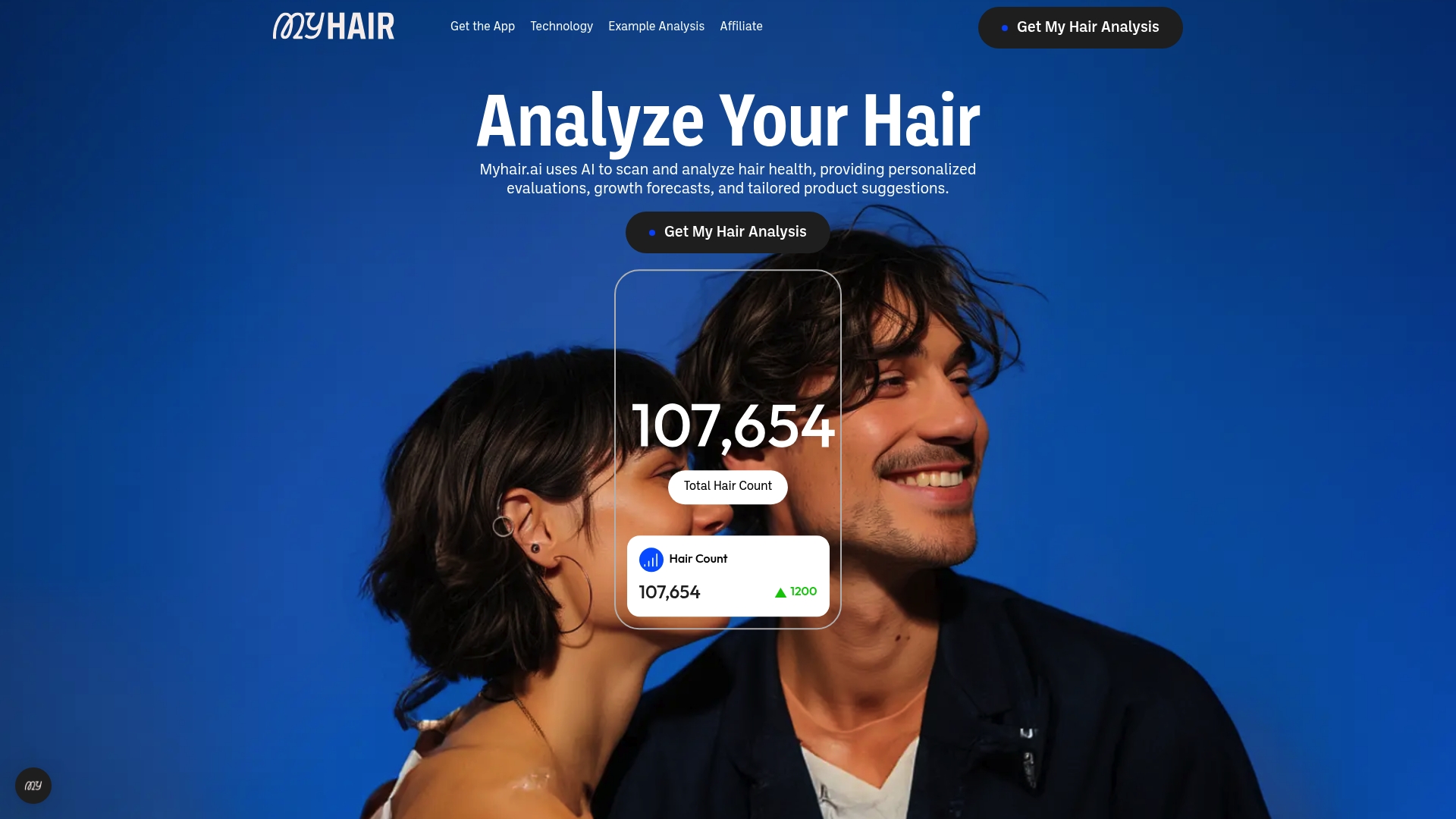
Myhair uses AI analysis to scan your hair and scalp and return a detailed assessment of your hair health. The AI-powered hair analysis identifies your hair's condition, tracks changes over time, and matches you with product recommendations built around your specific profile. That means no more guessing whether a product suits your porosity or scalp type. You get a clear picture of where your hair stands and what it actually needs. For anyone working through hair loss or trying to build a growth-focused routine, that data is the starting point that makes everything else more effective.
FAQ
What does "hair something" mean in hair care?
"Hair something" refers to the personalized approach of matching your hair care products and routine to your specific hair type, porosity, density, and scalp condition. It is the opposite of generic, one-size-fits-all advice.
How often should I wash my hair for healthy growth?
Washing frequency depends on your scalp type. Most people wash 2–3 times weekly, oily scalps may need daily washing, and dry or coily hair often needs only once weekly or biweekly.
Why is my hair still dry even after conditioning?
Dry hair after conditioning usually points to a porosity mismatch. High-porosity hair needs heavier products like butters or sealants to lock in moisture after conditioning.
When should I see a professional about my scalp?
See a dermatologist or telehealth provider if you have persistent redness, rashes, pimples, or unexplained itching. These symptoms signal scalp conditions that require medical assessment, not just a product change.
Does scalp health really affect hair growth?
Scalp health directly affects follicle function. A clean, balanced scalp with good circulation and no chronic inflammation gives follicles the best environment to produce strong, healthy hair.