TL;DR:
- Hair treatment for bleached hair involves bond repair, deep conditioning, and protective oils to rebuild strength and moisture. Applying bond treatments within 24-48 hours after bleaching enhances repair, while alternating protein and hydrating masks prevents damage. Using oils like argan and jojoba seals moisture and reduces porosity, supporting overall hair health.
Hair treatment for bleached hair is a targeted regimen combining bond repair, deep conditioning, and protective care to restore strength, moisture, and manageability. Bleaching breaks disulfide bonds inside the hair cortex, lifts the cuticle permanently, and strips the lipid layer that keeps strands hydrated. Without specialized treatment, bleached hair becomes brittle, porous, and prone to breakage. Products like Olaplex, K18, and Aveda Botanical Repair address these specific failure points. A consistent, layered routine is the difference between hair that recovers and hair that keeps snapping off.
What are the key components of effective hair treatment for bleached hair?
The three pillars of any successful bleached hair regimen are bond repair, deep hydration, and cuticle protection. Skip any one of them and the other two underperform.
Bond repair
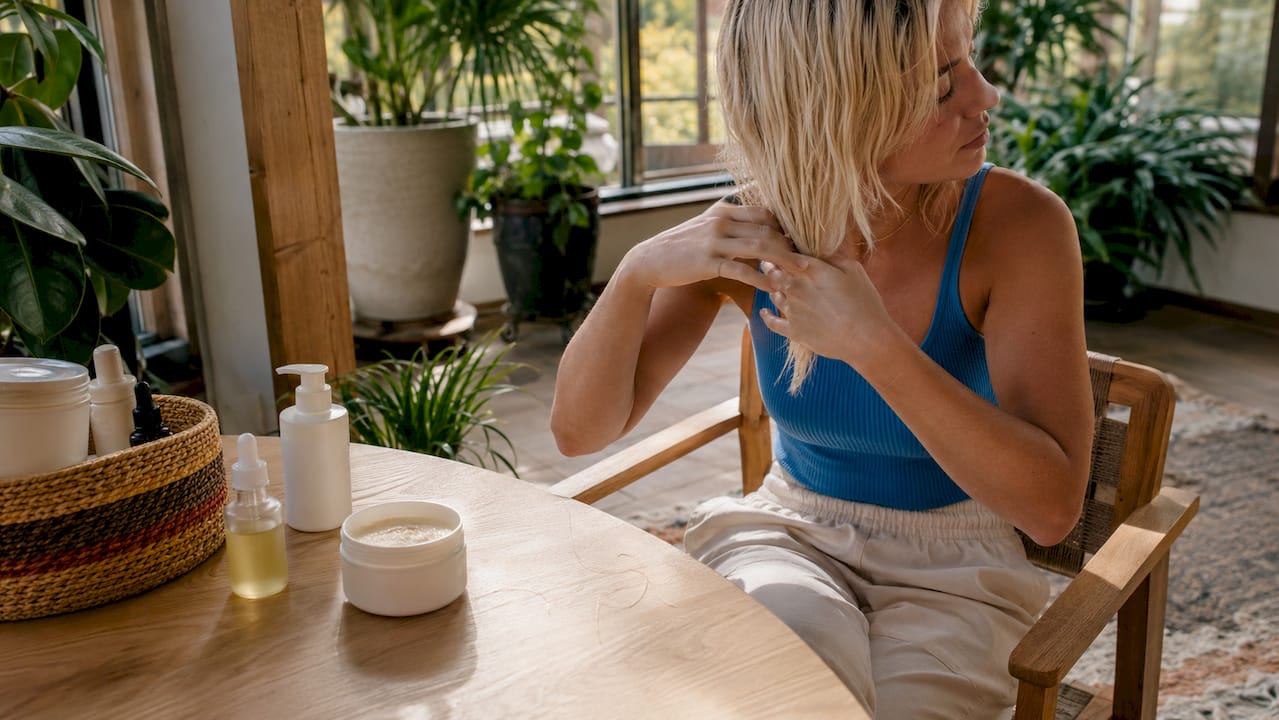
Bleaching oxidizes the hair's internal disulfide bonds, which are the structural links that give each strand its tensile strength. Bond-repair treatments like Olaplex No. 3 and K18 Leave-In Molecular Repair Mask work by reconnecting those broken links from the inside out. A structured routine using shampoo, mask, and leave-in products formulated for bleached hair can repair 79% of bleaching damage and reduce breakage by 83%. That result comes from rebuilding structure, not just coating the surface.
Deep conditioning and hydration
Bleached hair is highly porous. It absorbs water fast and loses it just as fast, which is why strands feel dry within hours of washing. Deep conditioning masks with ingredients like keratin, ceramides, and panthenol fill gaps in the cuticle and slow moisture loss. Hydration improvements of up to 92% and an eightfold increase in shine are achievable with the right conditioning and toning treatment in a single use. Consistency matters more than any single application.
Leave-in products and protective oils
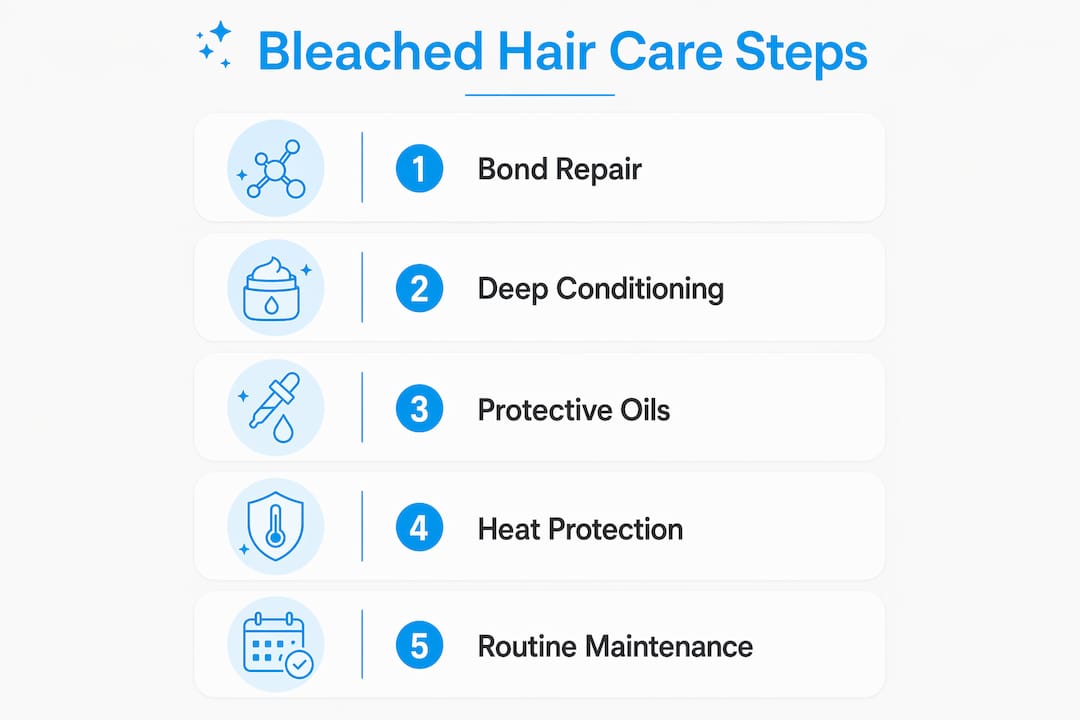
Leave-in conditioners and natural oils seal the cuticle after washing, locking in the moisture that deep conditioning delivers. Oils like argan and jojoba work best when applied before shampooing as a pre-wash treatment and again after washing as a sealant. Argan oil is rich in oleic and linoleic fatty acids. Jojoba closely mimics the scalp's natural sebum, making it especially effective for porous bleached hair. Coconut oil penetrates the hair shaft rather than sitting on top, which makes it one of the few oils that reduces protein loss during washing.
Pro Tip: Apply a few drops of argan oil to damp hair before blow-drying. It acts as a heat buffer and moisture seal at the same time.
Key ingredients to look for
- Bis-aminopropyl diglycol dimaleate (Olaplex's active): reconnects broken disulfide bonds
- K18 peptide: a patented biomimetic peptide that repairs the keratin chain
- Ceramides: fill micro-cracks in the cuticle and reduce porosity
- Hydrolyzed keratin: temporarily strengthens the strand surface and reduces frizz
- Fatty acid-rich oils (argan, jojoba, coconut): restore the lipid barrier and seal moisture
How to build an effective bleached hair treatment routine
A routine works because it layers treatments in the right order at the right frequency. Random product use produces random results.
- Day of bleaching: apply bond treatment immediately. The cuticle stays lifted for 24–48 hours post-bleach, giving bond treatments their best window for deep cortex penetration. Apply Olaplex No. 3 or K18 mask within this window before any shampoo.
- First wash (24–48 hours post-bleach): use a sulfate-free shampoo. Avoid washing during the first 24 hours. When you do wash, use a gentle, sulfate-free formula to avoid stripping the bonds you just repaired.
- Wash 1 of the week: bond treatment wash. Use a bond-building shampoo and conditioner, then apply a bond repair mask. Leave it on for the time specified on the label, typically 10–20 minutes.
- Wash 2 of the week: moisture-focused wash. Swap the bond mask for a deeply hydrating mask with ceramides or shea butter. This alternation prevents protein overload (more on that below).
- Every wash: apply leave-in conditioner and oil. On damp hair, layer a leave-in conditioner first, then seal with a few drops of argan or jojoba oil.
- Once a week or as needed: toning shampoo. Use a purple or blue toning shampoo to neutralize brassiness. 91% of people in an independent study found their hair less brassy after a single use of Olaplex No. 4P, which also reduced breakage by 52%.
Pro Tip: Swap your regular cotton bath towel for a microfiber towel or a clean cotton T-shirt. Traditional towel friction causes significant mechanical damage to bleached strands. Squeeze, never rub.
Limit heat styling to once or twice a week. When you do use heat, apply a heat protectant spray rated for at least 450°F. Air-drying is the lowest-risk option for bleached hair on non-styling days.
Which products and ingredients work best for bleached hair damage?
Not all products marketed for bleached hair deliver equal results. The table below compares the main categories.
| Product type | Top examples | Primary benefit | Key ingredient |
|---|---|---|---|
| Bond repair treatment | Olaplex No. 3, K18 Leave-In Mask | Rebuilds internal hair bonds | Bis-aminopropyl dimaleate, K18 peptide |
| Deep conditioning mask | Keune Care Blonde Savior Mask | Restores moisture and softness | Ceramides, hydrolyzed keratin |
| Toning shampoo | Olaplex No. 4P, K18 TripleBright | Neutralizes brassiness without drying | Purple pigments, oxidation defense |
| Leave-in conditioner | Aveda Botanical Repair Leave-In | Seals cuticle, reduces frizz | Amino acids, plant proteins |
| Natural oil | Argan, jojoba, coconut | Restores lipid barrier, seals moisture | Fatty acids, antioxidants |
Toning shampoos: what to look for
Older purple shampoos were drying because they relied on high pigment loads without conditioning agents. Modern formulas combine oxidation defense with conditioning ingredients, so they neutralize brassiness without stripping moisture. K18 TripleBright and Olaplex No. 4P both follow this approach. Use toning shampoo no more than twice a week. Overuse deposits too much purple pigment and can leave hair looking ashy or dull.
Natural oils for bleached hair
- Argan oil: high in vitamin E and oleic acid; best as a finishing oil on damp or dry hair
- Jojoba oil: mimics sebum; ideal for scalp application and as a pre-wash treatment
- Coconut oil: penetrates the shaft and reduces protein loss; use as a pre-wash mask for 30 minutes before shampooing
- Sweet almond oil: lightweight and rich in fatty acids; good for fine bleached hair that gets weighed down easily
Oils rich in fatty acids and antioxidants are the most effective at protecting the porous cuticle and restoring hydration in bleached hair. Apply them as a pre-wash treatment or post-wash sealant, not as a substitute for conditioner.
How to manage common challenges with bleached hair
Bleached hair presents a predictable set of problems. Knowing the cause of each one makes them easier to fix.
Protein overload
Too many bond-building or protein-heavy treatments back to back cause protein overload. The hair becomes stiff, brittle, and snaps easily. Alternating protein-rich treatments with moisture-focused masks prevents this. If your hair feels like straw after a bond treatment, skip the protein mask next wash and use a hydrating mask with shea butter or aloe vera instead.
Brassiness and tonal shift
Bleached hair turns brassy because the warm underlying pigments (orange and yellow) oxidize over time when exposed to air, water minerals, and UV light. Purple pigments in toning shampoos sit opposite yellow on the color wheel and cancel it out. For very orange tones, a blue shampoo works better than purple. Neither replaces a professional toner, but both extend the life of a salon tone significantly.
Breakage and brittleness
- Avoid brushing bleached hair when wet. Use a wide-tooth comb starting from the ends and working upward.
- Sleep on a silk or satin pillowcase to reduce overnight friction.
- Limit chemical processes (color, relaxers, perms) for at least 8 weeks after bleaching.
- Understanding hair breakage from bleach at the structural level helps you choose the right repair strategy rather than guessing.
Realistic expectations
Post-bleach care manages damage and prevents further loss. It does not reverse the chemical change that bleaching causes. Setting realistic expectations is the most underrated part of bleached hair recovery. Hair that has been heavily bleached will never feel exactly like virgin hair again. The goal is strong, hydrated, manageable strands, and that goal is fully achievable with the right routine.
Key takeaways
The most effective hair treatment for bleached hair layers bond repair, deep conditioning, and protective oils in a consistent weekly routine to rebuild strength and lock in moisture.
| Point | Details |
|---|---|
| Bond repair comes first | Apply Olaplex or K18 within 24–48 hours post-bleach for maximum cortex penetration. |
| Alternate protein and moisture | Switching between bond masks and hydrating masks prevents protein overload and brittleness. |
| Toning shampoo controls brassiness | Use a modern formula like Olaplex No. 4P up to twice a week to neutralize yellow tones without drying. |
| Oils seal moisture in | Apply argan or jojoba oil after washing to protect the porous cuticle and slow moisture loss. |
| Gentle handling reduces breakage | Microfiber towels, wide-tooth combs, and silk pillowcases cut mechanical damage significantly. |
What I've learned from years of watching bleached hair recovery
Cyriac here. The single biggest mistake I see people make with bleached hair is treating it like a one-time fix rather than an ongoing practice. Someone buys an Olaplex treatment, uses it twice, sees improvement, and then goes back to their old routine. Three weeks later the hair is brittle again and they conclude the product "stopped working." The product didn't stop working. The routine did.
The second thing I've noticed is that people underestimate how much mechanical damage undoes chemical repair. You can run the best bond treatment on the market through your hair and then towel-dry aggressively and lose a meaningful portion of that work. The chemistry is only half the equation. How you handle the hair physically matters just as much.
I'm also skeptical of the idea that more product equals better results. Protein overload is real, and it's more common than most people realize. If your bleached hair feels crunchy or snaps when you stretch it, the answer is almost never another bond treatment. It's a deeply hydrating mask with zero protein and a week off from any repair product.
The honest truth about bleached hair recovery is that it rewards patience and consistency more than any single product. A simple routine done correctly every week for two months will outperform an expensive but inconsistent one every time.
— Cyriac
Know exactly what your bleached hair needs
Guessing which treatment your hair actually needs wastes time and money. Myhair uses AI-powered hair analysis to assess your hair's condition from a scan and give you a personalized treatment plan based on your specific damage level and hair type.
The AI hair scanner identifies porosity, breakage patterns, and moisture levels that are hard to spot on your own. From there, Myhair generates a personalized hair score and tracks your progress over time so you can see what's actually working. If you've been guessing at your bleached hair routine, this is a faster way to get it right.
FAQ
What is the best hair treatment for bleached hair?
Bond-repair treatments like Olaplex No. 3 or K18 Leave-In Molecular Repair Mask are the most effective starting point. Pair them with a deep conditioning mask and a leave-in oil for full structural and moisture recovery.
How often should I deep condition bleached hair?
Deep condition bleached hair once or twice a week. Alternate between a protein-rich bond mask and a moisture-focused mask to avoid protein overload and keep hair both strong and flexible.
Can bleach damage be fully reversed?
Bleach damage cannot be fully reversed because the chemical change to the hair's bonds is permanent. Consistent treatment rebuilds strength and restores hydration, but bleached hair will not return to its pre-bleach state.
When should I apply bond treatment after bleaching?
Apply bond treatment within 24–48 hours of bleaching. The cuticle remains lifted during this window, which allows the treatment to penetrate deeper into the cortex for better repair results.
Do natural oils actually help bleached hair?
Yes. Oils like argan, jojoba, and coconut restore the lipid barrier, reduce porosity, and seal in moisture. Use them as a pre-wash treatment or post-wash sealant, not as a replacement for conditioner.