
Getting reliable, photo-driven hair health analysis that moves beyond vague descriptors and actually connects you to actionable treatment options remains difficult for those seeking measurable progress. Many hair health analysis software tools limit advanced diagnostics or clinic integration to premium plans or fail to support diverse hair types and workflows, leaving users guessing about next steps and product choices. This comparison covers scan accuracy, clinical support, and pricing so you can select the hair health analysis platform that best bridges assessment with real follow-up tailored to your needs.
Table of Contents
MyHair.ai
At a Glance
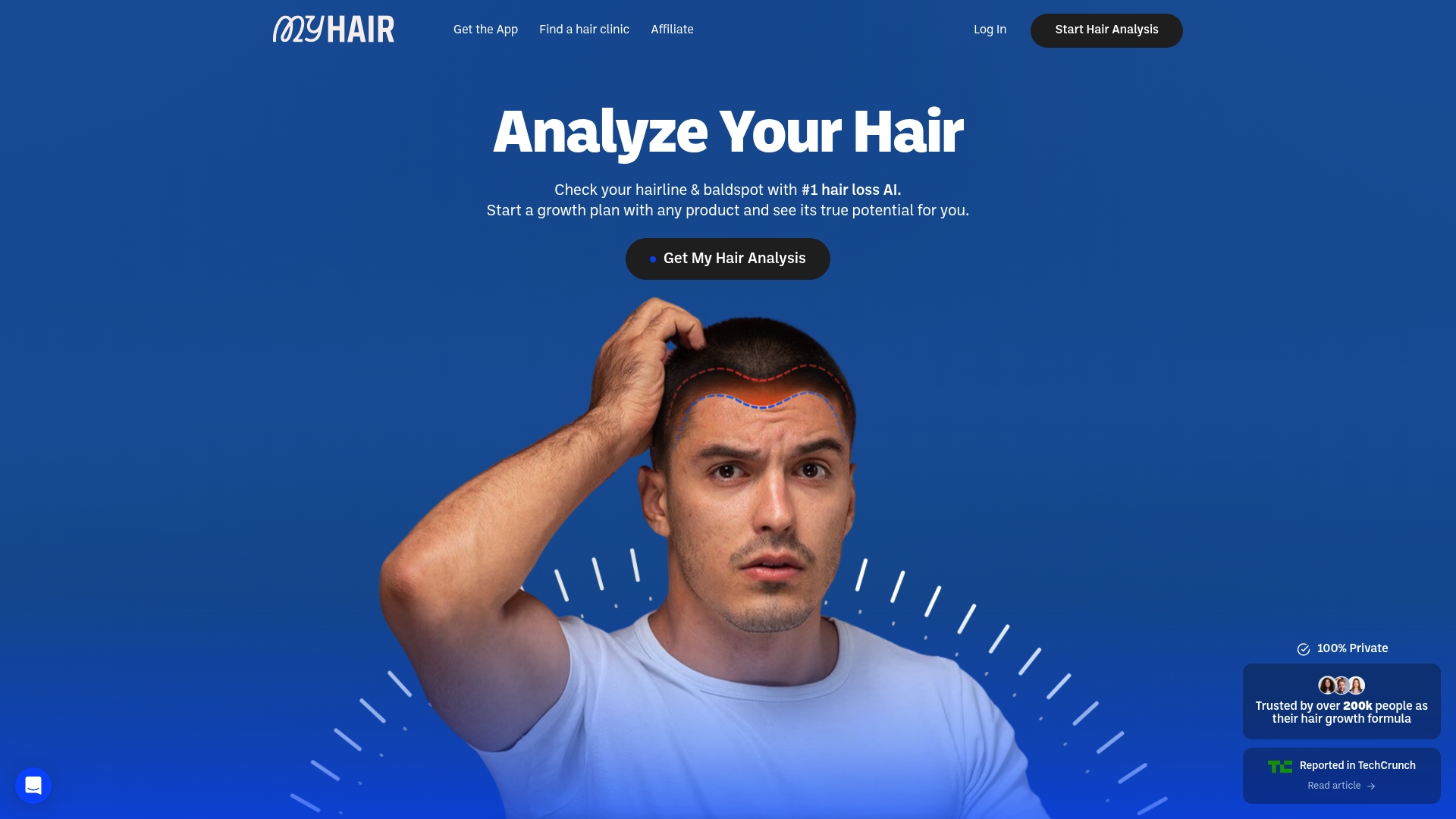
The vendor reports it is trusted by over 200,000 users worldwide. MyHair.ai combines an app and web interface that analyzes uploaded photos to predict hair count and loss, then recommends products and clinic-backed plans while keeping user privacy central.
Core Features
- AI-powered hair analysis from uploaded images to estimate density and condition.
- Hair count and loss prediction that quantifies change across scans for monitoring over time.
- Detailed hair health breakdown covering dryness, density, and visible scalp exposure.
- Personalized product recommendations and customized treatment timelines linked to verified clinics.
- App download option plus web access and privacy-focused controls for images and data.
Key Differentiator
The standout is combining image-based computer vision with direct access to globally verified clinics for treatment planning. That pairing moves the product beyond pure assessment and toward a workflow that can lead into clinical consultation when users want medical guidance.
Pros
- The analysis engine uses computer vision to deliver measurable metrics rather than vague descriptors. That technical focus makes comparisons between scans straightforward.
- Personalized suggestions map a scan to specific product types and routine changes, helping you test one variable at a time instead of guessing.
- Clinic collaboration gives a clear escalation path from self-monitoring to professional evaluation, which matters when patterns suggest medical review.
- Privacy-first controls and a simple app/web flow reduce friction for regular scanning and history tracking.
- Visible testimonials and media coverage back the product story and make the onboarding experience feel more credible to new users.
Cons
- Many advanced outputs and clinic referral features are gated behind premium plans, so full diagnostic detail requires a subscription.
Who It's For
Individuals concerned about hair loss who want technical, photo-driven metrics rather than subjective guesswork. This fits people who want to monitor change month to month, get specific product suggestions, or connect a clear scan result to a verified clinic for follow-up.
Unique Value Proposition
Linking a photo scan to clinic-backed treatment plans shortens the gap between spotting a problem and getting medical input. For users who want a single place to measure hair change, try product options, and then pursue a clinic consultation, that workflow removes several manual steps.
Real World Use Case
You upload baseline photos, run a scan, and get a quantified hair count plus a breakdown of density and dryness. You test a recommended serum for three months while tracking scans. If the pattern worsens, the platform’s clinic pathways make it simple to request expert review.
Pricing
Offers both free and premium plans. The free tier provides basic scanning and history tracking. Premium unlocks deeper analysis, expanded treatment timelines, and clinic referral features.
Website: https://myhair.ai
Hairalyze
At a Glance
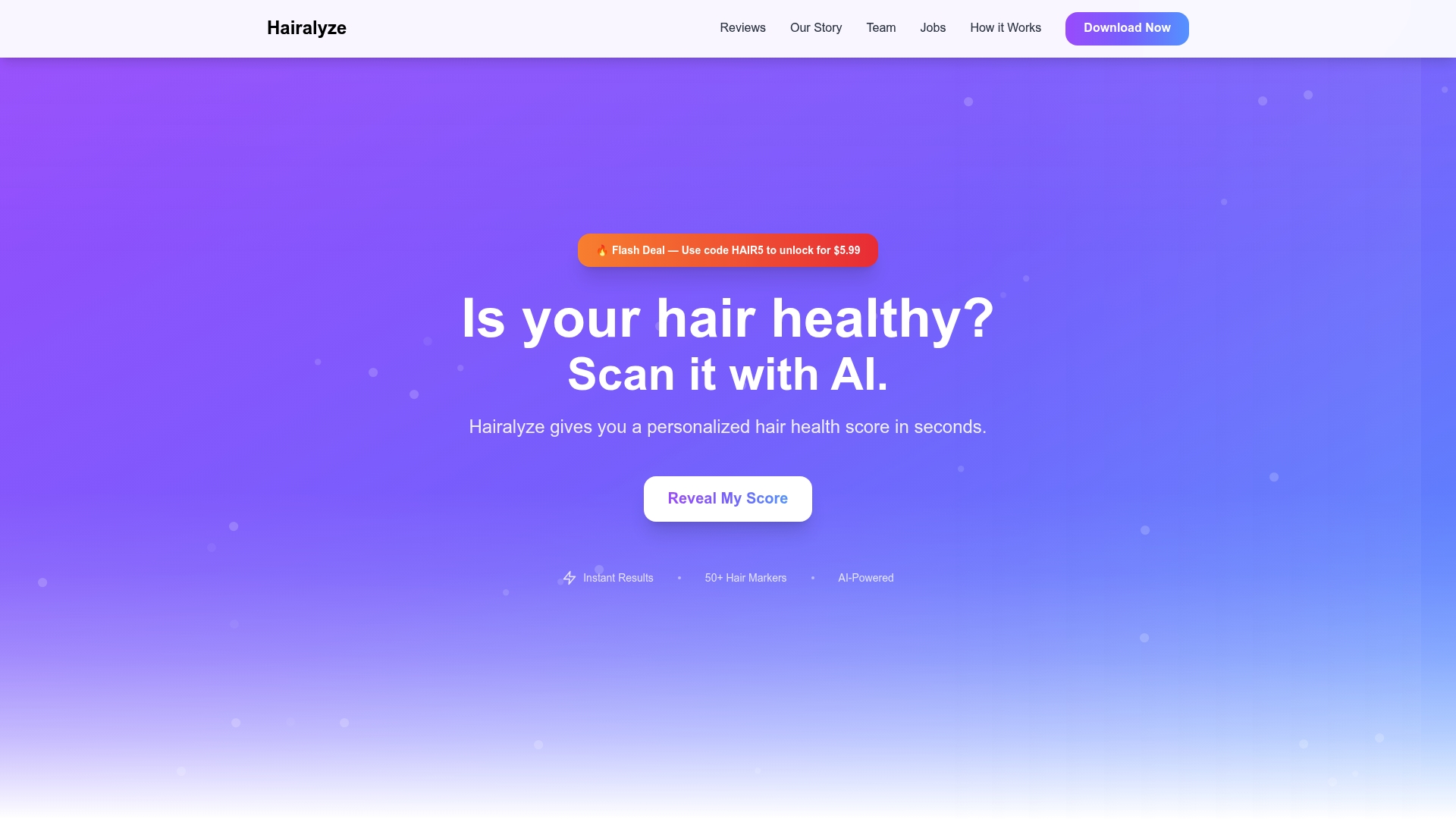
The vendor advertises AI analysis of 50+ hair markers from user photos and delivers an instant hair health score after each scan. That combination promises depth and speed for users who want immediate, actionable feedback without booking a salon visit.
Core Features
Hairalyze performs AI-driven hair analysis to identify more than fifty visible markers of hair condition. It returns an instant score plus a short list of suggested routine adjustments tailored to the scan.
The app stores scans for progress tracking over time and includes a chat feature that connects you to an AI stylist for follow-up advice. The interface is built for quick scans on the go.
Key Differentiator
Hairalyze aims to map many specific hair traits from a single photo. The vendor advertises the marker count above as its technical edge, making the app useful for users who want granular diagnostics rather than a generic recommendation.
That marker claim is the product's main promise. If the algorithm matches real-world hair variation, the app can speed diagnosis for common styling and damage patterns.
Pros
- Provides quick, personalized feedback so you can adjust a styling habit between appointments. Immediate results reduce guesswork.
- Affordable compared with routine salon assessments which usually require an in-person consult. The app lowers the barrier for frequent checks.
- The progress timeline makes it easy to compare scans week to week and see whether a change in product or routine correlates with visual improvement.
- Chat with an AI stylist delivers follow-up tips without waiting for a booking. That keeps advice practical for busy schedules.
- Designed to handle diverse hair types including curly and textured hair which many generic tools overlook.
Cons
- No substantive third-party reviews are available, so claims about accuracy and satisfaction remain vendor-reported at this stage.
- Limited independent validation on long-term accuracy means you should treat recommendations as guidance rather than a medical diagnosis.
- The feature set leans strongly toward analysis and advice rather than community features, product marketplace links, or integrations with salon systems.
When It May Not Fit
If you need clinically validated diagnostics or a tool tied into professional salon workflows, Hairalyze may not meet those requirements because independent validation and integrations are limited.
If your workflow depends on product purchases inside the app or an active community for peer feedback, this product focuses on scans and recommendations instead.
Who It's For
People who want a low-cost, fast way to check hair health between salon visits. Students and budget-conscious users who need immediate guidance will find the pricing and speed attractive.
Those with curly or textured hair who want targeted, photo-driven suggestions will appreciate the focus on diverse hair markers.
Real World Use Case
A college student notices split ends after finals and scans her hair between classes. The app highlights damage markers, suggests a temporary heat-free routine, and logs the scan so she can compare results before and after a two-week treatment.
That quick feedback keeps her from scheduling an expensive salon consult when small routine changes are sufficient.
Pricing
A current promotion uses code HAIR5 to unlock access for $5.99. Regular pricing is not specified in the vendor materials but the promotional price signals an emphasis on affordability for casual users.
Website: https://hairalyze.com
Varl
At a Glance
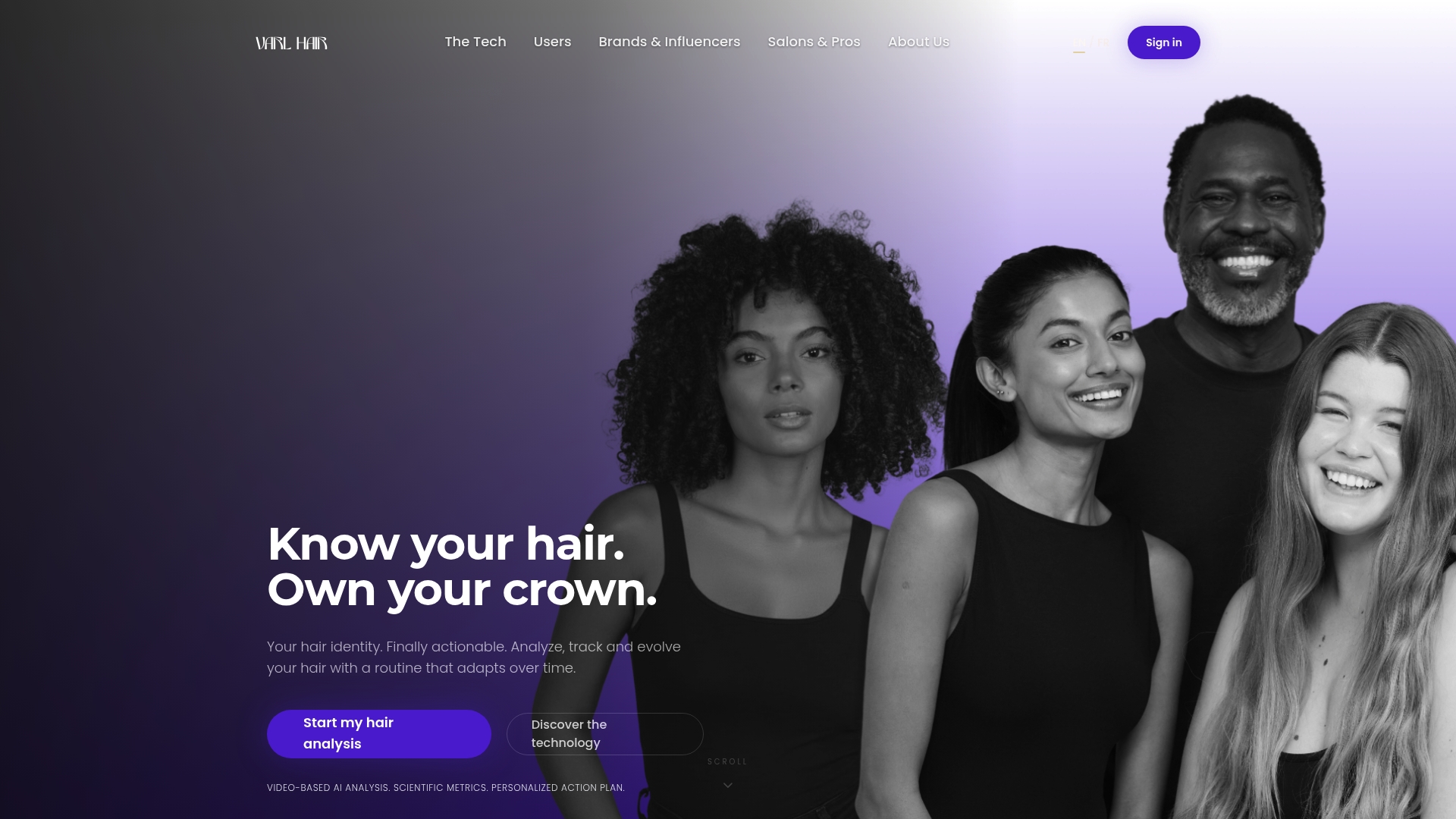
Varl's marketing materials claim its proprietary biometric ID™ captures a living, evolving map of hair health in seconds. The platform pairs that biometric record with video based AI analysis to generate personalized routines and product matches for consumers and salons.
Core Features
- Video based AI analysis that models the physics of hair from short clips to produce diagnostic metrics.
- Biometric ID™ that evolves over repeated scans to reflect changes in texture, breakage, and density.
- Hair health tracking expressed as a score from 0 to 100, making progress easier to compare over time.
- Smart product matching tuned to measured hair needs rather than generic profiles.
- Tools and data flows for salons and brands to share recommendations with clients under consent.
Key Differentiator
That biometric ID above is the platform's defining claim. It is presented as a compact, evolving profile you can share with a stylist or brand to avoid guesswork during consultations.
The focus is on precise, repeatable measurements rather than questionnaires alone, which changes how recommendations are generated and documented for clients.
Pros
- Proprietary analysis gives far more granular metrics than a typical quiz, so your routine changes can be tied to measured shifts in texture or breakage.
- The salon features let professionals prepare consultations with structured client data and explicit treatment notes rather than relying on memory.
- The ecosystem concept helps brands deliver tailored recommendations and loyalty incentives tied to your biometric profile.
- The vendor states GDPR compliance, which is significant when biometric data and video are involved.
- The platform supports both consumers and professionals, so a single profile can travel from home tracking to in salon appointments.
Cons
- Customer reviews indicate real problems with service delivery, support responsiveness, and product quality, including delayed or failed deliveries.
- Several third party reviews report unresolved warranty claims and poor communication from support teams.
- The platform's technical complexity creates a learning curve; casual users may find the setup and repeated scanning fiddly.
When It May Not Fit
If you want a zero friction app that only offers occasional tips, Varl's structured biometric workflow will feel heavy. The platform assumes repeat scans and salon collaboration, so casual testers or buyers who prioritize fast shipping and simple returns may be frustrated by the reported service issues.
If reliable customer support and rapid replacements are core priorities, that limitation above is worth weighing before adoption.
Who It's For
Consumers with textured hair who want precise tracking and evidence based recommendations, plus salons and brands that want to bring data into consultations. Tech savvy users who accept a short setup cost in time will get the most value.
Real World Use Case
A user records short weekly videos. The biometric profile updates and the score moves in response to a new routine. A salon imports the profile before an appointment, prescribes a tailored treatment, and tracks response over several months with the same metrics.
Pricing
Varl offers a free tier and paid subscriptions. Paid plans range from €4.99 to €8.99 per month for unlimited analysis, expanded tracking, and professional tools.
Website: https://varl.fr
Hairscope
At a Glance
The vendor advertises a 90% faster diagnosis speed when clinics use its selfie analysis, a striking efficiency claim for in-clinic triage and follow up. Hairscope pairs that assertion with website lead generation and multi-branch patient management aimed at clinics.
Core Features
- AI-powered hair analysis from selfies and clinical images for quick intake and baseline measurements.
- Follicle counting plus hair thickness segmentation and density measurement to quantify change over time.
- Progress tracking with session-by-session visual graphs and custom report generation for patients and clinicians.
- Lead capture via website and app integration, cloud storage, patient questionnaires, and targeted product suggestions.
Key Differentiator
Hairscope’s strongest claim is its selfie-first workflow that turns a phone photo into a quantified report in minutes. That 90% figure above frames the pitch: faster diagnosis and clearer visuals to show patients measurable progress rather than vague promises.
Pros
- Data-backed consults increase patient trust. Clinics can show density and thickness numbers on follow-up visits rather than relying on memory or photos alone.
- Scales across locations. Multi-branch management and centralized data make it practical for clinic chains to standardize reporting and training.
- Helps attract new patients. Site integration and AI-driven insights are presented as a lead magnet clinics can advertise on booking pages.
- Minimal setup for clinicians. The vendor positions the product as easy to implement so staff with limited technical experience can start tracking outcomes quickly.
- Pricing is pitched as clinic-friendly with lower entry cost for small practices, which reduces the barrier to trial.
Cons
- No independent third-party reviews were found in the supplied data, so external confirmation of long-term satisfaction is limited.
- Analysis depends on image quality. Poor lighting, low resolution, or inconsistent camera angles will degrade measurement reliability.
- Requires clinics to adopt a tech-enabled workflow. Practices that lack tablet or phone intake processes will need to change front-desk routines to use the tool well.
When It May Not Fit
If your clinic relies on high-resolution dermatoscope imaging or already uses a dedicated imaging device, a selfie-first tool may not match your diagnostic standard. Also, practices that prefer vendor-verified peer reviews before buying will find limited third-party validation in the materials provided.
Who It's For
Small to midsize hair clinics and dermatology practices that want to add quantitative reporting to consultations and marketing. Particularly useful for clinics aiming to standardize follow-up visuals across multiple locations and to present measurable progress to patients.
Real World Use Case
A single-location clinic uses Hairscope at intake. A patient’s selfie produces baseline follicle counts and density metrics. The clinician selects a treatment plan, and each follow-up visit produces a visual graph the patient can review, improving engagement and retention.
Pricing
Monthly plans start at $99 for small clinics, with discounted annual options. Higher-tier plans are available for growing or multi-branch clinics, topping out at $3,588 per year according to the vendor’s pricing notes.
Website: https://hairscope.ai
iHairium
At a Glance
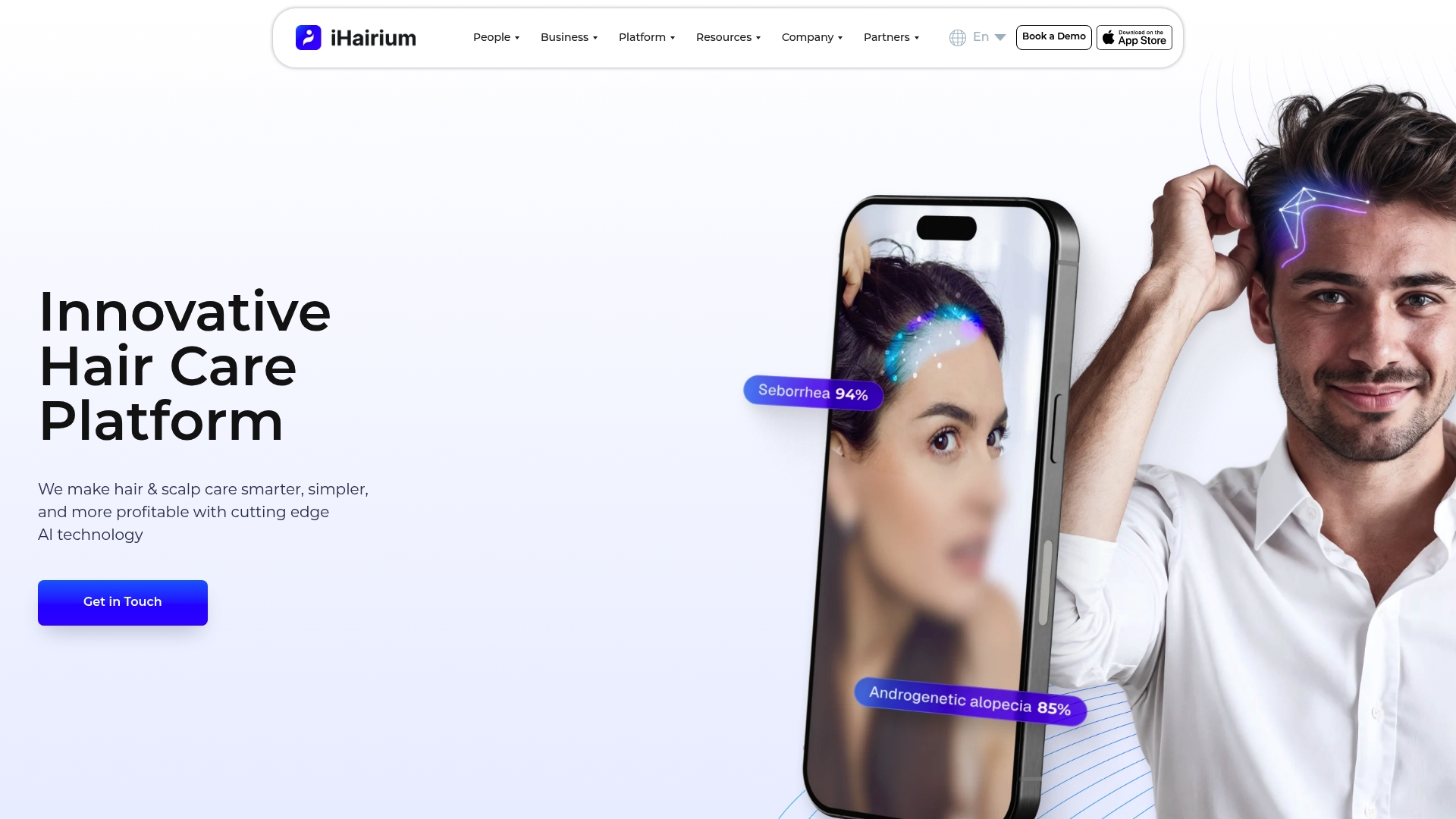
iHairium's marketing materials state its proprietary model was trained on over 150,000 expert-annotated images, a concrete dataset the vendor highlights to improve diagnostic coverage across hair types. The company also reports being trusted by thousands worldwide, a self-reported scale that appears in its promotional copy.
Core Features
- AI-powered hair and scalp diagnostics that analyze user photos and questionnaire answers to flag common conditions.
- Personalized treatment plans generated from the diagnostic output and tailored to user needs.
- Online consultations with hair specialists, dermatologists, and nutritionists to review results and next steps.
- Free hair testing tools including a hairline check and basic scalp scan for quick triage.
- Product and clinic recommendations mapped to diagnostics and user preferences.
Key Differentiator
The vendor emphasizes that training dataset above and positions it as the basis for higher diagnostic sensitivity across varied hair types. That training claim explains why iHairium focuses equally on consumer-facing scans and B2B tools for clinics and brands, blending patient triage with clinic workflow features.
Pros
- Quick access to a diagnostic read in minutes based on a user photo and short questionnaire, which lowers the barrier to an initial assessment.
- Free diagnosis for basic checks makes it easy to start without commitment and lets users test the service before booking a consult.
- Supports both individuals and professionals, so clinics can adopt the same diagnostic model their patients use for continuity of care.
- Online consult options reduce travel and wait time, letting you follow up with a specialist from home.
- Product and clinic matches help close the gap between diagnosis and actionable next steps, so users can find local providers or relevant products faster.
Cons
- No verified user reviews are available in the product data, so real buyer experiences are unconfirmed and hard to weigh.
- Diagnostic accuracy depends on photo quality and honest questionnaire responses, which creates variability in results across users.
- The platform's scope appears focused on hair and scalp health, with limited detail on broader dermatology or systemic causes.
When It May Not Fit
If you need a definitive medical diagnosis or procedures that require in-person assessment, this tool is not a replacement for a clinical exam. If you cannot provide clear, well-lit photos or prefer an entirely offline pathway, the service will be less effective. Clinics needing deep EHR integration should verify compatibility because no integrations are listed.
Who It's For
Individuals wanting a fast, low-cost first look at hair loss, dandruff, or early thinning will find this useful. Hair clinics and transplant centers that want AI triage for patient intake or brands seeking automated product matching can also use the platform as part of their front-end diagnostics.
Real World Use Case
A user photographs a thinning crown with the app, receives a diagnostic summary and suggested treatment plan, and books a virtual consult with a trichologist through the platform. The clinic receives the same scan and can prioritize the patient for an in-person follow up if needed.
Website: https://ihairium.com
Comparative Analysis for Hair Health Analysis Platforms
Selecting the right hair health analysis platform depends on specific user needs, preferences, and priorities. We have compared some leading platforms, highlighting key insights and trade-offs.
Depth of Technique and Data Accuracy
MyHair.ai outperforms in connecting detailed image analysis results to verified hair clinics, enabling users to effortlessly transition from a self-guided analysis to professional medical consultations. On the contrary, Hairalyze, while providing high marker counts for evaluation, lacks independent clinical endorsements guaranteeing diagnostic accuracy. Therefore, MyHair.ai presents a more advanced integration for users wanting a escalation path to verified expertise.
Accessibility and Ease of Use
For casual users seeking fast, affordable diagnostics, Hairalyze offers a straightforward solution with its highly accessible interface and AI Stylist feature, aiding users in making hair care adjustments without needing professional intervention. Conversely, Varl, with its intricate Biometric ID™ and salon-oriented capabilities, serves experienced users looking for maximal precision and extended professional collaboration but may feel complex for everyday needs. Hairalyze wins in convenience and simplicity, whereas MyHair.ai caters to comprehensiveness paired with usability.
Professional Features and Institutional Applications
Hairscope excels for clinics leveraging AI to enhance patient intake procedures and streamline inter-branch data management. It offers unique tools for quantifiable patient follow-ups using basic photos. While beneficial, it's primarily suited for professional environments and less so for independent consumers. In contrast, MyHair.ai balances the professional and personal scopes effectively, accommodating use cases for individual and institutional users alike.
Best Fit Recommendations
- For users seeking a hybrid personal and clinical integration: MyHair.ai delivers transitions between self-care and professional consultation, ideal for those concerned with progressive conditions needing medical intervention.
- For budget-conscious individuals with surface-level hair monitoring needs: Hairalyze provides quick, affordable diagnostics alongside incremental maintenance recommendations.
- For professional salons and clinicians requiring advanced consultation utilities: Hairscope offers systems for centralized management and graphical report generation.
- For tech-savvy salon clients emphasizing sophisticated biometric profiling: Varl’s unique features align with professional prowess despite operational complexities.
Our Pick
MyHair.ai stands out for its balanced offering of detailed diagnostics, professional network alignments, and efficiency across individual and institutional applications. However, its premium features requiring subscription investment make Hairalyze a better alternative for minimalistic users or those prioritizing economic solutions.
Hair Health Analysis Software Comparison
This table compares hair health analysis software, focusing on combined imaging technology and actionable insights.
| Product | Key Differentiator | Best For | Pricing | Notable Limitation |
|---|---|---|---|---|
| Myhair | Integration with clinics for personalized plans | Users wanting proactive monitoring | Free tier, premium subscription | Advanced analysis behind premium plans |
| Hairalyze | Granular diagnostics with 50+ hair markers | Budget-conscious users | $5.99 with HAIR5 promo | Limited external validation of claims |
| Varl | Biometric ID evolving with scans | Consumers and salons seeking detailed tracking | €4.99 to €8.99 monthly | Reports of inconsistent customer service |
| Hairscope | Selfie-first workflow for quick clinic diagnostics | Small clinics wanting centralized data | $99 monthly for clinics | Depends on photo quality for results |
| iHairium | Extensive training dataset for diagnosis | Individuals and clinics blending AI triage | Free basic scans, consultations extra | Accuracy variability with user-provided data |
Discover a Trusted Alternative with Myhair for Your Hair Health Needs
If you found yourself searching for reliable hairhealth.ai alternatives to avoid guesswork and get clear, measurable insights, Myhair offers a powerful solution designed just for you. Many users struggle with tracking subtle hair loss changes and want product recommendations tied to real clinic-backed plans. Myhair uses AI-driven photo analysis to provide detailed hair density and condition reports alongside personalized treatment options that adapt as you monitor progress.
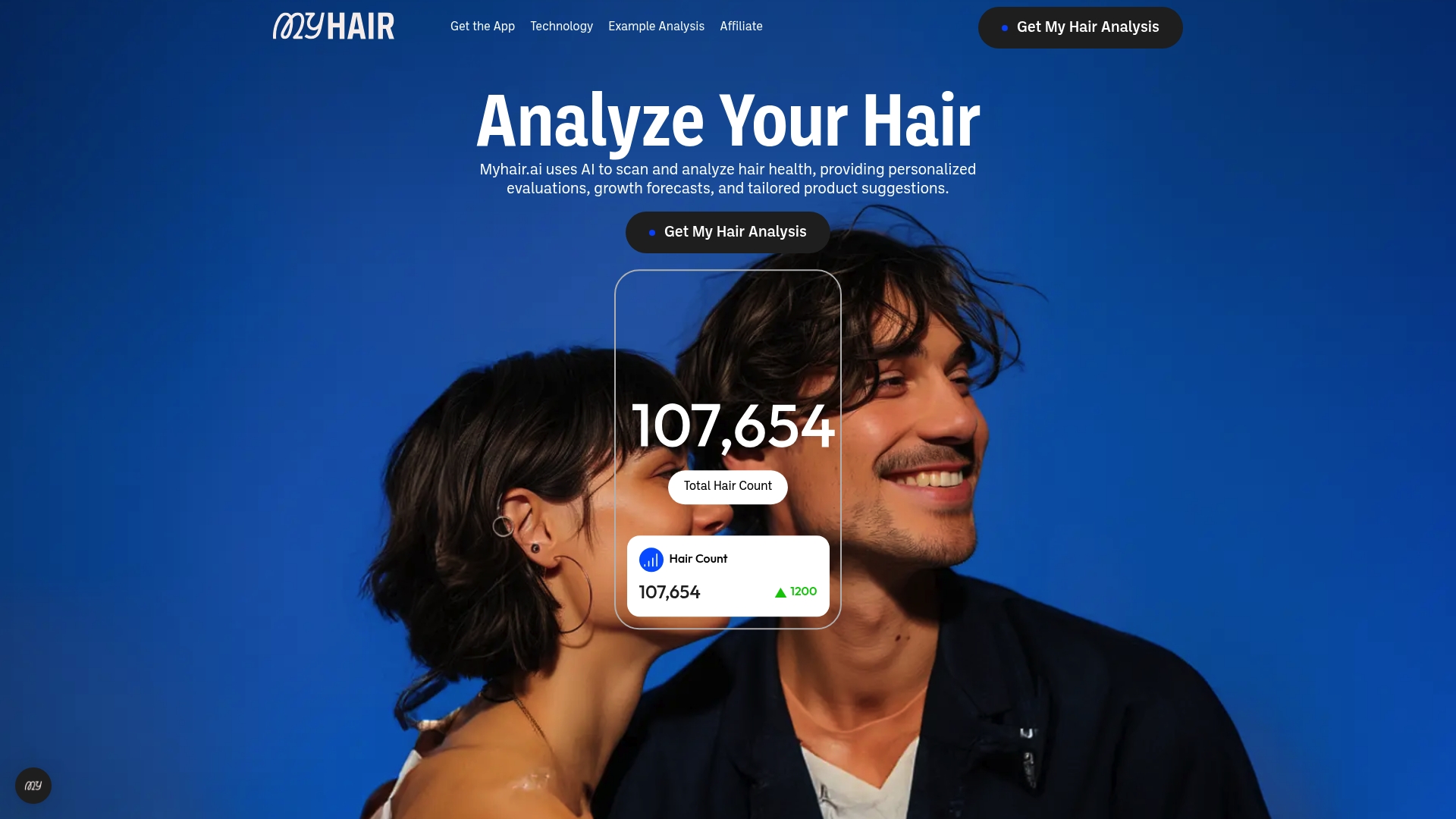
Take control of your hair health journey now with Myhair’s easy app and web platform. Visit Myhair to upload your first scan and receive tailored product suggestions linked to verified clinics. Start tracking your hair growth over time with confidence and move from uncertainty to actionable results.
Frequently Asked Questions
How does Myhair analyze hair health?
Myhair analyzes hair health using AI-powered hair analysis from uploaded images to estimate hair density and condition. It delivers detailed insights on dryness, density, and scalp exposure, making it easier for users to monitor changes overtime. You can utilize this feature to track your hair health progress month by month.
What is the difference between Myhair and Hairalyze?
Hairalyze provides instant hair health scores based on over fifty visible markers from user photos, making it a swift option for those seeking quick feedback. Myhair, on the other hand, focuses on detailed hair condition analysis and personalized product recommendations through photo scans, giving users a more in-depth understanding over time. Depending on your needs, you might prefer one platform for speed and efficiency or the other for detailed diagnostics.
Can I use Myhair for detailed product recommendations?
Yes, Myhair offers personalized product recommendations linked to verified clinics and treatment plans based on the analysis of uploaded images. This feature allows users to test one product at a time, which helps in identifying what works best for their hair health needs. Keep in mind that accessing some recommendations requires a premium subscription.
Does Myhair provide a privacy-focused experience for users?
Myhair prioritizes user privacy by implementing strict controls over image and data handling. This means you can upload your hair photos and analyze your health metrics without compromising your privacy. It's a good option if privacy is a major concern for your health data.
What features does Varl offer that Myhair does not?
Varl utilizes a proprietary Biometric ID™ that evolves with each scan to reflect changes in hair texture, breakage, and density, which adds a unique layer of tracking over time. Myhair focuses more on hair count and loss prediction, which may better suit users looking specifically for these metrics. If you are looking for an evolving diagnosis profile, Varl might be worth considering.