TL;DR:
- Effective hair thinning treatment requires personalized assessment and goal-setting.
- At-home treatments like minoxidil, microneedling, and natural oils can significantly improve hair density.
- Consistent tracking and data analysis over months are crucial for optimal results and adjustments.
Thinning hair is one of those problems that quietly chips away at your confidence. You notice more strands in the shower drain, a wider part in the mirror, and a ponytail that used to feel full now feels thin enough to see through. The frustration is real, and so is the confusion around what actually works. This guide cuts through the noise with evidence-backed, personalized steps you can start today. Whether you are dealing with early thinning, hereditary loss, or hormonal shifts, you will find a practical roadmap covering the best treatments, safe at-home strategies, and tools to measure real progress over time.
Table of Contents
- Assessing your hair and setting realistic goals
- Preparation: Tools, supplements, and safety essentials
- Using proven treatments: At-home and clinical options
- Tracking progress and optimizing your routine
- What most overlook about hair thickness gains
- Personalized solutions for your hair journey
- Frequently asked questions
Key Takeaways
| Point | Details |
|---|---|
| Personalize your plan | Choosing the right treatment means assessing your unique situation and goals. |
| Combination therapy works best | Studies support using multiple proven treatments, like microneedling with minoxidil, for thicker hair. |
| Track your progress | Measuring results and adjusting your approach is vital for long-term hair health. |
| Patience brings results | Noticeable improvements typically appear after three to six months of consistent effort. |
Assessing your hair and setting realistic goals
Once you have decided to tackle thinning hair head-on, it is critical to assess your current hair health and set achievable expectations. Jumping straight into treatment without understanding your baseline is like starting a fitness program without knowing your current weight or endurance level. You cannot track what you do not measure.
Understanding your hair thinning type
Hair thinning is not one-size-fits-all. The three most common patterns are:
- Androgenetic alopecia: Genetically driven, gradual miniaturization of follicles, typically following a predictable pattern (receding hairline in men, widening part in women)
- Diffuse thinning: Uniform shedding across the scalp, often linked to nutritional deficiencies, stress, thyroid issues, or postpartum hormone shifts
- Patchy loss (alopecia areata): Distinct bald spots, usually autoimmune in origin, requiring specific medical management
Knowing your type guides everything, from which ingredients to prioritize to how quickly you can expect results. Getting a proper hair score analysis gives you a data-driven starting point rather than relying on guesswork.
Common causes to identify before you treat
| Cause | Signs | Action needed |
|---|---|---|
| Genetics (DHT sensitivity) | Family history, temple recession | DHT blockers, minoxidil |
| Nutritional deficiency | Fatigue, brittle nails | Blood panel, targeted supplements |
| Hormonal shifts | Postpartum, thyroid changes | Consult endocrinologist |
| Chronic stress | Increased shedding 3 months post-stress | Stress management, adaptogens |
| Excessive styling | Breakage at specific lengths | Reduce heat, protective styles |
Early intervention works best because hair follicles miniaturize irreversibly over time, meaning the window to save them is real and finite. This is why self-assessment early matters as much as any product you use.
Setting SMART goals for your hair
Vague goals like "I want thicker hair" lead to quitting at month two when you do not see overnight miracles. Instead, try: "I will increase visible hair density at my part by 20% within six months, using a combination of topical minoxidil and scalp massage, measured by monthly photos taken in the same lighting." That is specific, measurable, and achievable.
Pro Tip: Take your first photos in natural light from three angles (top, front, side) and repeat monthly on the same day. Consistency in your tracking setup is what makes the comparison meaningful.
If you have significant or rapid shedding, a dermatologist visit is worth every penny. Conditions like scarring alopecia or alopecia areata need medical intervention, not just a better shampoo.
Preparation: Tools, supplements, and safety essentials
Now that you know your hair's baseline and goals, it is time to gather the right tools and information to ensure safe, effective treatment.
Building your core toolkit
| Tool/Treatment | Purpose | Evidence level |
|---|---|---|
| Minoxidil (2% or 5%) | Extends growth phase, widens follicles | FDA-approved, strong RCT support |
| Finasteride (prescription) | Blocks DHT conversion | Strong for androgenetic alopecia |
| Microneedling device (0.5-1 mm) | Stimulates growth factors | Strong, especially combined with minoxidil |
| DHT-blocking shampoo | Reduces scalp DHT exposure | Moderate, adjunct use |
| Scalp massager | Improves blood flow | Moderate, easy to add daily |
| Nutraceuticals (Nutrafol) | Internal nutritional support | Growing RCT evidence |
Each tool in this list has a specific role. Layering them strategically, rather than randomly, is how you build a routine that compounds over time.
What the supplement research actually shows
Nutraceuticals like Nutrafol, pumpkin seed oil, and tocotrienols significantly improve hair density and diameter in randomized controlled trials. These are not marketing claims. They are outcomes from structured studies using measurable endpoints like hair shaft diameter and count. The Nutrafol usage guide breaks down exactly how to use it for best results, including timing and dosage considerations.
What about biotin? This is where a lot of people waste money. Biotin supplements are ineffective for hair growth unless you have a confirmed deficiency. Most people eating a reasonably balanced diet get enough biotin through food. Before adding any vitamin to your routine, get a blood panel checking ferritin, vitamin D, zinc, and thyroid function. Supplementing what you actually lack is targeted. Supplementing randomly is expensive guessing.
Safety basics that most people skip
- Always patch test new topical products on your inner wrist before applying to the scalp
- Clean microneedling devices with 70% isopropyl alcohol before and after each use
- Never share microneedling tools. Ever.
- Avoid microneedling on active scalp infections, open wounds, or inflamed areas
- Consult a doctor before starting finasteride, especially if you are of childbearing age
Pro Tip: Start with the simplest effective combination first, typically minoxidil plus scalp massage. Add one new tool every four weeks so you can isolate what is working.
Using proven treatments: At-home and clinical options
With your toolkit in hand, you can begin applying treatment safely and efficiently, whether at home or with professional help.
Step-by-step protocol for the top at-home treatments
- Scalp prep: Wash your scalp with a gentle, sulfate-free or DHT-blocking shampoo. Pat dry; do not apply minoxidil to soaking wet hair.
- Microneedling (2x per week): Use a 0.5 mm to 1 mm dermaroller or stamp device across thinning areas. Apply light pressure. Spend about 5 minutes per session. Microneedling combined with minoxidil improves hair count and diameter more than minoxidil alone, regardless of the depth used. This is a meaningful distinction because it means even beginner-safe needle depths deliver real results.
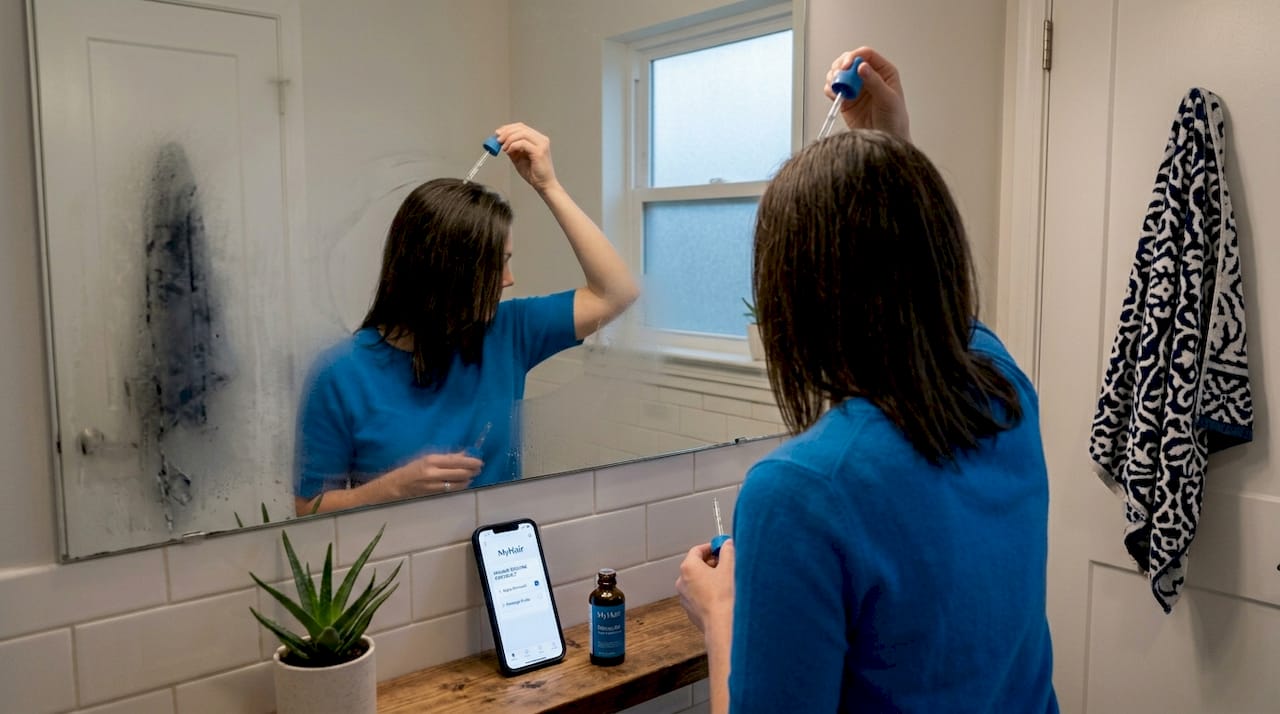
- Minoxidil application (daily or twice daily): Wait 24 hours after microneedling before applying minoxidil. Apply 1 mL to thinning areas using the dropper. Massage in for 60 seconds. Let it dry fully before styling.
- Rosemary oil (2-3x per week): Mix 5 to 6 drops of rosemary essential oil with a carrier oil like jojoba or coconut. Apply to scalp, massage for 5 minutes, leave for 30 minutes, then rinse. Rosemary oil is comparable to 2% minoxidil for androgenic alopecia when used consistently for six months. It is a powerful addition or standalone option for people who want to minimize chemical exposure.
- Finasteride (prescription only): Take as directed by your prescriber, typically once daily. Results emerge slowly over six to twelve months.
Safety note: More is not better when it comes to scalp devices. Using a microneedling tool more than three times per week, or pressing too hard, causes irritation, inflammation, and potential follicle damage. Stick to the recommended frequency and let recovery happen between sessions.
Choosing between home and clinical treatments
For most people dealing with early to moderate thinning, at-home protocols deliver strong results at a fraction of the cost. However, latest hair loss treatments like platelet-rich plasma (PRP) therapy, low-level laser therapy (LLLT), and hair transplants are worth considering when home treatments plateau. Exploring hair treatment products gives you a curated view of what pairs well together, and reading up on hair growth therapy can help you understand the science behind each option.
Combination therapy guidance from qualified clinics can customize in-office protocols to your specific thinning pattern and lifestyle, which is especially useful when you have tried at-home options for six months without adequate response.
Pro Tip: Consistency outperforms intensity every single time. A daily 60-second minoxidil application you actually do beats a perfect 10-step routine you skip half the time. Build the habit first, then optimize the protocol.
Tracking progress and optimizing your routine
Starting treatment is only half the journey. Success relies on staying accountable and adjusting as your hair changes.
How to track hair thickness accurately
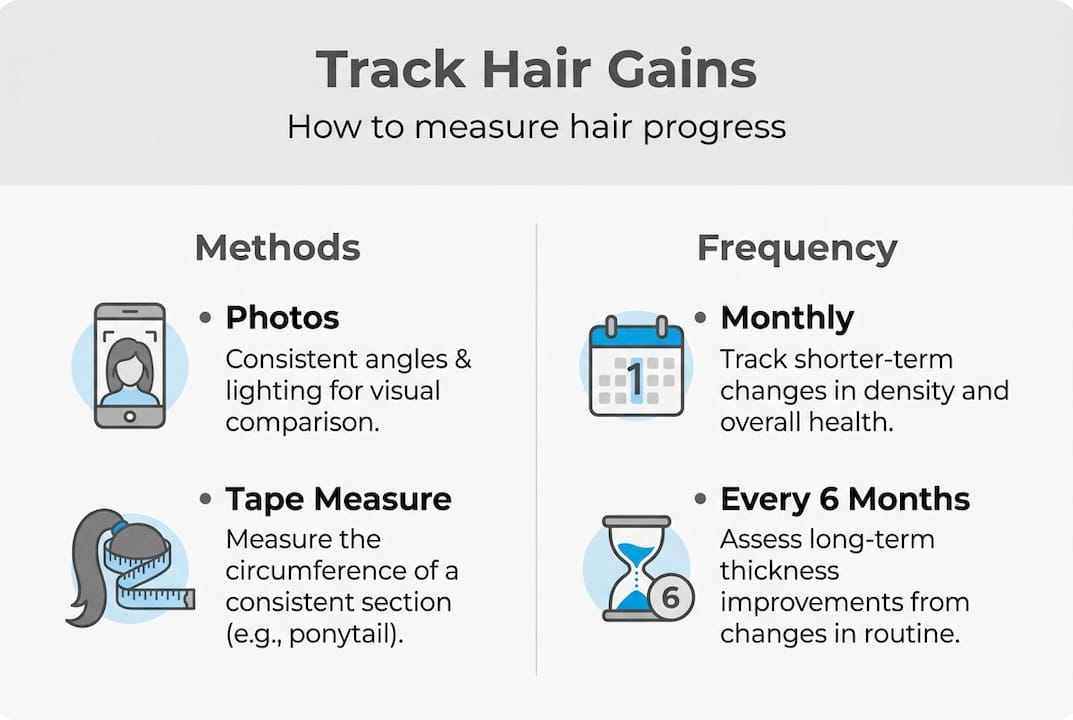
| Tracking method | Frequency | What it measures |
|---|---|---|
| Scalp photos (same angle, lighting) | Monthly | Visual density change |
| Hair pull test | Monthly | Active shedding level |
| Ponytail circumference | Monthly | Overall volume |
| Dermatologist trichoscopy | Every 6 months | Follicle health, miniaturization |
| AI hair scan (MyHair.ai) | Monthly | Hair shaft diameter, density score |
No single method tells the whole story. Combining photos with a simple circumference measurement or digital scan gives you a much clearer picture of what is actually happening.
Realistic time frames for visible change
- Month 1 to 2: You may notice increased shedding (called "dread shed" with minoxidil). This is normal and signals the follicles are transitioning to a new growth cycle. Do not stop.
- Month 3: Early regrowth, often fine or translucent, may appear along the hairline or part. Hair loss typically slows.
- Month 6: Meaningful visible improvement in density and thickness for most people following consistent protocols.
- Month 12: Full assessment of treatment efficacy. This is when switching or escalating treatment makes sense if results are insufficient.
PRP and minoxidil offer comparable gains in thickness and density, but PRP leads to higher satisfaction in some trials, likely because results feel more dramatic and require less daily maintenance. This is useful data when you are deciding whether to escalate to clinical options at month six or twelve.
When to change your approach
If you have followed a consistent protocol for six months and see no measurable improvement in photos or circumference, consider three things. First, check whether you have actually been consistent, because most people overestimate adherence. Second, rule out an underlying medical cause that is counteracting your efforts. Third, explore clinical research insights to identify whether a different evidence-backed treatment might suit your specific hair thinning pattern better.
Pro Tip: Set a calendar reminder every four weeks for your photo session and measurements. Treating it like a scheduled appointment makes it far more likely to happen consistently.
What most overlook about hair thickness gains
Let us step back with a reality check some sources will not tell you directly.
Most viral hair content promises transformation in 30 days. The reality is that hair follicles operate on a cycle lasting months, and no ingredient, device, or supplement can fully override that biology. The people who achieve real, lasting thickness gains are not the ones who found the secret ingredient. They are the ones who stayed consistent through the boring middle months when nothing seemed to be happening.
Generic routines fail because they are not built around your biology. Someone with diffuse thinning from iron-deficiency anemia needs a completely different approach than someone with DHT-driven androgenetic alopecia. Applying the same solution to different problems is why so many people cycle through products and feel like nothing works.
The most powerful thing you can do is track your data and adjust based on what it tells you. That beats chasing the next trending oil or supplement every single time. Reading about realistic treatment outcomes grounds your expectations in what the evidence actually supports, not what an influencer promises.
Small, consistent wins compound. A 5% improvement in density per month sounds unremarkable. Over a year, that trajectory produces genuinely visible results. Patience, personalization, and data-driven adjustments are not exciting advice. However, they are the actual answer.
Personalized solutions for your hair journey
Ready for the next level? Here is how you can make your plan smarter, not just harder.
Tracking, analyzing, and personalizing your hair routine is significantly easier when you have the right tools working for you.
MyHair.ai uses advanced AI to analyze your hair health from a simple scan, giving you a personalized score and tailored product recommendations based on your unique pattern of thinning. Instead of guessing what your hair needs, you get a clear picture. You can use the AI hair analysis tools to get an objective read on your hair density and shaft diameter, then get started with hair onboarding to build a treatment plan that fits your biology, not just a generic template. Use the platform to track your hair progress month over month so you always know whether to stay the course or pivot your approach.
Frequently asked questions
How long does it take to see thicker hair from treatment?
Most people start noticing meaningful changes in hair thickness after 3 to 6 months of consistent treatment. Hair shaft diameter and count increases are typically visible after 180 days or more with evidence-backed protocols.
Is microneedling at home safe for hair growth?
When following best practices like device hygiene and using a depth under 1 mm, at-home microneedling is generally safe and effective. Research confirms that microneedling combined with minoxidil at depths of 1 mm or less is both safe and enhances treatment efficacy.
Should I take biotin for thicker hair?
Biotin does not help hair growth unless you have a diagnosed deficiency, so check with your healthcare provider before starting any supplement. Biotin supplements are ineffective for most people and should not replace targeted, deficiency-based supplementation.
Which is better for hair thickness, PRP or minoxidil?
Both treatments increase thickness at similar rates in clinical trials, but PRP has higher patient satisfaction in some studies, likely due to less daily maintenance and a more dramatic perceived outcome. Your best option depends on your thinning type, budget, and how far along your hair loss has progressed.