TL;DR:
- Hair thinning affects both appearance and confidence, making understanding causes and treatments crucial. Identifying nutritional, genetic, or medical factors guides effective strategies, with consistent use of proven topicals like minoxidil and lifestyle habits supporting hair growth. Realistic timelines reveal that noticeable results emerge after several months, emphasizing the importance of patience, proper testing, and personalized plans.
Hair thinning doesn't just change how you look. It changes how you feel walking into a room. If you've noticed more strands on your pillow or a thinner ponytail, you're not imagining it, and you're not alone. Millions of people deal with the frustration of stalled or declining growth, but the path to increase hair growth is more concrete than most articles suggest. This guide covers the real factors behind hair loss, the nutrition your follicles need, topical treatments with actual evidence, and the daily habits that protect every strand you grow.
Table of Contents
- Key Takeaways
- What increases hair growth and what holds it back
- Nutrition and supplements to promote hair growth
- Topical and pharmacological treatments for hair regrowth
- Lifestyle habits that protect and support hair growth
- Setting realistic expectations and troubleshooting slow growth
- My honest take after years of tracking hair growth strategies
- See your hair health with Myhair's AI analysis
- FAQ
Key Takeaways
| Point | Details |
|---|---|
| Know your cause first | Identifying whether thinning stems from nutrition, stress, or genetics shapes which strategies will actually work. |
| Nutrition drives follicle function | Protein, vitamin D, biotin, iron, and zinc are the core nutrients your hair needs to grow and stay healthy. |
| Minoxidil requires commitment | Stopping treatment resumes hair loss, so long-term adherence is critical for lasting results. |
| Lifestyle protects your progress | Reducing heat, improving sleep, and managing stress prevent the breakage and shedding that undo growth gains. |
| Timelines are longer than you think | Most people see noticeable results after 3 to 6 months of consistent treatment, with fuller results at 12 months. |
What increases hair growth and what holds it back
Before you pick a product or change your diet, you need to understand what your hair is actually doing right now. Hair grows in three phases: anagen (active growth), catagen (transition), and telogen (resting and shedding). Most of your hair, roughly 85 to 90 percent, should be in the anagen phase at any given time. When something disrupts that cycle, you shed more than you grow.
The most common disruptors include:
- Nutritional deficiencies: Low iron, vitamin D, zinc, or protein directly impairs follicle function
- Chronic stress: Elevated cortisol pushes follicles into the telogen phase prematurely
- Genetics: Androgenetic alopecia (pattern hair loss) affects both men and women
- Medical conditions: Thyroid disorders, autoimmune diseases, and hormonal imbalances all affect hair cycles
- Physical or emotional triggers: Illness, surgery, childbirth, or extreme weight loss can cause sudden shedding
| Cause | Type of Hair Loss | Typical Onset |
|---|---|---|
| Nutritional deficiency | Diffuse thinning | Gradual, weeks to months |
| Telogen effluvium | Sudden shedding | 2 to 3 months post-trigger |
| Androgenetic alopecia | Patterned recession | Progressive, years |
| Thyroid disorder | Diffuse thinning | Variable |
| Stress or illness | Diffuse shedding | 2 to 4 months post-trigger |
If your hair loss is sudden, patchy, or accompanied by other symptoms, see a dermatologist before trying anything else. Self-treating without knowing the cause wastes time and money. Early intervention significantly improves the chances of restoring hair loss and getting follicles back on track.
Pro Tip: Ask your doctor to test ferritin (stored iron), vitamin D, zinc, and thyroid hormones before buying any supplement. These four account for the majority of nutrition-related hair thinning.
Nutrition and supplements to promote hair growth
Hair is made almost entirely of keratin, a protein. That single fact tells you everything about what your follicles need to build a strand from scratch. Adequate protein intake of at least 50 grams daily supports the structural foundation of every strand. If you're eating under your caloric needs or cutting protein to lose weight, your body will deprioritize hair and redirect nutrients to vital organs instead.
Beyond protein, several micronutrients play direct roles in follicle health and the hair growth cycle:
- Vitamin D: Supports follicle cycling. The Cleveland Clinic recommends 2,000 IU daily for hair support, with testing before starting
- Biotin: Popular and widely studied. The recommended dose is 3 to 5 mg daily, though it's most effective when a deficiency exists
- Iron: Low ferritin is one of the most common and overlooked causes of hair shedding in women. Get tested before supplementing
- Zinc: Supports cell division and follicle structure. Deficiency causes brittle, slow-growing hair
- Omega-3 fatty acids: Found in fatty fish, flaxseed, and walnuts. Support scalp health and reduce inflammation that can impair growth
- Vitamin C: Aids iron absorption and collagen synthesis, both relevant to follicle integrity
The best approach is food first. Eggs, salmon, lentils, spinach, pumpkin seeds, and sweet potatoes cover most of the nutrients above in whole-food form. You can explore hair-supportive food choices to build a practical shopping list around your specific deficiencies.
When food isn't enough, supplements fill the gap. But blind supplement stacking risks toxicity and ineffective treatment. Excess vitamin A, for example, actually causes hair loss. More is not better. Test first, supplement second, and stick to evidence-backed doses.

Pro Tip: Pair iron-rich foods with vitamin C at the same meal to significantly increase absorption. A spinach salad with lemon dressing beats an iron supplement for many people with mild deficiency.
Topical and pharmacological treatments for hair regrowth
Minoxidil is the most studied topical treatment for hair loss, and it works through two mechanisms. It prolongs the anagen (growth) phase of the hair cycle and improves blood flow to the scalp, delivering more oxygen and nutrients to follicles. Minoxidil 5% applied twice daily is the standard recommendation for men, while once daily is typical for women.
Here's how to apply it correctly:
- Apply to a dry scalp, not wet hair. The solution needs direct contact with skin
- Use the recommended dose. More does not improve results and increases side effects
- Let it dry fully before styling or going to bed
- Apply consistently every day. Gaps in treatment reduce effectiveness
- Give it at least 4 months before evaluating results
One of the most practical decisions you'll make is choosing between foam and liquid formulations. The liquid version contains propylene glycol, which causes irritation in many users and is a major reason people quit. Foam absorbs faster, causes less irritation, and tends to improve adherence over time. If you've tried liquid and stopped because of scalp reactions, foam is worth revisiting.
Other topical options worth knowing:
- Caffeine-based shampoos and conditioners: Research suggests that caffeine topicals may stimulate cellular metabolism in follicles, with some studies showing results comparable to drug treatments
- Antioxidant scalp serums: Products with niacinamide, retinol, or peptides support scalp health and may reduce oxidative stress on follicles
- Ketoconazole shampoo: Often used for dandruff, but also shows mild evidence for reducing DHT's impact on follicles in androgenetic alopecia
If topical treatments aren't producing results after 6 months, talk to a dermatologist. Oral minoxidil, finasteride (for men), or spironolactone (for women) are prescription options with stronger evidence for pattern hair loss. Oral minoxidil is more effective than the topical version but carries a higher risk of side effects, so medical supervision matters.
Pro Tip: If you're starting minoxidil, take a photo of your hairline and part width every 4 weeks in consistent lighting. Visual tracking makes it far easier to stay motivated during the slow early months.
Lifestyle habits that protect and support hair growth
You can take every supplement and apply every serum, but poor daily habits will undercut your progress. Effective ways to stimulate hair growth include what you stop doing just as much as what you start. Restrictive dieting is one of the fastest ways to halt hair growth, as your body pulls nutrients away from follicles the moment it perceives a deficit.
Protecting your hair from physical damage is another often-overlooked element of any solid hair care growth routine:
- Limit heat styling to two or three times per week and always use a heat protectant
- Avoid tight hairstyles like high ponytails or braids worn daily, which cause traction alopecia over time
- Switch to a silk or satin pillowcase to reduce friction-related breakage while you sleep
- Use a wide-tooth comb on wet hair and detangle from the ends upward to avoid snapping strands
- Minimize chemical treatments like bleach and relaxers, which degrade the hair's structural integrity
Scalp massage is one of the simplest habits you can add to improve hair growth. Massage improves blood flow to the scalp by dilating vessels beneath the skin. Even five minutes of firm circular pressure daily adds up. Pair it with a lightweight oil like rosemary or jojoba and you're adding topical benefit alongside the circulation effect.
Stress management belongs in every conversation about how to grow hair faster, because the cortisol response directly disrupts the hair cycle. Exercise, consistent sleep (7 to 9 hours), and daily stress reduction practices like breathwork or meditation all reduce cortisol levels. These aren't soft recommendations. They're direct inputs into your follicle's environment. You can build a healthy hair care routine around these pillars without adding much time to your day.
Setting realistic expectations and troubleshooting slow growth
One of the cruelest aspects of hair loss is the delay between cause and effect. When a stressful event, illness, or nutritional crash happens, you don't see the shedding for another 2 to 3 months. That lag makes it hard to connect the dots, and it's exactly why so many people panic when they see sudden thinning and assume it's permanent. This condition, telogen effluvium, resolves 3 to 6 months after removing the trigger, though chronic cases can take up to 12 months.
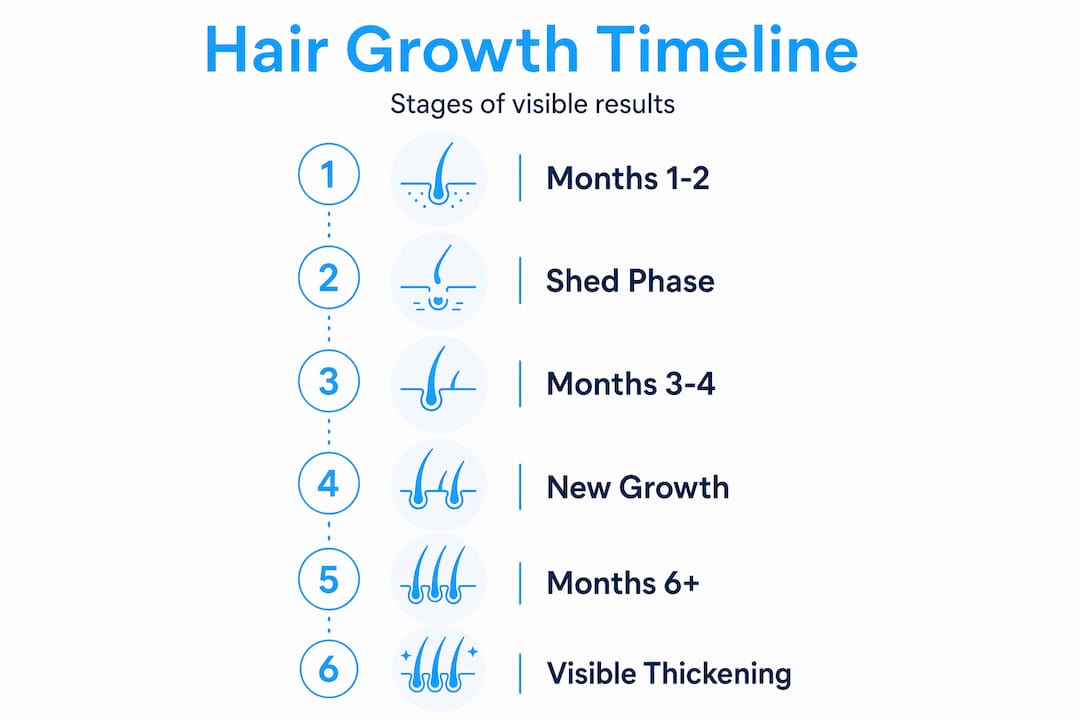
For people using treatments like minoxidil or changing their nutrition, here's a realistic timeline:
- Months 1 to 2: Possible increase in shedding as resting hairs are pushed out to make room for new growth. This is normal and temporary
- Months 3 to 4: Subtle signs of new growth, usually fine vellus hairs at the hairline or part
- Months 5 to 6: Noticeable improvement in density and thickness for most users
- Months 9 to 12: Fuller, more consistent results with continued treatment
| Stage | What to Expect | Action |
|---|---|---|
| Months 1 to 2 | Possible increased shedding | Stay consistent, don't stop |
| Months 3 to 4 | Fine new hairs appear | Track with photos |
| Months 5 to 6 | Visible density improvement | Reassess and adjust if needed |
| Months 9 to 12 | Fuller results | Continue and maintain |
If you see no improvement after 6 months of consistent treatment, go back to your doctor. The cause may not have been addressed, or the treatment may not match your specific type of hair loss. Common mistakes at this stage include inconsistent use, skipping supplements, or continuing habits that cause breakage.
Pro Tip: Never stop minoxidil abruptly without a plan. Stopping resumes hair loss progression at its natural rate. If you want to taper off, do it under medical guidance.
My honest take after years of tracking hair growth strategies
I've followed hundreds of hair growth cases and read through more clinical studies than most people would find tolerable, and the clearest pattern I've noticed is this: the people who succeed are almost always the ones who identified their specific cause early and treated it consistently. Not the ones who tried the most products.
What I've learned is that minoxidil is underused because the adherence challenge is real. People quit after 6 to 8 weeks when they don't see results, which is exactly when they should be doubling down. The foam formulation genuinely changes the experience for most people who struggled with the liquid, and I think it's underrecommended even now.
My other strong opinion: the nutrition piece is treated too casually. I've seen people spend heavily on topical treatments while eating a low-protein, nutrient-poor diet and wondering why nothing changes. Your follicles are living tissue. They need fuel. No serum fixes a starved follicle.
The people I'd most encourage to try tools like AI-powered hair analysis are those who feel like they've tried things without a clear picture of what's actually happening at the scalp level. Guessing is exhausting. Having data to track real change over time makes the whole process less demoralizing and more strategic.
— Cyriac
See your hair health with Myhair's AI analysis
If you've read this far, you're serious about making progress. The challenge most people hit next is not knowing whether what they're doing is actually working, at least not until months have passed.
Myhair uses AI-powered scanning to analyze your hair and scalp condition and generate a personalized hair health score based on your unique patterns. Instead of guessing whether your density is improving, you get measurable data over time. The platform also surfaces tailored product recommendations matched to your specific needs, not generic bestseller lists. Start with the scanner camera tool to get your first hair health assessment and a clear starting point for your growth plan.
FAQ
How long does it take to see results from hair growth treatments?
Most people notice early signs of new growth within 3 to 4 months of consistent treatment, with more visible improvements at 5 to 6 months. Full results typically appear closer to 12 months for both topical treatments and nutritional changes.
What nutrients are most important to promote hair growth?
Protein, vitamin D, biotin, iron, zinc, and omega-3 fatty acids are the most evidence-backed nutrients for hair growth. Getting tested for deficiencies before supplementing prevents unnecessary or harmful excess intake.
Does minoxidil work for everyone?
Minoxidil is most effective for androgenetic alopecia and diffuse thinning. It doesn't address hair loss caused by underlying medical conditions or severe nutritional deficiencies, so identifying your cause first determines how useful it will be.
Can stress really cause hair loss?
Yes. Chronic stress elevates cortisol, which pushes hair follicles into the resting phase early. The resulting shedding, known as telogen effluvium, typically appears 2 to 3 months after the stressful event and resolves once the trigger is removed.
Is it safe to take multiple hair growth supplements at once?
Not without testing first. Taking multiple supplements without knowing your deficiency levels risks excess intake of fat-soluble vitamins like vitamin A and D, which can actually worsen hair loss. Work with a doctor to identify what you're genuinely missing before stacking products.