
TL;DR:
- The Ordinary Multi-Peptide Serum supports mild thinning by improving scalp conditions and stimulating follicles.
- Consistent application, proper scalp preparation, and realistic expectations over several months are key for results.
- It works best as part of a broader hair health routine including nutrition, gentle styling, and medical consultation if needed.
Hair thinning catches most people off guard. You notice more strands on your pillow, a wider part in the mirror, or a scalp that looks a little too visible in certain lighting. You try one product after another without a clear plan, and nothing seems to stick. The Ordinary Multi-Peptide Serum for Hair Density has become one of the most talked-about options for people dealing with early-stage thinning, largely because it packs several well-studied ingredients into an affordable, no-frills formula. This guide walks you through exactly how it works, how to use it correctly, and how to tell if it's doing its job.
Table of Contents
- What is The Ordinary Hair Serum and how does it work?
- What you'll need: Preparing for application
- Step-by-step guide: How to apply The Ordinary Hair Serum
- Measuring results and optimizing your routine
- Why a multimodal approach to hair health matters more than any one serum
- Ready to personalize your hair growth plan?
- Frequently asked questions
Key Takeaways
| Point | Details |
|---|---|
| Works best for mild thinning | The Ordinary Hair Serum is most effective for early-stage hair thinning or as a maintenance product. |
| Consistency delivers results | Apply the serum daily for 3 months or more to notice significant changes in hair density. |
| Supportive, not a cure | This serum supports existing hair health, but is not a substitute for FDA-approved hair loss treatments. |
| Track and adjust your routine | Monitor your progress, combine with healthy habits, and revise your approach as needed for best outcomes. |
What is The Ordinary Hair Serum and how does it work?
With an understanding of your concerns, let's clarify exactly what this serum is and what it can, and cannot, do for your hair.
The Ordinary Multi-Peptide Serum for Hair Density is a leave-in scalp treatment designed to support thicker, denser-looking hair over time. It is not a shampoo, not a conditioner, and not a medical treatment. Think of it as a targeted booster that works at the scalp level to create better conditions for hair growth. It is best understood as one tool in a broader routine, especially if you are dealing with serums for thinning hair for the first time.
The key active ingredients and what they do
The formula includes five core actives, each with a distinct job:
- Peptides: Short chains of amino acids that signal hair follicles to stay in the growth phase longer. Research suggests peptide blends can reduce the time follicles spend in the resting phase, which directly supports visible density.
- Caffeine: A well-known vasodilator (something that widens blood vessels) that may increase blood circulation to the scalp, delivering more oxygen and nutrients to follicle cells.
- Redensyl: A patented compound that targets stem cells in the hair follicle. Early clinical data shows it can stimulate new hair growth, making it one of the more exciting ingredients in newer hair serums.
- Procapil: A blend of vitamins and a plant compound called biotinoyl tripeptide-1, designed to strengthen the hair anchor and reduce follicle miniaturization, which is the process where follicles gradually shrink and produce thinner strands.
- Baicapil: Derived from a plant called Scutellaria baicalensis, this ingredient is reported to reactivate dormant follicles and increase the number of hairs in the active growth phase.
| Ingredient | Primary Role | Supporting Evidence |
|---|---|---|
| Peptides | Prolong growth phase | Clinical peptide blend trials |
| Caffeine | Boost scalp circulation | Widely cited in dermatology literature |
| Redensyl | Stimulate follicle stem cells | Patented with in vitro studies |
| Procapil | Reduce follicle miniaturization | Manufacturer clinical data |
| Baicapil | Reactivate dormant follicles | Manufacturer clinical data |
"Best for mild thinning or maintenance; not a replacement for FDA-approved treatments like minoxidil, but
."
This distinction matters enormously. If you are experiencing significant or rapid hair loss, a serum like this will not reverse the underlying cause on its own. For people with mild thinning, early-stage diffuse loss, or those wanting to maintain current density, it fits well into a well-rounded approach to caring for thinning hair.
What you'll need: Preparing for application
Now that you know what this serum is and its strengths, let's prepare to use it by gathering the right tools and information.
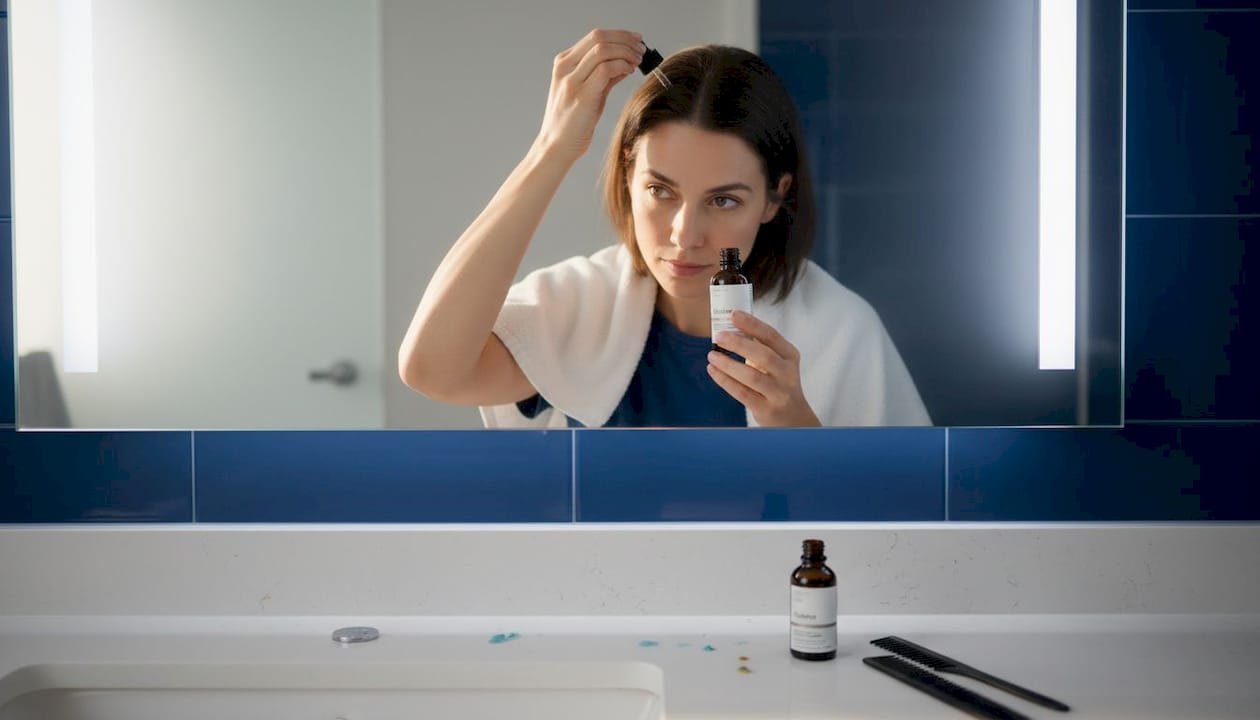
Good results depend as much on preparation as on the serum itself. Skipping this step is one of the most common reasons people feel disappointed after a few weeks of use.
Essentials checklist
Before your first application, gather the following:
- The Ordinary Multi-Peptide Serum for Hair Density (the dropper bottle)
- A clean towel for drying your scalp gently after washing
- A gentle, sulfate-free shampoo that does not strip your scalp of its natural oils
- A comb or sectioning clip to expose the scalp for precise application
- Optional: a scalp massager tool to assist with absorption during massage
Comparing your options
One question people ask often is: "Why not just use minoxidil?" Fair question. Here is how the two compare:
| Feature | The Ordinary Serum | Minoxidil (Topical) |
|---|---|---|
| FDA-approved | No | Yes |
| Prescription needed | No | No (OTC available) |
| Target user | Mild thinning, maintenance | Moderate to severe loss |
| Average monthly cost | Lower | Moderate to higher |
| Commitment required | Daily, long-term | Twice daily, indefinitely |
| Known side effects | Minimal | Scalp irritation, possible systemic effects |
| Time to results | 3 to 6 months | 4 to 6 months |
For people researching hair treatment options, the serum is a lower-risk starting point. For those dealing with more established or hereditary hair loss, pairing it with a clinically proven treatment may be a better strategy. Many clinics also offer advanced hair treatments that can complement at-home routines when loss has progressed further.
Timing and expectations
The best time to apply is at night, after washing your scalp. Your skin is clean, your pores are open, and there is no styling product or sweat barrier to block absorption. You can also apply to a clean, dry scalp on days you do not wash your hair.
Pro Tip: Do a patch test before your first full application. Apply a small amount behind your ear or on the inside of your wrist and wait 24 hours. This simple step can save you from scalp irritation on a larger area.
Set a realistic timeline from day one. Visible results typically require at least three months of consistent daily use. Some people see less shedding within the first four to six weeks, which is often the first sign the serum is doing something.
Step-by-step guide: How to apply The Ordinary Hair Serum
Once your materials are ready and you understand what to expect, it's time to start using the serum with the correct technique.
Most people who get poor results are not using the wrong product. They are using the right product incorrectly. Applying to hair strands instead of the scalp, skipping days without making up for them, or applying to a dirty scalp are the three most common mistakes.
The correct application process
- Wash your scalp with a gentle shampoo and rinse thoroughly. Pat dry with a clean towel. Your scalp should be damp, not soaking wet.
- Section your hair using a comb or your fingers to expose the scalp in the areas where thinning is most visible. Start at the crown and work outward.
- Fill the dropper with approximately 1 ml of serum (about one full dropper for most people).
- Apply directly to the scalp by placing the dropper tip against the skin and releasing small drops along each part. Work systematically across the entire thinning area.
- Massage gently using your fingertips in small circular motions for one to two minutes. This is not just for absorption — it also stimulates blood flow, which supports everything the caffeine in the formula is already trying to do.
- Leave it in. Do not rinse. The serum needs time on the scalp to work.
- Style as usual, but avoid heavy styling products on top of the serum immediately after, as they may reduce absorption.
Pro Tip: Focus every drop on your scalp, not your hair strands. The active ingredients work at the follicle level, which is below the surface. Coating your hair shaft accomplishes nothing.
Safety note: Do not apply this serum to broken, irritated, or sunburned skin. If you have any open wounds or active scalp conditions like psoriasis or seborrheic dermatitis, consult a dermatologist before starting.
Troubleshooting common mistakes:
- Overuse: Using more serum than recommended will not speed up results and may cause buildup that clogs follicles.
- Skipping days: Consistency is everything with follicle-targeted treatments. Missing multiple days resets the momentum your scalp was building.
- Applying to a dirty scalp: Product residue, sebum, and pollution act as a barrier. Always apply to a clean scalp for maximum penetration.
For context on what solutions for balding typically involve at various stages, the serum fits best in mild to moderate scenarios. Pairing it with supportive habits like using a thickening shampoo can reinforce the density effect you are working toward.
Measuring results and optimizing your routine
After applying the serum consistently, the next step is understanding what progress to expect and how to enhance overall results.
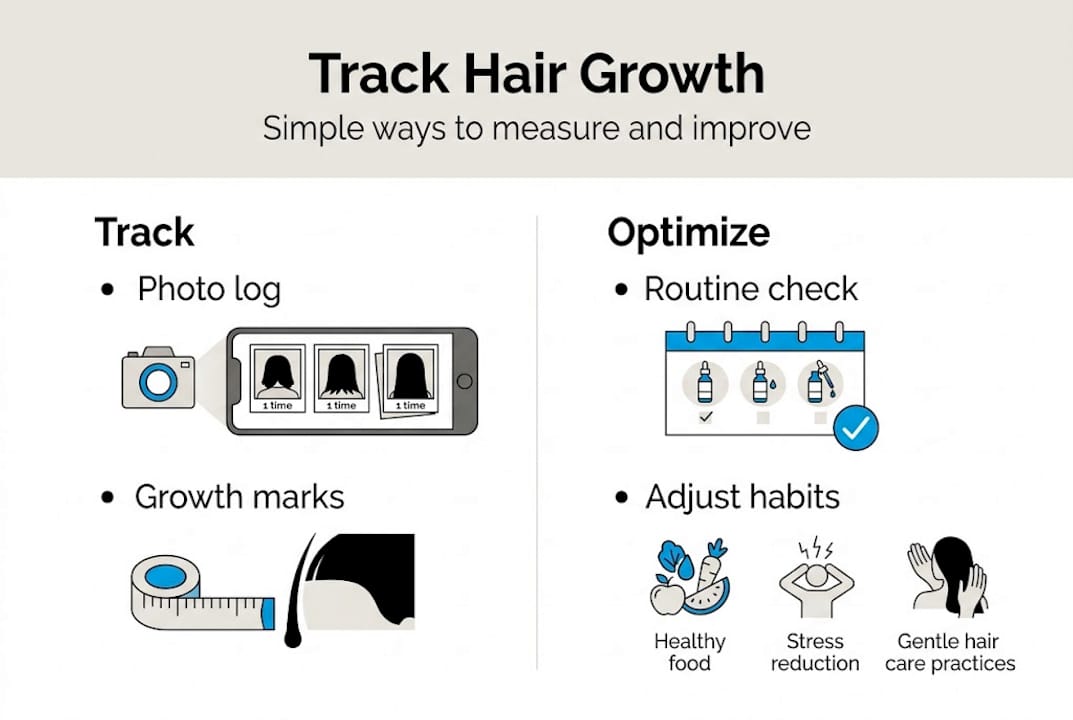
Tracking your progress prevents two common problems: abandoning a product that was actually working, or continuing one that genuinely is not. Both waste your time.
What to expect week by week
| Timeframe | What's Normal | Possible Red Flag |
|---|---|---|
| Weeks 1 to 4 | No visible changes; mild scalp tingling | Persistent burning or redness |
| Weeks 4 to 8 | Reduced shedding in shower or on pillow | No change in shedding at all |
| Weeks 8 to 12 | Baby hairs at hairline or part | Increased shedding (may indicate another cause) |
| Months 3 to 6 | Visible improvement in density | No progress at any level |
| 6 months plus | Maintained density or continued improvement | Plateau may require professional consultation |
How to self-assess at home
- Weekly photos: Take photos in the same lighting, from the same angle, every Sunday morning. Comparing monthly shows changes that are invisible day to day.
- Hair fall count: Count hairs lost during washing over three consecutive wash days. Losing 50 to 100 hairs per day is considered normal. Consistently more than that warrants attention.
- Part width: Photograph your part weekly. A narrowing part or less visible scalp is a reliable early sign of progress.
Optimizing your broader routine
The serum works best when your overall routine supports it. Consider these evidence-backed additions:
- Nutrition: Deficiencies in iron, zinc, vitamin D, and biotin are linked to hair loss. A simple blood panel from your doctor can tell you what to address.
- Scalp-friendly oils: Incorporating oils for thin hair like rosemary or pumpkin seed oil can complement the serum's work without interfering with it.
- Gentle styling: Tight hairstyles, excessive heat, and chemical processing accelerate follicle stress. Reducing these stressors gives the serum a better environment to do its job.
- Professional check-in: If results stall entirely after six months of consistent use, a dermatologist visit is worth it. Hair loss that does not respond to supportive therapy often has an underlying cause, such as hormonal imbalance or autoimmune conditions, that needs medical attention. Clinics offering professional hair care can also assess whether a clinical procedure makes sense at that stage.
Why a multimodal approach to hair health matters more than any one serum
Here is an uncomfortable truth most product-focused content does not tell you: no single serum, supplement, or shampoo has ever reliably reversed significant hair loss on its own. Not even the well-studied ones.
The Ordinary Multi-Peptide Serum is genuinely good at what it does. Its ingredient stack is science-informed, its price point removes financial barriers, and when used correctly, many people do see real improvements. But "real improvements" for most people means less shedding, slightly denser-looking hair, and a healthier scalp environment. It means better conditions for growth, not a reversal of an underlying condition.
What actually works for long-term hair health is treating it the same way you would treat your overall health: multiple inputs, consistent habits, and regular assessment. That means diet, stress management, scalp hygiene, and appropriate medical treatment if needed, all working together. Relying on beyond single solutions thinking is what separates people who see lasting improvement from those who cycle through products indefinitely.
The most common mistake we see is abandoning a serum at week six because the results are not dramatic. Hair growth is slow by biology. A full growth cycle takes months. Consistent, cumulative inputs over time are the only strategy that works. The serum is a valuable part of that system, not the whole system.
Ready to personalize your hair growth plan?
You now have the knowledge to use The Ordinary Hair Serum correctly. But knowing how to apply one product is just the start.
Real hair health progress comes from understanding your specific pattern of loss, tracking changes over time, and adjusting your approach based on what your scalp actually needs. MyHair.ai's AI-powered hair analysis scans your scalp and gives you a detailed picture of your current hair health in minutes. From there, the hair analysis onboarding process creates a personalized plan based on your unique pattern. You can also get your hair score to see exactly where you stand and which steps will move the needle most for your situation.
Frequently asked questions
How long does it take to see results from The Ordinary Hair Serum?
Most users notice initial signs like reduced shedding or fine new hairs within 3 months, but the serum works as supportive therapy and requires consistent daily use to deliver those results.
Can I use The Ordinary Hair Serum with minoxidil or other treatments?
Yes, pairing it with minoxidil is possible, but since the serum is not a replacement for FDA-approved treatments, space out applications and check with a dermatologist to minimize scalp irritation.
Is The Ordinary Hair Serum safe for sensitive scalps or color-treated hair?
The formula is generally gentle and free from harsh actives, but always patch test before your first full application and review the ingredient list if you have known sensitivities.
What should I do if I experience irritation after using the serum?
Discontinue use immediately and rinse your scalp with cool water. If redness, itching, or swelling continues after 24 hours, consult a healthcare provider.
Is The Ordinary Hair Serum suitable for men and women?
Yes, the formula is designed for all genders and works for anyone experiencing mild thinning or wanting to support and maintain hair density over time.