Breakage is your hair snapping along the shaft, not falling out at the root. If you're finding short, uneven pieces in your brush, split ends that catch on everything, or a duller texture than you remember, that's breakage talking. Stop heat and chemical stress for a few days, then run one quick test tonight.
- Grab a fallen strand and check the tip: no white bulb means it broke, not shed.
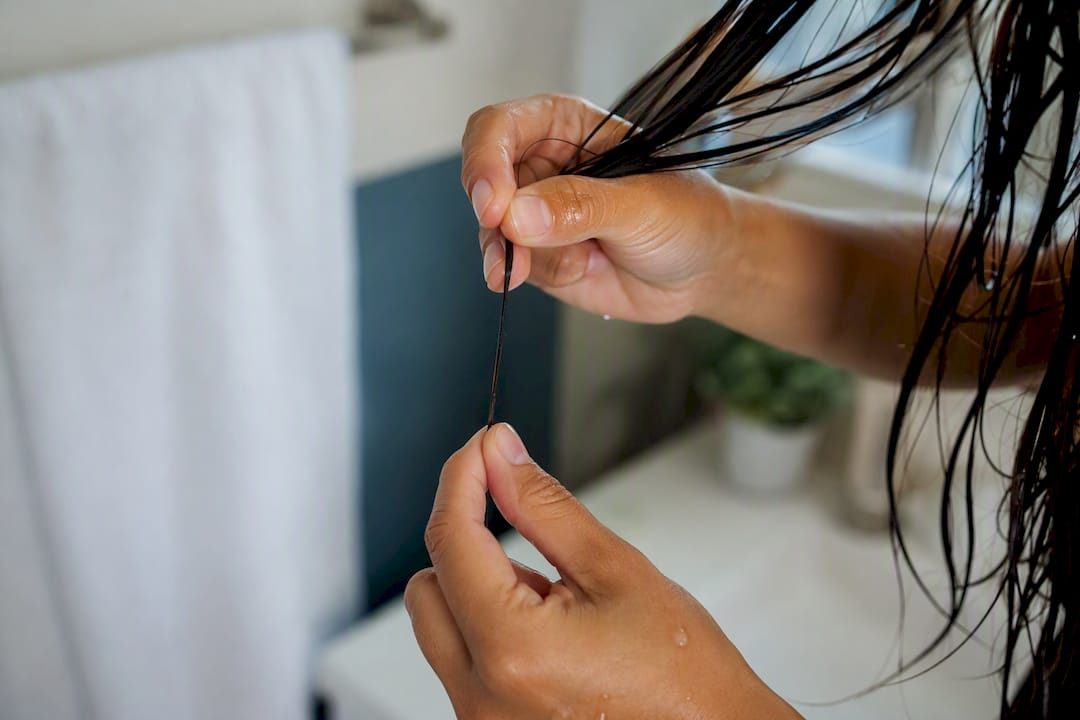
- Stretch a wet strand gently. Immediate snapping signals weak, damaged hair.
- Look at your ends in bright light for fraying or splitting.
Key Takeaways
Breakage shows up as blunt, uneven strand ends and dull texture, and confirming it takes one light test and one stretch test done at home tonight.
| Point | Details |
|---|---|
| Spot the difference | Broken hairs have no white bulb; shed hairs do, and that single check settles most confusion. |
| Run the wet stretch test | Immediate snapping signals low elasticity or a protein imbalance; excessive stretch without recoil signals a moisture gap. |
| Fix mechanical habits first | Skip rough towel-drying and wet brushing since water weakens hair's internal bonds the most. |
| Watch for medical red flags | Patchy thinning, scalp pain, or bulbed shedding warrants a ferritin and thyroid check. |
| Track change with data | Myhair's AI scan turns guesswork into a measurable hair score you can compare over weeks. |
Table of Contents
- Visual and Tactile Signs of Hair Breakage
- Quick At-Home Tests to Confirm Breakage
- What's Actually Causing the Breakage
- Prevention and Immediate Care Steps
- When Breakage Signals Something Bigger
- A Practical Way to Track What's Actually Working
- Track Your Progress With an AI Hair Scan
- Sources
- FAQ
Visual and Tactile Signs of Hair Breakage
The clearest indicators of hair breakage show up before you even reach for a test. Short, uneven fragments in your sink or hairbrush, with no tapered tip and no tiny white bulb at the end, are the single biggest tell. Shed hairs come out clean at the root. Broken hairs snap somewhere along the shaft, leaving a blunt or frayed edge.

Split ends and Y-shaped tips are next on the list. Once the protective cuticle layer wears away at the tip, the inner cortex separates into two or more strands, and the damage travels upward if you ignore it.
Dull, rough texture is a quieter signal, but it's just as reliable. Healthy hair has a flat, overlapping cuticle that reflects light evenly. Damaged hair has lifted or missing cuticle scales, so light scatters instead of bouncing back, which is exactly why breakage often shows up first as a loss of shine rather than an obvious snap. That same lifted cuticle causes the gritty, straw-like feel you notice when you run your fingers down a damaged section, and it's why split ends and rough texture often appear before full breakage rather than after.
- Frizz and tangling that didn't used to happen. Raised cuticle scales catch on each other, so strands grip instead of sliding smoothly.
- A halo of short flyaways around the hairline or part. This usually means breakage concentrated in one zone rather than even shedding across the scalp.
- Thinning that looks patchy at the part but not at the crown. Localized breakage often points to a specific habit, like a tight ponytail or one styling tool used daily.
- Hair that feels shorter than it should for how long you've been growing it out. Persistent breakage quietly caps your length even while new growth continues.
Pro Tip: *Take a photo of your part line and hairline under the same lighting once a month.
Quick At-Home Tests to Confirm Breakage
Four checks take less than five minutes and will tell you more than a mirror ever could.
- The light test. Hold a fallen hair up to a window or lamp. A tapered tip with a small white bulb means it shed naturally. A blunt, frayed, or split end without a bulb means it broke.
- The wet stretch test. Take a single wet strand and stretch it gently. Healthy hair stretches noticeably before springing back; hair that snaps immediately signals low elasticity or a protein imbalance.
- The ponytail comparison. Gather your hair and compare the thickness at the ends versus near the roots. A noticeably thinner tail end suggests ongoing breakage rather than shedding.
- The comb count. Note how many short, uneven fragments (not full-length strands) collect after one comb-through. A handful signals moderate damage; a fistful signals it's time to change your routine now.
What's Actually Causing the Breakage
Most breakage traces back to one of three buckets: mechanical, chemical or thermal, and internal.
Mechanical stress comes from daily habits you might not think twice about:
- Tight ponytails, braids, or buns that pull on the same section repeatedly
- Rough terry-cloth towels and cotton pillowcases that create friction against the cuticle
- Brushing or combing wet hair, when strands are at their most fragile
Chemical and thermal damage builds cumulatively:
- Bleaching and frequent coloring, which strip and weaken the cuticle
- Flat irons and curling wands used without a heat protectant
- Alkaline relaxers and other high-pH treatments
Internal contributors matter more than most people assume:
- Low protein intake or restrictive diets
- Iron deficiency
- Thyroid dysfunction, which affects the hair growth cycle broadly
Laboratory research on hair fibers found two distinct ways strands fail: centre splitting and edge splitting. Chemically damaged hair, like bleached strands, tends toward centre splitting and faster failure under repeated stress, which explains why over-processed hair seems to snap out of nowhere even when you haven't done anything different that week. It's not one bad day. It's the accumulated fatigue of small, repeated mechanical loads finally reaching a breaking point.
Prevention and Immediate Care Steps
Start by pulling back on whatever is causing the most damage. If that's heat, cut back the frequency and always use a heat protectant when you do style. If it's chemical processing, space out coloring appointments and ask about lower-damage alternatives.
- Skip the rough towel-dry. Dermatologists advise gentler drying and detangling because wet hair is at its most fragile.
- Switch to a wide-tooth comb and a microfiber towel or old cotton t-shirt for drying.
- Balance moisture and protein in your conditioning routine. If hair feels limp and stretches too much without recoil, add a protein treatment; if it feels brittle and snaps immediately, focus on moisture first.
- Rotate protective styles and swap elastic hair ties for fabric-covered ones to reduce snagging.
- Book trims every 8 to 12 weeks to cut split ends before they travel up the shaft.
The mechanism matters here: water disrupts the hydrogen bonds that hold hair's internal structure together, so treating wet hair gently isn't a nice-to-have, it's the single highest-leverage habit change most people can make. For a deeper routine breakdown, these hair breakage prevention tips cover product categories in more detail.
Pro Tip: If you're unsure whether to add protein or moisture first, do the wet stretch test again after two weeks of moisture-focused conditioning. If it still snaps immediately, that's your protein deficiency answer.
If breakage persists despite behavior changes, a diet low in protein or iron may need real correction, not just a supplement swap. Discuss labs with a clinician before assuming a deficiency on your own.
When Breakage Signals Something Bigger
Most breakage is a habit problem. Some of it isn't. See a dermatologist or primary care clinician if you notice:
- Patchy or unusually rapid thinning, rather than gradual length loss
- Scalp inflammation, pain, or scaly, oozing patches
- A widening part line combined with visible scalp
- A large number of shed hairs with intact white bulbs, which points to a growth-cycle issue rather than shaft breakage
A clinician will typically take a history, examine the scalp (sometimes with dermoscopy), and order blood tests for ferritin and thyroid function before recommending treatment. Persistent breakage that doesn't respond to gentler handling and reduced heat is a reasonable trigger for that visit, especially when internal causes like thyroid problems are on the list.
A Practical Way to Track What's Actually Working
Guessing whether your hair is improving is where most people get stuck. A simple workflow works better: note your history and habits, run the light and stretch tests, change one variable at a time, then reassess in six to twelve weeks, not six days.
Photos beat memory every time. Once the cortex physically fractures, that strand doesn't repair itself. The goal is stopping further breakage while healthier growth replaces it, and you can only tell if it's working by comparing consistent, dated evidence rather than relying on how your hair feels on any given morning.
— Cyriac
Track Your Progress With an AI Hair Scan
Guessing at your progress is the biggest reason people quit a hair care routine too early or too late. Myhair's scan gives you a measurable hair score, breakage indicators, and density readings from a photo, so you can see whether your last two months of gentler handling actually moved the needle instead of relying on memory.

The scan flags patterns you might miss in a mirror, like thinning concentrated at the part versus even breakage across the scalp, and tracks those numbers over time so trends show up before they become obvious. If your case looks like it needs professional eyes, Myhair's clinic directory connects you with specialists who can order the labs a persistent case might call for. Start with a free scan through the app and get a baseline reading before you change another product.
Sources
Guidance above draws on AAD haircare recommendations, Healthline's breakage overview, and peer-reviewed fiber mechanics research.
This article is general information, not a substitute for advice from a qualified doctor. Consult a qualified healthcare professional about your own circumstances before acting on anything here.
- Hair care habits that damage hair - American Academy of Dermatology (AAD)
- Hair fiber mechanics and splitting behavior - Royal Society Open Science (2023)
- Hair fiber vulnerability when wet - PMC article
FAQ
What Does Hair Breakage Look Like Compared to Shedding?
Breakage produces short, uneven fragments with blunt or frayed ends and no bulb, while shedding produces full-length strands with a small white bulb at the root.
How Can I Tell if My Hair Is Weak or Just Dry?
Run the wet stretch test: hair that snaps immediately when stretched wet points to weak, low-elasticity strands indicating protein imbalance, while hair that feels rough but stretches normally is more likely just dry.
Can Hair Breakage Grow Back?
Broken hair can't repair itself once the shaft is fractured, but healthier new growth replaces it if you address the underlying mechanical, chemical, or nutritional cause.
How Often Should I Check for Signs of Breakage?
A monthly photo comparison of your part line and hairline, paired with an occasional comb count, catches gradual changes that are easy to miss day to day.
Is an AI Hair Scan Actually Useful for Tracking Breakage?
Yes. Myhair's scan measures density and breakage indicators from a photo and tracks them over time, which removes the guesswork of comparing your hair to memory alone.