TL;DR:
- Normal hair shedding ranges from 50 to 150 hairs daily as part of natural hair growth cycles, but abnormal thinning presents with gradual density loss and scalp visibility. Early signs include a widening part, receding hairline, or crown thinning, often caused by genetics, hormonal shifts, stress, or nutritional deficiencies. Effective treatments like minoxidil and finasteride, combined with proper styling and lifestyle changes, can help manage thinning hair when diagnosed early.
Pulling a few extra strands from your brush this morning doesn't mean you're losing your hair. But when does a bad hair day cross the line into something worth watching? Most people swing between two extremes: dismissing genuine early warning signs or spiraling into worry over completely normal shedding of 50 to 150 hairs every single day. This guide will cut through that confusion. You'll learn how to objectively read what your hair and scalp are telling you, spot the real signals of thinning, understand what's driving changes, and find out which solutions actually work.
Table of Contents
- What's normal vs. cause for concern: Understanding hair shedding
- Early signs of thinning: What to look for in your hair and scalp
- Common causes of hair thinning: What's behind the changes?
- Most effective solutions: Treatments and expert-backed strategies
- Styling and lifestyle tips: Making hair look fuller today
- Cutting through hair thinning confusion: What most guides don't tell you
- Discover your best path forward with MyHair
- Frequently asked questions
Key Takeaways
| Point | Details |
|---|---|
| Know normal shedding | Losing up to 150 hairs a day is usually normal, but patterns matter more than numbers. |
| Spot early signs | Widening parts, less volume, or increased scalp visibility often signal true thinning. |
| Act early for best results | Starting treatment at the first sign of thinning gives the best chance for success. |
| Use a holistic approach | Combine medical, lifestyle, and styling strategies for the best hair health and confidence. |
| Expert help is valuable | Professional analysis and ongoing tracking will give you clarity and tailored options. |
What's normal vs. cause for concern: Understanding hair shedding
Before you can identify thinning, it's vital to understand what healthy shedding looks like and when to pay closer attention.
Your hair grows in cycles. Each strand passes through a growth phase (anagen), a transition phase (catagen), and finally a resting phase (telogen) before it naturally falls out and a new strand replaces it. At any given moment, roughly 85 to 90 percent of your hair is actively growing, while the rest is resting and preparing to shed. This means some daily shedding is not just normal. It's biologically essential.
Most people lose 50 to 150 hairs daily, though the exact number shifts based on hair thickness, washing frequency, and even the season. People with thick, coarse hair may see more strands in their brush simply because each strand is easier to spot. People who wash every two or three days may notice more shedding on wash day because those hairs accumulated between washes.
When should you start paying attention?
Here's what separates normal shedding from a red flag:
| Situation | Likely normal | Warrants attention |
|---|---|---|
| Hairs on pillow or brush | A few dozen daily | Sudden large increase |
| Shower drain | Some strands each wash | Noticeably more than usual |
| Duration of increased shedding | 1 to 2 weeks (e.g., after illness) | Longer than 6 to 8 weeks |
| Pattern of loss | Random, evenly distributed | Patterned, concentrated area |
| Scalp visibility | No change | More scalp visible over time |
Temporary increases in shedding happen. A stressful event, an illness, surgery, or a rapid diet change can push more hairs into the resting phase at once, a condition called telogen effluvium. You'll notice heavier shedding roughly two to three months after the trigger, not immediately. In most cases, this reverses on its own within six months.
What you're really tracking is trend, not snapshot. A single heavy shedding day proves nothing. A consistent, measurable increase sustained over weeks is a different story.
Pro Tip: Instead of counting hairs obsessively on one day, track your shedding week-to-week using a simple phone note or tally. Patterns become clearer over four to six weeks than they ever will in 24 hours.
Early signs of thinning: What to look for in your hair and scalp
Now that you know the difference between normal shedding and abnormal loss, let's look at the tell-tale signs that what you're seeing could be true thinning.

True hair thinning is rarely dramatic at first. It creeps in gradually, which is both its frustrating trait and your biggest opportunity. Catching it early means more treatment options and better outcomes. The challenge is that our brains are wired to normalize gradual change, so the person who sees you every day is often the last to notice.
According to Vogue's hair health reporting, thinning often presents as a gradual reduction in hair density and strand diameter, showing up as a widening part and more visible scalp in women, or recession plus thinning at the crown in men.
Here are the concrete early signs to watch for:
- Widening part line. If you notice your part looking wider or your scalp more visible under bright lighting, this is one of the clearest early indicators in women.
- Smaller ponytail circumference. If your hair tie wraps around more times than it used to, or your ponytail feels noticeably thinner, total hair volume has likely decreased.
- Receding hairline. Men typically notice the temples pulling back first or the hairline shifting. A bald spot at the front hairline is a common early pattern in male androgenetic alopecia.
- Crown thinning. A growing "see-through" area at the top of the head, especially visible in overhead lighting or photos taken from above.
- Finer strand texture. Individual hairs may feel thinner or more fragile before the total count drops significantly.
- More scalp visible in photos. Compare photos taken in similar lighting six to twelve months apart. This comparison often reveals what daily viewing hides.
"Hair thinning often shows up as gradual reduction in hair density, which may present as a widening part and more visible scalp, especially in women, or recession plus thinning at the crown, especially in men." — Vogue
Understanding hair thinning stages helps you calibrate how far along any changes might be. Early stages are characterized by subtle density shifts, while later stages involve clearly visible scalp and significant volume loss. Similarly, hairline hair loss follows recognizable patterns that differ between men and women, which matters when choosing the right treatment path.
Common causes of hair thinning: What's behind the changes?
Identifying early clues is just step one. Knowing what might be driving the change points you toward the smartest next step.
Hair thinning rarely has one cause. Usually, it's a combination of factors layered on top of a genetic predisposition. Understanding the most common drivers helps you have a more informed conversation with a dermatologist and make smarter choices about hair thinning progression and care.
-
Genetics. Hereditary hair loss, known as androgenetic alopecia, is the most common cause for both men and women. It's triggered by sensitivity to dihydrotestosterone (DHT), a byproduct of testosterone that gradually shrinks hair follicles. If your parents or grandparents experienced significant thinning, your risk is meaningfully higher.
-
Hormonal shifts. Pregnancy, postpartum recovery, perimenopause, menopause, and thyroid disorders all interfere with the hormones that regulate hair growth cycles. Postpartum shedding, for example, is extremely common and typically peaks three to four months after birth before resolving naturally.
-
Stress and illness. Both acute and chronic stress can trigger telogen effluvium. Physical stressors like surgery, severe infection, or crash dieting are particularly potent triggers. The lag between the stressor and the shedding often leads people to miss the connection entirely.
-
Nutritional deficiencies. Low iron, ferritin, zinc, vitamin D, and protein are all linked to increased hair shedding. A diet too low in calories or heavily restricted in food groups can deprive follicles of the nutrients they need to sustain the growth phase. This is especially common in people who have recently lost significant weight.
-
Harsh styling and over-processing. Tight hairstyles (traction alopecia), chemical relaxers, bleaching, and excessive heat all damage the hair shaft and, over time, can impair follicle health. This kind of damage is cumulative and easy to underestimate until it becomes visible. Good hair care for thinning hair addresses these habits directly.
-
Medical conditions and medications. Scalp conditions like seborrheic dermatitis or psoriasis can disrupt follicle function. Certain medications, including some blood pressure drugs, antidepressants, and chemotherapy agents, list hair loss as a side effect.
Pro Tip: If you suspect a nutritional cause, get bloodwork done before self-supplementing. Too much of certain nutrients (like vitamin A) can actually worsen hair loss rather than help it.
Most effective solutions: Treatments and expert-backed strategies
Having identified your possible cause, let's move to what actually works and what to consider when choosing your approach.
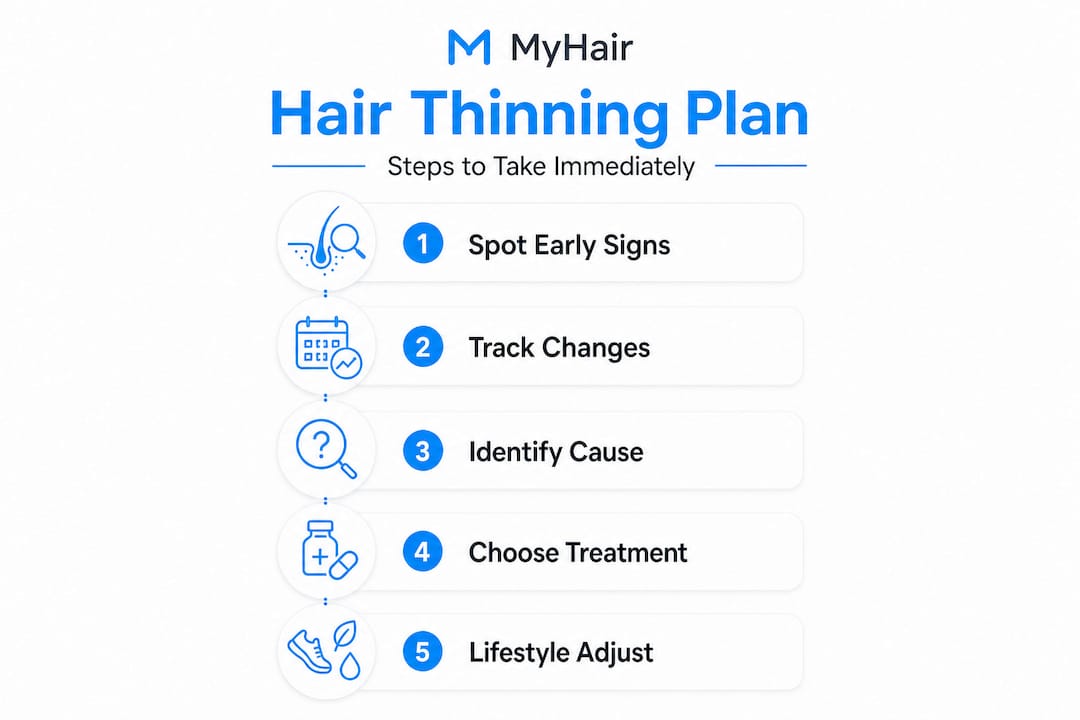
Not all hair loss treatments are created equal, and the evidence behind them varies significantly. Here's a clear breakdown of what's supported by clinical data and what's best used as a complement to medical care.
| Treatment | Evidence level | Best suited for |
|---|---|---|
| Minoxidil (topical or oral) | Strong | Both men and women, multiple causes |
| Finasteride (oral) | Strong | Men with androgenetic alopecia |
| Combination therapy | Growing evidence | Moderate to advanced cases |
| Low-level laser therapy | Moderate | Early to moderate thinning |
| PRP (platelet-rich plasma) | Emerging | Adjunct to other treatments |
| Nutritional supplementation | Variable | Deficiency-driven shedding |
Clinical research confirms that for male androgenetic alopecia, minoxidil and 5-alpha-reductase inhibitors like finasteride and dutasteride can improve hair outcomes, with combination approaches outperforming single treatments in some analyses. The key word in any of these studies is ongoing. Stop the treatment, and the benefits reverse.
Women have fewer approved pharmaceutical options but respond well to topical minoxidil. Oral minoxidil at low doses is increasingly used off-label and shows strong results in clinical practice.
- Start early. The sooner you address thinning, the more follicles remain active and responsive to treatment.
- Be patient. Meaningful results from minoxidil typically take four to six months of consistent daily use.
- Consider professional input. A dermatologist or trichologist can identify your specific cause and tailor a protocol to your biology.
- Explore hair loss treatment strategies that combine medical and supportive approaches for the best chance at real improvement.
- Check out expert tips for thinning hair for a 2025 perspective on the newest approaches gaining traction.
Pro Tip: Combining a proven medical treatment with supportive cosmetic strategies gives you immediate visual improvement while the medical treatment works underneath. Don't wait six months staring at the mirror.
Styling and lifestyle tips: Making hair look fuller today
While long-term treatments get to the root, simple styling tactics can help you feel more confident today.
You don't have to wait for a treatment to kick in to look and feel better. Several practical adjustments make a meaningful difference in how thinning hair appears, and some of them also support the health of the follicles underneath.
Smart styling choices:
- Use a volumizing or thickening shampoo designed to lift the hair shaft from the scalp, creating visual density without weighing hair down.
- Opt for lightweight, leave-in conditioners rather than heavy creams that flatten fine hair against the scalp.
- Try a side part instead of a center part. It shifts hair across the head and naturally covers more scalp area.
- Blow-dry with a round brush, lifting hair away from the scalp before drying to create root lift that lasts.
- Avoid heavy oils or waxes directly on the scalp. Instead, apply natural hair oils and masks from mid-shaft to ends to avoid buildup.
- Explore hair products for thinning hair that are specifically formulated to add lift and minimize scalp exposure.
Lifestyle support:
- Eat protein at every meal. Hair is made almost entirely of a protein called keratin, and insufficient dietary protein directly impairs growth.
- Minimize heat styling frequency. Let hair air dry when possible and use a heat protectant when you can't avoid it.
- Manage stress actively. Exercise, sleep, and mindfulness practices all support hormone regulation, which directly affects the hair cycle.
- Explore natural hair thickening methods that complement medical treatments without harsh chemicals.
- Learn how to make thin hair look thick using proven expert solutions that go beyond just dry shampoo.
A Vogue feature on hair thinning recommends comparing current density and part width to older photos under similar lighting as a practical self-check, noting that progressive or concerning changes warrant a dermatology evaluation regardless of the cause.
Pro Tip: Scalp massage for five to ten minutes daily increases blood flow to follicles and may support growth. Use your fingertips (not nails) with gentle circular pressure. Pair this with a mild scalp exfoliator once a week to remove buildup that can clog follicles.
Cutting through hair thinning confusion: What most guides don't tell you
Reading guides about hair thinning often makes diagnosis feel simple. Spot these symptoms, rule out that cause, pick this treatment. Real life is messier than that, and the advice that sticks is the kind that's honest about complexity.
The first uncomfortable truth is that self-diagnosis is unreliable. Not because people aren't observant, but because thinning progresses so slowly that the human eye compensates without realizing it. You adapt to the mirror. This is exactly why side-by-side photo comparisons over time are more trustworthy than your daily impression. A photo from six months ago doesn't adjust to make you feel better. It just shows what's there.
The second thing most guides skip over: the value of objective tracking tools. Knowing what stage of thinning you're at changes everything about your treatment options. Early-stage thinning is far more responsive to treatment than mid to late-stage loss. Yet most people wait until the change is dramatic before doing anything, which limits their options significantly.
The third gap in most advice is the expectation of a single fix. There is no one treatment that works for every type of thinning in every person. Genetics, hormones, stress, and lifestyle all interact. Someone whose thinning is stress-driven needs a completely different approach than someone with hereditary androgenetic alopecia. A personalized assessment, not a generic protocol, is what actually produces results.
Finally, don't underestimate the psychological weight of this process. Hair is tied to identity and self-perception in deeply personal ways. Tracking changes and waiting for treatments to work requires patience that most guides treat as a footnote. Build realistic timelines into your plan and recognize that early intervention, even before thinning is dramatic, is one of the most powerful decisions you can make.
Discover your best path forward with MyHair
If you've been nodding along to this guide, wondering which of these signs apply to you and which cause fits your situation, that uncertainty is exactly what MyHair.ai is built to resolve.
MyHair's AI-powered hair analysis gives you an objective, data-driven look at your hair density and scalp health without guesswork or self-comparison bias. You get a detailed assessment based on your actual scan, tracked over time so you can see real changes rather than imagining them. From there, you receive personalized product and treatment recommendations matched to your specific pattern and needs. Whether you want to track hair count consistently over weeks or connect with a specialist through a professional hair consultation, MyHair puts clear, actionable answers in your hands from day one.
Frequently asked questions
What is the first sign my hair is thinning?
A wider part, more visible scalp, or decreased volume are early signs of thinning, and early detection is easier with side-by-side photo comparisons over several weeks.
How much hair shedding is normal?
Most people lose 50 to 150 hairs every day as part of the normal shedding cycle, though this varies based on hair type and washing habits.
What is the most effective treatment for thinning hair?
Minoxidil and finasteride, alone or combined, are backed by clinical evidence as effective for many cases, though results require ongoing use and vary by individual.
When should I see a specialist about hair thinning?
Consult a dermatologist if your thinning is rapid, patchy, or paired with scalp symptoms, or if self-tracking over several weeks shows a persistent reduction in density rather than a temporary surge.
Can lifestyle and hair care habits really make a difference if my hair is thinning?
Yes. Proper nutrition, gentle styling, and targeted hair care can improve appearance and may slow progression when combined with medical treatment rather than used as a standalone solution.