TL;DR:
- MyHair.ai and HairHealth.ai are the leading AI-based hair assessment tools in the US, offering personalized insights from scalp scans.
- While useful for tracking and pattern recognition, they cannot replace comprehensive clinical diagnosis or lab work.
The strongest AI-based alternatives to kopelmanhair.com available in the US right now are MyHair.ai and HairHealth.ai. Both use machine learning to analyze hair and scalp conditions from uploaded photos, generate personalized growth projections, and match users to targeted product recommendations. Neither replaces a dermatologist, but they give you a real starting point that a generic quiz simply cannot.
| Platform | US Available | Personalization Tech | App Access | Follow-Up Options | Product Rec Scope |
|---|---|---|---|---|---|
| MyHair.ai | Yes | AI scan analysis, growth tracking | Yes (app) | Ongoing monitoring | Tailored to scan results |
| HairHealth.ai | Yes | AI baldness grading, cost prediction | Web-based | Doctor referral | Extensive brand catalog |
Clinical experts are clear that AI works best as a companion tool, not a standalone diagnosis. The platforms below reflect that principle in different ways.
Table of Contents
- How do the top AI hair assessment platforms compare?
- How do you choose the right AI hair assessment service?
- Myhair gives you AI-powered hair analysis without the guesswork of generic sites
- FAQ
- Key Takeaways
How do the top AI hair assessment platforms compare?
MyHair.ai
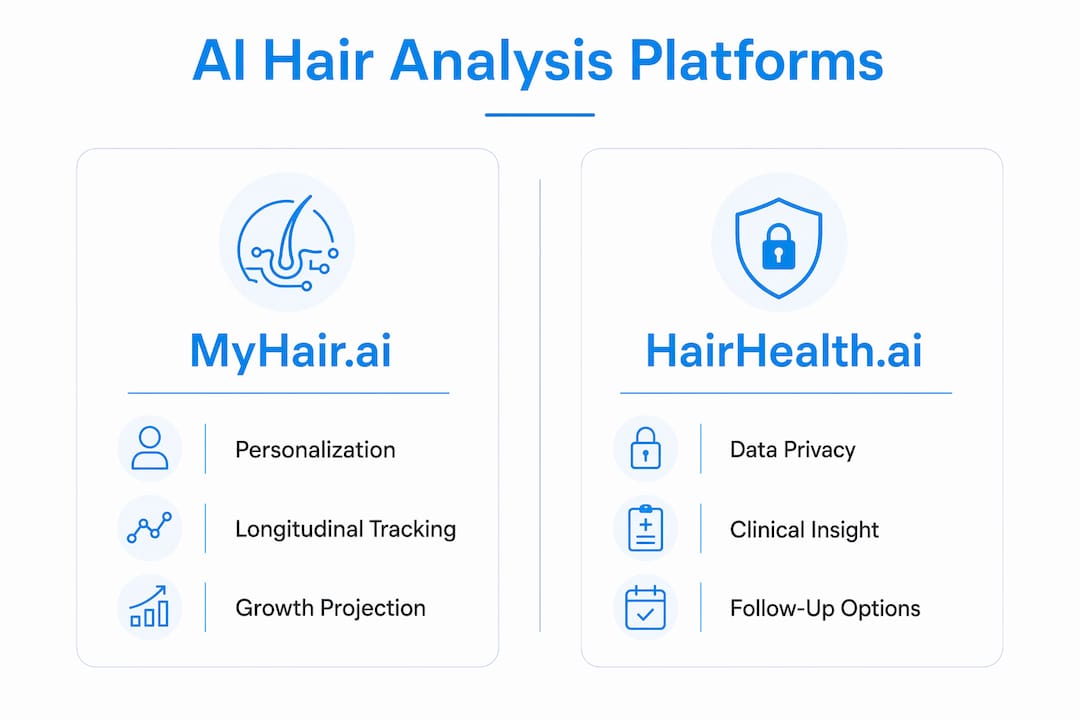
MyHair.ai runs uploaded scans through advanced algorithms to produce a personalized hair health score, growth projections, and product suggestions tied to your specific pattern. The app interface is clean and accessible, and the platform is built for ongoing tracking rather than a one-time read. That long-term monitoring angle is where it genuinely separates itself from most competitors.
HairHealth.ai
HairHealth.ai takes a broader diagnostic approach. Its AI grades baldness severity, estimates transplant costs, and connects users to doctors when clinical intervention looks warranted. The brand catalog integration is extensive, so product matches feel less generic than what you get from a questionnaire-only service.
Key differences worth knowing:
- MyHair.ai prioritizes scan-based tracking and personalized product alignment through its app.
- HairHealth.ai adds cost prediction and a doctor-referral layer, useful if you are already thinking beyond topical treatments.
- Both platforms are transparent that their AI cannot replicate a full clinical workup, which includes patient history, physical exam, imaging, and lab results.
On data privacy: neither platform publicly lists detailed HIPAA compliance documentation, so if you are uploading scalp photos, read each service's privacy policy before submitting images.
What clinical experts say: Effective hair loss management typically requires a prolonged period of consistent treatment with a clear follow-up plan. Platforms that offer one-time assessments with no structured check-ins fall short of that standard, regardless of how sophisticated their algorithms are.
How do you choose the right AI hair assessment service?
Picking the right platform comes down to a few concrete criteria, not marketing language.
- Clinical oversight: Does the service connect you to a licensed provider, or does it stop at product recommendations?
- Personalization depth: Is the assessment based on your actual scan data, or a generic questionnaire?
- Transparency: Can you see how the AI reached its conclusions? Opaque outputs are harder to act on.
- Follow-up structure: Quality hair loss care involves scheduled monitoring, not a single report.
- Pricing clarity: Avoid services where costs are buried or tied to mandatory subscriptions with no clear clinical benefit.
Interpreting AI output critically matters too. Machine learning models trained on imaging data can identify patterns, but they cannot account for thyroid function, iron deficiency, hormonal shifts, or medication side effects. Those factors require lab work and a physician. The 5-layer diagnostic framework used by hair loss specialists covers patient history, physical exam, imaging, labs, and physician assessment. AI tools currently assist with imaging and pattern recognition. The other layers still need a human.
The best treatment depends on your specific loss pattern and risk tolerance, not on which product bundle a platform happens to carry.
Pro Tip: Look for platforms that offer longitudinal tracking, not just a one-time snapshot. Comparing scans over 3–6 months gives you objective evidence of whether a treatment is working, which is far more useful than a single AI score.
For a broader look at AI hair assessment options beyond these two platforms, the range of tools available in the US has expanded considerably in 2026.
Myhair gives you AI-powered hair analysis without the guesswork of generic sites
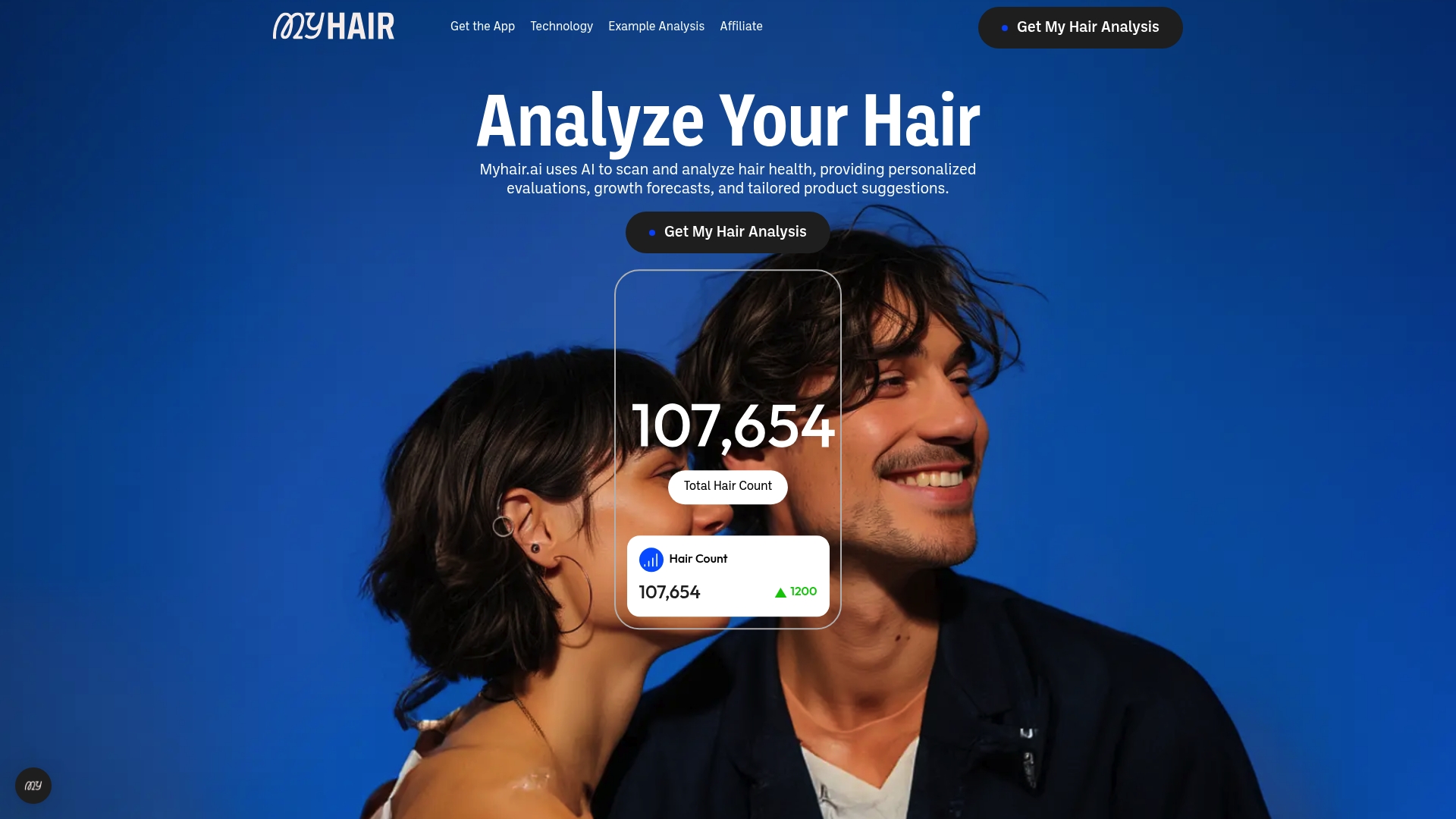

Most hair assessment sites hand you a questionnaire and a product bundle. Myhair does something different: it analyzes your actual scan data using AI algorithms to produce a personalized hair health score, growth projections, and product recommendations tied to what the scan shows, not what a quiz infers. You can track changes over time through the app, which means you are building real evidence of progress rather than relying on bathroom-mirror impressions.
For users who want AI-driven insights without committing to a clinical program upfront, Myhair is a practical first step. Start your AI hair analysis today and get a personalized assessment based on your own scan data.
FAQ
What are the best kopelmanhair.com alternatives in the US?
MyHair.ai and HairHealth.ai are the strongest AI-based alternatives currently available in the US, offering personalized assessments, product recommendations, and varying levels of clinical connection.
Can AI replace a dermatologist for hair loss diagnosis?
No. AI tools assist with pattern recognition and tracking, but a full diagnosis requires patient history, physical exam, and lab work that only a licensed clinician can provide.
How long does hair loss treatment typically take to show results?
Effective hair loss management generally requires 6–12 months of consistent treatment with structured follow-up, not a one-time assessment.
Does Myhair offer ongoing hair tracking?
Yes. Myhair is built for longitudinal monitoring, letting you upload scans over time to track changes and measure whether your approach is working.
Key Takeaways
AI hair assessment platforms are most effective when paired with professional medical oversight, not used as a standalone diagnostic tool.
| Point | Details |
|---|---|
| Top US alternatives | MyHair.ai and HairHealth.ai lead for AI-based personalized hair health assessment in the US. |
| AI has real limits | Machine learning cannot replace lab work, physical exams, or patient history in hair loss diagnosis. |
| Follow-up matters | Quality care involves 6–12 months of monitored treatment, not a single AI-generated report. |
| Choose on substance | Evaluate platforms by clinical oversight, personalization depth, and follow-up structure, not marketing claims. |
| Myhair's approach | Myhair delivers scan-based AI analysis with ongoing tracking and tailored product recommendations via its app. |