TL;DR:
- Laser therapy stimulates dormant hair follicles using light energy, but it cannot regrow hair on completely bald areas. It is most effective for early-stage androgenetic alopecia with miniaturized, yet intact, follicles when used consistently over several months. Combining laser treatment with medications like minoxidil or finasteride enhances results, especially with proper diagnosis and ongoing maintenance.
If you've been watching your hairline shift or your part widen, you've probably landed on laser treatment for hair loss as a potential fix. The marketing makes it sound almost too good. In reality, the science behind it is solid, but it comes with limits that most product pages won't tell you. This guide breaks down exactly how low-level laser therapy works, who actually benefits from it, what the devices look like across different price points, and how to fit it into a real treatment plan that gives you the best chance at results.
Table of Contents
- Key takeaways
- How laser treatment for hair loss works
- Who benefits most from laser hair therapy
- Laser hair restoration devices: what to look for
- What to expect during and after treatment
- Combining laser therapy with other treatments
- My honest take on laser therapy
- Track your progress with Myhair's AI hair analysis
- FAQ
Key takeaways
| Point | Details |
|---|---|
| Science-backed, not magic | Laser therapy stimulates dormant follicles using light energy, but it cannot regrow hair on completely bald areas. |
| Best for early-stage hair loss | Candidates with androgenetic alopecia and miniaturized follicles see the strongest results from laser treatment. |
| Consistency is non-negotiable | Visible improvement typically takes 3 to 6 months of regular sessions, with ongoing maintenance required afterward. |
| Combination therapy wins | Pairing laser therapy with minoxidil or finasteride produces better outcomes than laser treatment alone. |
| Get diagnosed first | A dermatologist visit before starting any laser treatment helps confirm the cause of your hair loss and whether laser therapy is appropriate. |
How laser treatment for hair loss works
The technology at the center of this treatment is called Low-Level Laser Therapy, or LLLT. Unlike surgical options or topical treatments, LLLT uses specific wavelengths of red light to reach your hair follicles and trigger biological changes at the cellular level. It's a process called photobiomodulation, which is a complicated word for a fairly logical concept: light energy absorbed by cells gives them fuel to function better.
Here's what happens at the follicle level:
- Mitochondrial stimulation. LLLT targets cytochrome C oxidase in follicle cells, an enzyme in the mitochondria that converts light energy into ATP. ATP is the cellular fuel your follicles need to stay active and produce hair.
- Increased blood flow. Laser energy causes capillaries near the hair follicle to dilate, delivering more oxygen and nutrients directly to the follicle root.
- Reduced inflammation. Scalp inflammation is a known contributor to follicle miniaturization. Laser therapy helps reduce scalp inflammation, which creates a better environment for hair to grow.
- Phase transition. The combined effect pushes follicles from their resting phase (telogen) into the active growth phase (anagen), and extends how long follicles stay in that growth phase.
What this means practically is that laser therapy works on miniaturized follicles that are still alive but underperforming. It does not create new follicles, and it cannot regrow hair on scalp areas where follicles have already been destroyed. Think of it as waking up dormant machinery, not building new machinery from scratch.
Pro Tip: Laser hair growth devices and laser hair removal devices are not the same thing. Hair removal uses high-energy lasers to destroy hair follicles, while LLLT uses low-level red light to stimulate them. Completely opposite mechanisms, completely different devices.
Who benefits most from laser hair therapy
Laser treatment is not a universal solution. The people who get the most out of it share a fairly specific profile.
You are a strong candidate if you have early to moderate androgenetic alopecia, the pattern baldness that affects both men and women due to DHT sensitivity. LLLT is most effective when miniaturized follicles are still present on the scalp, because those are the follicles the laser can stimulate. You're also a good candidate if your hair loss is non-scarring, meaning the follicle structures are intact even if the follicles are underactive.
Laser therapy is significantly less likely to help if:
- Your scalp shows extensive, visible baldness with no active follicle activity
- You have scarring alopecia, where inflammation has already destroyed follicle tissue
- Your hair loss is caused by a medical condition like thyroid disease, nutritional deficiency, or autoimmune conditions such as alopecia areata
- You're on photosensitizing medications without medical clearance
This last point matters more than most people realize. Accurate diagnosis of the underlying cause of your hair loss is not optional before starting laser treatment. If your hair loss is driven by iron deficiency or a thyroid imbalance, no laser device will fix that. A dermatologist can confirm what you're actually dealing with, which tells you whether laser therapy belongs in your plan at all.
Pro Tip: Think about laser therapy as a stabilizer and enhancer, not a restorer. The realistic goal for most people is slowing loss and thickening existing hair, not achieving a full head of hair from scratch.
Laser hair restoration devices: what to look for
The device market for at-home laser hair therapy has expanded significantly. You'll find three main form factors: laser caps, helmets, and combs. Each has tradeoffs.
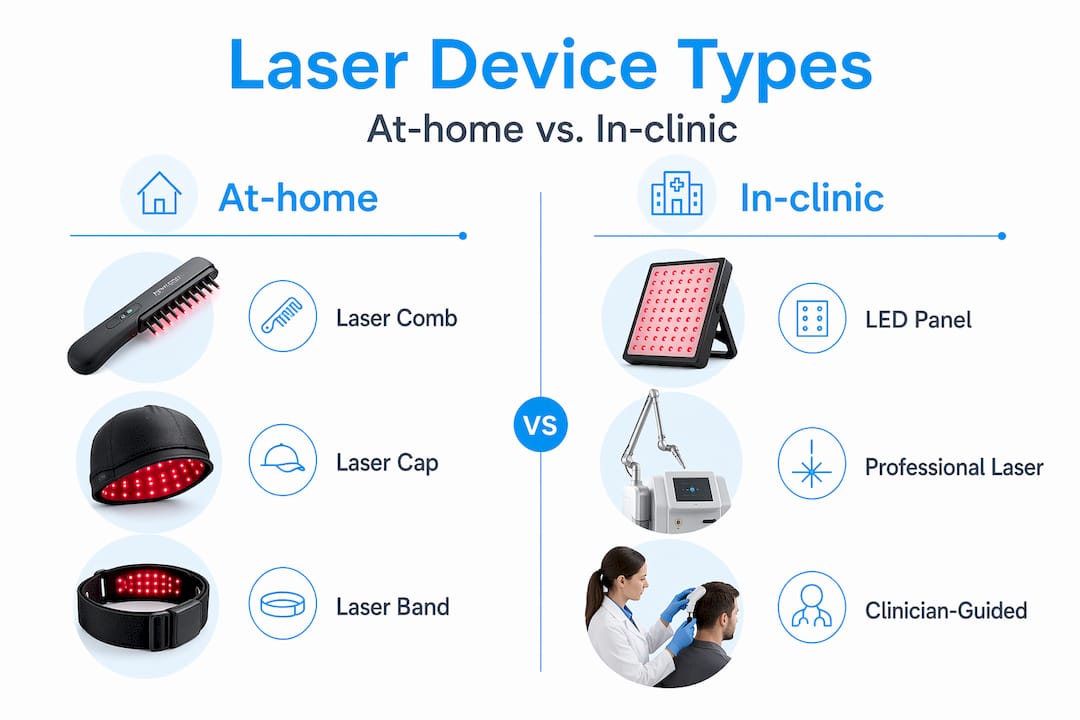
| Device type | Coverage | Typical price | Best for |
|---|---|---|---|
| Laser comb | Partial, manual | $150–$350 | Budget-conscious beginners |
| Laser cap | Full scalp, hands-free | $449–$900 | Convenience and consistency |
| Laser helmet | Full scalp, more diodes | $900–$1,899+ | Maximum coverage and features |
At-home laser devices range from around $449 for entry-level caps to over $1,899 for advanced helmets with hundreds of diodes operating across multiple wavelengths. The wavelength range that matters for follicle penetration is 630 nm to 680 nm, targeting follicle depth of roughly 5 to 8 millimeters below the scalp surface.
When evaluating any device, focus on these factors:
- FDA clearance. This is non-negotiable. FDA-cleared devices confirm the product has met safety standards. Marketing language like "FDA registered" or "FDA compliant" is not the same thing.
- Number of diodes. More diodes generally means better scalp coverage. Quality helmets carry 264 to 500 diodes.
- Treatment time. Effective devices typically require 10 to 20 minutes per session. Be skeptical of devices claiming full results in under 5 minutes.
- Return policy. Since results take months to appear, a 6-month satisfaction guarantee matters far more than a 30-day return window.
Clinical in-office laser treatments offer professional-grade devices with higher output but cost significantly more per session. For many people, a quality at-home device used consistently beats sporadic clinic visits that fall off due to scheduling or cost. Check out this overview of hair regrowth treatments for men if you want to see how devices compare against other clinical options.
What to expect during and after treatment
Setting the right expectations here is where most guides fall short. Here's an honest timeline:
- Weeks 1 to 8. You may notice a temporary shedding phase early on. This is not a sign the treatment is failing. It reflects old, miniaturized hairs being pushed out as follicles cycle into a new growth phase.
- Months 2 to 4. Some people notice reduced shedding and early signs of thickening. Most people see nothing dramatic yet, which is normal.
- Months 4 to 6. This is when visible improvement in hair density and thickness typically becomes apparent. Clinical studies confirm significant results after 16 to 26 weeks of consistent use.
- Beyond 6 months. Maintenance treatments are required to sustain results. Stopping treatment allows follicles to gradually return to their prior state.
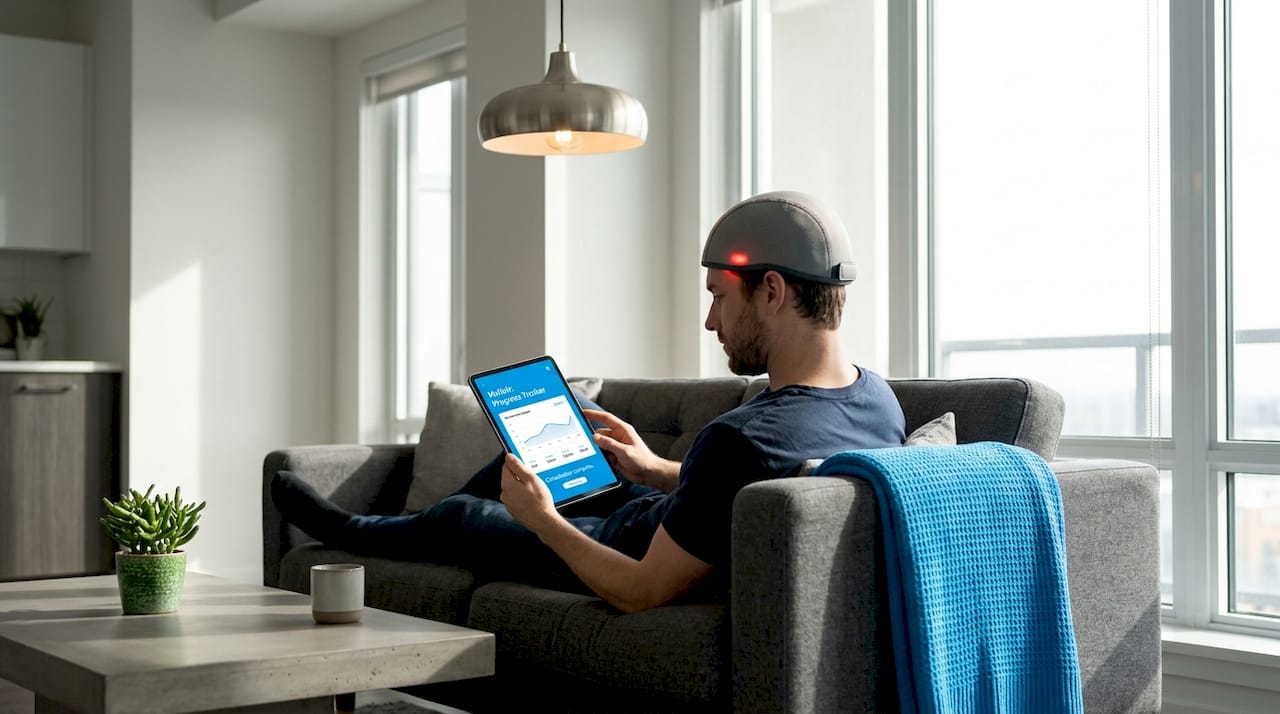
Typical protocols call for 10 to 20 minute sessions, 3 to 4 times per week. This is a real time commitment, and the people who get results are the ones who treat it like a routine, not an experiment.
Pro Tip: Track your progress with photos taken under consistent lighting every 4 weeks. Changes in hair density happen gradually, and without photo documentation you may underestimate your actual improvement or miss early signs of a problem.
Signs you should check in with a doctor: sudden accelerated shedding after the initial phase, scalp redness or irritation that persists, or no change at all after 6 full months of consistent use.
Combining laser therapy with other treatments
Laser therapy is a strong standalone support tool, but it performs best as part of a broader plan. Here's why that matters: combining laser therapy with minoxidil or finasteride produces better outcomes than any single treatment alone. These FDA-cleared treatments work through different mechanisms, which means they target different follicle populations at the same time.
Key combinations worth knowing:
- Laser plus minoxidil. Minoxidil increases blood flow and prolongs anagen phase through vasodilation. Laser therapy does the same through cellular stimulation. Together, they reinforce each other without redundancy.
- Laser plus finasteride. Finasteride blocks DHT, the hormone responsible for follicle miniaturization in androgenetic alopecia. Laser therapy cannot block DHT. This makes them genuinely complementary rather than overlapping.
- Laser plus hair transplant. Research shows laser therapy accelerates post-transplant recovery by reducing shock loss and supporting earlier regrowth in newly transplanted follicles.
- Laser plus PRP. Platelet-Rich Plasma injections and laser therapy both target follicle health at the cellular level. Many clinicians now offer these together for patients with moderate pattern hair loss.
The hair growth outcomes after alopecia vary significantly depending on the cause and the combination of treatments used. The takeaway is that a multi-modal approach, built around your specific diagnosis, gives you far better odds than any single product ever could.
My honest take on laser therapy
I've worked with a lot of people researching hair loss treatments, and I keep seeing the same pattern: someone tries a laser cap for two months, sees nothing life-changing, and writes off the whole category as hype. That's the wrong conclusion. What they actually experienced is the reality of gradual biological change colliding with unrealistic expectations.
In my experience, laser therapy is genuinely effective for the right candidate. LLLT stabilizes hair loss in roughly 90% of patients and induces regrowth in about 60%. Those numbers are real, and they're better than most people expect from a non-surgical option. But they require consistency over months, not weeks.
What I find most important to communicate is this: the value of laser therapy is not just in regrowing hair. It's in stopping the progression while other treatments do their work. Used as part of a plan that includes proper diagnosis, medical-grade treatments where appropriate, and regular tracking, it becomes a meaningful tool rather than a $600 gamble.
The technology is also improving quickly. Devices are getting more diodes, better wavelength coverage, and more clinical backing. I expect the data to get stronger over the next few years. If you're considering this route, start with a diagnosis, choose an FDA-cleared device from a reputable brand, commit to the timeline, and combine it with whatever your dermatologist recommends alongside it.
— Cyriac
Track your progress with Myhair's AI hair analysis
Starting a laser treatment program without a baseline is like exercising without ever stepping on a scale. You need to know where you're starting to measure whether anything is actually changing.
Myhair uses AI-powered scanning to give you a detailed assessment of your scalp and hair health, tracking changes over time so you can see exactly how your follicles are responding to treatment. The AI hair analysis tool builds a personalized picture of your hair condition, and the hair scoring feature lets you monitor density and quality improvements month over month. Whether you're just starting to explore laser therapy or already mid-protocol, having objective data makes every treatment decision sharper and more confident. Start your hair health assessment today.
FAQ
What is low-level laser therapy for hair loss?
Low-level laser therapy uses red light wavelengths between 630 nm and 680 nm to stimulate hair follicles, increase cellular energy, and reduce scalp inflammation. It's FDA-cleared for androgenetic alopecia and works by activating miniaturized follicles rather than creating new ones.
How long does laser treatment take to show results?
Most people see visible improvement in hair density and thickness after 16 to 26 weeks of consistent use, with sessions of 10 to 20 minutes done 3 to 4 times per week. Early shedding in the first few weeks is normal and not a sign of failure.
Can laser therapy regrow hair on a completely bald scalp?
No. Laser therapy stimulates dormant follicles that are still present but underactive. It cannot generate new follicles or regrow hair on areas where follicles have been permanently destroyed, making early treatment essential for best results.
Is laser hair therapy safe to use at home?
FDA-cleared at-home devices are considered safe with no known systemic side effects, as they use non-ionizing light that does not damage DNA. People on photosensitizing medications or with certain scalp conditions should consult a doctor before starting.
Does laser therapy work better when combined with other treatments?
Yes. Combining laser therapy with minoxidil or finasteride produces better outcomes than any single treatment alone, since each targets different biological mechanisms involved in hair loss and follicle health.