
TL;DR:
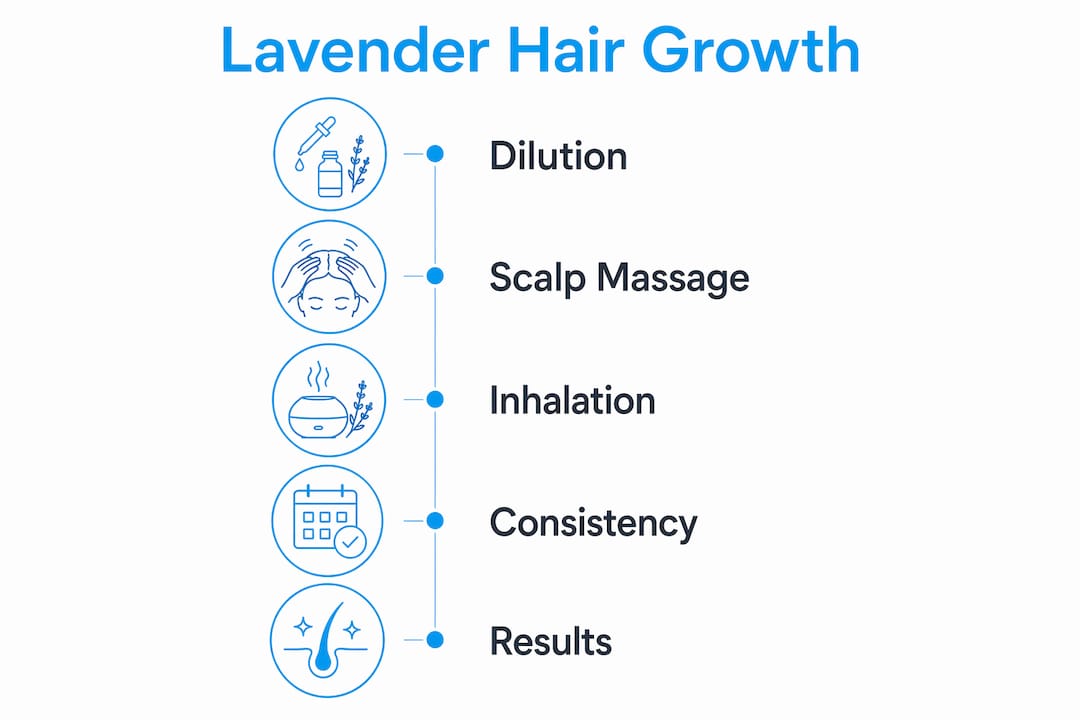
- Lavender oil is a clinically supported natural remedy that stimulates hair follicles and improves scalp health. It works by increasing dermal papilla cell activity, reducing inflammation, regulating sebum, and lowering stress hormones like cortisol. Proper, consistent dilution and scalp massage are essential for effective results over at least four weeks.
Lavender for hair growth is a clinically supported natural remedy that stimulates hair follicles, improves scalp circulation, and creates the conditions your scalp needs to grow thicker, denser hair. A 2016 clinical study showed that lavender oil increased both hair follicle number and depth compared to a control group. That result matters because it moves lavender oil out of the "folk remedy" category and into evidence-based territory. If you are dealing with thinning hair and want a natural approach grounded in real research, lavender essential oil is one of the most credible options available.
How does lavender oil promote hair growth?
Lavender oil works through several biological pathways, not just one. That multi-pathway action is what separates it from single-mechanism remedies.
The most significant mechanism is the stimulation of dermal papilla cells. These cells sit at the base of each hair follicle and control the growth cycle. Lavender oil stimulates these cells and raises IGF-1 (insulin-like growth factor 1) levels in the scalp. Higher IGF-1 signals follicles to stay in the active growth phase longer, which directly increases hair count and shaft depth over time.
Two active compounds drive much of this effect: linalool and linalyl acetate. These are the primary constituents of Lavandula angustifolia essential oil. Linalool and linalyl acetate deliver antibacterial, antifungal, and anti-inflammatory effects on the scalp. A calmer, cleaner scalp environment means follicles face less obstruction and less chronic inflammation, both of which are known contributors to hair thinning.
Lavender oil also regulates sebum production and protects against the fungal infections that cause dandruff. Excess sebum and fungal buildup clog follicles and slow growth. Keeping that balance in check is a foundational step that many people overlook.
There is also a stress-reduction angle worth taking seriously. Lavender's aromatherapy properties lower cortisol, the stress hormone directly linked to telogen effluvium, a condition where stress pushes hair follicles into a resting phase prematurely. Reducing cortisol through regular lavender use addresses one of the most common but least discussed triggers of hair shedding.
- Dermal papilla stimulation: Raises IGF-1 levels, extending the active growth phase of each follicle
- Antimicrobial action: Linalool and linalyl acetate clear bacterial and fungal scalp issues
- Sebum regulation: Prevents follicle congestion from excess oil buildup
- Cortisol reduction: Lowers stress-driven shedding through aromatherapy
Pro Tip: Inhale deeply while massaging lavender oil into your scalp. The aromatherapy effect is not incidental. It actively lowers cortisol, which means you are addressing stress-related shedding at the same time as follicle stimulation.
How to use lavender oil for hair safely and effectively
Safe application is non-negotiable with essential oils. Undiluted lavender oil applied directly to the scalp causes contact dermatitis, which can worsen hair thinning rather than improve it. The National Center for Complementary and Integrative Health (NCCIH) specifically warns against undiluted essential oil use on skin.

The correct approach is to dilute to a 2–3% concentration in a carrier oil before any scalp application. At 2%, that works out to roughly 12 drops of lavender essential oil per ounce (30 ml) of carrier oil. At 3%, use 18 drops per ounce.
Choosing the right carrier oil
Your hair type determines the best carrier oil to pair with lavender:
- Jojoba oil works for all hair types. Its molecular structure closely resembles natural sebum, so it absorbs without leaving a heavy residue. It is the most versatile choice for a daily oil hair routine.
- Coconut oil suits thick, coarse, or dry hair. It penetrates the hair shaft deeply and reduces protein loss. Avoid it if your scalp is prone to buildup.
- Argan oil is best for fine or color-treated hair. It adds shine and reduces frizz without weighing strands down.
- Castor oil is the strongest choice for growth-focused treatments. Its ricinoleic acid boosts scalp circulation. Mix it 50/50 with a lighter carrier like jojoba to improve spreadability.
Application technique
Scalp massage is not optional. Massage improves blood circulation, delivering nutrients and oxygen to follicles and increasing how much oil the scalp actually absorbs. Apply your diluted blend to the scalp in sections, then use your fingertips (not nails) to massage in small circular motions for 5–10 minutes.
Pro Tip: Warm your diluted oil blend slightly before applying. Warm oil spreads more easily, absorbs faster, and makes the scalp massage more effective. A few seconds in your palms is enough.
What to expect on the timeline
Visible improvements take 4–8 weeks of consistent use. In the first week, scalp irritation typically decreases. By weeks 2–3, dandruff often reduces noticeably. Texture and density improvements begin around week 4. Patience here is not optional. Follicle biology moves slowly, and expecting results in days sets you up for abandoning a treatment that actually works.
How does lavender oil compare to other natural oils?
Lavender oil sits in a specific category among natural oils for hair growth: it is a multi-benefit scalp oil with a calming profile, not a pure growth stimulant. Understanding where it fits helps you build a smarter routine.
| Oil | Primary benefit | Best for | Key limitation |
|---|---|---|---|
| Lavender | Follicle stimulation, scalp health | Sensitive scalps, stress-related shedding | Needs consistent use over weeks |
| Rosemary | DHT blocking, circulation | Androgenetic alopecia | Stronger scent, not calming |
| Castor | Circulation boost, thickness | Sparse edges, eyebrows | Heavy texture, hard to rinse |
| Coconut | Protein retention, moisture | Dry, brittle hair | Can cause buildup on fine hair |
Rosemary oil gets significant attention for hair growth, and rightly so. It targets DHT (dihydrotestosterone), the hormone responsible for androgenetic alopecia. Lavender does not block DHT directly. What lavender offers that rosemary does not is a calming, anti-inflammatory profile that suits people with sensitive or reactive scalps.
Combining lavender with castor oil produces a particularly effective blend. Castor oil's ricinoleic acid drives circulation while lavender's compounds reduce inflammation and support follicle health. The two mechanisms complement each other rather than overlap.
The most important context: lavender oil supports but does not replace medically proven therapies for advanced hair loss conditions like androgenetic alopecia. If your hair loss is significant, lavender belongs in your routine alongside professional guidance, not instead of it.
Practical lavender oil recipes for your hair routine
These recipes work. They are built around the dilution ratios and application methods that clinical and practical evidence supports.
Scalp treatment oil blend
This is your core weekly treatment for a focused hair growth routine:
- 2 tablespoons jojoba oil
- 1 tablespoon castor oil
- 12 drops lavender essential oil (approximately 2% dilution)
Mix in a small glass bottle. Apply to the scalp in sections, massage for 5–10 minutes, leave on for at least 30 minutes (or overnight with a shower cap), then shampoo out.
Lavender hair mask
- 2 tablespoons coconut oil (melted)
- 1 tablespoon argan oil
- 10 drops lavender essential oil
- 1 teaspoon honey (optional, for moisture)
Apply from roots to ends. Leave on for 20–30 minutes, then rinse thoroughly. Use once a week for dry or damaged hair.
Lavender water spray
- 1 cup distilled water
- 10 drops lavender essential oil
- 1 teaspoon aloe vera gel (optional, for hold)
Shake well before each use. Spray onto the scalp between wash days to maintain a clean, balanced environment. This is especially useful for managing scalp oiliness without overwashing.
| Treatment | Frequency | Leave-in time | Best for |
|---|---|---|---|
| Scalp treatment oil | 2–3 times per week | 30 min to overnight | Growth stimulation |
| Hair mask | Once per week | 20–30 minutes | Moisture and repair |
| Lavender water spray | Daily or as needed | No rinse needed | Scalp maintenance |
Pro Tip: Store your lavender water spray in the refrigerator. The cool temperature adds a light vasodilation effect when applied to the scalp, which briefly increases blood flow to follicles.
Key Takeaways
Lavender oil promotes hair growth by stimulating dermal papilla cells, reducing scalp inflammation, and lowering cortisol-driven shedding, but it requires consistent, properly diluted application over at least 4–8 weeks to deliver visible results.
| Point | Details |
|---|---|
| Dilution is non-negotiable | Always dilute to 2–3% in a carrier oil to prevent dermatitis and protect follicles. |
| Scalp massage amplifies results | Massaging for 5–10 minutes improves absorption and blood flow to follicles. |
| Timeline requires patience | Visible density and texture improvements begin around week 4 of consistent use. |
| Pair with the right carrier oil | Match your carrier oil to your hair type: jojoba for all types, castor for growth focus. |
| Lavender supports, not replaces, treatment | For advanced hair loss, use lavender oil alongside professional guidance, not instead of it. |
Why I think most people use lavender oil wrong
Most people who try lavender oil for hair thinning quit after two weeks. They apply it inconsistently, skip the scalp massage, and use too little of it. Then they conclude it does not work. That conclusion is wrong, but it is understandable.
The mistake is treating lavender oil like a topical medication where you apply it and wait for results. It does not work that way. The scalp massage is not a nice-to-have. It is the delivery mechanism. Without it, the oil sits on the surface and the follicle stimulation never happens at the depth it needs to.
The other thing I have observed is that people underestimate the stress angle. Cortisol-driven shedding is one of the most common causes of diffuse thinning, and it is also one of the most reversible. Lavender's aromatherapy effect on cortisol is real and measurable. Using it as a purely topical treatment while ignoring the inhalation component means leaving a significant benefit on the table.
My honest recommendation: commit to a minimum of eight weeks, use the scalp massage every single time, and track your progress with photos taken in consistent lighting. Without tracking, you will not notice the gradual improvements that are actually happening. Tools like Myhair's AI hair analysis make that tracking objective rather than guesswork-based, which keeps you motivated through the slow early weeks.
Lavender oil is not a miracle. It is a well-supported, low-risk, multi-benefit scalp treatment that works when you use it correctly and consistently. That is a higher bar than most natural remedies clear.
— Cyriac
Myhair's AI analysis pairs well with natural remedies
Natural remedies like lavender oil work best when you can actually measure what is changing. Feeling like your hair looks better is not the same as knowing your follicle density has improved.
Myhair uses AI-powered hair analysis to give you an objective picture of your scalp health, follicle count, and hair density over time. When you start a lavender oil routine, you can use Myhair's hair analysis app to establish a baseline and track real changes week by week. That data tells you whether your current routine is working or whether you need to adjust. It also connects you with personalized product recommendations that complement what you are already doing. Natural remedies and AI-driven analysis are not competing approaches. They work better together.
FAQ
Can lavender oil actually promote hair growth?
Yes. A 2016 clinical study showed that lavender oil increases hair follicle number and depth by stimulating dermal papilla cells and raising IGF-1 levels in the scalp.
How long before I see results from lavender oil?
Most people see scalp improvements within 2–3 weeks and measurable density changes starting around week 4, with full results requiring 4–8 weeks of consistent use.
What is the correct dilution for lavender oil on the scalp?
Dilute lavender essential oil to a 2–3% concentration in a carrier oil, which equals approximately 12–18 drops per ounce (30 ml) of carrier oil.
Is lavender oil safe for all hair types?
Yes, when properly diluted. The NCCIH warns against undiluted application, which can cause contact dermatitis. Diluted lavender oil is safe for all hair types, including sensitive scalps.
Does lavender oil work for androgenetic alopecia?
Lavender oil supports scalp health and follicle activity but does not block DHT, the primary driver of androgenetic alopecia. It works best as a complementary treatment alongside proven medical therapies for that condition.