TL;DR:
- Lightweight hair oils use small molecules like argan, jojoba, and grape seed to deliver shine and moisture without greasiness. Proper application techniques, such as applying on damp hair and focusing on mid-lengths and ends, prevent oily buildup, especially near the roots. Brand options like Moroccanoil, Amika, Gisou, and Olaplex offer formulas tailored for different hair types and needs, with personalized recommendations available through AI analysis.
Lightweight hair oil is a haircare product formulated to deliver moisture, shine, and frizz control without leaving hair greasy or flat. Unlike traditional heavy oils loaded with thick butters and dense waxes, these formulas use fast-absorbing carriers like argan, jojoba, and grape seed to condition hair at the surface level. Products like Moroccanoil Treatment Light and Amika Superfruit Star have set the clinical benchmark, with up to 118% shine increase in a single application and up to three days of weightless hydration. That kind of performance is why non-greasy hair oil has become a staple for anyone managing fine, color-treated, or buildup-prone hair.
What makes a hair oil lightweight?
The answer is in the molecular structure of the base oils. Lightweight oils have smaller molecules that absorb into the hair shaft quickly instead of sitting on top and creating a greasy film. Common lightweight oils for fine and medium hair include argan, jojoba, almond, and grape seed, each chosen for their ability to condition without coating.
The role of ingredients and texture
Formulation matters as much as the oil itself. Many fast-absorbing hair oils blend these lighter carriers with plant extracts, hydrosols, and fruit milks to add hydration without density. Gisou's Honey Gloss Collagen Drops, for example, combines honey extract with collagen-activating compounds to build moisture and elasticity simultaneously. That kind of ingredient innovation shows how far lightweight formulas have moved beyond simple oil blends.
Silicones also appear in many non-greasy formulas. Cyclomethicone and dimethicone coat the hair cuticle to smooth frizz and add shine without the heaviness of plant-based waxes. The key is concentration. A well-balanced lightweight hair serum uses just enough silicone to create slip and reflect light, not enough to cause buildup over time.
The texture of the finished product tells you a lot. A true lightweight formula feels almost watery when you rub it between your fingers. If it feels thick or tacky before it hits your hair, it will likely feel the same after. Heavier formulas typically contain shea butter, castor oil, or coconut oil as primary ingredients. These are excellent for deep conditioning treatments but are not designed for daily styling on fine or medium hair.
- Argan oil: Rich in oleic and linoleic acids; absorbs quickly and adds shine without residue
- Jojoba oil: Technically a liquid wax; mimics the scalp's natural sebum and rarely causes buildup
- Grape seed oil: One of the lightest plant oils available; ideal for fine hair types
- Sweet almond oil: Slightly heavier than grape seed but still fast-absorbing; adds softness and manageability
Pro Tip: Read the ingredient list from the bottom up. If a heavy oil like castor or coconut appears in the first five ingredients, the formula is not truly lightweight regardless of what the label says.
How do you use hair oil without getting greasy?
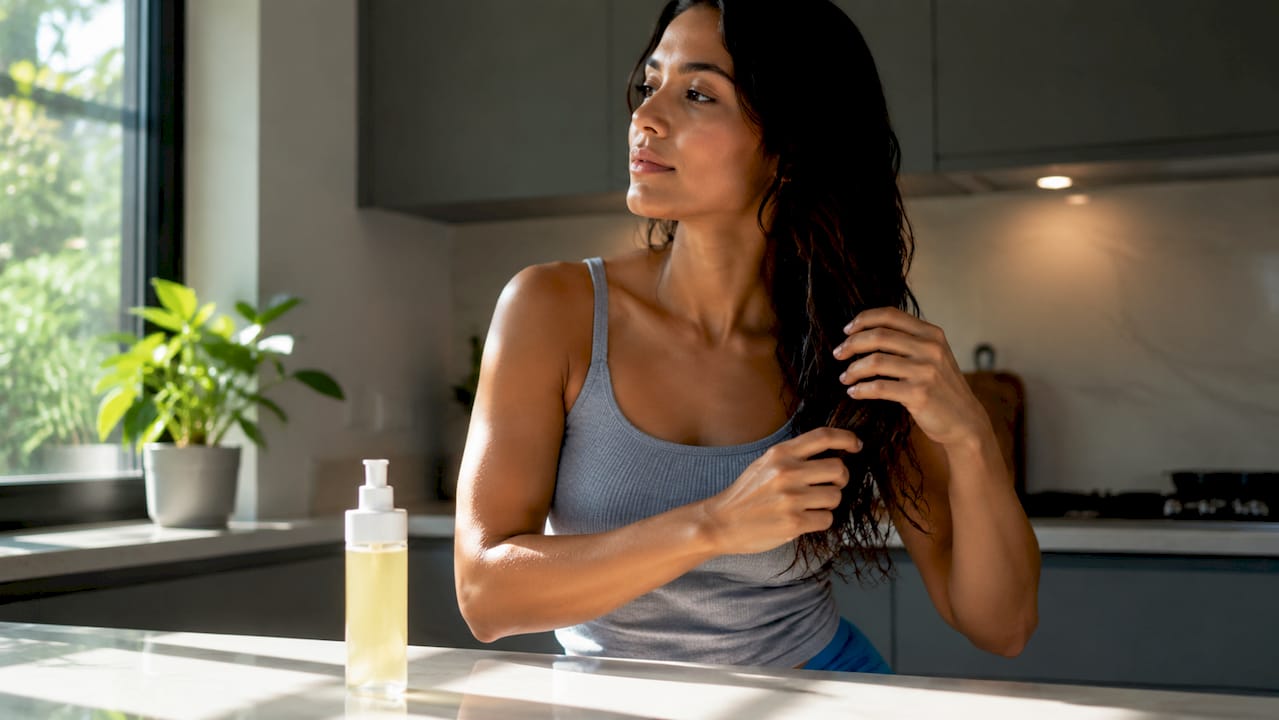
Greasiness from hair oil is almost never the product's fault. Professional stylists confirm that the cause is almost always incorrect dosage and timing, not the formula itself. Getting the technique right changes everything.
Follow this sequence for clean, non-greasy results every time:
- Start with towel-dried hair. Applying oil on damp hair that is still dripping creates a water barrier that blocks absorption and causes patchy, greasy spots after drying. Blot with a towel first until hair is damp but not wet.
- Use the minimum effective dose. For fine hair, start with one drop or half a pump and work up only if needed. More is rarely better with lightweight formulas.
- Emulsify before applying. Rub the oil between your palms for 10–15 seconds before touching your hair. This warms and thins the product, spreading it evenly and preventing heavy spots.
- Focus on mid-lengths and ends. Apply from mid-length down, concentrating on the last 3–4 inches. Roots produce their own sebum and need the least help.
- Use micro-layering for thick hair. Rather than applying a larger amount at once, apply small amounts frequently throughout the day. This maintains moisture and health benefits without any weight accumulation.
- Finish on dry hair for shine. A single drop smoothed over the surface of dry, styled hair adds gloss and tames flyaways without disturbing volume.
Pro Tip: If your hair looks greasy an hour after applying oil, the problem is almost certainly root application. Most users apply too close to the scalp, which flattens hair and causes buildup. Keep oil at least two inches from the root.
One distinction worth understanding: lightweight hair conditioning oil is designed for the hair shaft, not the scalp. Scalp oiling and styling oil serve completely different purposes. Confusing the two leads to buildup at the roots and missed benefits at the ends where hair needs protection most.
Moroccanoil vs. amika vs. gisou vs. olaplex: which wins?
These four products represent the current standard for best lightweight hair products across different hair types and concerns. Each has a distinct formulation strategy and a different primary benefit.
| Product | Key Ingredients | Primary Benefit | Best For | Heat Protection |
|---|---|---|---|---|
| Moroccanoil Treatment Light | Argan oil, linseed extract | Shine and hydration up to 3 days | Fine to medium hair | Yes |
| Amika Superfruit Star | Superfruit complex, sea buckthorn | Strength and breakage reduction | Damaged or color-treated hair | Up to 450°F |
| Gisou Honey Gloss Collagen Drops | Honey extract, collagen activators | Moisture and elasticity | Medium to thick hair | Moderate |
| Olaplex No.7 Bonding Oil | Bis-aminopropyl diglycol dimaleate | Bond repair and frizz control | Chemically processed hair | Up to 450°F |
Moroccanoil Treatment Light delivers the headline shine numbers. The 118% shine increase in one use is a clinical claim backed by independent testing. It is the go-to for fine hair that needs gloss without weight.
Amika Superfruit Star is the performance leader for damaged hair. Its formula makes hair 7x stronger and reduces breakage by 86% while protecting against heat up to 450°F. That combination of strength and protection is rare in a formula this light.
Gisou Honey Gloss Collagen Drops takes a different approach. The collagen-activating formula targets elasticity and moisture retention, making it better suited for medium to thick hair that needs hydration more than shine enhancement.
Olaplex No.7 is the specialist option. It works at the bond level inside the hair shaft, making it the strongest choice for hair that has been bleached, permed, or chemically relaxed. The frizz control is exceptional, and it layers cleanly under other styling products.
Format also matters when choosing. A liquid oil like Moroccanoil absorbs fastest. A serum like Olaplex No.7 sits slightly longer on the surface before absorbing, which is why it delivers stronger frizz control. A mist format, common in lightweight hair serums for everyday use, distributes the most evenly but delivers the lightest dose per application.
How do you choose the right oil for your hair type?
The right light hair oil for frizz control is not the same as the right oil for fine hair volume or damaged hair repair. Matching the product to your specific needs prevents wasted money and disappointing results.
Start by identifying your hair's primary characteristic:
- Fine hair: Prioritize formulas with grape seed or jojoba as the lead oil. Avoid anything with coconut oil or shea in the first five ingredients. Moroccanoil Treatment Light and similar argan-based formulas work well here. Check out expert picks for thin hair for a curated shortlist.
- Thick or coarse hair: You can handle slightly richer formulas. Gisou Honey Gloss or a superfruit-based oil gives you the moisture density you need without crossing into heavy territory.
- Curly or textured hair: Look for oils that define without crunching. Almond and argan blends work well. Apply to soaking wet hair before diffusing for the best curl definition.
- Color-treated or chemically processed hair: Olaplex No.7 or any bond-building lightweight oil is the right category. Strength and protection matter more than shine here.
- Frizz-prone hair in humidity: Silicone-forward formulas create a barrier against moisture in the air. A lightweight hair serum with dimethicone outperforms pure plant oil blends in high-humidity conditions.
Beyond hair type, consider scalp condition and porosity. High-porosity hair absorbs oil fast but loses moisture just as quickly. A slightly richer lightweight formula applied more frequently works better than a single heavy application. Low-porosity hair resists absorption, so applying on damp hair and using heat from a diffuser or dryer helps the oil penetrate. For a deeper look at building a consistent routine, Myhair's guide on effective oil hair routines covers the full protocol.
Price and ethics also factor in. Olaplex and Amika are both cruelty-free. Gisou is not certified vegan due to honey use but is cruelty-free. Moroccanoil is cruelty-free and widely available at Ulta Beauty and Sephora. These details matter to a growing segment of buyers and are worth checking before committing to a product.
Key takeaways
The most effective lightweight hair oil is one matched to your hair type, applied correctly in small amounts on towel-dried hair from mid-length to ends.
| Point | Details |
|---|---|
| Ingredient selection drives weight | Argan, jojoba, and grape seed oils absorb fast; avoid castor or coconut as lead ingredients. |
| Technique prevents greasiness | Emulsify in palms, apply to ends only, and start with one drop or half a pump. |
| Product choice depends on concern | Use Amika for strength, Moroccanoil for shine, Olaplex for bond repair, Gisou for moisture. |
| Timing affects absorption | Apply on towel-dried hair for best results; use on dry hair for a finishing gloss layer. |
| Micro-layering beats heavy application | Small, frequent amounts work better for all hair densities than one large dose. |
What i've learned after years of recommending hair oils
I used to recommend the same two or three oils to everyone who asked. That was a mistake. The biggest shift in my thinking came when I started paying attention to how people were actually using these products, not just which ones they bought.
The most common error I see is treating lightweight hair conditioning oil like a scalp treatment. People massage it into their roots expecting deep nourishment, then wonder why their hair looks flat and oily by noon. Lightweight oils are surface products. They protect, smooth, and shine the hair shaft. They are not designed to penetrate the scalp or stimulate follicles. That is a different product category entirely.
The second thing I changed my mind on is frequency. I used to think daily oil use would cause buildup. It does not, as long as you use the right amount and the right formula. Micro-layering small amounts every day actually keeps hair in better condition than one heavy application twice a week. The hair stays protected from heat and friction continuously instead of in bursts.
My current recommendation for anyone starting out: pick one product, use it for three weeks with strict technique, and judge from there. Most people switch products too fast and never give a formula enough time to show what it can do. Moroccanoil Treatment Light is the best starting point for most hair types because it is forgiving, widely available, and the performance data is solid. From there, you can layer in a bond-building option like Olaplex No.7 if your hair needs structural repair.
The newer collagen-activated formulas from Gisou are worth watching. The science behind collagen activation in hair care is still developing, but early results on elasticity and moisture retention are genuinely interesting. I would not call it a replacement for proven argan-based formulas yet, but it is a category to follow.
— Cyriac
Find your perfect match with myhair's AI hair analysis
Choosing the right lightweight hair oil gets a lot easier when you know exactly what your hair needs. Myhair uses AI-powered scanning to analyze your hair condition from a photo, identifying your hair type, density, porosity, and health status in minutes.
The platform then generates personalized product recommendations based on your actual hair profile, not generic advice. If your hair is fine and prone to buildup, Myhair points you toward the right non-greasy formula. If your hair is damaged and needs bond repair, it flags that too. Start with Myhair's AI hair analysis to get a clear picture of your hair health and a product shortlist built around your specific needs.
FAQ
What is a lightweight hair oil?
A lightweight hair oil is a fast-absorbing formula made with oils like argan, jojoba, or grape seed that conditions and smooths hair without leaving grease or residue. It differs from heavier oils by using smaller-molecule carriers that penetrate the hair shaft quickly.
Can lightweight hair oil be used on fine hair?
Yes. Fine hair benefits most from lightweight formulas. Start with one drop or half a pump, apply only to the last 3–4 inches of hair, and avoid the roots entirely to preserve volume.
How often should you apply lightweight hair oil?
Daily use is fine with the right technique. Micro-layering small amounts each day keeps hair protected and conditioned without buildup, which is more effective than occasional heavy applications.
Does lightweight hair oil protect against heat damage?
Some formulas do. Amika Superfruit Star and Olaplex No.7 both provide heat protection up to 450°F. Check the product label, as not all lightweight oils include a thermal protection claim.
What is the difference between a lightweight hair oil and a hair serum?
A hair oil uses plant-based or synthetic oil carriers as the primary ingredient. A hair serum typically uses a silicone or water base with oil as a secondary component. Serums often deliver stronger frizz control in humidity, while oils provide deeper conditioning and shine.