The mistakes that damage hair the most are overwashing or underwashing for your type, skipping heat protectant, wearing tight styles that pull on the scalp, brushing hair while it's wet, ignoring buildup on the scalp, over-processing with chemicals, and skipping regular trims. Fixing even two or three of these changes how your hair looks within weeks. The rest of this guide breaks down exactly what to do instead.
TL;DR:
- Frequent switching of hair products without proper trial periods can prevent you from identifying what truly improves your hair health.
- Hard water buildup can cause dullness and color fading, making installing a shower filter or using chelating shampoos essential for some areas.
- Using heat above 350°F without protection causes significant cuticle damage, so always apply a heat protectant and limit high-temperature styling.
- Tight hairstyles and extensions can lead to irreversible damage like traction alopecia if worn consistently and without breaks.
- Adjusting your routine seasonally and according to your hair type remains critical to prevent issues like frizz, dryness, or oiliness, especially in humid or dry climates.
Table of Contents
- Mistake #1: Overwashing or Washing on the Wrong Schedule
- Mistake #2: Using the Wrong Shampoo or Chasing Every New Product
- Mistake #3: Neglecting Scalp Health
- Mistake #4: Brushing or Combing Wet Hair
- Mistake #5: Using Heat Without Protection or Cranking the Temperature
- Mistake #6: Wearing Tight or High-Tension Hairstyles
- Mistake #7: Rough Towel-Drying
- Mistake #8: Overdoing Chemical Treatments and Skipping Trims
- What a Scalp-First Routine Actually Looks Like
- Incorrect Conditioner Application and Skipping Conditioning
- Sleeping on Hair Without Protection
- Not Adjusting Your Routine for Hair Type and Environment
- Using Hard Water Without Filtering or Treating It
- Ignoring Diet and Hydration's Role in Hair Health
- The One Change I'd Make First
- Want a Faster Way to Know What Your Hair Actually Needs?
- Sources
- FAQ
Mistake #1: Overwashing or Washing on the Wrong Schedule
Wash too often and you strip natural oils your scalp needs, leaving hair dry, frizzy, and prone to breakage. Wash too rarely and oil, sweat, and product pile up, weighing hair down and sometimes irritating the scalp. Neither extreme is a fixed rule. It depends on your hair type.
Wash frequency depends on your hair type and scalp condition rather than fixed intervals, ranging from daily for very oily hair to less frequent washes for dry or chemically treated hair.
Run a three-week test: wash on your usual schedule, then add or subtract a day and track how your scalp and strands feel. Use a quarter-sized amount of shampoo, stick to lukewarm water, and reach for a clarifying shampoo only once every few weeks if you use a lot of styling products.
Mistake #2: Using the Wrong Shampoo or Chasing Every New Product
Strong sulfate-based cleansers can strip more oil than some hair types need, though they're genuinely useful for an occasional deep clarify. The bigger problem for most people isn't the sulfates. It's the constant switching. Stylists have flagged that jumping between trending products every few weeks makes it nearly impossible to tell what's actually working, and a simple, tailored routine outperforms constant swapping.
Before buying anything new, run this quick check:
- What's the goal: more moisture, less oil, or scalp relief?
- What's your hair's porosity, and does this product match it?
- Does it contain actives you don't actually need right now?
Pro Tip: Introduce one new product at a time and give it 4 to 6 weeks before judging results. Hair growth cycles are slow, and switching products every two weeks means you never see a fair trial.
If you're not sure where to start, a personalized hair care routine built around your goals beats guessing from shelf labels.
Mistake #3: Neglecting Scalp Health
Hair grows out of skin, and skin that's inflamed or coated in buildup doesn't grow healthy hair. Product residue, excess oil, and dead skin cells clog follicles over time, and dermatologists point to unmanaged buildup and inflammation as a direct threat to hair quality.
Massage your scalp for a minute or two during every wash using your fingertips, never your nails, to loosen debris and encourage circulation. If you notice flaking or oily buildup, a clarifying or medicated shampoo once every one to two weeks helps reset things.
Some signs go beyond a DIY fix:
- Persistent scaling or flaking that doesn't respond to over-the-counter shampoo
- Pain, burning, or tenderness on the scalp
- Bleeding, open sores, or rapidly spreading bald patches
Any of those warrants a dermatologist visit rather than another trip to the drugstore aisle. Small, consistent scalp care habits matter more than any single miracle product, a point covered in more depth in this guide to improving scalp health.
Mistake #4: Brushing or Combing Wet Hair
Wet hair stretches further and snaps more easily than dry hair, which is exactly why aggressive brushing right out of the shower causes so much breakage. The fix is a specific sequence, not a specific brush.
- Apply conditioner first. Wet hair needs slip before it needs a tool.
- Use a wide-tooth comb, never a fine-tooth comb or a stiff brush.
- Start detangling at the ends and work upward toward the roots in small sections.
Dermatology-backed hair care guidance recommends this bottom-up approach specifically because it reduces the mechanical trauma that causes split ends and mids haft breaks. A dedicated detangling brush works fine for this. A boar-bristle or paddle brush does not.
Mistake #5: Using Heat Without Protection or Cranking the Temperature
Hair starts to sustain real cuticle damage above roughly 350°F (177°C), an effect stylists sometimes describe as "toasting," since the protein structure of the hair shaft breaks down under sustained high heat. Healthline's grooming guidance backs the 350°F ceiling as the practical limit for flat irons, curling irons, and blow dryers.
Statistic Callout: Staying at or below 350°F is the threshold most stylists and dermatology sources recommend to avoid cuticle damage from hot tools.
- Apply a heat protectant to damp hair before any hot tool touches it
- Start at the lowest setting that actually works for your hair, not the highest your tool offers
- Limit yourself to one or two passes per section instead of repeatedly re-styling the same strands
- Air-dry partially before blow-drying to cut total heat exposure
Mistake #6: Wearing Tight or High-Tension Hairstyles
Tight ponytails, slicked buns, and extensions pulled taut at the root put constant tension on the follicle, and that tension is the root cause of traction alopecia. Dermatology sources note this damage often concentrates at the temples and hairline and can become permanent scarring if the tension continues.
Watch for these early warning signs:
- Tenderness or soreness along the hairline after styling
- Small bumps or scabs where the style pulls tightest
- Visible thinning at the temples or part line
Swap tight styles for looser parts, satin-covered hair ties, and rotating between different styles rather than repeating the same tension pattern daily. Extensions and braids need rest periods, ideally spaced weeks apart, to let the scalp recover.
Pro Tip: If you notice tenderness or thinning at the hairline, stop the style immediately rather than waiting it out. Early removal is the single most effective step to prevent permanent follicle loss, while continued tension is what turns temporary thinning into scarring.
Mistake #7: Rough Towel-Drying
Rubbing wet hair with a terrycloth towel roughs up the cuticle and tangles strands at the exact moment they're most fragile. Dermatology guidance recommends blotting instead of rubbing, ideally with a microfiber towel or an old cotton T-shirt, both of which create far less friction than standard bath towels.
- Blot, don't rub, starting at the ends and working up
- Choose microfiber or a cotton T-shirt over terrycloth
- Dry roots first when blow-drying, since this cuts total drying time and avoids rewetting the ends
- Skip the twist-and-wring habit that stretches wet strands
Drying roots before ends matters more than people realize. It means fewer total passes with the dryer and no repeated re-wetting of already-dried sections, which otherwise adds up to significantly more cumulative heat exposure over a single styling session.
Mistake #8: Overdoing Chemical Treatments and Skipping Trims
Color, bleach, and perms all break down the protein bonds in hair, and stacking these services too close together compounds the damage before hair has time to recover. Spacing chemical services six to ten weeks apart, or longer in drier seasons, gives the hair shaft time to rebuild strength between treatments.
- Space color, bleach, and perm services at least 6 to 10 weeks apart
- Alternate protein treatments with moisture treatments. Too much protein makes hair stiff and brittle, not stronger
- Get trims every 8 to 12 weeks even if you're growing your hair out
- Watch for split ends that travel up the shaft as a sign you've waited too long
Trims don't slow growth. What they do is remove already-damaged ends before the split travels further up the strand, which is why hair that gets regular trims often looks thicker and healthier even at the same length.
What a Scalp-First Routine Actually Looks Like
Consistency beats novelty every time. The hair care habits that actually move the needle are boring: gentle cleansing on a schedule that fits your hair type, heat protection every single time, and enough patience to let a routine work before abandoning it. A scan-based assessment that separates scalp-level issues from strand damage helps you figure out which of these nine mistakes is actually costing you the most, rather than guessing.
A simple framework to follow:
- Check your scalp first. Buildup, redness, or flaking should shape your product choices before anything else does.
- Choose one gentle cleanser matched to your hair type and stick with it for at least a month.
- Protect from heat every time, no exceptions, even on low settings.
- Schedule check-ins, whether that's a trim, a scalp scan, or simply reassessing your routine every couple of months.
If thinning, persistent scalp inflammation, or a sudden pattern change shows up, that's a signal to involve a dermatologist rather than trying another product first.
Incorrect Conditioner Application and Skipping Conditioning
Conditioner is not optional, and where you put it matters as much as whether you use it. A common mistake is applying conditioner at the roots, which weighs down fine or oily hair and can leave the scalp feeling greasy within a day. The ends of your hair are the oldest and most damaged part of the strand, often years older than the hair at your scalp, and that's where conditioner needs to concentrate.
Apply conditioner from mid-shaft to ends, avoiding the root area entirely unless you have very dry or coily hair that needs the extra moisture throughout. Leave it on for at least two to three minutes before rinsing. Rinsing immediately defeats the purpose, since the ingredients need time to penetrate the cuticle.
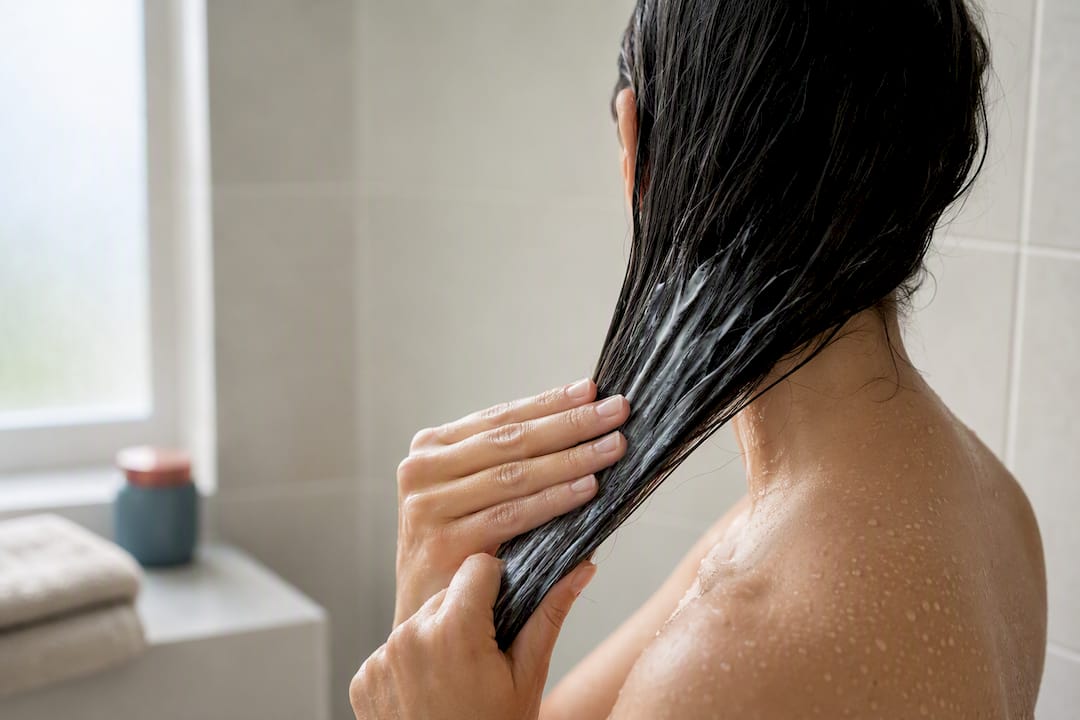
Skipping conditioner altogether is just as common a mistake, especially among people with oily scalps who assume conditioner will make things worse. That assumption is usually wrong. Conditioner smooths the cuticle, reduces friction during detangling, and cuts down on the exact kind of mechanical damage covered earlier in the wet-hair section. Even oily hair types benefit from a lightweight, rinse-out conditioner applied only below the ears.
A weekly deep conditioning treatment adds another layer of protection, particularly for color-treated, heat-styled, or naturally dry and curly hair. Leave-in conditioners serve a different purpose than rinse-out formulas. They provide ongoing protection throughout the day rather than a single treatment moment, which makes them worth adding if your hair tends to dry out or tangle by midday.
Sleeping on Hair Without Protection
What your head rests on for eight hours a night has an outsized effect on hair health, and it's one of the most overlooked items on this list. Standard cotton pillowcases create friction against hair as you move during sleep, and that friction roughs up the cuticle in the same way a terrycloth towel does. Over months, that nightly friction adds up to more breakage, frizz, and tangling than most people trace back to their pillowcase.
Silk and satin pillowcases reduce this friction significantly because the fibers let hair glide rather than catch. They also hold less moisture than cotton, which means less of your hair's natural oils get pulled out overnight. If replacing your pillowcase isn't practical, a silk or satin bonnet or scarf accomplishes the same goal.
Protective styling before bed helps too. A loose braid or a low, soft bun keeps long hair from tangling against fabric or getting caught underneath you as you shift positions. The key word is loose. A tight braid or ponytail worn overnight just relocates the tension problem from your daytime style to your nighttime one, and hair under sustained tension for eight hours straight is no better off than hair pulled tight during the day.
This is a low-effort fix with a real payoff, since it requires zero change to your actual hair care routine, just a swap in bedding or a two-minute step before lights out.
Not Adjusting Your Routine for Hair Type and Environment
A routine that works in January often fails by July, and a routine built for stick-straight hair rarely works for tight curls. Treating hair care as one fixed set of steps regardless of texture or season is a mistake that shows up as chronic frizz, dryness, or oiliness that never quite resolves no matter which products get swapped in.
Humidity is the most common seasonal trigger. Hair that stays smooth all winter can frizz within minutes in summer humidity, which usually calls for a lighter, humidity-resistant styling product rather than a heavier one. Cold, dry winter air pulls moisture out of hair the same way it dries out skin, which means winter often calls for richer conditioners and less frequent washing than summer does.
Hair texture changes what "correct" looks like entirely. Fine, straight hair typically needs lightweight products and less frequent conditioning to avoid looking flat. Coily and curly hair usually needs more moisture, less frequent washing, and gentler detangling tools because the natural curl pattern already makes strands more prone to breakage at each bend.
Where you live plays a role too. Dry climates call for more leave-in moisture and fewer clarifying washes. Humid climates call for lightweight, anti-frizz formulas and possibly more frequent washing if sweat and humidity build up oil faster. There's no single "correct" routine, only the one that actually matches your hair type, your climate, and the season you're in right now.
Using Hard Water Without Filtering or Treating It
Hard water carries a heavy mineral load, mostly calcium and magnesium, and those minerals don't rinse cleanly off hair the way soft water does. Instead, they build up on the hair shaft over repeated washes, coating strands in a way that makes hair feel dry, look dull, and resist styling products no matter how much conditioner gets applied.
Over time, that mineral buildup can also make hair color fade faster and leave colored hair with an off tone, since minerals interfere with how pigment sits on the cuticle. People in hard water areas sometimes cycle through shampoo after shampoo trying to fix dryness that's actually a water problem, not a product problem, which wastes both money and time.
A shower filter designed to reduce mineral content is the most direct fix, and it requires no change to the rest of your routine once installed. A weekly or biweekly clarifying shampoo also helps strip mineral buildup between washes, though it shouldn't replace a proper filter if hard water is a daily issue. Chelating shampoos, a specific category formulated to bind and remove mineral deposits, work faster than a standard clarifying formula for heavy buildup.
If your hair feels chronically dry, dull, or hard to style despite a solid product routine, and nothing else on this list explains it, hard water is worth ruling out before buying another round of moisturizing treatments.
Ignoring Diet and Hydration's Role in Hair Health
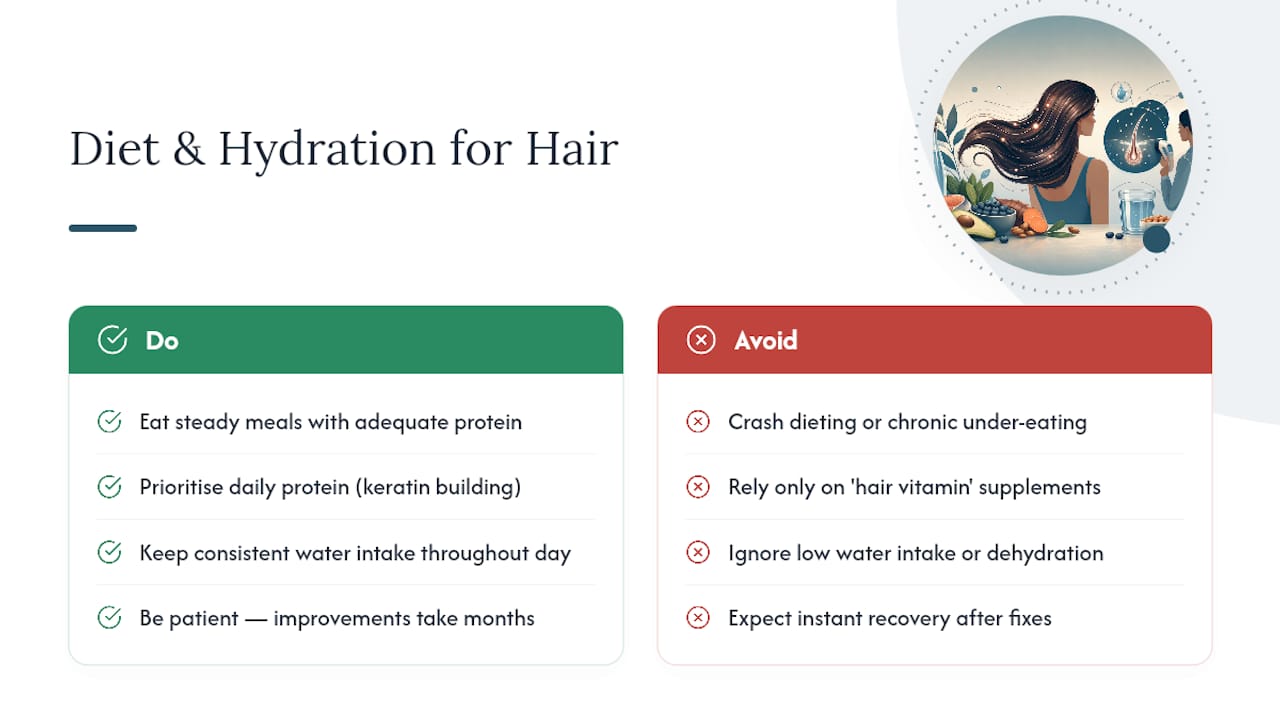
Hair is not a priority organ for the body. When nutrition or hydration runs short, the body directs resources to organs that keep you alive first, and hair growth is one of the first processes to slow down or pause as a result. That's why chronic under-eating, crash dieting, or low water intake shows up in hair health months later, often as increased shedding or hair that feels weak and grows slowly.
Protein matters most here, since hair strands are made almost entirely of a protein called keratin. Diets consistently low in protein can lead to weaker strands and slower growth, which is why sudden, severe calorie restriction often triggers noticeable shedding a few months afterward. Iron, zinc, and biotin deficiencies get plenty of attention in hair health conversations, but the more common issue for most people is simply inconsistent, inadequate overall nutrition rather than one single missing nutrient.
Hydration plays a quieter but real role too. Dehydration affects skin elasticity and moisture retention throughout the body, including the scalp, and a dry, tight scalp is a less hospitable environment for healthy follicles than a well-hydrated one.
None of this means a supplement aisle is the answer. Steady meals with adequate protein and consistent water intake do more for long-term hair health than any single "hair vitamin," and the effects of poor nutrition or dehydration take months to show up and months to reverse once corrected. Patience matters as much as the fix itself.
The One Change I'd Make First
If you fix only one thing from this list, fix heat protection or washing frequency, whichever one you're actually skipping right now. Both are daily habits, both compound fast, and both are easier to correct than reversing chemical damage or traction alopecia after the fact.
Pick one change, apply it consistently for 6 to 8 weeks, and actually track what happens rather than judging it after a few days. Hair grows and reveals damage on a slow timeline, and most people give up on a good habit before it's had time to show results.
— Cyriac
Want a Faster Way to Know What Your Hair Actually Needs?
Reading through nine mistakes is useful, but figuring out which ones apply to your specific hair takes guesswork out of a mirror check. An AI-powered scan gives you a scalp-and-strand assessment based on your own photos, so instead of trying every fix on this list, you can see which ones matter most for your hair right now.
The scan-based analysis flags whether your issue is scalp-driven, like buildup or inflammation, or strand-driven, like heat or chemical damage, and pairs that assessment with product suggestions matched to what it finds. If your results point toward something beyond a routine fix, the platform also connects you to a clinic directory for a professional opinion. Start with the app onboarding to run your first scan and get a baseline reading before you change anything else in your routine.
Sources
- 10 hair care habits that can damage your hair
- Simple Secrets to Healthier, Fuller, Shinier Hair
- Is your haircare routine damaging your hair? Know which 3 mistakes you need to avoid
FAQ
What is the most damaging thing for hair?
Chronic mechanical stress, tight hairstyles pulling on the scalp, aggressive wet-hair brushing, and repeated high-heat styling without protection, tends to cause the most cumulative damage, and traction alopecia can become permanent if the tension is not addressed early.
What are three do's and don'ts of hair care?
Do apply heat protectant before every hot tool use, do detangle wet hair with conditioner and a wide-tooth comb starting at the ends, and do space chemical services 6 to 10 weeks apart. Don't brush wet hair aggressively, don't exceed roughly 350°F on hot tools, and don't wear the same tight hairstyle daily.
What products should I avoid in hair care?
Avoid layering multiple new active-ingredient products at once, since it makes it impossible to tell what's actually helping or hurting. Consistency with a simpler, tailored routine outperforms frequent switching, and heavy sulfate shampoos used daily can be too stripping for dry or curly hair types.
Which shampoo brand is not good for hair?
No single brand is universally bad. The bigger issue is mismatch: a shampoo formulated for oily, fine hair applied to dry, coily hair will underperform regardless of brand. A scan-based assessment can help match a formula to your actual scalp and hair type rather than relying on trial and error.