
Did you know that more than 80 million people in the United States experience hair loss, often starting with thinning hair? For many, noticing less volume or a widening part can feel unsettling, affecting both confidence and daily routines. Understanding the signs and causes behind thinning hair can help you make informed decisions and take control of your hair health before subtle changes become bigger concerns.
Table of Contents
- What Does Thinning Hair Mean?
- Common Causes of Thinning Hair
- How AI Analyzes Hair Thickness
- Effective Treatments and Growth Solutions
- Preventing Further Hair Thinning
Key Takeaways
| Point | Details |
|---|---|
| Understanding Thinning Hair | Thinning hair denotes a gradual reduction in density, often influenced by genetic, hormonal, and lifestyle factors. Recognizing early signs can help in timely intervention. |
| Common Causes | Key contributors to hair thinning include genetic predisposition, hormonal changes, and nutritional deficiencies. Each factor affects hair growth and health differently. |
| AI in Hair Analysis | AI technology enhances hair health assessments through precise analysis of thickness and follicle characteristics, aiding in early detection of issues. |
| Treatment and Prevention | Effective management of hair thinning requires a tailored approach, combining medical treatments with lifestyle changes to address underlying causes. |
What Does Thinning Hair Mean?
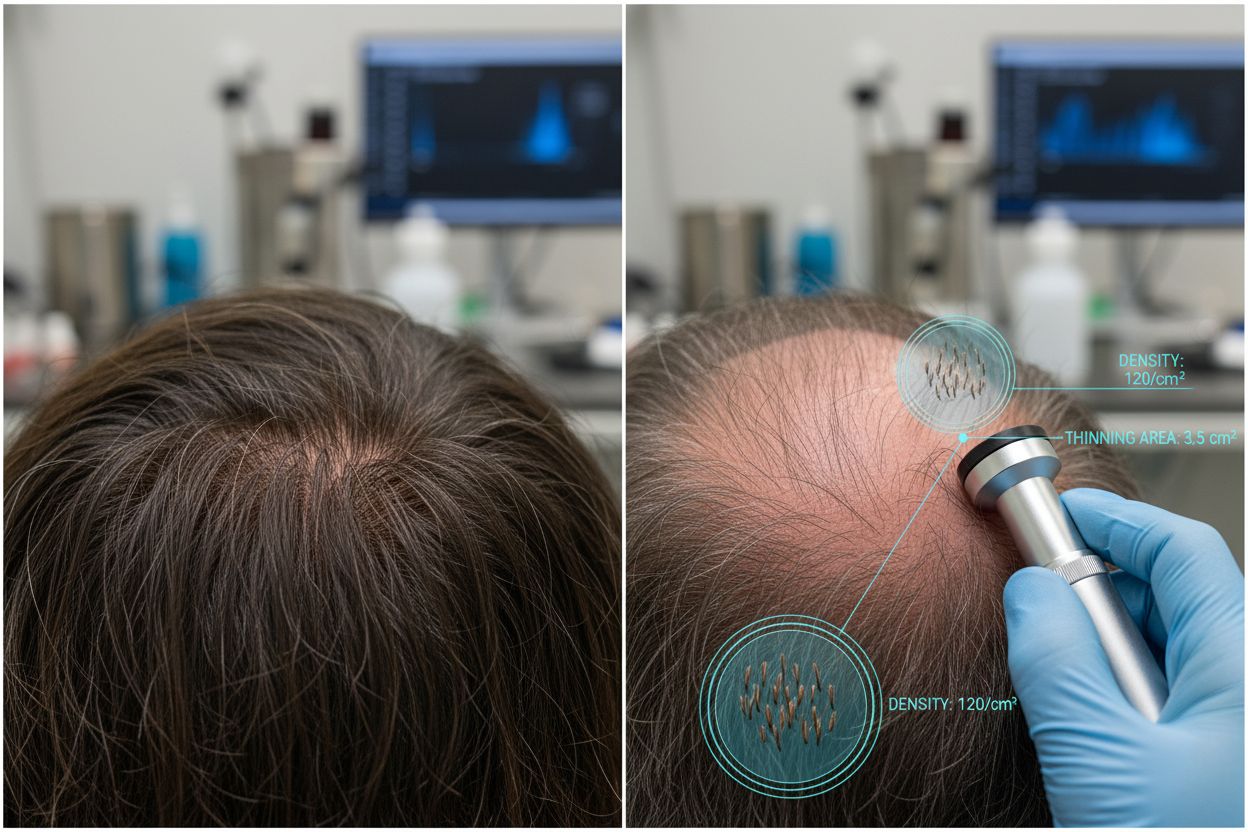
Thinning hair represents a nuanced condition where hair gradually becomes less dense, revealing more of your scalp than before. Unlike complete baldness, thinning hair signals a gradual reduction in hair volume and coverage that can affect both men and women. According to research from the Mayo Clinic, this process occurs when new hair fails to replace fallen hair strands, creating noticeable changes in hair thickness and overall appearance.
At its core, hair thinning manifests through several key indicators. You might notice wider hair part lines, reduced hair density at specific scalp regions, or increased visibility of your scalp during normal styling. These changes can stem from multiple factors, including:
- Genetic predispositions
- Hormonal fluctuations
- Nutritional deficiencies
- Stress and lifestyle factors
- Medical conditions
- Aging processes
For those experiencing hair thinning, understanding the underlying mechanisms becomes crucial. While some hair loss is natural—humans typically shed 50-100 hair strands daily—persistent thinning requires closer examination. Learn more about potential hair treatment solutions to address these changes comprehensively and proactively. The key is early recognition and targeted intervention, which can significantly slow down or potentially reverse thinning hair progression.
Common Causes of Thinning Hair
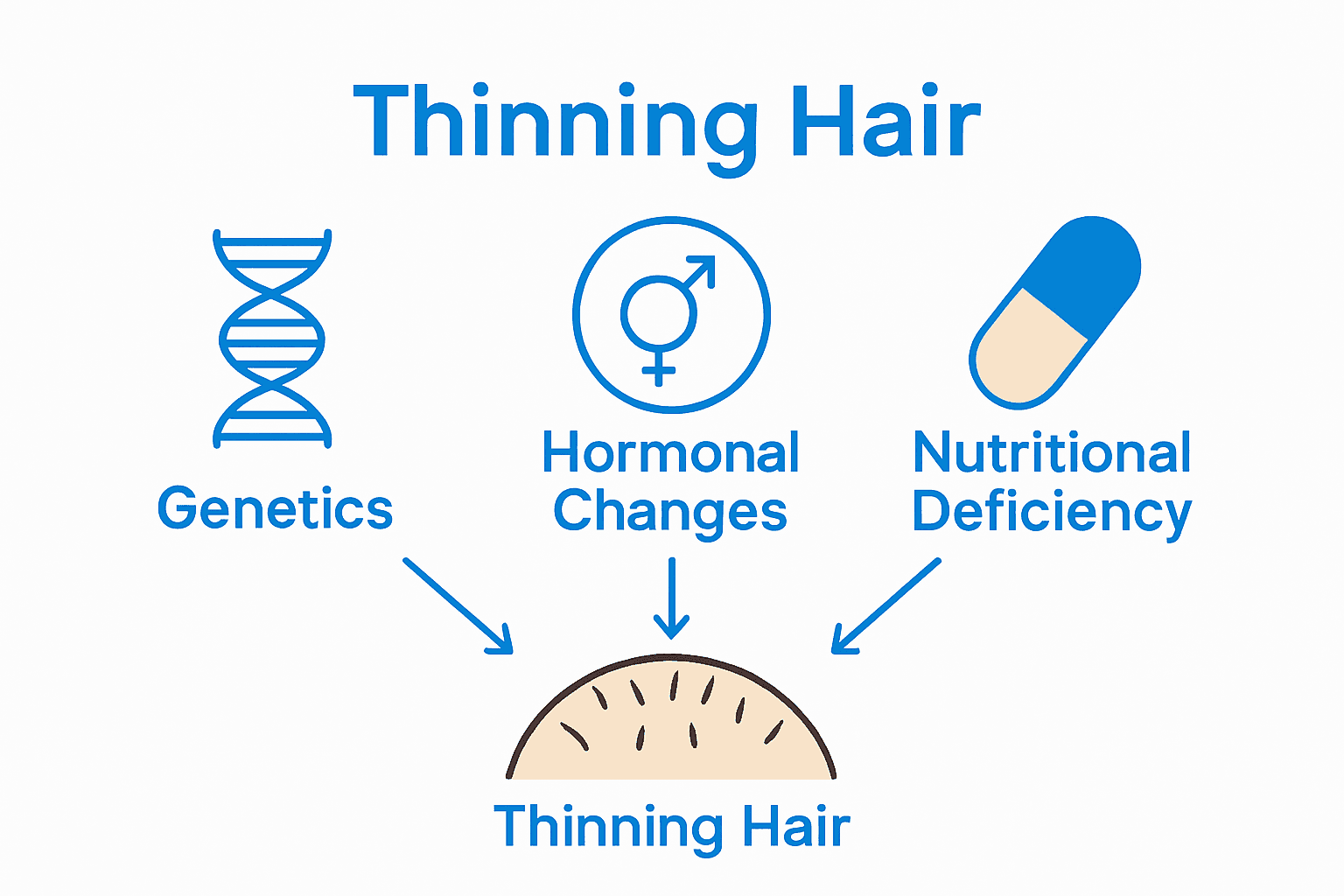
Hair thinning is a complex condition with multiple potential origins, each impacting hair growth and density differently. According to research from Northwestern Medicine, over 80 million individuals in the United States experience hair loss, with androgenetic alopecia emerging as the most prevalent cause. This genetic condition represents a significant factor in understanding why hair begins to thin.
Several key contributors trigger hair thinning across different demographics:
- Genetic Predisposition: Hereditary factors play a critical role in hair loss patterns
- Hormonal Changes: Shifts in hormone levels can dramatically impact hair growth
- Nutritional Deficiencies: Lack of essential vitamins and minerals disrupts healthy hair production
- Medical Conditions: Certain illnesses directly influence hair follicle health
- Stress and Lifestyle: Chronic stress and environmental factors accelerate hair thinning
As the Cleveland Clinic highlights, additional nuanced factors like medications, autoimmune disorders, and physical trauma can also trigger hair loss. Check out our comprehensive guide on thinning hair solutions to better understand these complex mechanisms and explore potential intervention strategies. Understanding these diverse causes is the first step in developing an effective approach to managing and potentially reversing hair thinning.
Here's a summary of common causes of hair thinning and their typical effects:
| Cause | Key Features | Typical Impact on Hair |
|---|---|---|
| Genetic Predisposition | Family history<br>Inherited patterns | Gradual thinning<br>Certain areas |
| Hormonal Changes | Pregnancy<br>Menopause<br>Thyroid issues | Diffuse shedding<br>Cyclical loss |
| Nutritional Deficiency | Low iron<br>Protein or vitamin shortage | Weak strands<br>Slower growth |
| Medical Conditions | Autoimmune<br>Chronic illness | Patchy loss<br>Sudden thinning |
| Stress & Lifestyle | High stress<br>Poor sleep<br>Hair pulling | Temporary shedding<br>Breakage |
How AI Analyzes Hair Thickness
Artificial Intelligence has revolutionized hair analysis by introducing unprecedented precision in evaluating hair thickness and health. Deep learning algorithms can now process complex visual data, identifying subtle changes in hair density and follicle characteristics that might escape human observation. According to groundbreaking research published in advanced machine learning journals, these AI systems can achieve up to 96.2% accuracy in detecting and analyzing hair and scalp conditions.
The AI hair analysis process typically involves several sophisticated techniques:
- Image Recognition: Advanced algorithms scan high-resolution hair and scalp images
- Pattern Matching: Machine learning models compare images against extensive databases
- Density Calculation: Precise measurements of hair strand thickness and scalp coverage
- Growth Cycle Tracking: Mathematical models predict hair growth and potential thinning patterns
- Predictive Modeling: AI forecasts potential future hair health based on current conditions
Research demonstrates that mathematical models informed by experimental data can provide intricate insights into hair growth cycles. Explore our comprehensive guide on understanding hair analysis to see how cutting-edge technology transforms hair health assessment. By leveraging these advanced AI techniques, individuals can now gain unprecedented understanding of their unique hair characteristics and potential health indicators.
Effective Treatments and Growth Solutions
Navigating hair loss treatments requires a comprehensive approach tailored to individual needs and underlying causes. Medical interventions offer multiple strategies for addressing hair thinning, with dermatologists recommending targeted solutions based on specific hair loss patterns. According to the Cleveland Clinic, treatment effectiveness depends on identifying the root cause and selecting appropriate interventions.
Key treatment options include:
- Topical Medications: Minoxidil applications to stimulate hair growth
- Oral Prescription Medications: Finasteride for blocking hair loss progression
- Laser Therapy: Low-level light treatments to enhance follicle stimulation
- Surgical Solutions: Hair transplant procedures for permanent restoration
- Lifestyle Modifications: Nutritional changes and stress management techniques
Dermatological research emphasizes that successful hair restoration involves a multifaceted approach. Discover the latest hair growth treatment options to understand how innovative medical techniques can address your unique hair health needs. By combining medical interventions with personalized care strategies, individuals can effectively manage and potentially reverse hair thinning progression.
Preventing Further Hair Thinning
Preventing hair thinning requires a holistic approach that addresses multiple aspects of personal health and hair care. Proactive strategies can significantly slow down or halt hair loss progression by targeting underlying causes and implementing protective measures. According to research from Northwestern Memorial Hospital, identifying and managing potential triggers is crucial in maintaining healthy hair growth.
Key prevention strategies include:
- Nutritional Support: Consuming a balanced diet rich in protein, vitamins, and minerals
- Stress Management: Implementing techniques like meditation and regular exercise
- Hair Care Practices: Minimizing harsh chemical treatments and excessive heat styling
- Hormonal Balance: Regular medical check-ups to monitor hormonal health
- Protective Styling: Avoiding hairstyles that cause excessive tension on hair follicles
Understanding your individual hair health requires a comprehensive approach. Discover expert tips for making your hair thicker to develop a personalized strategy that addresses your unique hair concerns. By combining lifestyle modifications, proper nutrition, and targeted hair care techniques, you can effectively protect your hair's health and potentially reverse thinning patterns.
Take Control of Thinning Hair with Personalized AI Insight
If you have noticed your hair feeling thinner and are facing the stress of uncovering the causes and solutions, you are not alone. This guide highlights how factors like genetic predisposition, nutritional deficiencies, and stress impact hair thinning. Understanding these elements is the first step to reclaiming your hair's health. Imagine having a personalized analysis tool that can pinpoint your unique hair thinning pattern and recommend specific treatments tailored for you.
Discover how AI-based hair health analysis from MyHair.ai offers detailed assessments based on your hair scan, helping you track changes and receive tailored product recommendations that match your exact needs. Don't wait until thinning worsens. Take action now by visiting MyHair.ai to start your personalized hair health journey and explore comprehensive solutions designed around your unique hair profile.
Frequently Asked Questions
What are the common causes of thinning hair?
Hair thinning can stem from various factors, including genetic predisposition, hormonal changes, nutritional deficiencies, medical conditions, and stress or lifestyle factors. Understanding these causes is essential for identifying appropriate treatment options.
How can I analyze my hair thickness at home?
While comprehensive analysis is best done by professionals using AI technologies, you can assess your hair thickness by examining the density of your hair part and checking for increased scalp visibility. Observing changes over time can also help you understand your hair health.
What effective treatments are available for thinning hair?
Treatment options for thinning hair include topical medications like minoxidil, oral medications like finasteride, laser therapy, surgical options such as hair transplants, and lifestyle changes that focus on nutrition and stress management.
Are there preventive measures I can take to avoid further hair thinning?
Yes, preventing hair thinning involves a holistic approach that includes maintaining a balanced diet rich in essential nutrients, practicing stress management techniques, using gentle hair care products, and avoiding hairstyles that tension hair follicles.