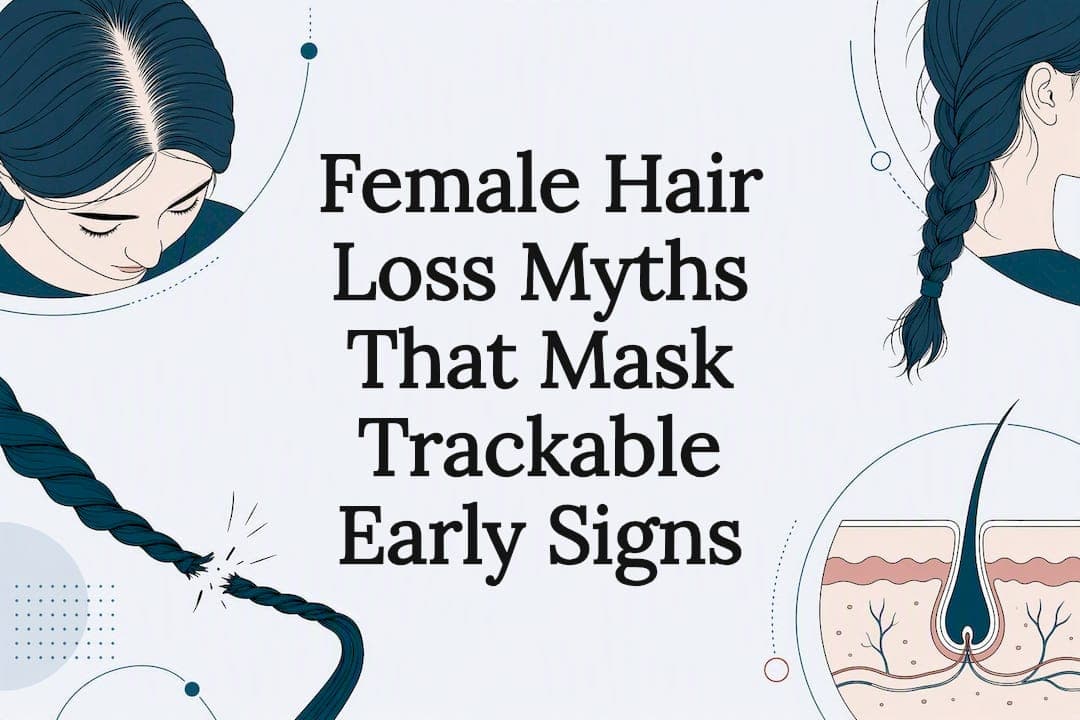
Most widely repeated beliefs about women's hair loss are myths. The real drivers are usually genetic, hormonal, inflammatory, or styling related, not the shampoo you use or the hat you wear. The three biggest actual causes are androgenetic (female pattern) hair loss, telogen effluvium from a physical or emotional shock, and traction from tight styling. If shedding lasts more than a few months or comes with scalp pain or patchy bald spots, see a dermatologist.
TL;DR:
- Most common causes of female hair loss are genetic, hormonal, inflammatory, or styling-related, rather than shampoo or hat use.
- Hair shedding of 50 to 100 hairs daily is normal, and more hair loss could signal health issues like scalp scarring or hormonal imbalance.
- Treatments like topical minoxidil have the strongest evidence, and early diagnosis significantly improves the chances of reversing certain types of hair loss.
- Myths about hair loss—such as hats causing baldness or cutting hair speeding growth—are false, with actual causes often being manageable or reversible.
- Hair type and ethnicity influence mechanics but do not determine inevitable loss, as traction and scalp care are controllable factors.
Table of Contents
- Myths About Female Hair Loss You've Probably Heard as Fact
- What Actually Causes Female Hair Loss
- What the Evidence Actually Supports
- Myths That Vary by Ethnicity and Hair Type
- Why This Conversation Matters More Than the Science Alone
- How Myhair Turns Confusion Into a Clear Next Step
- Sources
- FAQ
Myths About Female Hair Loss You've Probably Heard as Fact
Almost every woman who has ever pulled a clump of hair from a shower drain has heard some version of these claims. Most don't hold up.
-
Myth: Washing or shampooing too often causes hair loss. Shampoo doesn't pull hair out of the follicle. You notice more strands in the shower because shed hairs that were already loosening their grip finally let go when water and lathering move them. Losing 50 to 100 hairs a day is normal, according to the American Academy of Dermatology, and skipping washes just lets those hairs build up before they fall together.
-
Myth: Hats or brushing wet hair cause baldness. Rough brushing on wet strands can snap the hair shaft. That's breakage, and it grows back on its own timeline. Baldness happens at the follicle, under the skin, where a hat has no reach at all.
-
Myth: Frequent haircuts make hair grow faster or thicker. Trimming affects dead keratin, not the living follicle that determines growth rate. Cutting split ends just prevents hair from looking thinner at the tips.
-
Myth: Only men lose their hair, and it's inherited only from your mother's side. Female pattern hair loss is common and looks different from the male version. Instead of a receding hairline, women typically see diffuse thinning and a widening part. The genetics come from both parents, not a single maternal gene.
-
Myth: Stress always causes permanent hair loss. Stress is a trigger for telogen effluvium, a temporary shedding phase, not a direct cause of chronic hair loss. The shedding typically shows up about three months after the stressful event, which is exactly why people blame something recent instead of the actual trigger months earlier. It's usually reversible once the underlying cause resolves.
-
Myth: Hair coloring causes permanent hair loss. Bleach and harsh chemical treatments can weaken and break the hair shaft, sometimes badly. That's cosmetic damage. It doesn't destroy the follicle underneath, so hair grows back once you stop the damaging process.
-
Myth: All hair loss is permanent. Telogen effluvium, nutritional deficiencies, thyroid imbalances, and early traction alopecia are often reversible with the right intervention. Androgenetic hair loss is progressive but treatable if caught early, which is different from irreversible.
-
Myth: Tight hairstyles are harmless as long as they don't hurt. Constant tension from tight ponytails, braids, or extensions can inflame follicles and lead to traction alopecia. Catch it early by loosening the style and it typically recovers. Left alone for years, the follicle can scar and stop producing hair for good.
-
Myth: Sun exposure causes hair loss. There's no solid evidence that sunlight itself damages follicles. The vitamin D connection runs the other way: low vitamin D levels are associated with some hair loss conditions, so sun avoidance isn't the fix people assume it is.
-
Myth: Natural supplements or topicals always help. "Natural" doesn't mean effective. Plenty of over-the-counter products make regrowth claims with little to back them up.
What Actually Causes Female Hair Loss
Female pattern hair loss (androgenetic alopecia) is the most common diagnosis, usually starting with gradual part widening or crown thinning any time from your 20s through menopause, when hormonal shifts often accelerate it.
Telogen effluvium follows a different pattern: a stressor, illness, surgery, childbirth, or crash diet pushes hair follicles into a resting phase, and the shedding shows up roughly three months later before typically resolving on its own.
Traction alopecia develops slowly from repeated pulling at the hairline or part, and it's one of the few causes largely within your control to prevent.
Other real culprits include thyroid disorders, iron deficiency, autoimmune conditions like alopecia areata, and certain medications.
- Notice shedding that's lasted longer than six months.
- Look for scalp symptoms: burning, itching, redness, or visible patches.
- Check for scarring or shiny, smooth patches where hair used to grow.
- If any of these apply, book a dermatology appointment rather than waiting it out.
By age 50, an estimated one-third to one-half of women will experience some form of female pattern hair loss, which makes it one of the most common skin and scalp conditions women face, not a rare misfortune. Because early treatment gives follicles the best chance to recover, waiting years to bring it up with a doctor is the costliest mistake in this whole conversation.
What the Evidence Actually Supports
Dermatology research is fairly consistent on a few points, and it's worth knowing which treatments have real data behind them before you spend money chasing a trend.
- Topical minoxidil is the best-studied treatment for female pattern hair loss, with 2% solution twice daily and 5% foam once daily both FDA-approved for women.
- Telogen effluvium is typically temporary, and understanding the roughly three-month lag between trigger and shedding helps you actually identify what caused it.
- Randomized controlled trial evidence for many popular supplements and natural topicals is thin or absent, which doesn't mean every one is useless, just that most haven't been rigorously tested.
- Minoxidil can cause a short-term increase in shedding as follicles shift growth phases; dermatologists generally advise sticking with it for a few months before judging whether it's working.
Treating hair loss first with unproven products, without an actual diagnosis, can delay effective therapy long enough that follicles miniaturize past the point of easy recovery.
That warning, echoed across dermatology literature, is the strongest argument for getting a diagnosis before you buy anything. If you want to verify any of this independently, the American Hair Research Society and peer-reviewed dermatology journals are a better starting point than a product review site.
Myths That Vary by Ethnicity and Hair Type
Hair texture changes some of the mechanics of hair loss, and that's led to a separate set of myths depending on background.
A common one: women with tightly coiled or curly hair are naturally more prone to breakage, so any thinning must just be "normal" for that hair type and not worth investigating. Coiled hair does break more easily under mechanical stress because of its curvature, but that's breakage, not follicle loss, and it doesn't explain a receding part or visible scalp.
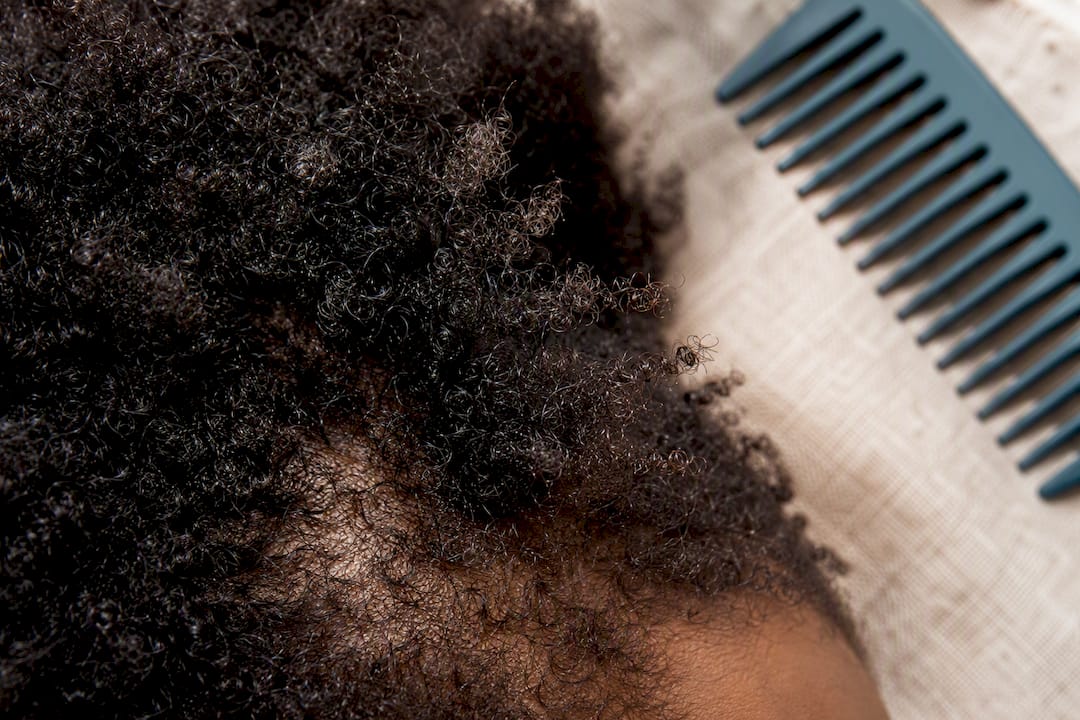
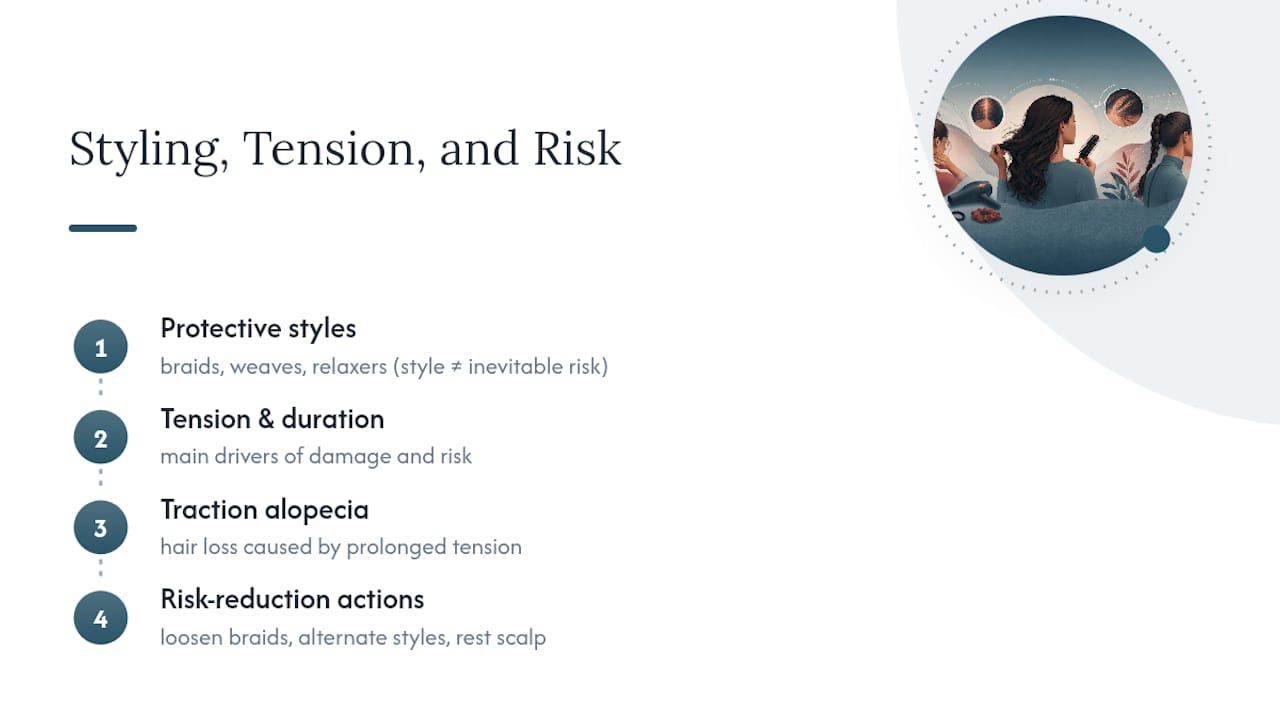
Another persistent myth targets Black women specifically: that traction alopecia from braids, weaves, or relaxers is unavoidable if you want certain protective styles. In reality, the risk comes down to tension and duration, not the style category itself. Loosening a braid pattern, alternating styles, and giving the scalp rest periods meaningfully lowers risk without abandoning the styles altogether.
There's also a myth in some South Asian and Middle Eastern communities that oiling the scalp heavily prevents genetic hair loss. Scalp oils can improve hair shaft condition and reduce breakage, but they don't change androgen sensitivity at the follicle, which is what drives pattern hair loss.
And among women with fine, straight hair, there's an assumption that visible scalp through the hair automatically means advanced loss. Fine hair simply has less coverage per strand, so scalp visibility shows up earlier even at a normal hair density.
Why This Conversation Matters More Than the Science Alone
Hair loss carries an emotional weight that pure biology doesn't capture. Confusion between myth and fact only deepens that weight, because it leaves you guessing whether something you did caused this, or whether it's simply out of your control. Neither guilt nor helplessness serves you well here.
What actually helps is separating temporary shedding from progressive thinning, since they call for completely different responses. A tool that tracks density and miniaturization over time, rather than relying on memory or a single photo, gives you the kind of objective signal that a mirror can't. That's the gap worth closing before you decide on a next step, whether that's a lifestyle change, a lab test, or a dermatology referral.
— Cyriac
How Myhair Turns Confusion Into a Clear Next Step
Once you know most hair loss myths don't hold up, the real question becomes: what's actually happening on your own scalp? Myhair's AI scan measures hair count, density, and early miniaturization patterns from a simple photo, then tracks those numbers over time so you can see whether you're dealing with temporary shedding or something progressive.
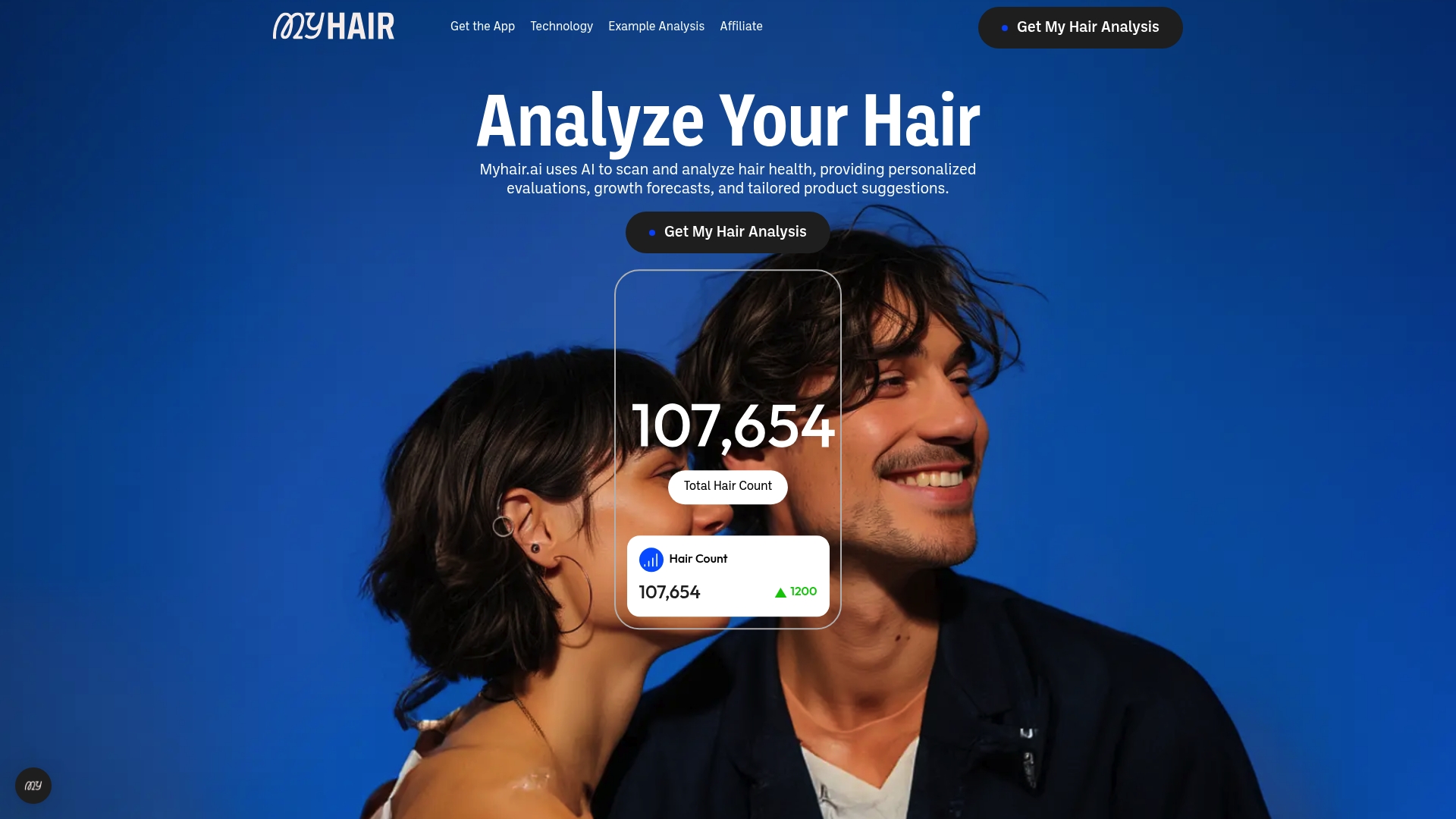
Instead of guessing based on how your hair "feels" day to day, you get a report that flags likely causes, whether that's a hormonal pattern, a stress-related shedding phase, or signs worth raising with a dermatologist. The scanner tool captures your baseline in minutes, and the onboarding walkthrough shows you exactly how the tracking and product recommendations work from there. If you've been wondering for months whether things are getting worse, start with a scan and let the data answer that instead of another guess.
This article is general information, not a substitute for advice from a qualified doctor. Consult a qualified healthcare professional about your own circumstances before acting on anything here.
Sources
- American Hair Research Society — Female pattern hair loss
- Harvard Health — Hair loss A to Z
- Cleveland Clinic — Female pattern baldness
FAQ
What are some common myths about hair loss?
The biggest ones are that shampooing, hats, haircuts, and sun exposure cause hair loss. In reality, the main drivers are genetics, hormones, telogen effluvium, and traction from tight hairstyles.
What to say to a woman who is losing her hair?
Acknowledge that it's difficult without minimizing it, and avoid guessing at causes. Encouraging her to get an evaluation, whether through a dermatologist or a tracking tool like a Myhair scan, is more useful than reassurance alone.
How long does it take to go bald once you start thinning?
It depends entirely on the cause. Telogen effluvium often resolves within months, while untreated female pattern hair loss progresses gradually over years, which is why early tracking and diagnosis matter so much.
What does losing hair mean spiritually?
Spiritual or symbolic meanings around hair loss vary widely by culture and personal belief, and there's no medical basis for them. Clinically, hair loss in women almost always traces back to genetics, hormones, or a specific physical trigger.