TL;DR:
- Hair loss affects confidence and daily comfort, and natural supplements can support growth when used correctly.
- Choosing evidence-based ingredients like pumpkin seed oil, saw palmetto, and marine protein, and maintaining lifestyle consistency are crucial for meaningful results.
You notice it in the shower drain. On your pillow. Wrapped around your hairbrush. Hair loss is not just a cosmetic issue — it chips away at confidence, daily comfort, and how you see yourself. The supplement market promises fixes from every shelf and screen, but most people buying bottles have no idea which ones actually work or why. This guide cuts through the noise with evidence-based steps, honest expectations, and a clear plan for using natural hair growth supplements the smart way, before you ever consider reaching for a prescription.
Table of Contents
- What you need to know before starting natural hair growth supplements
- Key ingredients and choosing the right supplement
- Step-by-step: How to add natural hair growth supplements to your routine
- Troubleshooting, mistakes to avoid, and when supplements are not enough
- A realistic perspective: Why supplement strategies succeed or frustrate
- Next steps: Personalizing your hair growth journey with expert tools
- Frequently asked questions
Key Takeaways
| Point | Details |
|---|---|
| Choose evidence-based ingredients | Select supplements with ingredients shown in clinical trials to support hair growth such as pumpkin seed oil or marine proteins. |
| Set realistic expectations | Improvement takes 3–6 months and gradual results should be documented with photos and tracked over time. |
| Supplements work best as additions | For optimal benefits, use supplements alongside a healthy diet, proven medical treatments, and stress management. |
| Biotin is not always needed | Test for deficiency before using biotin, as most people will not benefit from routine supplementation. |
| Monitor for side effects | Though rare, mild digestive issues may occur and should be discussed with your healthcare provider if persistent. |
What you need to know before starting natural hair growth supplements
Not every supplement works for every type of hair loss. That matters more than most label claims suggest. Natural hair growth supplements show the strongest results for people with androgenetic alopecia (also called AGA, or pattern hair loss), general thinning, postpartum shedding, menopausal hair changes, and nutritional gaps common in vegan diets. They also show promise for non-scarring alopecia broadly, and a systematic review and meta-analysis confirms that nutraceutical supplements produce positive effects on hair growth in these non-scarring conditions. If your hair loss involves scarring, autoimmune triggers, or medication side effects, supplements alone will not be enough.
So how do supplements actually work? Most act through one or more of three main pathways:
- Blocking DHT (dihydrotestosterone): DHT is the hormone responsible for shrinking hair follicles in AGA. Ingredients like saw palmetto and pumpkin seed oil work by partially blocking DHT's effects.
- Multi-targeting: Some formulas tackle multiple roots of hair loss at once, including chronic stress, hormonal imbalances, inflammation, and oxidative damage. Nutrafol is the most well-known example of this approach.
- Follicle nourishment: Marine protein supplements like Viviscal deliver amino acids and nutrients that feed follicles directly, supporting longer, stronger growth cycles.
Biotin gets its own mention because it is wildly overhyped. It only improves hair growth if you have a genuine deficiency. Taking extra biotin when your levels are normal does nothing for your follicles.
Important: Supplements are not a cure and they are not a replacement for medical treatments like minoxidil or finasteride. Think of them as tools that support your overall plan, not the entire plan itself. Combining supplements with a healthy lifestyle, stress management, and adequate sleep consistently produces better results than supplements alone.
Before starting, explore a hair growth supplements comparison to understand the options available, and review natural hair treatment steps to build the strongest possible foundation.

Mild digestive discomfort is the most commonly reported side effect and it is rare even then. Most people tolerate hair supplements well when taken with food and at consistent times.
Pro Tip: Always start with a baseline. Take photos of your hairline, part width, and crown before you begin any supplement. You will thank yourself in three months when the small changes are actually visible.
Key ingredients and choosing the right supplement
Walking into a supplement aisle without knowing what works is like buying paint without knowing what room you are painting. The network meta-analysis of 19 randomized controlled trials found that pumpkin seed oil, Nutrafol, saw palmetto, tocotrienols, and Viviscal marine protein significantly improved hair density, diameter, and count compared to placebo. Those five are your starting point.
Here is a breakdown of the top evidence-backed ingredients and how they compare:
| Ingredient | Main mechanism | Evidence level | Best for |
|---|---|---|---|
| Pumpkin seed oil | DHT blocker | Strong (RCT data) | AGA, male/female pattern loss |
| Saw palmetto | DHT blocker | Moderate-strong | AGA, general thinning |
| Nutrafol blend | Multi-targeting | Strong (proprietary RCTs) | Stress-related, hormonal, AGA |
| Tocotrienols (Vitamin E) | Antioxidant, follicle support | Moderate | Oxidative stress-related loss |
| Viviscal marine protein | Follicle nourishment | Strong (RCT data) | General thinning, postpartum |
| Biotin | Cofactor in keratin synthesis | Weak (only if deficient) | Confirmed deficiency only |
When scanning a product label, look for ingredients that appear in this table. If a supplement leads with biotin and nothing else, put it back. If it combines two or more of the above with clear dosages listed, that is a stronger signal. Proprietary blends without disclosed amounts are a red flag.
Multi-ingredient formulas consistently outperform single-ingredient products because hair loss is rarely one-dimensional. Hormonal shifts, nutritional gaps, inflammation, and stress often pile on simultaneously. A formula that targets more than one pathway has more chances to make a difference.
Explore the supplements for hair growth guide for a deeper breakdown by hair type and concern, or check the top hair growth supplements comparison to narrow down your options quickly.
Pro Tip: Search for brands that publish or reference published clinical studies on their specific formula, not just on individual ingredients. A brand confident in its product will point you to the data.
Step-by-step: How to add natural hair growth supplements to your routine
Once you have picked your supplement, execution is everything. Consistency beats intensity every time. Follow this step-by-step process to give your chosen supplement the best possible chance to work.
- Check for deficiencies first. Before spending money on any supplement, visit your healthcare provider and ask for a panel that includes ferritin (stored iron), vitamin D, zinc, and biotin. Deficiencies in these nutrients cause hair loss on their own, and correcting them can produce visible results without fancy formulas.
- Choose and purchase an evidence-based supplement. Use the table above as your guide. Prioritize products from reputable brands with published clinical backing.
- Follow the dosage on the label exactly. Do not double up thinking faster results will follow. Overdosing does not speed up follicle recovery and can introduce unnecessary risks.
- Take it consistently at the same time each day. Most hair supplements absorb better with food. Morning with breakfast is a common and sustainable routine.
- Track your progress every 30 days. Photograph your part line, hairline, and crown under the same lighting. Note changes in shedding volume and texture.
- Stay patient through the full study period. Most clinical results appear between 90 and 180 days of consistent use.
- Report any side effects to your doctor. If you experience scalp changes, stomach pain, or unexpected symptoms, consult a professional before continuing.
Here is a realistic timeline based on clinical study data:
| Timeframe | What to expect | Clinical reference |
|---|---|---|
| Weeks 1 to 4 | Possible adjustment; little visible change | Standard supplement lag period |
| Months 1 to 3 | Reduced shedding, early texture improvements | Nutrafol effectiveness study |
| Months 3 to 6 | Increased hair shaft diameter, more visible volume | Nutrafol six-month outcomes |
| Months 4 to 6 | Higher terminal hair count, fuller appearance | Viviscal RCT findings |
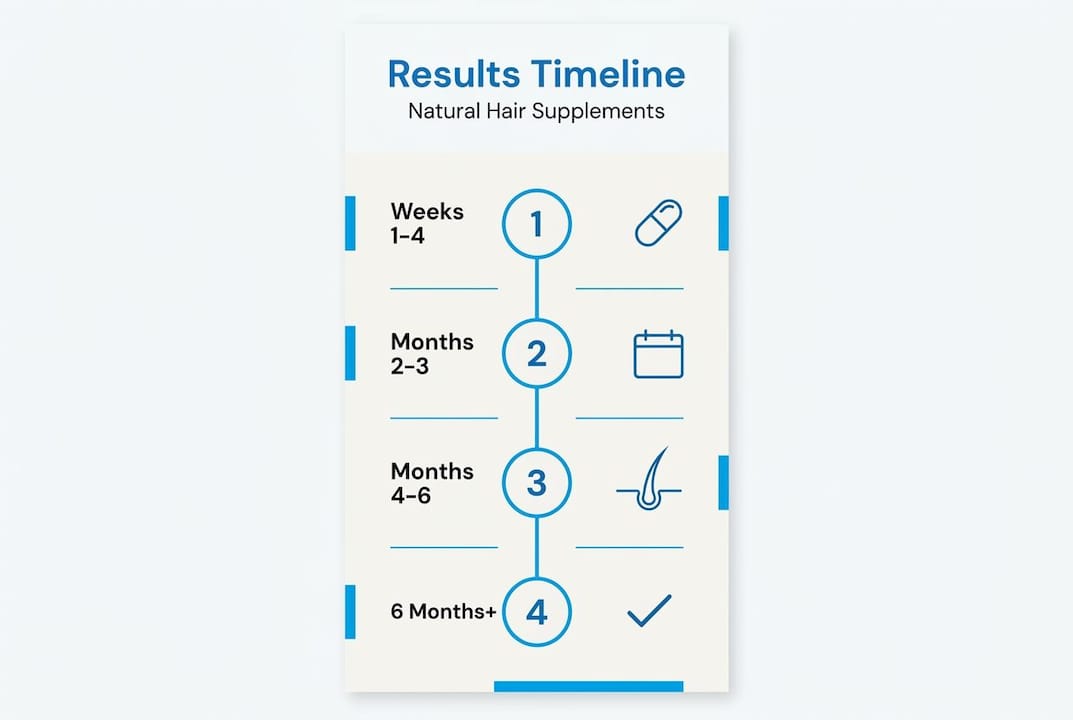
Nutrafol products significantly increased hair shaft diameter and reduced shedding within a six-month period in a published clinical study. Viviscal marine protein supplement showed increased terminal hair count and diameter across multiple randomized controlled trials. These are not marketing claims — they are measurable, peer-reviewed outcomes.
Check natural products for hair growth for additional options that pair well with supplement use, including topical and lifestyle strategies.
Pro Tip: Create a simple notes file on your phone with the date you started, your supplement name and dose, and your monthly observations. This record becomes invaluable when talking to a dermatologist or tracking what actually changed.
Troubleshooting, mistakes to avoid, and when supplements are not enough
Most supplement journeys stall not because the product failed, but because the approach did. Here are the most common mistakes and how to avoid them.
- Switching products too fast. Many people give up at the six-week mark when nothing looks different. Follicle cycles take time. Three months is the minimum realistic evaluation window.
- Not tracking progress. Without photos or notes, you cannot detect gradual improvements. Human memory underestimates slow, positive change.
- Expecting overnight results. Hair growth averages about half an inch per month. Significant density or volume changes require multiple full growth cycles.
- Overloading on biotin. This one deserves a full paragraph. Biotin supplementation only helps hair loss in people with a true deficiency, and high doses can interfere with lab tests for thyroid hormones and cardiac markers, potentially masking serious conditions. More biotin is not better unless your bloodwork confirms you need it.
- Ignoring symptoms that need medical attention. Rapid or patchy hair loss, scalp pain, burning, or loss that appears suddenly in clumps are all reasons to see a dermatologist rather than add another bottle to your cabinet.
Know your limits: Supplements are adjuncts, not alternatives to clinical care. Advanced hair loss, especially if it progresses quickly, may require minoxidil, finasteride, platelet-rich plasma therapy, or transplant evaluation. A supplement can support those treatments but cannot substitute for them.
For a structured approach to choosing the right product without falling into common traps, visit choosing effective hair care supplements.
Pro Tip: Always tell your doctor or dermatologist which supplements you are taking, especially before any bloodwork. Biotin and other ingredients can distort lab values, which could lead to misdiagnosis or unnecessary follow-up testing.
A realistic perspective: Why supplement strategies succeed or frustrate
Here is something the supplement industry does not want you to think about too hard: most people who feel frustrated by hair supplements did everything right. They bought a quality product. They took it consistently. And they still felt like it did not work. Why?
Because hair loss is almost never one thing. It is the sum of genetics, stress load, sleep quality, nutritional status, hormonal shifts, and scalp health all interacting at once. A single supplement can tip the balance if the gap is small. But if your sleep is wrecked, you are running on cortisol, and your diet is low in protein, even the best-formulated supplement is working against too many headwinds to produce a dramatic result.
This is why multi-ingredient formulas consistently outperform single-ingredient ones and why the research is clear that supplements are most effective as part of a holistic approach, not as a standalone fix. Benefits are real, but they are modest and gradual. That is not a failure of the product — it is an accurate reflection of how biology works.
What separates successful supplement journeys from frustrated ones is almost always the surrounding lifestyle. The person who adds a quality supplement AND improves their sleep, reduces alcohol, adds protein to their diet, and manages stress more effectively is going to see meaningfully better results than someone treating the capsule like a magic pill.
The other thing worth saying honestly: progress will be slow enough at times that you will doubt it is happening. Celebrate small wins. Less hair in the drain after week six is a real win. A slightly thicker ponytail at month four is a real win. If you are tracking correctly, you will see these moments. If you are only watching for a dramatic transformation, you will miss them entirely.
Explore the best food supplement for hair loss if you want to pair your supplement plan with targeted dietary changes that amplify your results.
Next steps: Personalizing your hair growth journey with expert tools
Understanding the science is step one. Acting on it with precision is where real results come from.
MyHair.ai gives you something most supplement guides cannot: a personalized, AI-powered look at your actual hair health, not a generic recommendation based on your age or gender. By using the AI hair analysis tool, you can scan your scalp and get a detailed assessment of your hair density, follicle health, and thinning patterns right now. Track how those metrics change month over month as your supplement routine takes effect. Your personalized hair score gives you a clear, objective benchmark so you know when progress is real and when to adjust. For the most current research on which supplements are gaining clinical traction, check the latest supplement research section to stay ahead of the evidence.
Frequently asked questions
How long does it take to see results from natural hair growth supplements?
Most people notice reduced shedding within one to three months and visible volume increases between three and six months of consistent use, based on Nutrafol clinical outcomes. Results depend heavily on the root cause of your hair loss and overall lifestyle consistency.
Are there any side effects to natural hair supplements?
Side effects are rare. The most commonly reported issue is mild digestive discomfort, and even that is uncommon. A large systematic review of nutraceuticals found supplements to be well-tolerated across study populations.
When is biotin supplementation helpful for hair loss?
Biotin is only helpful if you have a confirmed deficiency from bloodwork. Routine supplementation without a deficiency offers no hair growth benefit and can distort important lab test results.
Can I use natural supplements with minoxidil or finasteride?
Yes. Supplements can complement medical treatments by supporting follicle health from different angles, but they are not a replacement for clinically proven medications when those are indicated.
How do I know if a hair supplement is science-backed?
Look for products with published clinical studies on their specific formula, and check that key ingredients like pumpkin seed oil, saw palmetto, marine protein, or tocotrienols are listed with clear dosages. The strongest evidence currently supports these ingredients above all others in the natural supplement category.
Recommended
- Transform your hair naturally: evidence-based product guide | MyHair
- Best Hair Growth Supplements List – Expert Comparison 2025 | MyHair
- Natural Products for Hair Growth and Thickness: A Complete Guide | MyHair
- Natural Hair Growth Shampoo: Science, Myths, and Real Impact | MyHair
- Naturalne doczepy – zalety i możliwości przedłużania włosów