TL;DR:
- A natural hair growth routine focuses on length retention through consistent scalp care, moisture balance, and protective styles. It emphasizes washing every 7 to 14 days, sealing moisture with LOC or LCO methods based on hair porosity, and daily scalp massage to stimulate follicles. Patience and individualized adjustments over several months are essential for visible progress.
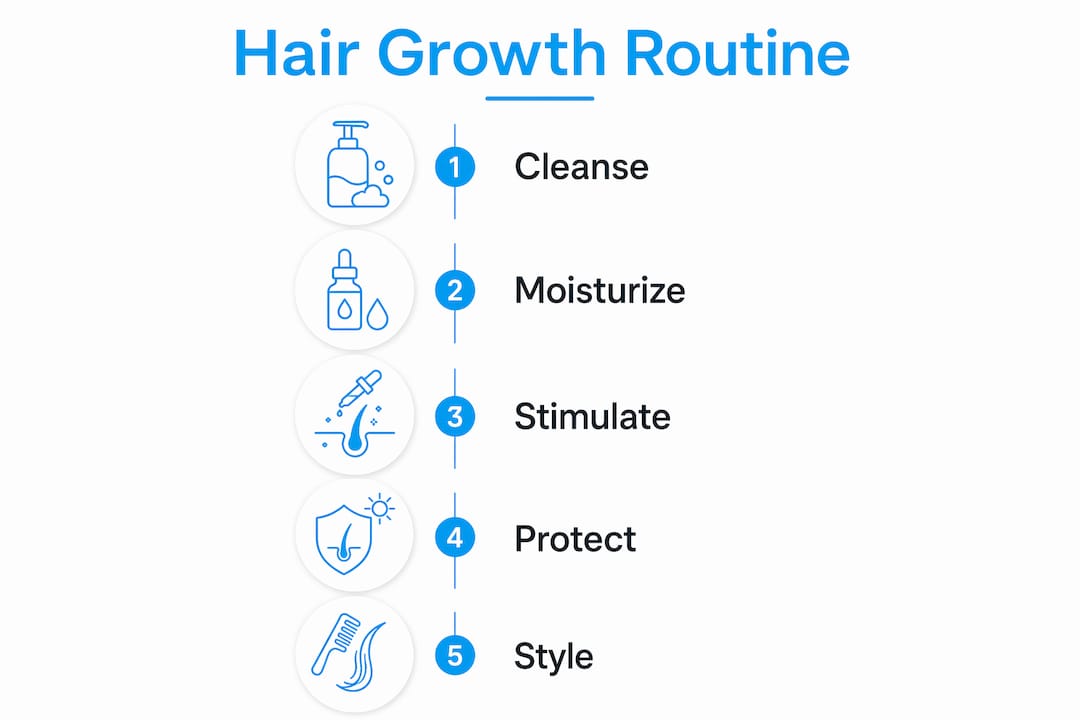
A natural hair routine for hair growth is a structured regimen combining cleansing, moisturizing, scalp stimulation, and protective styling to retain length and reduce breakage. The real barrier to longer natural hair is not slow follicle activity. It is the daily and weekly damage that removes length faster than your scalp produces it. A focused, consistent hair care routine built around your specific hair type addresses that problem directly. Products like sulfate-free shampoos, jojoba oil, and deep conditioners are not optional extras. They are the foundation of every effective growth-focused regimen.
What does a natural hair routine for hair growth actually require?
The most important concept in any growth-focused regimen is length retention, not growth speed. Hair growth is driven by genetics, so your follicles are already doing their job. The problem is that mechanical friction, moisture imbalance, and product buildup strip away the length your scalp produces. Addressing those three factors is the core of every best hair care routine for growth.

Your routine needs four pillars: a clean scalp, balanced moisture, regular stimulation, and low-manipulation styling. Each pillar targets a specific failure point. Skipping any one of them creates a gap that limits your results regardless of how well you execute the others. Think of it less like a beauty ritual and more like a maintenance schedule for a system that is already running.
80% of growth effort should focus on protecting the ends, because that is where breakage eliminates visible progress. Most beginners spend their energy on wash day and ignore end care entirely. Reversing that priority is the single fastest way to see length gains.
How often should you wash natural hair to encourage growth?
Curly and coily hair types should wash every 7 to 14 days, with clarifying treatments every 3 to 4 weeks to remove product buildup that clogs follicles. Washing too frequently strips natural oils and disrupts the moisture balance your strands depend on. Washing too infrequently allows sebum and product residue to accumulate, slowing follicle function.
The method matters as much as the frequency. Here is a comparison of the most common washing approaches and their impact on hair health:
| Washing method | Best for | Impact on hair health |
|---|---|---|
| Sulfate-free shampoo | All natural hair types | Cleanses without stripping moisture |
| Co-washing (conditioner only) | High-porosity, dry hair | Adds moisture but may cause buildup |
| Clarifying shampoo | Product buildup, oily scalp | Deep cleans but drying if overused |
| Pre-poo treatment | Fragile, color-treated hair | Protects cuticle before water exposure |
Pre-poo treatments, applied 30 minutes before washing with oils like coconut or olive oil, reduce hygral fatigue. That is the swelling and contracting of the hair shaft during wetting and drying, which weakens strands over time.
- Use a sulfate-free shampoo as your weekly or biweekly standard cleanser
- Rotate in a clarifying shampoo once per month to reset the scalp
- Apply a pre-poo treatment on dry hair before every wash day
- Co-wash midweek only if your scalp is very dry between wash days
Pro Tip: Divide your hair into four sections before washing. This prevents tangling and reduces the mechanical damage that happens when wet, fragile strands rub against each other.
How do you moisturize and seal natural hair for optimal growth?
Moisture retention is the most misunderstood part of a good hair routine for growth. Most people apply product and assume the job is done. The LOC method (Liquid, Oil, Cream) and LCO method (Liquid, Cream, Oil) are the two frameworks that actually lock moisture into the shaft rather than sitting on top of it.
LOC works best for low-porosity hair, which resists moisture absorption. The oil layer applied second creates a barrier that slows water evaporation before the cream seals everything in. LCO works better for high-porosity hair, which absorbs moisture quickly but loses it just as fast. The cream applied second fills gaps in the cuticle before the oil seals the surface.
Hair porosity determines which products hydrate the shaft properly, making porosity-based product selection more effective than routine complexity. A water-based leave-in conditioner is your liquid layer regardless of porosity. Jojoba oil closely mimics the scalp's natural sebum and works across all hair types as an oil layer. Shea butter or a curl cream completes the seal.
The protein-moisture balance directly influences breakage and elasticity. Over-moisturized hair feels limp, stretches without snapping back, and tangles easily. Over-proteinized hair feels stiff, brittle, and snaps with minimal tension. Recognizing which state your hair is in prevents you from applying the wrong treatment and making the problem worse.
Signs your hair needs more protein:
- Strands stretch significantly before breaking
- Hair feels mushy or gummy when wet
- Styles lose definition quickly
Signs your hair needs more moisture:
- Strands snap immediately with no stretch
- Hair feels rough or straw-like to the touch
- Breakage increases after protein treatments
Pro Tip: Do a strand test before every deep conditioning session. Wet a single strand and stretch it gently. If it snaps with no give, reach for a moisturizing deep conditioner. If it stretches and does not return, use a protein treatment instead.
What scalp care practices actually stimulate hair growth?
Scalp health is the foundation of any hair routine to grow hair. A daily 5-minute scalp massage improves circulation and boosts oxygen and nutrient delivery to follicles. This is one of the few practices with consistent support across dermatological research, and it costs nothing.
Here is a practical scalp care sequence to integrate into your weekly routine:
- Apply a few drops of diluted peppermint or rosemary oil to your fingertips before massaging. Both oils have evidence supporting their role in follicle stimulation.
- Use the pads of your fingers, not your nails, and work in small circular motions across the entire scalp for 5 minutes.
- On wash day, follow the massage with a scalp exfoliation using a gentle scalp scrub or a diluted apple cider vinegar rinse to lift dead skin cells.
- Product buildup clogs follicles and impedes growth, so clarifying treatments and exfoliation are not optional steps. Schedule them every 3 to 4 weeks without exception.
- After clarifying, apply jojoba oil directly to the scalp to restore the lipid barrier before styling.
Signs of an unhealthy scalp include persistent flaking, tenderness, excessive oiliness, or slow-growing patches. These are signals to consult a dermatologist rather than add more products. More product on an inflamed scalp makes the problem worse, not better.
Pro Tip: Mix 2 to 3 drops of rosemary essential oil with a tablespoon of jojoba oil as your scalp massage blend. Use it 4 to 5 nights per week for consistent follicle stimulation without the cost of specialty growth serums.
Do protective styles actually help with length retention?
Protective styles reduce mechanical damage by keeping your ends tucked away from friction, clothing, and daily manipulation. The key word is low tension. Overly tight or prolonged protective styles cause traction alopecia, which is permanent follicle damage along the hairline and temples. A style that pulls at installation is already causing harm regardless of how neat it looks.
Effective protective styles for natural hair include:
- Loose two-strand twists tucked at the ends
- Flat twists with no tension at the root
- Low buns secured with a satin scrunchie rather than elastic
- Box braids installed with minimal tension and medium-sized sections
Keep any protective style in for no longer than 4 to 6 weeks. Beyond that window, new growth tangles with the style base and causes matting and breakage during removal. Removal is also a high-risk moment. Work from the ends upward, apply a detangling conditioner generously, and use your fingers before reaching for a wide-tooth comb.
Nighttime care is equally important. A satin or silk pillowcase reduces friction by roughly half compared to cotton. A satin bonnet or silk scarf adds another layer of protection, especially for styles with exposed ends. Cotton absorbs moisture from your hair while you sleep, undoing the moisturizing work from your daytime routine.
How to build a consistent weekly routine and avoid common mistakes
A weekly hair care routine does not need to be complicated to be effective. Consistency over complexity is the rule that separates people who see results from those who do not.
Here is a sample weekly schedule built around the best hair care routine for hair growth principles:
| Day | Action | Expected outcome |
|---|---|---|
| Wash day (Day 1) | Pre-poo, shampoo, deep condition 15-30 min, LOC/LCO method | Clean scalp, sealed moisture, defined style |
| Day 3 to 4 | Refresh with water mist and leave-in, scalp massage | Restored moisture, improved circulation |
| Day 5 to 6 | Protective style refresh or re-twist, satin bonnet at night | Reduced friction, maintained style integrity |
| Weekly | Scalp exfoliation or apple cider vinegar rinse | Clear follicles, balanced scalp pH |
| Every 3 to 4 weeks | Clarifying shampoo, protein or moisture treatment | Reset buildup, corrected protein-moisture balance |
Visible length retention typically requires 3 to 6 months of consistent, gentle care. That timeline is not a warning. It is a realistic benchmark that helps you evaluate whether your routine is working rather than switching products every few weeks.
Common beginner mistakes that stall progress:
- Switching products before giving them 8 to 12 weeks to show results
- Skipping deep conditioning because hair "feels fine"
- Leaving protective styles in longer than 6 weeks
- Using heat without a thermal protectant, which causes irreversible cuticle damage
- Neglecting regular trims every 8 to 12 weeks, allowing split ends to travel up the shaft
Key takeaways
A natural hair growth routine succeeds through consistent length retention, not faster follicle activity, making scalp care, moisture balance, and protective styling the three non-negotiable pillars.
| Point | Details |
|---|---|
| Length retention is the goal | Focus on protecting ends and reducing breakage, not accelerating growth speed. |
| Wash frequency matters | Wash every 7 to 14 days and clarify every 3 to 4 weeks to keep follicles clear. |
| LOC or LCO seals moisture | Match the method to your hair porosity for effective hydration that lasts. |
| Scalp massage is non-negotiable | Five minutes daily with rosemary or peppermint oil stimulates follicle circulation. |
| Patience is part of the routine | Expect visible results after 3 to 6 months of consistent, gentle care. |
What I have learned after years of watching natural hair routines succeed and fail
After working with hundreds of people tracking their hair health, the pattern is always the same. The people who see the most growth are not using the most products or the most expensive ones. They are the most consistent and the most gentle.
The biggest misconception I see is treating natural hair growth like a sprint. Someone tries a rosemary oil scalp massage for two weeks, sees nothing dramatic, and abandons it for the next trending product. But the real challenge is length retention, not growth speed. Your follicles are producing hair right now. The question is whether your routine is protecting that hair long enough to become visible length.
I also think the industry overcomplicates this. A five-step product routine applied inconsistently will always underperform a two-step routine done every single week. Simplify your product selection, learn your hair porosity, and commit to one routine for at least three months before evaluating it. That is not patience for its own sake. It is the minimum time needed for your hair to reflect what you are doing.
The other thing I would tell anyone starting out: your routine will need to change. Seasonal shifts, hormonal changes, and even a new water supply can alter how your hair responds to products. Treat your routine as a living document, not a fixed prescription. The goal is to understand your hair well enough to adjust intelligently, not to follow a formula forever.
— Cyriac
Let Myhair build your personalized growth routine
Generic routines only take you so far. What actually accelerates results is understanding your specific scalp condition, hair porosity, and growth patterns before choosing products or techniques.
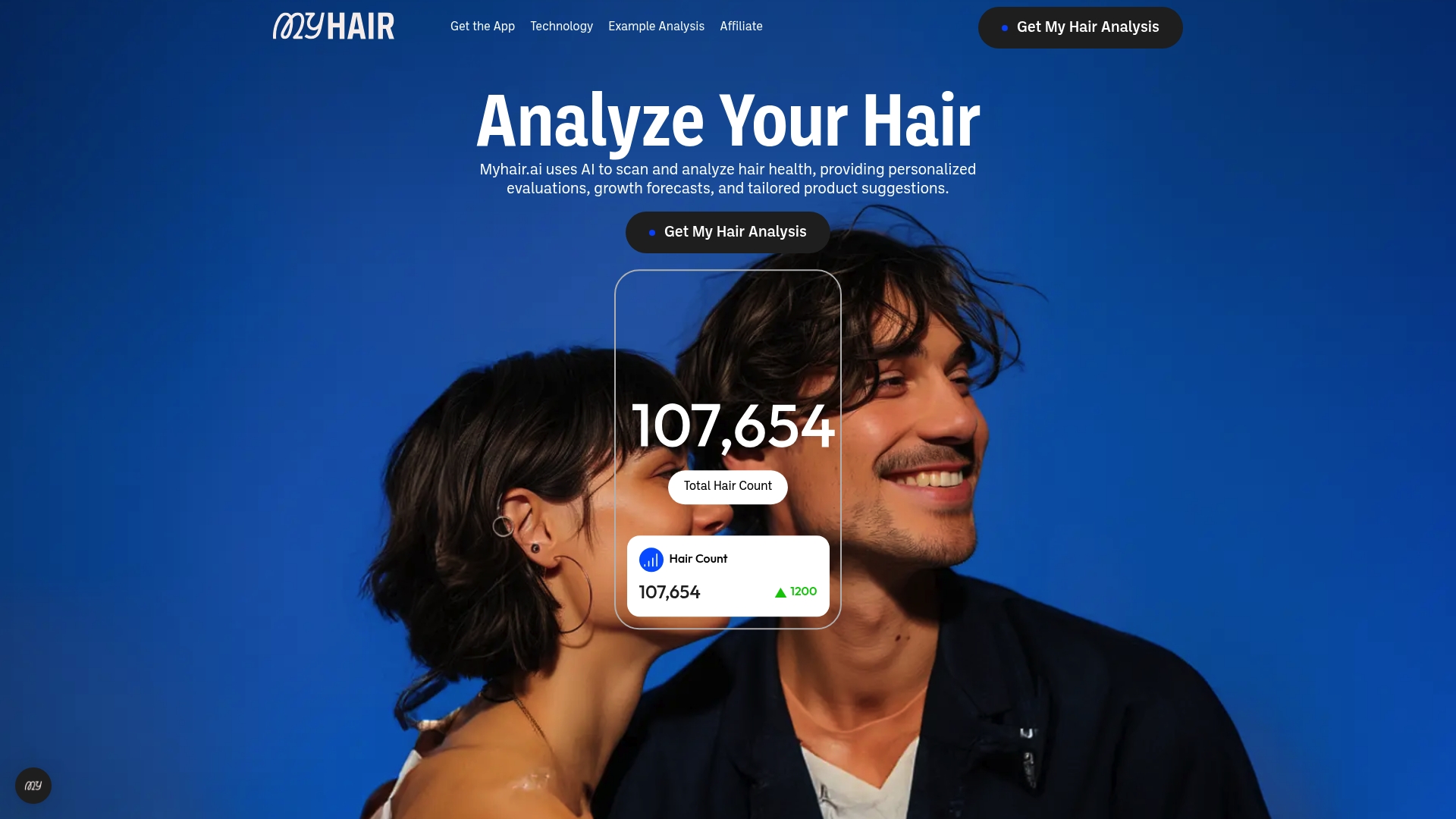
Myhair's AI-powered hair analysis scans your scalp and hair to generate a personalized health assessment, identifying the exact gaps in your current routine. The platform's hair scoring system tracks your progress over time so you can see measurable improvement rather than guessing whether your routine is working. Start your hair analysis onboarding today and get a routine built around your hair, not someone else's.
FAQ
How long does it take to see results from a natural hair routine?
Visible length retention typically requires 3 to 6 months of consistent, gentle care. Switching products or routines before that window closes prevents you from accurately evaluating what is working.
What oils are best for natural hair growth?
Jojoba oil, rosemary oil, and peppermint oil are the most evidence-supported choices for scalp and strand health. Jojoba mimics natural sebum, while rosemary and peppermint stimulate follicle circulation when diluted and applied directly to the scalp.
Does washing natural hair more often help it grow faster?
No. Washing too frequently strips natural oils and disrupts moisture balance. Curly and coily hair types benefit most from washing every 7 to 14 days with a sulfate-free shampoo and a monthly clarifying treatment.
Are protective styles necessary for hair growth?
Protective styles reduce mechanical damage and friction, which directly supports length retention. However, not all protective styles promote growth. Styles must be low tension and kept in for no longer than 4 to 6 weeks to avoid traction alopecia.
What is the LOC method and should I use it?
The LOC method layers a liquid leave-in conditioner, an oil, and a cream to seal moisture into the hair shaft. It works best for low-porosity hair. High-porosity hair typically responds better to the LCO method, where the cream is applied before the oil to fill cuticle gaps first.